Navratri Fasting Recipes: Easy Vrat Meals, Snacks & Sweets
Navratri fasting recipes can make vrat meals varied without making the kitchen complicated. Sabudana khichdi, samak pulao, roasted makhana and a simple kheer offer plenty of choice. However, there is no single food list that every family follows, so check your household’s vrat rules before shopping or cooking.
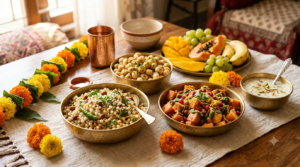
Easy Navratri fasting recipes featuring sabudana khichdi, vrat-friendly snacks, fresh fruits and traditional sweets for festive meals.
This collection keeps familiar meals, snacks and sweets together. It also explains how to handle soaked ingredients, cooked potatoes and dairy safely. If someone has a food allergy, the small changes to a recipe matter just as much as the seasoning.
Navratri Fasting Recipes: Quick Overview
Most Navratri fasting recipes use fruit, potatoes, sabudana, selected fasting flours and, where permitted, dairy or nuts. The exact rules differ across regions, families and religious traditions. Some people eat one simple meal, while others follow a fruit-only or much stricter fast.
- Common substitutes: sabudana, kuttu (buckwheat), singhara (water chestnut) flour and rajgira (amaranth), subject to family practice.
- Samak rice: many families use barnyard millet as vrat rice, but some traditions avoid millets and other grains entirely.
- Seasoning: sendha namak, cumin, green chilli, ginger and pepper are common choices when the household permits them.
- Check allergens: peanuts, tree nuts and milk appear in several dishes. Read packets and prevent cross-contact.
- Plan storage: refrigerate soaked ingredients and cooked make-ahead items promptly instead of leaving them overnight on the counter.
Foods Allowed and Avoided in Navratri Fasting Recipes
Navratri fasting recipes often avoid ordinary wheat and rice dishes, lentils, onion and garlic. Yet fasting is a matter of religious practice, not one fixed national food rule. Ask an elder in your household or your temple if an ingredient is unfamiliar.
The table shows common patterns rather than universal permission. For background on festival customs, see Drik Panchang’s Navratri information. Follow your own practice when its guidance differs.
| Ingredient group | Often used in vrat cooking | What to check first |
|---|---|---|
| Starches and flours | Sabudana, kuttu, singhara, rajgira | Whether your family accepts each flour; check packaged mixes |
| Millet | Samak or barnyard millet in many homes | Some traditions avoid it because it is a millet |
| Vegetables and fruit | Potato, sweet potato, pumpkin, raw banana, fresh fruit | Whether particular vegetables or seasonings are restricted |
| Dairy | Milk, curd, paneer, ghee | Milk allergy, lactose needs and household restrictions |
| Nuts and seasonings | Peanuts, makhana, almonds, cumin, pepper, rock salt | Nut or peanut allergies; stricter rules for legumes and spices |
| Common exclusions | Many families avoid wheat, rice, dal, onion and garlic | Your family’s observance may be stricter or different |
Many households also skip turmeric, mustard and asafoetida during a strict vrat. Moreover, some commercial hing blends contain wheat flour. Check the ingredient label if you avoid grains or gluten.
Does every family have to use sendha namak?
No. Many families choose sendha namak, or rock salt, for religious reasons during Navratri. Others observe different rules or avoid added salt. This is a custom, not proof that iodised salt is unhealthy.
The World Health Organization explains why iodised salt helps prevent iodine deficiency. So do not present long-term avoidance of iodised salt as a health benefit. Follow medical advice if your diet requires iodine or salt management.
Easy Navratri Fasting Recipes for a Filling Meal
These savoury Navratri fasting recipes use ingredients that many households already keep for vrat cooking. Check the add-ins before you begin, especially peanuts and millet. A recipe is suitable only if its ingredients match your own observance and any medical dietary needs.
Sabudana Khichdi
Sabudana khichdi combines soaked tapioca pearls with cooked potato, cumin, green chilli and often crushed roasted peanuts. A squeeze of lemon adds brightness at the end. If your family avoids peanuts, leave them out rather than swapping in another nut without checking for allergies.
The trick is the soak. Rinse the sabudana until the water runs clear, then follow your packet’s soaking guidance. Pearl size varies, so a fixed water ratio cannot suit every brand. Once the pearls soften, drain excess water and cook gently until tender.
If soaking takes several hours, keep the covered bowl in the refrigerator. For ingredient amounts and a fuller method, see our Navratri sabudana khichdi recipe. That page is the detailed recipe; this guide helps you choose a complete menu.
Samak Rice Khichdi or Pulao
Samak rice, also called barnyard millet, moriyo or bhagar, looks similar to tiny rice grains. Many families cook it during Navratri, although others exclude millets from fasting meals. Check that rule before you make it the centre of lunch.
To prepare a simple pulao, warm ghee and temper cumin if permitted. Add ginger, green chilli and chopped cooked potato, then stir in rinsed samak. Add water gradually and simmer according to the product instructions until the grains turn tender.
Serve with plain curd if your diet and fasting practice allow dairy. Avoid promising that this dish is automatically suitable for diabetes or any other health condition.
Kuttu Ki Puri and Cheela
Kuttu, or buckwheat flour, turns into two vrat favourites. For puri, knead the flour with boiled mashed potato and sendha namak into a stiff dough, then roll small rounds and fry until cooked through.
For cheela, thin a kuttu batter and cook it on a lightly greased pan. Kuttu has no gluten of its own, so the dough can crack. Potato helps bind it, while a gentle hand makes rolling easier.
Check a packaged flour for wheat mixing if you need a strictly gluten-free meal. Buckwheat’s natural composition does not prevent cross-contact during grinding or packing. Pair either dish with vrat aloo or plain curd when permitted.
Navratri Fasting Recipes for Sweets and Snacks
Snacks and sweets in Navratri fasting recipes add variety, but they do not need a health halo. Fried snacks contain oil, while many halwas and kheers contain added sugar. Enjoy the dish that suits your appetite and household custom.
Sabudana Vada and Roasted Makhana
Sabudana vada are crisp patties of soaked sago, mashed potato, crushed peanuts and green chilli. Shape the mixture into small flat rounds, then fry on medium heat until the centres cook through. If the outside browns too quickly, lower the heat.
Makhana, or fox nuts, are a simpler option. Roast them gently with a little ghee, then season with sendha namak and pepper if permitted. Cool them before storing in a dry, airtight container.
Allergy note: vada often contains peanuts, and ghee comes from milk. Never assume makhana roasted in a shared pan is free of those allergens. Use safe ingredients and thoroughly cleaned utensils.
Vrat Wale Aloo and Sweet Potato Chaat
Potato is the backbone of fasting food, and a simple jeera aloo pairs with almost everything. For jeera aloo, temper cumin in ghee, add cooked potato cubes, then season lightly. Toss until the edges develop colour.
Sweet potato chaat is a precooked assembly recipe, not a no-cook recipe. First boil, steam or roast the shakarkandi until tender. After it cools enough to handle, cube it and toss with lemon, pepper and permitted seasonings.
If you cooked sweet potatoes earlier, refrigerate them promptly in a covered container. Assemble the chaat shortly before serving, and keep it chilled if you are not eating it right away. Do not count the boiling time as zero preparation.
Sabudana Kheer, Makhana Kheer and Halwa
Sabudana kheer simmers soaked pearls in milk with sugar and cardamom until creamy. Makhana kheer swaps the sago for roasted fox nuts. Both contain milk unless you deliberately use a suitable alternative.
For a warm treat, singhara or lauki halwa cooks water chestnut flour or grated bottle gourd in ghee with milk or water. Stir gently until it reaches the texture you like. A little saffron adds aroma if it suits your budget and customs.
Do not assume every commercial milk substitute or sweetener fits a vrat. Check the label and your family’s rules. For another slow-cooked devotional sweet, see this festival prasadam recipe.
Choosing the Right Flour for Navratri Fasting Recipes
The main vrat staples behave differently, so picking the right one saves a failed batch. Sabudana suits khichdi, vada and kheer. Samak works for a rice-like dish only when your family accepts millet. Kuttu and singhara flours suit puri or halwa.
| Ingredient | Also called | Useful for |
|---|---|---|
| Sabudana | Sago, tapioca pearls | Khichdi, vada, kheer |
| Samak | Barnyard millet, moriyo, bhagar | Pulao, khichdi; confirm vrat rules |
| Kuttu flour | Buckwheat flour | Puri, cheela |
| Singhara flour | Water chestnut flour | Halwa, puri |
If you can stock only one staple, sabudana offers several uses. However, there is no need to buy every flour for one festival. Choose recipes your household already knows, then check the packets for added flour or allergens.
Genuinely No-Cook Navratri Fasting Recipes
Genuinely no-cook Navratri fasting recipes use ready-to-eat ingredients and need no boiling, frying or roasting at home. They work well when your kitchen is busy. Still, wash produce carefully and use clean hands, knives and boards.
- Fresh fruit chaat: cube washed apple and banana, add pomegranate, then finish with lemon if your family permits it.
- Plain curd and fruit: spoon chilled curd over sliced fruit, using dairy only if safe and allowed.
- Cucumber and fruit plate: wash and slice cucumber and fruit just before eating. Keep cut produce cool.
These are assembly ideas, not claims that fruit alone meets everyone’s dietary needs. The steamed banana snack offers a warm alternative, but it also needs cooking.
Refrigerating Ingredients for Navratri Fasting Recipes
Cooked potatoes, soaked sabudana and dairy sweets in Navratri fasting recipes need sensible cold storage. Do not leave boiled vegetables on the counter overnight for a next-day recipe. Cooling and refrigerating promptly are safer than assuming fasting food cannot spoil.
The US Department of Agriculture’s leftover guidance says to refrigerate perishable cooked food within two hours. When the surrounding temperature exceeds 32°C, use one hour. Keep the refrigerator at 4°C or below.
- After boiling: divide potatoes or sweet potatoes into smaller portions, then refrigerate promptly in shallow covered containers.
- During soaking: soak sabudana in a clean covered bowl in the refrigerator when preparing it well ahead.
- After cooking: refrigerate kheer and other milk dishes promptly instead of cooling them all night on the counter.
- Before serving: keep curd, cut fruit and prepared chaat chilled until needed.
- With leftovers: use safely refrigerated cooked leftovers within three to four days; eat sooner if quality declines. Discard food left out too long.
For a busy festival morning, cook smaller portions and serve them fresh when possible. Reheating cannot reliably fix unsafe storage. Also, a food can be unsafe before it smells spoiled.
Allergens and Cross-Contact in Navratri Fasting Recipes
Peanuts, almonds, cashews and milk appear often in Navratri fasting recipes. A traditional dish is not automatically safe for someone with an allergy. Ask guests about allergies before cooking, then choose ingredients and tools that avoid their allergens.
The Food Safety and Standards Authority of India (FSSAI) publishes food-labelling rules, including updates. Check the current ingredient and allergen statements on each packet. The US Food and Drug Administration explains allergen cross-contact in food preparation.
- Peanut-free khichdi: leave out peanuts and use a safe cooking fat. Do not replace peanuts with cashews for someone with a nut allergy.
- Dairy-free preparations: avoid milk, curd, paneer and ghee. Choose a suitable alternative only after checking both the label and vrat rules.
- Gluten avoidance: inspect packaged kuttu flour, spice mixes and hing for wheat or cross-contact statements.
- Shared kitchens: wash hands and clean pans, boards, grinders and serving spoons thoroughly. Never reuse peanut-contaminated oil.
For a severe allergy, even a small amount of the allergen may matter. If you cannot keep an allergen out of a shared kitchen, do not promise that dish is safe. Follow the person’s allergy plan and seek urgent medical help for a serious reaction.
What Beginners Get Wrong With Vrat Cooking
A few small mistakes with Navratri fasting recipes trip up first-time cooks. Fixing them improves texture and helps prevent preventable food-safety problems.
- Over-soaking sabudana: too much water makes a sticky lump. Drain well and press-test a pearl before cooking.
- Assuming all vrat rules match: ask before serving samak, peanuts or a spice blend to another family.
- Skipping the potato binder: kuttu and singhara dough can crack without mashed potato.
- Frying on high heat: sabudana vada may brown before the middle cooks, so use moderate heat.
- Leaving prep out overnight: chill soaked sabudana, boiled potatoes and cooked kheer promptly.
- Ignoring labels: flavoured makhana, mixed flour and ready-made spice blends may contain unwanted grains or allergens.
Fruit also deserves a spot on the menu. A quick fruit chaat needs no cooking, and you can prepare it just before eating. That is a better no-cook example than chaat made with boiled sweet potato.
Fasting Safely Through Navratri
Fasting affects people differently, so do not push through dizziness, weakness or other worrying symptoms. Some traditions permit water and regular meals, while others involve long gaps without food or drink. Choose an observance that does not compromise your health.
Anyone who is pregnant, has diabetes, takes medicines with food or has another medical condition should ask a qualified clinician before a strict fast. People with diabetes need an individual plan, not a blanket promise that makhana or samak will control blood sugar. Seek medical help for severe symptoms.
Do not change prescribed medication or replace medical care with a vrat meal. Fasting is a personal devotional choice; these recipes are cooking ideas, not treatment or nutrition prescriptions.
The Bottom Line
A good menu of Navratri fasting recipes can be simple: khichdi, a crisp snack, fruit and an occasional sweet. Keep sabudana and a permitted flour in the pantry, then build meals around what your family accepts. The best Navratri fasting recipes are the ones you can prepare safely and enjoy without guesswork.
Plan cooking ahead, but refrigerate perishable ingredients promptly. Above all, check allergens and household rules before sharing a dish. Then rotate two or three favourites through the festival rather than cooking everything every day.
Frequently Asked Questions
What are the easiest Navratri fasting recipes for beginners?
Sabudana khichdi, roasted makhana and a fruit chaat are easy places to start. The khichdi needs soaking and cooking, while makhana needs roasting. Fresh fruit chaat is genuinely no-cook, so it also suits busy mornings.
Can I eat rice during Navratri fasting?
Many households avoid ordinary rice during Navratri vrat and use ingredients such as sabudana instead. Some use samak, which is barnyard millet rather than rice. Since other traditions avoid millets too, check your family’s rules before cooking it.
Is sabudana allowed during Navratri fasting?
Many families include sabudana in vrat meals because it comes from tapioca starch rather than ordinary cereal grain. Still, your own fast may have narrower rules. Check packaged sabudana for added ingredients and prepare it with safe soaking and storage.
Why are onion and garlic avoided during Navratri?
Some devotees leave out onion and garlic as part of a simple, sattvic style of religious cooking. This reflects spiritual custom, not a proven medical effect. Cumin, ginger and green chilli can add flavour where the family permits them.
Which salt should I use in vrat recipes?
Many families prefer sendha namak during Navratri because of their religious custom. It is not a universal rule, and rock salt does not automatically replace iodine in the diet. If you have an iodine or sodium-related health concern, follow medical advice.
Is sweet potato chaat a no-cook vrat recipe?
No, not if you start with raw sweet potato. You need to boil, steam or roast it first, then cool and season it. When you use sweet potato that you cooked and refrigerated safely earlier, the final assembly is no-cook.
Can I prepare sabudana and boiled potatoes the night before?
Yes, provided you refrigerate them safely rather than leaving them at room temperature overnight. Soak sabudana in a covered bowl in the fridge. Refrigerate boiled potatoes promptly in shallow containers, then cook and serve your dish the next day.
How do I make vrat food safe for peanut or milk allergies?
Remove the allergen, check every packaged ingredient and clean the cooking equipment thoroughly. Avoid replacing peanuts with a different nut without checking the person’s allergies. If you cannot prevent cross-contact, do not serve the dish as allergen-free.
Can someone with diabetes keep a Navratri fast?
People with diabetes should discuss fasting with their treating clinician before changing meal times or medicine. Dishes containing sabudana, potato or added sugar can affect blood glucose. No single vrat food can guarantee safe glucose levels during fasting.
How do I keep sabudana khichdi from turning sticky?
Rinse the pearls well and avoid adding more soaking water than the particular variety needs. Once they soften, drain excess water and stir gently over moderate heat. Different pearl sizes need different soaking times, so follow the packet and test the texture.