Makhana Chivda: Crunchy Roasted Peanut and Curry Leaf Mix
Makhana chivda is a dry, crunchy mix of roasted fox nuts, peanuts, crisp curry leaves and a light coat of spices. The secret is to roast each crunchy ingredient properly before combining everything. Unlike a makhana bhel or chaat, this snack needs no chopped onion, tomato, chutney or lemon juice.
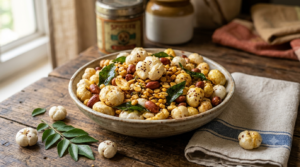
Crunchy roasted makhana chivda with golden peanuts, crisp curry leaves and a light coating of Indian spices.
This makhana chivda recipe uses an intentionally simple peanut-and-curry-leaf flavour. It relies on a wide pan and a small amount of oil, not deep-frying. Recipe status: These quantities, timing ranges and yield are editorial estimates, not results from a kitchen-tested batch.
Makhana Chivda at a Glance
- Style: Dry Indian snack mixture, not a moist chaat.
- Main ingredients: Popped makhana, peanuts and curry leaves.
- Method: Dry-roast the makhana, cook the peanuts, crisp the curry leaves, then toss with spices.
- Estimated time: About 15–25 minutes, depending on the pan and stove; not kitchen-tested.
- Estimated yield: Roughly 2½–3 cups, or about 3 small snack portions; not measured in a test batch.
- Allergen alert: Contains peanuts and mustard; check any packaged spice blends for other allergens.
What Makes Dry Makhana Chivda Different?
A good makhana chivda feels light at first bite, then delivers the deeper crunch of roasted groundnuts. Curry leaves add a distinct aroma, while turmeric and chilli bring colour and warmth. The flavour should reach each piece without leaving a greasy coating.
For makhana chivda, the word “dry” matters. Wet bhel and chaat often rely on chutneys, fresh vegetables or lemon juice added just before eating. This version avoids those ingredients so the mix stays loose and crisp. It is closer to thin poha chivda or a homemade namkeen than a salad-like street snack.
Makhana itself is the popped kernel of an aquatic seed. The Indian Council of Agricultural Research (ICAR) explains how processors roast and pop the seed before it reaches shops. At home, you start with the already-popped white makhana and toast it for crunch; you do not attempt the commercial popping process.
Ingredients for Makhana Chivda with Peanuts and Curry Leaves
Use level measuring cups for consistency, though the finished volume may vary with makhana size. Choose plain popped makhana, not a ready-seasoned packet. You can also use roasted peanuts instead of raw ones, provided they are fresh and crisp.
| Ingredient | Proposed amount | Why it is here |
|---|---|---|
| Plain popped makhana | 2 cups | Light, airy base |
| Raw shelled peanuts | ⅓ cup | Firm, nutty crunch |
| Fresh curry leaves | 12–15 leaves | Toasted aroma |
| Roasted chana dal (dalia/putnalu) | 2 tbsp | Optional extra bite |
| Neutral cooking oil | 2 tsp | Helps roast and coat |
| Mustard seeds | ¼ tsp | Tempering flavour |
| Turmeric powder | ¼ tsp | Colour and earthy note |
| Red chilli powder | ¼ tsp, or to taste | Heat |
| Amchur (dry mango powder) | ¼ tsp | Dry tang without juice |
| Salt | Start with ¼ tsp | Seasoning; adjust later |
| Sugar | ¼ tsp, optional | Balances chilli and tang |
Measurement note: The makhana chivda ingredient set is a proposed starting formula, not a tested or standardised recipe. Salt and heat should be adjusted after tasting a cooled sample. The estimated yield assumes little breakage and no major change in bulk during roasting.
How to Make Makhana Chivda Step by Step
Cook the parts separately before the final toss. Peanuts need more direct heat than spice powder, while curry leaves need to lose surface moisture. In makhana chivda, putting everything in the pan at once can scorch the masala before the makhana turns crisp.
Roast the Base
- Prepare the leaves. Wash curry leaves if needed, then drain and pat them thoroughly dry. Keep the spice powders measured nearby, since the tempering moves quickly.
- Roast the makhana. Heat a wide, heavy pan over low to medium-low heat. Add plain makhana without oil and stir often. When a cooled piece snaps and breaks cleanly rather than bending, move the batch to a dry plate.
- Roast the peanuts. Add 1 teaspoon oil and the raw shelled peanuts to the pan. Stir over moderate-low heat until they smell toasted and are cooked through. Break and cool one to check its centre; if still raw-tasting or soft, continue roasting. Remove the peanuts.
Season and Finish the Mix
- Crisp the curry leaves. Add the remaining teaspoon of oil and mustard seeds. Once they splutter, add the thoroughly dried curry leaves. Stir carefully until they stop looking damp and turn crisp, without letting them blacken.
- Season gently. Reduce the heat to its lowest setting or take the pan off the flame. Add turmeric, chilli powder, amchur, salt and optional sugar. Stir briefly so the spices coat the oil without burning.
- Bring the dry mix together. Return the makhana and peanuts to the pan. Add roasted chana dal if using, then toss gently until the seasoning spreads. Avoid crushing the fox nuts with a heavy spoon.
- Cool and assess. Spread the mix on a clean, dry plate. Once cool enough to taste, check the crunch and seasoning. Serve when it has cooled, or store only after it is fully cool.
There is no single guaranteed roasting time for makhana chivda. Pans, flame levels, makhana size and moisture differ, so use the snap test instead of a stopwatch. A pale colour with a crisp centre is better than a dark outside and chewy middle.
How to Tell When the Makhana Is Crisp
Take one piece out of the pan and let it cool briefly before testing. A well-toasted fox nut should snap or crumble with little pressure, not flatten into a chewy lump. If its centre still feels soft, roast the batch a little longer while stirring.
Watch for uneven heat. Smaller pieces can brown before large ones turn crisp, so keep the pan moving. If a few pieces burn, remove them rather than mixing bitterness into the whole batch. The same principle applies when checking peanuts: assess a cooled nut, not just its warm surface.
How to Keep Curry Leaves Crisp in Makhana Chivda
In makhana chivda, curry leaves should carry flavour, not unwanted moisture. Dry washed leaves thoroughly before they touch hot oil, since water can cause splattering. Use a modest flame and stand back when the leaves first enter the pan.
They should turn fragile enough to break between your fingers after cooling. If they stay limp, they can soften nearby makhana. If they become almost black, the flavour may turn bitter. Add powdered spices only after the leaves finish sizzling, preferably with the heat lowered.
Why Roast the Peanuts Separately?
Peanuts in makhana chivda take longer to cook than spice powders and often longer than already-popped makhana. Roasting them on their own gives you a better chance of cooking the centre without scorching turmeric or chilli. It also keeps the texture of each ingredient under control.
If you use packaged dry-roasted peanuts, skip the raw-peanut roasting step. Warm them briefly only if needed, and check whether the pack already contains salt. Otherwise, your finished makhana chivda may become too salty even though you followed the proposed seasoning amounts.
Makhana Chivda Versus Wet Bhel and Chaat
Makhana chivda and wet bhel can share crunchy ingredients, yet their serving logic differs. This makhana chivda is a pan-toasted mixture meant to remain dry. Bhel or chaat may include wet chutneys, fresh produce or juice, which changes both the texture and how quickly you should serve it.
| Feature | Dry makhana mix | Wet bhel or chaat |
|---|---|---|
| Moisture | No wet sauce or fresh topping | Often includes wet ingredients |
| Key texture | Roasted crunch | Mixed soft and crisp textures |
| When to combine | During cooking, then cool | Usually just before eating |
| Best serving style | Small dry snack bowl | Freshly assembled plate |
Do not stir onion, tomato, chutney or lemon juice into the stored batch. Those additions turn it into a different dish and will quickly change the crunch. Keep this version intentionally simple so its roasted ingredients remain the focus.
How to Fix a Batch That Goes Soft
First, identify the cause. Undertoasted makhana usually feels chewy from the start, while a once-crisp batch can soften after exposure to air or damp ingredients. A sealed jar will not undo moisture already trapped inside a warm mixture.
For makhana chivda that has merely lost crunch, try a brief, gentle re-toast in a dry pan. Stir constantly, then cool and test one piece before serving. This may help texture, but it is not a fix for spoilage. Discard any mixture with mould, an off smell, insect damage or other signs of deterioration.
Makhana Chivda Variations That Stay Dry
A little variation changes the flavour without losing the main idea. Add plain dry coconut flakes during the final toss for a mellow note, or use a small pinch of roasted cumin powder in place of some chilli. Increase the peanuts only if you prefer a heavier, nuttier bite.
For a more tart version, add another small pinch of amchur after tasting. Avoid fresh lemon juice in a batch you plan to store. If you omit peanuts for an allergy, substitute a tolerated ingredient from an uncontaminated supply and clean the utensils. Simply removing peanuts does not guarantee an allergy-safe snack.
Storage Tips for Crisp Makhana Chivda
Let the finished makhana chivda cool completely before putting it in a clean, dry, airtight jar. Store it away from steam, sunlight and damp kitchen spots. Open the lid only when needed, and use a dry spoon so moisture stays out.
There is no validated shelf-life claim for this untested home recipe. Make modest batches and eat them while fresh, following the storage advice on packaged ingredients. The Food Safety and Standards Authority of India (FSSAI) Eat Right India guidance recommends checking labels for storage directions and allergens. Dry foods also benefit from suitable sealed storage.
Allergens and Serving Safety
Contains peanuts and mustard. Peanuts can trigger serious allergic reactions in susceptible people. Optional nuts, spice mixes, oil and roasted gram may introduce other ingredients or cross-contact risks, so always read packaging. FSSAI’s official website provides Indian food-safety information, while its Eat Right guidance highlights allergen checks.
Do not serve this recipe with whole peanuts to children under five because of choking risk. The UK National Health Service (NHS) advises against whole nuts for that age group. People with a known food allergy should use a recipe and preparation area that suit their medical advice; a casual ingredient swap is not enough.
Common Mistakes to Avoid
- Using high heat: The outer makhana can brown while the centre stays chewy, so lower the flame and keep tossing.
- Adding damp leaves: Moisture splatters in oil and can soften the finished mix. Dry them well first.
- Burning spices: Chilli and turmeric scorch quickly. Add them with the pan on low heat or briefly off the flame.
- Using salted peanuts without adjusting salt: Taste before adding more seasoning.
- Closing the jar while warm: Wait until the entire mixture cools, so trapped steam does not ruin the crunch.
- Adding wet toppings for storage: Onion, tomato and chutneys belong to a fresh chaat, not this dry chivda.
The Best Way to Serve This Dry Snack
Serve makhana chivda in small bowls alongside tea or as a savoury snack between meals. Its light, airy pieces pair well with the denser peanuts, so scoop from the bottom to include both. You can also divide it into small dry containers after it cools. For a softer, cooked-peanut snack, try peanut sundal instead.
For makhana chivda, the right balance is easy to judge: the fox nuts should break cleanly, the peanuts should taste roasted through, and the curry leaves should be crisp. When those three details work, the spices can remain restrained. The goal of makhana chivda is a pleasant dry snack, not a heavily coated masala mixture.
Frequently Asked Questions
Can I make makhana chivda without deep-frying?
Yes. Dry-roast the makhana in a heavy pan, then use a small amount of oil for the peanuts and curry-leaf tempering. Keep the flame moderate and stir regularly. You should get a crisp mixture without immersing ingredients in oil.
How much makhana should I use for one small batch?
This proposed formula starts with 2 cups of plain popped makhana and ⅓ cup of peanuts. The amounts have not been kitchen-tested together. Use them as a starting point, then adjust for your preferred nut-to-makhana ratio.
Can I use ready-roasted peanuts?
Yes, plain roasted peanuts simplify the method. Warm them briefly if needed, but do not cook them as though they were raw. Check for added salt and oils on the packet before seasoning your mix.
Why is my makhana chivda chewy?
It may need more roasting or may have absorbed moisture after cooling. Test a fully cooled piece: it should snap rather than bend. If the makhana chivda is otherwise fresh and sound, a gentle dry-pan re-toast may help restore its bite.
Can I add lemon juice or fresh onions?
Not to the batch you want to keep dry. Lemon juice and onion introduce moisture, changing the snack into a bhel- or chaat-style mixture. This recipe uses amchur for tang without adding liquid.
How long does homemade makhana chivda last?
No exact shelf life has been established for this untested recipe. Cool it fully, store it in a clean airtight container and keep it away from damp conditions. Prepare small quantities and discard any snack showing signs of spoilage.
Is this makhana chivda safe for someone with a peanut allergy?
No, the recipe as written contains peanuts. Removing them does not automatically make it safe because of shared utensils, packaged-ingredient cross-contact or other allergens. Anyone with an allergy needs ingredients and preparation that meet their own medical guidance.
Is this snack suitable for children?
It depends on the child’s age and eating ability. Whole peanuts are a choking hazard for children under five, so this version is not suitable for that age group as written. Check all ingredients for known allergies as well.
Can I make the mixture without curry leaves?
Yes, but the aroma will change noticeably. The peanuts and dry-roasted makhana still provide contrast, while cumin or a small pinch of amchur can supply another note. Keep the seasonings dry to preserve the intended texture.