Bobbatlu Recipe: Soft Chana Dal & Jaggery Sweet Poli
This bobbatlu recipe is a traditional one, made exactly the way it is prepared every Ugadi and Sankranti in Andhra kitchens. Bobbatlu is a soft, sweet stuffed flatbread. The moment it hits the tawa, it fills the house with the smell of jaggery and ghee.
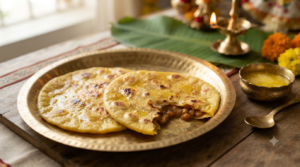
Soft homemade bobbatlu with a chana dal and jaggery filling, fresh off the tawa.
You may know it as Holige or Obbattu in Karnataka. In Maharashtra it becomes Puran Poli, while parts of Telangana call it Bakshalu. Whatever the name, the heart of the dish stays the same: a smooth chana dal and jaggery filling wrapped in thin, supple dough. This guide gives you exact quantities, the tricky steps explained slowly, and the small fixes that make this bobbatlu recipe work the very first time.
This Bobbatlu Recipe at a Glance
Before you start, here is the quick shape of this bobbatlu recipe. Read it once, so nothing surprises you mid-recipe.
- Prep time: about 1 hour 15 minutes, most of it hands-off resting and cooling
- Cook time: around 30 minutes on the tawa
- Total time: roughly 1 hour 45 minutes
- Yield: 8 to 10 bobbatlu
- Difficulty: medium, because the rolling takes a little practice
- Best for: Ugadi, Sankranti, Ganesh Chaturthi, and everyday festive cravings
The bobbatlu recipe below is scaled for a small family batch. You can easily double it for a festival crowd.
Bobbatlu Recipe Ingredients You Need
Everything this bobbatlu recipe needs comes from a normal Indian pantry. Keep the dough and the filling ingredients in two separate bowls. You make them separately and combine them only at the shaping stage.
For the dough
- 1 cup whole wheat flour (atta) — about 120 g
- 1 cup all-purpose flour (maida) — about 120 g
- ¼ tsp turmeric powder
- ½ tsp salt
- 4–5 tbsp oil, or ¼ cup ghee, for the dough
- ⅓–½ cup water, added slowly as needed
- Extra ghee or oil for roasting
For the stuffing (poornam)
- 1 cup chana dal, the split husked Bengal gram — about 195 g
- 2.5 cups water for pressure cooking
- 1 cup jaggery — about 160–165 g
- ½ tsp green cardamom powder
- ¼ tsp nutmeg powder (optional)
The sweet filling is traditionally called poornam. It carries all the flavour, so use good soft jaggery and fresh cardamom. That way the aroma comes through in every bite.
Bobbatlu Recipe: Step-by-Step Instructions
Take these steps in order. The dough rests while the dal cooks, so nothing is wasted. The whole bobbatlu recipe flows if you plan it as one continuous sitting.
Step 1: Prepare the dough (15–20 mins plus rest)
In a large bowl, sift the whole wheat flour, all-purpose flour, turmeric, and salt together. Add water slowly and knead into a soft dough. Once it comes together, pour in the oil or ghee. Knead for 7 to 8 minutes until it feels very soft and stretchy.
The dough should be softer than roti dough, almost glossy. Cover it and let it rest for 30 minutes. Resting relaxes the gluten and makes rolling far easier.
Step 2: Cook the chana dal (20–25 mins)
Rinse the chana dal well. Add it to a pressure cooker with 2.5 cups water. Cook for 6 to 7 whistles on medium heat, until the lentils are very soft. Let the pressure drop naturally before opening the lid.
Now drain every drop of water and spread the dal on a plate to cool. This draining step matters most. Leftover water turns the filling runny and makes sealing impossible.
Step 3: Make the sweet filling (10–12 mins)
Transfer the cooled dal to a blender. Add the jaggery, cardamom powder, and nutmeg if you are using it. Blend into a smooth paste with no lentil specks. Heat 1 tbsp ghee in a pan on low flame, then add the blended mixture.
Stir continuously until it thickens and starts leaving the edges of the pan. Turn off the heat and cool it fully. Then divide it into 8 to 10 medium balls.
Step 4: Stuff and shape (10–15 mins)
Pinch a lemon-sized portion of dough and roll it into a ball. Flatten it with your fingers or a small rolling pin. Place a ball of sweet filling in the centre, then bring the dough edges up and seal them over the top.
Gently roll this stuffed ball between your palms to smooth it. Keep the rest covered, so they do not dry out while you work.
Step 5: Roll the bobbatlu (8–10 mins)
You can roll bobbatlu two ways. For the rolling-pin method, dust the surface with a little rice flour, then roll the stuffed ball into a thin circle about 6 to 7 inches wide.
For the traditional method, grease a banana leaf, plastic sheet, or parchment with oil. Place the ball on it and pat it outward gently with your fingers. Either way, work slowly, because too much pressure makes the filling burst through.
Step 6: Cook on the tawa (8–10 mins)
Heat a flat tawa on medium flame. Place the rolled bobbatlu on the hot surface and cook until golden spots appear, then flip. Brush ghee or oil on each side and cook until both sides are lightly golden.
Do not leave it too long on a low flame, since slow cooking dries it out and makes it hard. Fold each one and stack it under a cloth to stay soft.
Chana Dal or Moong Dal for This Bobbatlu Recipe?
Both dals work, and the choice changes the texture. Chana dal gives the classic Andhra taste and a firmer, richer filling, though it takes longer to soak and cook. Moong dal cooks faster and gives a lighter, smoother poornam that many Karnataka homes prefer.
Some families even use toor dal for a slightly different bite. If this is your first attempt, stay with chana dal. It is the most forgiving and the most traditional choice for a bobbatlu recipe from the Telugu states.
Bobbatlu Recipe: Regional Names and Variations
This one dish travels across South and West India under many names. Knowing them helps you follow other recipes and spot the same sweet on festival menus.
- Bobbatlu / Bakshalu: Andhra Pradesh and Telangana
- Holige / Obbattu: Karnataka
- Puran Poli: Maharashtra, where it is a Holi favourite
- Paruppu Poli / Boli: Tamil Nadu
The most popular variation swaps the lentils for coconut. That version is called Kobbari Bobbatlu or Thengai Poli, and it uses grated coconut cooked with jaggery instead of dal. You can also stir a spoon of grated coconut into the chana dal filling for extra crunch.
Once you master the plain version, this bobbatlu recipe adapts easily to any of these regional forms. For the history and full spread of regional names, the Puran Poli reference on Wikipedia is a useful read.
Pro Tips for the Best Bobbatlu Recipe
These are the details you only learn by making them year after year. They turn a good bobbatlu recipe into a great one. They are the difference between a bobbatlu that tears and one that puffs softly.
- Add the pinch of turmeric to the dough for a warm golden tone. In Tirupati, elders swear by it for colour and subtle flavour.
- Drain the pressure-cooked dal completely, because any water left behind makes the filling runny and rolling impossible.
- Knead the dough until it is very soft and slightly oily, since a stiff dough cracks and lets the filling escape.
- For extra softness, some cooks add a tablespoon of fine semolina (rava) to the dough. Use it sparingly.
- Cook on steady medium heat, so the jaggery filling warms through without burning.
- Keep the finished bobbatlu wrapped in a kitchen towel to hold in warmth and moisture.
Common Bobbatlu Recipe Mistakes and Fixes
Most problems come down to three or four fixable causes. Once you know them, this bobbatlu recipe stops feeling difficult.
- Grainy filling: the dal was undercooked or ground too coarse. Cook it very soft, then blend until fully smooth.
- Filling bursting out: the dough was too thin, too stiff, or rolled too hard. Roll gently and keep an even thickness.
- Hard, chewy bobbatlu: you cooked them too long on a low flame. Use medium heat and pull them off as soon as golden spots form.
- Runny poornam that will not set: the dal held water, or the mixture was not cooked down enough. Cook it until it leaves the pan edges.
Bobbatlu Recipe Substitutions and Storage
Easy substitutions
If you have no jaggery, sugar or palm sugar works, although the flavour shifts and jaggery tastes richer. You can swap chana dal for toor dal for a different texture. Using all whole wheat flour gives a heartier flatbread that may need a little more water. To make the whole bobbatlu recipe vegan, simply replace ghee with coconut oil or vegan butter.
Storage tips
Leftovers from this bobbatlu recipe store well. Keep cooled bobbatlu in an airtight container for 2 to 3 days at room temperature. They also keep in the fridge for up to 5 days.
To reheat, warm them on a tawa with a light brush of ghee, so they regain that fresh taste. For longer storage, wrap each one individually and freeze for up to a month.
How to Serve This Bobbatlu Recipe
This bobbatlu recipe is best served warm, straight off the tawa, with an extra drizzle of ghee on top. Many Andhra families eat it with a small bowl of warm milk, while others enjoy it with thick sweetened milk. During Sankranti and Ugadi, it usually sits beside savoury festival dishes, so the sweetness balances the meal. It also travels well, which is why it turns up in so many festival lunchboxes.
Nutrition Information Per Serving (Approx.)
These figures are approximate and depend on your exact jaggery and ghee quantities. One bobbatlu is roughly:
| Nutrient | Per serving |
|---|---|
| Calories | ~320 kcal |
| Carbohydrates | 50 g |
| Protein | 6 g |
| Fat | 11 g |
| Fibre | 6 g |
| Sugar | 21 g |
Bobbatlu is a festive sweet built on jaggery, so it is naturally rich in sugar and carbohydrates. Enjoy it in moderation, especially if you watch your sugar intake. Jaggery does carry trace minerals, which you can read about on the jaggery reference on Wikipedia.
Why Bobbatlu Is So Beloved in Indian Sweets
This bobbatlu recipe marries simplicity and depth in one bite. Protein-rich lentils, the deep sweetness of jaggery, and the buttery warmth of ghee make it comforting and celebratory. Across Andhra Pradesh and Karnataka, this centuries-old sweet carries real cultural weight.
It is often the first thing offered to guests during festivities. For many, the smell of it cooking is simply the smell of a festival morning at home.
Before You Start Rolling
If you take away three things, let them be these: cook the dal soft, drain it bone-dry, and roll with a gentle hand. Get those right, and the rest of this bobbatlu recipe falls into place. Start with a small batch your first time, so you can practise the sealing and rolling without pressure. By your second festival, you will make them from memory.
For more sweets to serve alongside this bobbatlu recipe, try our Diwali special sweets recipes or the soft Ganesh Chaturthi modak recipe. You can also pair the day with a traditional Ugadi Pachadi.
Frequently Asked Questions
What is bobbatlu made of?
Bobbatlu is made of a soft flour dough wrapped around a sweet filling of cooked chana dal and jaggery, flavoured with cardamom. The dough uses a mix of wheat flour and all-purpose flour. Each stuffed round is then roasted on a tawa with ghee.
Can I make this bobbatlu recipe vegan?
Yes. Simply replace the ghee with coconut oil or vegan butter throughout. The texture changes very slightly, but the bobbatlu stays soft and delicious.
Why is my bobbatlu filling grainy?
A grainy filling means the dal was not cooked soft enough or was ground too coarse. Cook the chana dal until it is very tender. Then blend it into a completely smooth paste before mixing in the jaggery.
Can I prepare the filling ahead of time?
Yes. You can make the sweet poornam a day in advance and refrigerate it. Warm it slightly before stuffing, so it softens and shapes easily.
Should I use chana dal or moong dal?
Chana dal gives the classic Andhra flavour and a firmer filling, while moong dal cooks faster and stays lighter. Beginners should start with chana dal, since it is the most traditional choice for this bobbatlu recipe.
Why does my bobbatlu burst while rolling?
Bursting usually happens when the dough is too stiff or rolled too hard, or when the filling is too wet. Keep the dough very soft, drain the dal fully, and roll with light, even pressure.
Can I use sugar instead of jaggery?
Yes, sugar or palm sugar works if you have no jaggery. The colour will be paler and the flavour milder, so jaggery is still the better choice for an authentic bobbatlu recipe.
How long does bobbatlu stay fresh?
Bobbatlu keeps for 2 to 3 days at room temperature and up to 5 days in the fridge in an airtight box. For longer storage, wrap them individually and freeze for up to one month. Reheat on a tawa with a little ghee before serving.