Bobbatlu Recipe With Jaggery: Soft, Easy Step-by-Step
This bobbatlu recipe with jaggery gives you soft, melt-in-the-mouth sweet flatbreads that hold a rich chana dal and jaggery filling without tearing. Bobbatlu is one of the most loved festive sweets of Andhra Pradesh and Telangana, though it travels under many names across South India. Get two things right, the loose oiled dough and the well-cooked filling, and the rest is easy. Bobbatlu is traditionally made every Ugadi and Sankranti, and the timings and small kitchen fixes below come straight from a tried-and-tested home method, not from guesswork.
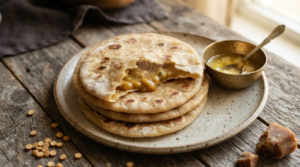
Soft, golden bobbatlu with a sweet chana dal and jaggery filling, served warm with ghee.
This Bobbatlu Recipe With Jaggery at a Glance
- What it is: a thin sweet flatbread stuffed with a chana dal and jaggery paste called poornam.
- Also called: Holige, Obbattu, Bakshalu and Puran Poli in different states.
- Best for: Ugadi, Sankranti, Ganesh Chaturthi and Diwali, since it stays soft for a day or two.
- Skill level: medium, because shaping takes a little practice.
- Makes: about 10 bobbatlu in roughly 1 hour 45 minutes.
Why This Bobbatlu Recipe With Jaggery Works
Most bobbatlu turn out hard for one of two reasons: either the dough was too stiff, or the dal was not cooked enough. This bobbatlu recipe with jaggery fixes both. The dough rests soft and submerged in oil, so it stretches thin like tissue. Meanwhile the dal is pressure-cooked until fully soft, which lets the jaggery blend into a smooth poornam instead of turning gritty.
Jaggery is the traditional sweetener here, and it does more than sweeten. It adds a warm, caramel-like depth that plain sugar cannot match. Because jaggery melts unevenly and often hides grit, this recipe melts and strains it first. That single step is why the filling stays silky.
Bobbatlu Recipe With Jaggery: Quick Recipe Card
| Detail | Value |
|---|---|
| Prep Time | 30 mins (plus 30 mins dough rest) |
| Cook Time | 45 mins |
| Total Time | 1 hr 45 mins |
| Servings | 10 bobbatlu |
| Course | Dessert / Festive sweet |
| Cuisine | Andhra, South Indian |
| Difficulty | Medium |
Ingredients for Bobbatlu Recipe With Jaggery
The ingredient list for this bobbatlu recipe with jaggery is short, so quality matters. Use fresh, soft jaggery and clean chana dal for the best result. Everything below yields about 10 pieces.
For the dough
- 1 cup whole wheat flour (atta)
- 1 cup all-purpose flour (maida)
- ¼ tsp turmeric powder, for the classic yellow tint (optional)
- ½ tsp salt
- ⅓ cup water, added slowly as needed
- 5 tbsp oil or ghee, for kneading
- Extra oil, to soak and rest the dough
- Ghee, for roasting
For the jaggery filling (poornam)
- 1 cup chana dal (split, husked Bengal gram), about 195 g
- 2.5 cups water, for pressure cooking
- 1 cup jaggery, grated or chopped, about 160-165 g
- ½ tsp cardamom powder
- ¼ tsp nutmeg powder (optional)
- 1 tbsp ghee, for cooking the filling
Step-by-Step Bobbatlu Recipe With Jaggery
Read all five steps of this bobbatlu recipe with jaggery once before you start. Because the dough needs to rest while the filling cools, a little planning saves time. Both parts can also be made a few hours ahead.
- Make the soft dough (15 mins plus rest). Sift the whole wheat flour, maida, turmeric and salt into a bowl, then add water slowly and mix into a soft dough. Now pour in 5 tablespoons of oil or ghee and knead for 7-8 minutes. The dough should feel very soft, glossy and slightly sticky, looser than roti dough. Place it in a bowl, pour a little extra oil over the top, cover, and rest it for at least 30 minutes.
- Cook the chana dal (10 mins). Rinse the chana dal well, then add it to a pressure cooker with 2.5 cups of water. Cook on medium heat for 6-7 whistles, or until the dal is completely soft and mashes easily. This step is the one people rush, so do not shortcut it. Drain every drop of excess water since leftover water makes the filling runny, and save that drained water for pappu or pulusu later.
- Make the jaggery poornam (15 mins). Melt the jaggery with 2 tablespoons of water on low heat, then strain it to remove grit. Blend the cooked dal into a smooth paste, then heat 1 tablespoon of ghee in a pan, add the dal and strained jaggery, and cook on low heat. Stir continuously for 10-12 minutes until it thickens and leaves the sides of the pan. Add cardamom and nutmeg, mix, then cool and divide into balls.
Shaping and Roasting the Bobbatlu
- Stuff and shape (10 mins). Pinch the dough into lemon-sized balls, then grease your fingers or a plastic sheet with oil. Flatten a dough ball, place a poornam ball in the center, and bring the edges up to seal it fully. Dust lightly with rice flour, then pat or roll into a thin disc. Roll gently, because too much pressure tears the seal.
- Roast on the tawa (10 mins). Heat a tawa on medium, then place the bobbatlu on it and roast until golden spots appear underneath. Flip, brush with ghee, and roast the other side. Both sides should look golden, not dark, so serve warm with a drizzle of ghee or a cup of milk on the side.
Getting the Poornam Right
The filling, or poornam, decides whether your bobbatlu succeed, so it is the heart of any good bobbatlu recipe with jaggery. A good poornam holds its shape when rolled into a ball and never oozes. If it feels wet, cook it a few minutes longer. If it turns dry and crumbly, sprinkle a teaspoon of warm milk and mix.
Undercooked dal is the most common mistake, because the jaggery then sets hard and the stuffing feels gritty. Lumps cause a second problem, since they push through the dough and make it split. So blend the mixture until smooth, and always cool it before shaping. A cool, firm poornam is far easier to seal inside soft dough.
Pro Tips for This Bobbatlu Recipe With Jaggery
In Andhra Pradesh during Ugadi, the smell of jaggery and cardamom fills the house long before the first bobbatlu hits the tawa. A few small habits from a traditional kitchen make a big difference to any bobbatlu recipe with jaggery. None of them are hard, yet each one quietly improves the final texture.
- Keep the dough loose: a soft, oil-rested dough rolls thin and puffs gently.
- Dust with rice flour: it stops tearing better than plain flour while rolling.
- Roast on medium: high heat browns the outside before the inside warms through.
- Roll on a greased sheet: patting on an oiled plastic sheet or banana leaf is more forgiving than a rolling pin.
- Strain the jaggery: it removes sand and grit that spoil the texture.
Regional Names and Variations
This sweet changes name and character as it crosses state lines, even though the idea stays the same. Knowing the differences helps you tweak the recipe to taste.
- Bobbatlu / Bakshalu: the Andhra and Telangana version, usually chana dal and jaggery, no coconut.
- Holige: the Karnataka style that often adds grated coconut to the filling.
- Obbattu: also from Karnataka, typically made without coconut.
- Puran Poli: the Maharashtra favourite, sometimes made with toor dal instead of chana dal.
You can swap chana dal for toor dal if you want a slightly different flavour. Similarly, half jaggery and half sugar gives a lighter colour, while pure jaggery keeps it traditional and deep.
Substitutions and Storage
Small swaps keep this recipe flexible when your pantry is short. Storage is simple too, so a big batch is worth the effort.
Easy substitutions
- Jaggery: palm jaggery or coconut sugar work if standard jaggery is unavailable.
- Lentils: toor dal replaces chana dal for a milder taste.
- Flour: use all whole wheat for more fibre, or a wheat-maida mix for softness.
How to store
- Keep cooked bobbatlu in an airtight box at room temperature for up to 2 days.
- Reheat on a tawa with a little ghee to refresh the texture.
- Refrigerate leftover poornam separately for up to 3 days.
- Freeze cooked bobbatlu between parchment sheets for up to a month, then reheat on a tawa.
How to Serve This Bobbatlu Recipe With Jaggery
Bobbatlu tastes best warm, with a spoon of melting ghee on top. Many families in Andhra serve it with a small bowl of warm milk, which softens each bite. During festivals it is also offered as naivedyam before the family eats. For a simple weekend treat, a warm bobbatlu with plain ghee needs nothing else.
Some homes also serve it with a thin coconut chutney on the side. Leftovers taste just as good the next morning, warmed briefly on a tawa.
Is Jaggery Healthier Than Sugar?
Jaggery is less refined than white sugar and carries small amounts of iron and minerals. That is why many home cooks prefer it in traditional sweets. Still, jaggery is largely sugar, so it raises blood glucose much like any sweetener. If you manage diabetes or watch your sugar intake, treat bobbatlu as an occasional festive dish and check with your doctor or dietitian before making it a habit.
Nutrition Information Per Serving
Each bobbatlu carries roughly 320 kcal, mostly from carbohydrates in the dough and jaggery. These are estimates for one piece and will shift with the amount of ghee you use.
| Nutrient | Approx. per bobbatlu |
|---|---|
| Calories | ≈ 320 kcal |
| Carbohydrates | ≈ 50 g |
| Protein | ≈ 6 g |
| Fat | ≈ 11 g |
| Sugar | ≈ 21 g |
| Fiber | ≈ 6 g |
These values are approximate and based on a standard jaggery-filled version. Read more about the wider Andhra cuisine this sweet belongs to, or the shared history of Puran Poli across India.
Final Thoughts
A good bobbatlu is soft, thin and gently sweet, and this bobbatlu recipe with jaggery comes down to two habits: a loose oiled dough and a fully cooked filling. Make the poornam ahead so shaping feels relaxed, and once you nail the first two or three, the rest of the batch flows quickly. Try it for your next Ugadi or Sankranti, and pair it with our Ugadi festival prasadam recipes for a full festive spread. For flour tweaks, our bobbatlu with maida guide is a handy companion, and more Diwali sweets round out the celebration.
FAQ: Bobbatlu Recipe With Jaggery
Why use jaggery instead of sugar in bobbatlu?
Jaggery gives a deeper, caramel-like sweetness that suits the earthy chana dal filling, which is why this bobbatlu recipe with jaggery skips plain sugar. It also adds a traditional colour and aroma that white sugar lacks. Because it can hide grit, melt and strain it before use.
Why does my bobbatlu filling turn out runny?
Runny poornam almost always means leftover water in the cooked dal. Drain the dal completely before blending. Then cook the filling until it leaves the sides of the pan and holds its shape.
Why does the dough tear while rolling?
Tearing usually comes from a stiff dough or a lumpy filling. Keep the dough soft and well-oiled, and blend the poornam smooth. Roll gently and dust with rice flour to prevent sticking.
Can bobbatlu be frozen?
Yes, cooked bobbatlu freezes well. Layer the pieces between parchment sheets in an airtight box for up to a month. Reheat straight on a tawa with a little ghee.
Can I make the dough ahead of time?
Yes, prepare the dough up to a day in advance. Cover and refrigerate it, then bring it back to room temperature before stuffing. This actually makes the dough easier to roll.
Can I use toor dal instead of chana dal?
Yes, toor dal works and gives a slightly milder, softer filling. It is the traditional choice for Maharashtrian puran poli. Cook it until fully soft, just as you would chana dal.
What is the difference between bobbatlu, holige and puran poli?
They are regional versions of the same sweet flatbread. Bobbatlu is the Andhra name, holige and obbattu are from Karnataka, and puran poli is the Maharashtrian version. Holige often adds coconut, while puran poli may use toor dal.
How long does bobbatlu stay fresh?
Bobbatlu stays soft at room temperature for up to 2 days in an airtight container. Refrigeration extends it a little longer. Warm it on a tawa with ghee before serving to bring back the softness.