Drumstick Sambar Recipe: Murungakkai Sambar Made Easy at Home
This drumstick sambar recipe gives you tender moringa pods sitting in a tangy toor dal gravy, and the whole thing takes about 45 minutes. Order of cooking matters far more than the ingredient list. Most home cooks stir the mashed dal in too early, so the lentils turn pasty while the pods stay stubbornly woody.
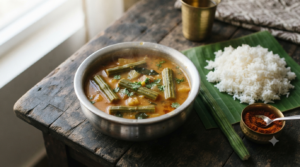
Tender drumstick pieces in a tangy toor dal gravy, finished with a fresh mustard and curry leaf tempering.
Cook the drumsticks first in a tamarind broth, then fold the dal in near the end. That one change is the backbone of this drumstick sambar recipe, because it fixes the two complaints people have about homemade sambar. According to USDA FoodData Central, 100 g of raw drumstick pods carry about 141 mg of vitamin C, so the vegetable earns its place well beyond flavour.
Drumstick Sambar Recipe at a Glance
Here is the short version of the drumstick sambar recipe before the detail, because sometimes you just need the numbers.
- Total time: 45 minutes, of which about 15 minutes is hands-on prep
- Serves: 4 people with rice, or 3 as a generous tiffin side
- Key vegetable: 2 fresh drumsticks (murungakkai), cut into 2-3 inch batons
- Sour agent: tamarind, added as strained pulp rather than paste
- Cuisine: South Indian, everyday home style with onion and tomato
- Skill level: easy, though the drumsticks need watching
| Detail | Value |
|---|---|
| Prep time | 15 minutes |
| Cook time | 30 minutes |
| Total time | 45 minutes |
| Servings | 4 |
| Course | Main, served with rice or idli |
| Difficulty | Easy |
Why This Drumstick Sambar Recipe Works
Toor dal and drumsticks want completely different treatment. Lentils need 15 minutes of hard pressure cooking, whereas the pods soften in roughly 8 to 10 minutes of gentle simmering. Cook them together and one of them always loses.
So this drumstick sambar recipe separates them. The dal cooks alone in the pressure cooker while the drumsticks simmer in the tamarind and sambar powder broth. Because the pods absorb that sour, spiced liquid directly, the flavour sits inside the vegetable instead of only around it.
The dal joins last, purely as a thickener and a protein base. Since it is already cooked, it needs only eight minutes of simmering to blend. That short final simmer also keeps the gravy from turning gluey, which is what happens when mashed lentils boil for twenty minutes.
Drumstick Sambar Recipe Ingredients With Exact Quantities
Everything below is measured for four servings of this drumstick sambar recipe. Use standard Indian measures, where one cup is 240 ml and one tablespoon is 15 ml.
- 1/2 cup toor dal (split pigeon peas), rinsed twice
- 2 fresh drumsticks, cut into 2-3 inch pieces (about 10-12 pieces)
- 1 medium onion, finely sliced
- 1 medium tomato, chopped
- 1 tbsp tamarind, soaked in 1/4 cup warm water and strained
- 1 to 1.5 tbsp sambar powder, adjusted to your brand
- 1/4 tsp turmeric powder
- 1/2 tsp jaggery, optional but recommended
- Salt, roughly 1 tsp to start
- 2.5 to 3 cups water, added in stages
- 2 tbsp oil or ghee, split between two temperings
- 1 tsp mustard seeds
- 1-2 dry red chillies
- 1/2 tsp fenugreek seeds
- 10-12 curry leaves
- A pinch of asafoetida (hing)
- 2 tbsp fresh coriander leaves, chopped, for garnish
Sambar powder is the one ingredient a drumstick sambar recipe cannot be strict about. Strong commercial blends and freshly ground homemade sambar powder behave very differently. Start at one tablespoon, taste after the simmer, and add more only if the gravy tastes thin.
How to Choose and Cut Drumsticks
A good drumstick sambar recipe really starts at the vegetable shop. Pick pods that are slim, deep green and slightly flexible.
If a pod bends without snapping and shows no fat bulges along its length, it is young. Fat, pale, rigid pods are mature, and their flesh turns fibrous no matter how long you cook them.
Scrape the ridged edges lightly with a knife before cutting, since those strings never soften. Then cut across into 2-3 inch batons so each person gets two or three pieces. Drumsticks sell almost year round in South Indian markets, although the pods are usually cheapest and most tender in the spring months.
How to Make Drumstick Sambar Recipe Step by Step
Step 1: Cook the dal and soak the tamarind (15 minutes)
Put the rinsed toor dal in a pressure cooker with 3/4 cup water and the turmeric. Cook for three to four whistles on medium heat until the grains collapse when pressed. Once the pressure drops naturally, whisk the dal smooth and set it aside.
While the dal cooks, soak the tamarind in 1/4 cup warm water. After five minutes, squeeze it between your fingers and strain the liquid. Discard the fibre, because those strands ruin the texture of an otherwise smooth sambar.
Step 2: Build the base and cook the drumsticks (12 minutes)
Heat 1 tbsp oil or ghee in a heavy pan. Add mustard seeds first and wait for them to pop, then add fenugreek seeds, dry red chillies, curry leaves and hing. Sauté for 30 seconds until the fenugreek turns a shade darker.
Add the sliced onion and cook for two to three minutes until translucent. Next, add the tomato and cook another two minutes until it softens. Now add the drumstick pieces, 1 cup water and salt, then cover and simmer for 8 to 10 minutes.
The pods are ready when a knife slides into the flesh but the piece still holds its shape. Do not cook them until they split, since drumsticks collapse very suddenly at the end.
Step 3: Add sour, spice and dal (10 minutes)
Pour in the tamarind water and stir in the sambar powder and jaggery. Simmer this uncovered for four minutes, because raw tamarind and raw spice powder both need heat to lose their edge. You will smell the change when it happens.
Then add the whisked dal along with 1 to 1.5 cups water, adjusting for the thickness you want. Simmer gently for six to eight more minutes. Taste for salt only now, since tamarind makes a correctly salted gravy taste under-seasoned.
Step 4: Finish with a fresh tempering (3 minutes)
Heat the remaining 1 tbsp oil or ghee in a small pan until it shimmers. Add mustard seeds, a few curry leaves and a broken red chilli, then wait for the crackle. Pour the tempering over the sambar, scatter the coriander, and cover the pan for two minutes so the aroma settles in.
Drumstick Sambar Recipe in a Pressure Cooker
On a weekday you can compress this drumstick sambar recipe into one vessel. Temper directly in the cooker, add the onion, tomato, drumsticks, rinsed dal, turmeric, salt and 2.5 cups water together. Cook for exactly two whistles on medium, then release the pressure immediately.
After opening, stir in the tamarind water and sambar powder and simmer uncovered for five minutes. Finish with the second tempering as usual. The trade-off is honest: the pods come out softer and slightly less defined, though the flavour holds up well.
Regional Twists on This Drumstick Sambar Recipe
The same vegetable is treated quite differently across South India. Each drumstick sambar recipe below is a real household style, not a garnish swap, so pick the one that matches the meal you are planning.
| Style | What changes | Serve with |
|---|---|---|
| Tamil Brahmin (Iyer) | No onion or garlic; shallots and tomato dropped; more fenugreek | Steamed rice and poriyal |
| Madras hotel style | Whole shallots, a garlic clove or two, thinner gravy | Idli and medu vada |
| Karnataka (nuggekai) | Fresh coconut paste plus jaggery, noticeably sweeter | Rice or bisi bele style meals |
| Andhra (munagakaya) | More chilli, less jaggery, sharper tamarind | Hot rice with ghee |
If you want the breakfast version instead, the gravy needs to be thinner and slightly sweeter, which is exactly how a tiffin sambar for idli is built. For a seasonal change, the same base works beautifully with raw mango, as in this Andhra mango sambar.
Getting the Consistency Right for Rice or Idli
A drumstick sambar recipe for rice and one for idli differ mainly in water. Consistency decides whether the dish works with your meal. For rice, aim for a gravy that coats the back of a spoon and drips slowly. Use about 2.5 cups of total water for that.
For idli or dosa, go thinner so it soaks in rather than sitting on top. Add roughly half a cup more water and simmer an extra two minutes. Remember that sambar thickens noticeably as it cools, so leave it looser than you think you need.
What Can Go Wrong With a Drumstick Sambar Recipe
A published drumstick sambar recipe usually stops at the happy path. These are the failures that actually happen in home kitchens, along with what recovers each one.
| Problem | Cause | Fix |
|---|---|---|
| Drumsticks stay woody | Mature pods, or too little simmering time | Simmer 5 more minutes covered; next time buy slimmer pods |
| Pods fall apart | Pressure cooked with the dal | Serve as is; cook them separately next time |
| Raw, dusty spice taste | Sambar powder added at the very end | Simmer four more minutes uncovered |
| Bitter aftertaste | Burnt fenugreek or too much of it | Add jaggery and a spoon of coconut paste to round it off |
| Too sour | Tamarind squeezed too strong | Add water plus 1/2 tsp jaggery, then re-simmer |
| Gravy turns pasty | Dal boiled too long after mashing | Loosen with hot water; add dal later next time |
| Tastes flat | Salted before the tamarind went in | Correct salt at the end, then add a fresh tempering |
None of these need a restart. Sambar is forgiving because water, jaggery and a second tempering can rescue almost any batch.
Pro Tips Most Recipes Skip
These four habits change a drumstick sambar recipe more than any ingredient swap does.
Taste for salt only after the tamarind goes in. Sourness suppresses how we register salt, so an early correction almost always leads to an over-salted pot.
Keep half a teaspoon of jaggery in the recipe even if you dislike sweet sambar. It will not read as sweetness at that quantity, yet it softens the tamarind and pulls the spices together.
Do not skip the second tempering. The first one flavours the base while it cooks, whereas the finishing tadka sits on top and carries the aroma to the table. Cover the pan for two minutes afterwards so nothing escapes.
Finally, avoid stirring vigorously once the drumsticks are cooked. Stir from the bottom with a gentle lift instead, because the pods break easily at that stage.
How to Actually Eat a Drumstick
This trips up first-time eaters, and no recipe card explains it. The tough outer skin is not eaten. Pick up a piece, split it lengthwise with your fingers or teeth, and scrape out the soft pulp and seeds.
Then discard the fibrous shell on the side of your plate. Because the pulp holds a lot of the gravy, that scrape is where most of the flavour actually lives. Children under five should be given the pulp already scraped out, since the fibre is a genuine choking risk.
Drumstick Sambar Recipe Nutrition and Calories
A single serving of this drumstick sambar recipe is light. The figures below are calculated from the ingredient quantities above and divided by four servings. Treat them as estimates, because oil quantity and sambar powder brand shift the totals.
| Nutrient | Approx. per serving |
|---|---|
| Calories | 155-185 kcal |
| Protein | 6-8 g |
| Fat | 6-8 g |
| Carbohydrates | 18-22 g |
| Dietary fibre | 4-6 g |
| Sodium | Varies with added salt |
The pods themselves are light. USDA FoodData Central lists raw drumstick pods at roughly 37 kcal, 2.1 g protein and 3.2 g fibre per 100 g, with about 141 mg of vitamin C. Most of the calories in a serving therefore come from the dal and the oil, not the vegetable.
One caution worth stating plainly: the pods of Moringa oleifera eaten as food are not the same as concentrated moringa bark, root or supplement powders, which carry different safety considerations. If you are pregnant, breastfeeding or managing a medical condition, speak to your doctor before taking any moringa supplement. This is general information, not medical advice.
Substitutions, Storage and Reheating
This drumstick sambar recipe tolerates swaps well, so cook it with what your kitchen actually has. These are the changes that hold up.
- No tamarind: use 1 tsp lemon juice stirred in off the heat, which gives a brighter, less deep sourness
- Creamier body: swap a quarter of the toor dal for masoor dal
- Vegan version: replace ghee with coconut or sesame oil
- No fresh drumsticks: frozen pods work, though add them straight from frozen and shorten the simmer
- Extra vegetables: shallots, brinjal or pumpkin sit well alongside, but keep the drumstick as the main pod
Storage is simple, although the pods and the gravy behave differently once cooled.
- Refrigerate in an airtight container for up to 3 days
- Freeze for up to 1 month, although the pods soften considerably on thawing
- Reheat gently with a splash of water, since the gravy thickens in the fridge
- Add a fresh tempering after reheating so the aroma returns
What to Serve With It
A drumstick sambar recipe belongs to a full plate rather than a bowl on its own. Hot steamed rice with a teaspoon of ghee is the classic pairing, along with a dry vegetable poriyal on the side. For breakfast, it works with idli, dosa, uttapam or medu vada.
A papad and a spoon of curd round out a full meal. If you like drumstick as an ingredient, the leaves are equally useful, as in these moringa leaves parathas.
Before You Cook This Drumstick Sambar Recipe Again
The success of this drumstick sambar recipe rests on three decisions. Buy slim, flexible pods; cook them in the tamarind broth before the dal joins; and salt only after the sourness is in. Get those right and the rest is adjustment to taste.
Keep the sambar powder quantity flexible rather than fixed, because no two blends are equal in strength. Then finish with a fresh tempering every single time. That last thirty seconds is what separates an everyday sambar from one people remember.
Frequently Asked Questions
Can I make this drumstick sambar recipe in a pressure cooker?
Yes, and it works in one vessel. Temper in the cooker, add the drumsticks, dal, vegetables and water together, then cook for two whistles only. Stir in the tamarind and sambar powder afterwards and simmer five minutes uncovered. The pods will be softer than in the stovetop method.
How long do drumsticks take to cook in sambar?
Tender pods need 8 to 10 minutes of covered simmering in liquid. Mature, thicker pods can take 15 minutes and may still stay fibrous. A knife should enter the flesh easily while the piece keeps its shape.
Should I peel drumsticks before cooking?
Do not peel them fully, because the skin holds each piece together during simmering. Scrape only the stringy ridges along the edges with a knife. You separate the skin from the pulp at the table, not in the kitchen.
Why does my sambar taste bitter?
Burnt or excessive fenugreek seeds are the usual cause, since they turn sharply bitter past a light brown. Overcooked tamarind can add to it. Half a teaspoon of jaggery and a spoon of coconut paste will soften the bitterness noticeably.
Can I use sambar powder and rasam powder interchangeably?
No, they are built for different dishes. Sambar powder is coriander-heavy and suits a thick lentil gravy, whereas rasam powder leans on pepper and cumin for a thin, peppery broth. Using rasam powder here gives a sharp, watery result.
Can I make drumstick sambar ahead of time?
Yes. Cook it up to the end of step 3 and refrigerate, then reheat and add the final tempering just before serving. The flavour actually deepens overnight, although you will need extra water when reheating.
Can I freeze drumstick sambar?
Freeze it for up to one month in an airtight container. Thaw overnight in the refrigerator and reheat gently on the stovetop. Be aware that the pods lose structure after freezing, so freeze the gravy separately if texture matters to you.
Which sambar powder is best for this drumstick sambar recipe?
Freshly ground homemade powder gives the best aroma, because the roasted coriander and chilli lose potency within weeks. Good commercial blends work too, though they are often stronger. Start with one tablespoon and increase only after tasting.
Is this drumstick sambar recipe healthy for daily meals?
A drumstick sambar recipe like this one fits an everyday menu well, since a serving is modest in calories and supplies protein and fibre from the lentils. Oil quantity and salt are the two levers to watch. Anyone on a sodium-restricted or medically supervised diet should follow their own dietitian’s guidance.