Vada Curry Without Frying: Easy Steamed Tamil Nadu Method
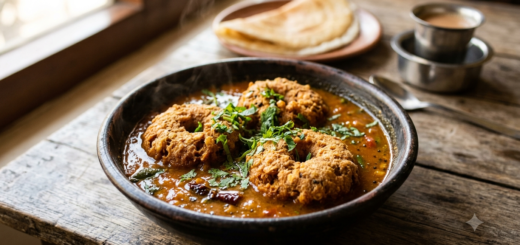
Vada curry without frying gives you the deep, spicy taste of a Tamil Nadu roadside tiffin favourite, but with a fraction of the oil. Instead of deep-frying lentil fritters, you steam them, so the dish turns light without losing its soul. This version leans on soaked chana dal, a fragrant onion-tomato gravy, and a few smart shortcuts from South Indian home kitchens.
It pairs beautifully with idli, dosa, or hot steamed rice. If you have wanted the flavour without the frying pan and the guilt, this vada curry without frying method is exactly what you need.
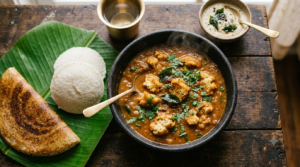
Steamed vada curry without frying, served hot with soft idli.
One honest note before you start, because it helps you set expectations. Classic vada curry uses crisp fried vadai that hold a bite even after simmering. When you steam the vadai instead, the dish sits closer to paruppu urundai kuzhambu, the soft lentil-dumpling gravy.
It is still rich and satisfying, just gentler in texture. That trade is the whole point of cooking this vada curry without frying at home.
What Makes This Vada Curry Without Frying Special
Most recipes online simply drop the frying step and hope for the best. This one is built around steaming from the ground up, so the vadai actually hold together in the gravy. Because the lentils are ground coarse and steamed firm, they soak up flavour without dissolving into mush. That single detail separates a good no-fry version from a soggy one.
You also get real choices here. If a steamer feels fussy, you can air-fry or dry-roast the same batter and still skip the oil bath. Each route gives a slightly different texture, so you pick what suits your kitchen and your mood. That flexibility is rare in most single-method recipes.
Vada Curry Without Frying at a Glance
Here is the quick snapshot before you commit to the full method. Keep it handy while you shop and prep.
- Main base: coarsely ground chana dal (kadalai paruppu), steamed instead of fried.
- Gravy: onion, tomato, ginger-garlic, and everyday South Indian spices.
- Best served with: idli, dosa, set dosa, or plain rice.
- Total time: about 1 hour, plus 2 to 3 hours of soaking.
- Diet notes: vegan, and gluten-free if you skip or verify the rice flour.
| Detail | Value |
|---|---|
| Prep time | 20 mins (plus soaking) |
| Cook time | 40 mins |
| Servings | 4 people |
| Difficulty | Medium |
Why Make Vada Curry Without Frying?
Deep-frying adds crunch, yet it also soaks the vadai in oil and heats up your whole kitchen. Steaming keeps the lentil goodness intact while cutting the fat sharply. Because chana dal is already high in protein and fibre, a lighter cooking method lets those nutrients shine through. You end up with a curry that feels like comfort food but sits easier afterward.
There is a practical win too. Steamed vadai need no oil temperature check, no splatter, and no leftover frying oil to store. So vada curry without frying is friendlier for beginners and for anyone cooking in a small space. It is also easier to scale up when guests arrive.
Ingredients You’ll Need
For the Steamed Vadai (No Frying)
- 1 cup chana dal (split Bengal gram), washed and soaked 2 to 3 hours
- 2 dried red chillies
- 1 tsp fennel seeds (saunf)
- 10 to 12 curry leaves, chopped
- ½ cup finely chopped coriander leaves
- ¾ tsp salt, adjusted to taste
- 1 tsp rice flour, optional, for light binding
For the Curry Gravy
- 2 tbsp oil (groundnut or any neutral vegetable oil)
- 1 tsp mustard seeds
- 1 tsp cumin seeds
- 1 large onion, finely chopped
- 1 tbsp ginger-garlic paste
- 2 medium tomatoes, finely chopped
- ½ tsp turmeric powder
- 1 tsp red chilli powder
- 1 to 2 tsp coriander powder
- Salt to taste
- 1 to 2 cups hot water, to reach the consistency you like
- 2 tbsp chopped coriander, for garnish
Fennel seeds do quiet heavy lifting here, so do not skip them. They give the vadai that unmistakable tiffin-shop aroma. A tablespoon of thick coconut milk at the end is optional, yet it rounds the gravy nicely.
How to Make Vada Curry Without Frying, Step by Step
Soak and Grind the Dal
Drain the chana dal after it has soaked for 2 to 3 hours. Grind it coarse with the red chillies and fennel seeds, adding no water at all. You want a grainy, sandy texture, never a smooth paste, because a paste turns gummy after steaming. Now mix in the curry leaves, coriander, salt, and rice flour by hand.
Steam the Vadai
Lightly grease an idli plate and spoon the mixture into each mould. Steam for 12 to 15 minutes until the tops feel set and firm to the touch. Let them cool a little, then break them into bite-sized pieces. These rustic chunks are your vada pieces, and their rough edges grab the gravy well.
Build the Onion-Tomato Gravy
Heat the oil in a heavy pan on medium flame. When it shimmers, add mustard and cumin seeds and wait for them to splutter. After about 30 seconds, tip in the onions and sauté for 4 to 5 minutes until soft. Stir in the ginger-garlic paste next, cooking until the raw smell fades.
Add Spices, Then Simmer
Add turmeric, red chilli powder, and coriander powder, and stir so they bloom in the oil. Now fold in the tomatoes and cook 8 to 10 minutes until they collapse and the oil separates. Slide in the steamed vadai pieces and pour in the hot water gradually. Simmer gently for 10 minutes on low heat so the vadai drink up the flavour, then taste, adjust salt, and finish with coriander.
Steamed vs Air-Fried vs Dry-Roasted Vadai
The steamed route is the softest and the lightest, so it suits everyday meals. If you want a firmer bite that stands up longer in gravy, the air fryer wins. Dry-roasting is the quickest, though the vadai stay crumbly rather than whole. This quick comparison helps you decide before you start.
| Method | Texture | Best for |
|---|---|---|
| Steamed | Soft, absorbs gravy fast | Lightest, everyday cooking |
| Air-fried (180°C, 10 mins) | Firm, holds shape | A bite closer to fried vadai |
| Dry-roasted (1 tsp oil) | Crumbly, quick | Fastest, no equipment |
Pro Tips for the Best Vada Curry Without Frying
A few small habits make a real difference to the final dish. These are the details that separate a home cook’s plate from a tiffin-shop one.
- Grind dry and coarse. Water in the batter is the top reason vadai turn mushy, so drain the dal well first.
- Do not over-steam. Firm edges help the pieces hold together, while soggy ones fall apart in the gravy.
- Add vadai late. Because they keep soaking liquid, drop them in shortly before serving, not an hour ahead.
- Handle the hot plate carefully. Steam burns sneak up on you, so use a cloth when lifting the idli plate.
- Want it richer? A spoon of coconut milk or a little roasted-coconut paste deepens the gravy the Chettinad way.
Mistakes to Avoid with Vada Curry Without Frying
Even a simple vada curry without frying can go sideways, and the reasons are usually the same handful. Watch for these and you will get it right the first time.
Grinding the dal too fine is the biggest culprit, since it makes the vadai dense and pasty. Over-soaking does similar damage, because waterlogged dal will not hold shape. Rushing the gravy is another trap, as under-cooked tomatoes leave a raw, sour edge. Finally, adding too much water at once thins the curry, so pour it in slowly and stop when the consistency looks right.
Tasty Variations Worth Trying
This dish has cousins across South India, and each one is worth a weekend. Once you master the no-fry base, these swaps come easily. They also help you use up whatever dal is in the pantry.
- Kerala style: the Kerala vada curry adds coconut and a softer, milder gravy.
- Chettinad style: the Chettinad version brings bay leaf, cinnamon, and bolder spice.
- Restaurant style: try the Saravana Bhavan-style vada curry for that hotel-menu flavour.
- Medu vada base: swap in a medu vada curry made with urad dal for a fluffier bite.
What to Serve With Vada Curry
This curry was practically made for a South Indian breakfast spread. It clings to soft idli and slips into the folds of a crisp dosa. Set dosa is the classic Chennai pairing, and locals swear by it. Plain steamed rice works too when you want a fuller meal.
For a complete tiffin plate, serve it alongside coconut chutney and a bowl of sambar. A warm millet pongal on the side rounds things out if you are feeding a crowd. Because the gravy is fairly spicy, a cooling side balances the plate nicely.
Storage, Make-Ahead, and Reheating
You can prep smartly and still serve this fresh. Store leftover curry in an airtight container for up to 2 days in the fridge. Reheat gently on low heat, and splash in a little water if the gravy has thickened. Since the vadai keep drinking liquid, expect the curry to firm up overnight.
For longer storage, freeze only the gravy base without the vadai for up to a month. Thaw it, warm it through, then add freshly steamed vadai just before serving. This keeps the texture close to a just-made batch. Making the base ahead also turns a weeknight dinner into a ten-minute job.
Nutrition Information (Approximate)
These figures are rough estimates per serving, not lab-tested values, so treat them as a guide. Your exact numbers will shift with the oil, portion size, and any extras like coconut milk.
| Nutrient | Approx. per serving |
|---|---|
| Calories | ~305 kcal |
| Protein | ~12 g |
| Fat | ~9 g |
| Carbohydrates | ~45 g |
| Fibre | ~8 g |
Because the vadai are steamed rather than fried, the fat here lands well below a traditional plate. The protein and fibre come mostly from the chana dal, which makes this a filling vegetarian option.
Before You Cook: The Bottom Line
Vada curry without frying proves you can keep a beloved Tamil Nadu classic on the table without the oil and the fuss. Steam the vadai firm, build a proper onion-tomato gravy, and add the pieces late so they stay whole. Serve it hot with idli, dosa, or rice, and it rarely lasts long. Try it once, and this lighter method may quietly replace your fried routine.
Frequently Asked Questions
Can I make vada curry without frying and without a steamer?
Yes, you can dry-roast the dal mixture on a non-stick pan with just 1 tsp of oil until crumbly, then add it to the curry. It will not be as soft as steamed vadai, but the flavour still comes through. An air fryer at 180°C for about 10 minutes is another easy no-fry route.
Why did my steamed vadai turn mushy?
Mushy vadai almost always trace back to a wet or over-ground batter. Drain the soaked dal thoroughly, grind it coarse without water, and avoid over-soaking beyond 3 hours. Firm, grainy batter holds its shape far better after steaming.
Is this the same as authentic Tamil Nadu vada curry?
The flavours are the same, though the texture differs a little. Traditional vada curry uses fried vadai, so steaming makes this version closer to a soft paruppu urundai kuzhambu. It is a lighter cousin of the classic rather than an exact match.
What can I use instead of chana dal?
Moong dal (green gram) works well as a substitute, but reduce the soaking time to about 1 to 1.5 hours. The vadai will be a touch softer. Some cooks blend a little toor dal with chana dal for extra body.
What Should I Serve With Vada Curry Without Frying?
This vada curry goes beautifully with idli, dosa, set dosa, or plain steamed rice. In Chennai, set dosa with vada curry is a much-loved breakfast combo. Coconut chutney on the side completes the plate.
Can I Freeze Vada Curry Without Frying?
Freeze only the gravy base, without the vadai, for up to a month. Thaw and reheat it, then fold in freshly steamed vadai for the best texture. Freezing the vadai in the gravy tends to make them fall apart.
Is vada curry without frying healthy?
It is lighter than the fried original because you skip the oil bath, and chana dal brings solid protein and fibre. It is not a medical or weight-loss remedy, just a sensible everyday choice. As with any dish, portion size and your overall diet matter most.