Gutti Vankaya Masala Curry: Authentic Andhra Stuffed Brinjal
A Gutti Vankaya Masala Curry usually fails for one reason: the stuffing slides out and the dish collapses into a loose brinjal sabzi. Because the masala was ground too wet, it never had a chance to stay inside the slit. The fix happens at the grinder, well before the pan gets hot. Below you get exact quantities, real timings, and the corrections most published versions of this recipe quietly skip.
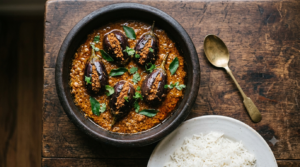
Stuffed baby brinjals simmered in a thick roasted peanut and tamarind masala, finished with fresh coriander.
Gutti Vankaya Masala Curry is the thick roasted-masala version cooked in Andhra homes, where peanuts and dry coconut carry the body and tamarind supplies the sour edge. It is naturally vegan, and it stays gluten-free if you check one ingredient that most recipes never mention.
Gutti Vankaya Masala Curry at a Glance
- Cuisine: Andhra Pradesh and Telangana, South India
- Meaning: “gutti” means stuffed, while “vankaya” means brinjal in Telugu
- Prep time: 30 minutes, of which 15 minutes is tamarind soaking
- Cook time: 35–40 minutes on a kadai, or 12–15 minutes in a pressure cooker
- Serves: 4 people, using 12–14 small brinjals
- Difficulty: intermediate, since the stuffing step needs a light hand
- Allergens: peanuts, and sesame if you add it
| Detail | Value |
|---|---|
| Prep time | 30 minutes |
| Cook time | 40 minutes |
| Total time | 70 minutes |
| Servings | 4 |
| Course | Main side dish with rice or roti |
How Gutti Vankaya Masala Curry Differs From Kura and Vepudu
Gutti Vankaya Masala Curry is the gravy version, built on a ground roasted masala and finished with tamarind extract. Kura is the everyday tangy curry, usually looser and lighter on peanuts. Vepudu and fry versions cook down almost dry, so the brinjals brown at the edges instead of simmering.
That distinction matters at the stove. A masala curry wants a thick, glossy gravy that clings to rice. Meanwhile a vepudu wants very little water, because moisture stops the browning.
| Style | Texture | Best with |
|---|---|---|
| Masala curry | Thick, glossy gravy | Steamed rice, ghee |
| Kura | Lighter, tangier gravy | Rice, sambar meal |
| Vepudu / fry | Nearly dry, browned | Roti, jowar rotte |
If a drier finish suits your table better, our Gutti Vankaya Vepudu recipe uses the same brinjals with less water. For the lighter tamarind-forward version, see the Gutti Vankaya Kura recipe.
Ingredients for Gutti Vankaya Masala Curry
Main ingredients
- 12–14 small tender brinjals, roughly 500 g, washed and dried
- 1 tablespoon tamarind, soaked in ½ cup warm water
- 2 tablespoons oil, preferably cold-pressed sesame or groundnut oil
- ½ teaspoon mustard seeds
- ½ teaspoon cumin seeds
- ½ teaspoon urad dal, which is split black gram
- 1 sprig curry leaves
- ½ cup finely chopped onion
- 1 tablespoon ginger-garlic paste
- 1 to 1½ teaspoons salt, adjusted at the end
- 2 tablespoons chopped coriander leaves
For the roasted masala
- ⅓ cup raw peanuts, about 50 g
- 2 tablespoons dry coconut, grated or desiccated
- 2 tablespoons white sesame seeds, optional but traditional
- 1 tablespoon coriander seeds
- ½ teaspoon cumin seeds
- ¼ teaspoon fenugreek seeds, called methi
- 3–4 dry red chillies, adjusted to taste
- ½ teaspoon turmeric powder
Ingredient notes that change the result
Use ⅓ cup peanuts rather than a smaller amount, because 12–14 brinjals need real volume of masala. A quarter cup leaves you scraping the mixer, and the gravy ends up thin.
Sesame seeds are optional here, yet they are what many Rayalaseema kitchens rely on. They add a bitter-nutty depth that peanuts alone cannot reach. Skip them if allergies are a concern.
Choose a hing, or asafoetida, that states gluten-free on the pack if that matters to you. Many Indian compounded hing brands use wheat flour as a carrier, so the dish stops being gluten-free the moment you add it.
Choosing and Slitting Brinjals for Gutti Vankaya Masala Curry
Pick small, firm, glossy brinjals of roughly equal size, since uneven sizes cook unevenly. A brinjal that feels light for its size is usually seedy and slightly bitter. Press the skin gently, and reject any that stay dented.
Keep the stalk on. It holds the brinjal together while it simmers, so the quarters do not fall apart in the gravy.
Make a deep cross slit from the base upward, stopping about a centimetre short of the stalk. Then drop the slit brinjals into salted water for 10 minutes. This prevents browning and softens the flesh a little before stuffing.
How to Make Gutti Vankaya Masala Curry Step by Step
Step 1: Extract the tamarind, 15 minutes
Soak 1 tablespoon tamarind in ½ cup warm water for 15 minutes. Squeeze thoroughly and strain, which gives roughly ⅓ cup of extract. Set it aside for the gravy, and do not add it to the grinder.
Step 2: Roast the masala, 10 minutes
Dry roast the peanuts first on low heat until the skins darken and split, about 3–4 minutes. Remove them, then roast coriander seeds, cumin, fenugreek and dry chillies until fragrant. Add sesame seeds and dry coconut last, because both burn fast. Cool everything completely before grinding.
Step 3: Grind thick, not wet, 5 minutes
Grind the cooled mixture with turmeric and ½ teaspoon salt into a coarse, dense paste. Add water only one teaspoon at a time, up to about 2 tablespoons total. The paste should hold its shape on a spoon, since a wet paste will run straight out of the brinjals.
Step 4: Stuff the brinjals, 10 minutes
Drain the soaked brinjals and pat them dry. Open each slit gently and press the masala in with a small spoon or your thumb. Reserve roughly a third of the masala for the gravy.
Step 5: Temper and simmer, 25 minutes
Heat 2 tablespoons oil in a wide heavy pan. Add mustard seeds, and when they crackle, add cumin and urad dal. Toss in curry leaves, then sauté the onion until translucent. Add ginger-garlic paste and cook for a minute until the raw smell goes.
Stir in the reserved masala and fry it for 2–3 minutes on low heat. Now add the tamarind extract and about ½ cup water. Place the stuffed brinjals upright in the pan, then sprinkle the remaining salt over them.
Cover and simmer on low for 20–25 minutes. Turn the brinjals gently twice, never stirring hard. The curry is done when a knife slides through easily and oil beads at the surface.
Step 6: Rest before serving, 15 minutes
Switch off the heat and leave the pan covered for 15 minutes. Gutti Vankaya Masala Curry improves sharply with this rest. The brinjals keep absorbing the gravy while they sit, so the flavour deepens noticeably. Garnish with coriander just before serving.
Kadai or Pressure Cooker: Which Method Suits You
A wide kadai gives better control over Gutti Vankaya Masala Curry and a glossier gravy, although it takes 20–25 minutes. Use it when you want the brinjals to hold their shape for guests.
A pressure cooker cuts the time to roughly 2 whistles, or about 12–15 minutes on medium heat. However the brinjals soften quickly, so release the pressure naturally and open only after it settles. Overcooking by even two minutes turns them to pulp.
Troubleshooting Gutti Vankaya Masala Curry
| Problem | Likely cause | Fix |
|---|---|---|
| Stuffing leaks out | Masala ground too wet | Grind drier, add water by the teaspoon |
| Bitter aftertaste | Burnt fenugreek or old brinjals | Roast methi last, buy firm brinjals |
| Brinjals break apart | Stirred too often, stalk removed | Turn gently twice, keep the stalk |
| Gravy stays thin | Too much water, too little masala | Simmer uncovered 5 minutes |
| Raw masala taste | Reserved paste not fried | Fry the paste 2–3 minutes first |
| Too sour | Excess tamarind | Add ½ teaspoon jaggery |
Bitterness in Gutti Vankaya Masala Curry deserves a note of its own. It usually comes from the brinjal rather than the spices, especially when the vegetable is large or has sat too long. Small tender brinjals with pale, tightly packed seeds rarely turn bitter.
Pro Tips From an Andhra Kitchen
Roast the peanuts separately instead of throwing everything into the pan at once. Peanuts need longer than coriander seeds, so a single batch always leaves something under-roasted or scorched.
Use cold-pressed sesame oil if you can find it, because it carries the roasted masala better than refined oil. Groundnut oil works well too, and it echoes the peanut in the stuffing.
Add a half teaspoon of jaggery near the end. It does not sweeten the curry, yet it rounds the tamarind sharpness the way experienced cooks expect.
Finally, resist the urge to double the water. Brinjals release moisture as they cook, so a curry that looks tight at the start usually loosens by itself.
Substitutions, Storage and Allergy Notes
- No peanuts: use roasted cashews or double the sesame and dry coconut
- No tamarind: add 1 tablespoon lemon juice at the end, though the tang is brighter and less deep
- Milder heat: deseed the dry chillies before roasting
- No fenugreek: use a small pinch of fenugreek powder instead
Refrigerate leftovers in an airtight container for up to 3 days. Reheat gently with a splash of water so the gravy loosens without splitting.
Freezing is not recommended, despite what many recipe pages claim. Cooked brinjal cells collapse on thawing, and the texture turns watery and grey.
This dish contains peanuts, and sesame when you include it. Both are recognised major allergens under India’s food labelling rules published by the Food Safety and Standards Authority of India. Tell guests before serving, since a peanut-based masala is not obvious from the appearance of a stuffed brinjal.
Nutrition Information, Approximate
| Per serving | Estimate |
|---|---|
| Calories | 190–230 kcal |
| Carbohydrates | 13–16 g |
| Protein | 5–7 g |
| Fat | 14–18 g |
| Fibre | 5–7 g |
These figures are estimates calculated from the ingredient quantities above, divided across four servings. Most of the fat comes from the 2 tablespoons of oil and the peanuts, so reducing either lowers the total noticeably.
Values shift with brinjal size, oil absorption and portion size, and they are not a substitute for professional dietary advice. For verified reference data, check the USDA FoodData Central database or the Indian food composition tables published by the ICMR-National Institute of Nutrition.
What to Serve With Gutti Vankaya Masala Curry
Hot steamed rice with a spoon of ghee is the classic pairing, because plain rice carries the thick masala well. Jowar rotte and bajra roti also suit it, especially in winter.
Round the meal out with a thin dal, a rasam, or plain curd. A tamarind chickpea curry makes a heavier alternative for the same tamarind-loving palate. For breakfast the next morning, leftovers pair surprisingly well with Andhra pesarattu.
Before You Cook
Three things decide whether a Gutti Vankaya Masala Curry works. Grind the masala thick, keep the tamarind out of the grinder, and let the curry rest before you serve it. Everything else is adjustment to taste.
Buy small brinjals of even size, and buy them the same day if possible. That single choice prevents most bitterness complaints. Start with the tamarind soak, since it runs while you roast the masala.
Frequently Asked Questions
Can I make Gutti Vankaya Masala Curry without peanuts?
Yes. Replace the peanuts with roasted cashews in the same quantity, or double the sesame seeds and dry coconut. The gravy stays thick, although it loses some of the earthy sweetness peanuts contribute. Cashews give a richer, milder result.
Why does my stuffing keep falling out?
The masala was ground too wet. A stuffing paste should hold its shape on a spoon and never drip. Add water one teaspoon at a time while grinding, and stop as soon as the mixture binds. Keep the tamarind extract out of the grinder entirely.
Which brinjals work best for this curry?
Small purple or striped brinjals weighing roughly 30–40 g each are ideal. They cook evenly, absorb masala quickly, and rarely turn bitter. Larger brinjals need deeper slits and longer cooking, and they often carry more mature seeds.
Is Gutti Vankaya Masala Curry vegan and gluten-free?
The recipe is naturally vegan, since it uses no dairy at all. It is also gluten-free provided you skip compounded asafoetida, which frequently contains wheat flour. Serve it with rice or millet rotis rather than wheat chapati to keep the meal gluten-free.
Can I skip the tamarind?
You can, though the curry loses its characteristic sourness. Add 1 tablespoon of lemon juice after switching off the heat instead. Lemon gives a sharper, fresher tang, while tamarind gives a deeper, rounder one.
How long does Gutti Vankaya Masala Curry keep?
Refrigerated in an airtight container, it keeps well for up to 3 days. The flavour actually improves on the second day as the brinjals absorb more gravy. Avoid freezing, because thawed brinjal turns watery and loses its texture completely.
How spicy is it, and can I reduce the heat?
With 3–4 dry red chillies it lands at moderate Andhra heat, which is warmer than most North Indian curries. Deseed the chillies to cut the heat sharply while keeping the colour. Alternatively swap one or two for Kashmiri chillies.
Why did my curry turn bitter?
Burnt fenugreek seeds are the usual culprit, so add them late and watch them closely. Older or oversized brinjals cause the rest of the cases. If the masala already tastes bitter, a half teaspoon of jaggery masks it partially, but it will not disappear.