Gutti Vankaya Curry Without Peanuts: Easy Andhra Recipe
Gutti Vankaya Curry Without Peanuts is the version my mother makes whenever someone at the table cannot eat groundnuts, and it tastes every bit as rich as the original. The secret is not simply leaving the peanuts out. Andhra kitchens swap in roasted gram, sesame and coconut, because those three together rebuild the body, the nuttiness and the thickness that peanuts normally give the gravy. Skip that swap and you get thin, sour tamarind water around sad brinjals.
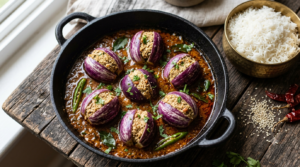
Andhra stuffed brinjal curry made with a roasted gram, sesame and coconut masala instead of peanuts.
Allergy note: this recipe is written for home cooks avoiding peanuts by choice or by allergy. It is not medical advice. If anyone eating has a diagnosed peanut allergy, read the safety section below, and follow your allergist’s plan on ingredients and cross-contamination.
Gutti Vankaya Curry Without Peanuts at a Glance
- What replaces peanuts: roasted gram (putnala pappu), white sesame seeds and coconut, roasted together.
- Prep time: 20 minutes. Cook time: 30 minutes. Total: about 50 minutes.
- Serves: 4 people, with roughly 205 kcal per serving.
- Critical swap: do not use groundnut oil, even though many Andhra recipes call for it.
- Contains sesame, which is itself a major allergen. A sesame-free variation appears further down.
- Best with: hot steamed rice, a spoon of ghee, and pappu or rasam on the side.
What Peanuts Actually Do in This Curry
Before you replace an ingredient, it helps to know its job. Peanuts do three separate things in a classic gutti vankaya masala. They add fat, which emulsifies into the tamarind gravy and stops it from splitting.
They also add starch and protein, which thicken the sauce as it simmers. Finally, they carry a roasted, slightly sweet flavour that balances tamarind’s sourness. Any workable version of Gutti Vankaya Curry Without Peanuts has to replace all three jobs, not just the flavour.
In Gutti Vankaya Curry Without Peanuts, sesame and coconut alone cover the fat and the flavour. However, they do not cover the starch, so the gravy stays looser than you expect. That is exactly why the older version of this recipe felt thin to some readers. Roasted gram fixes it, because chana dal is mostly starch and protein with very little oil.
Peanut Substitutes Compared
| Substitute | What it gives | Watch out for |
|---|---|---|
| Roasted gram (putnala pappu) | Body, thickness, mild sweetness | Legume, not a nut; fine for peanut allergy in most cases |
| White sesame seeds | Fat, nutty aroma, glossy gravy | Major allergen in its own right |
| Desiccated or fresh coconut | Richness, faint sweetness | Labelled a tree nut in the United States |
| Sunflower seeds | Closest texture match to peanuts | Turns slightly grey when ground |
| Melon seeds (magaz) | Creamy body, neutral taste | Costly, and burns quickly while roasting |
Since roasted gram is already cooked and dried, you barely need to roast it. Warm it for a minute, then grind. Sunflower seeds work well too, so use them if roasted gram is hard to find where you live.
Ingredients for Gutti Vankaya Curry Without Peanuts
Brinjals and Gravy
- 10 small tender brinjals, about 500 g, stems left on
- 2 tbsp sesame oil, sunflower oil or refined vegetable oil
- 1 tsp mustard seeds
- 1 tsp cumin seeds
- 1 sprig curry leaves
- 1 medium onion, finely sliced
- 2 tsp ginger-garlic paste (optional)
- 2 green chillies, slit lengthwise
- ½ tsp turmeric powder
- 1 tsp Kashmiri red chilli powder
- 1 cup tamarind extract, from 1 tbsp tamarind soaked in ½ cup warm water
- Salt to taste, roughly 1 tsp
- 2 tbsp chopped coriander leaves
Peanut-Free Stuffing Masala
- ¼ cup roasted gram, also sold as putnala pappu or dalia
- 2 tbsp white sesame seeds
- 2 tbsp desiccated coconut, or fresh grated coconut
- 1 tbsp coriander seeds
- 1 tsp cumin seeds
- ¼ tsp fenugreek seeds (optional)
- 6 to 8 dried red chillies, adjusted to your heat level
- ½ tsp black peppercorns
- ½ tsp turmeric powder
- ½ tsp salt for the masala
Every ingredient for Gutti Vankaya Curry Without Peanuts sits in an ordinary Andhra pantry. Buy brinjals with bright green, firm stems. Tender ones hold their shape while they cook, whereas older brinjals collapse into the gravy. Press one gently before buying, because a hollow, light brinjal is usually seedy inside.
How to Make Gutti Vankaya Curry Without Peanuts
Step 1: Soak the Tamarind and Slit the Brinjals (10 minutes)
Soak 1 tablespoon of tamarind in half a cup of warm water. Meanwhile, cut two deep slits into each brinjal, working from the base up towards the stem. Stop before you cut through, so the brinjal stays in one piece. Then drop them into lightly salted water, which keeps the cut flesh from browning.
Step 2: Roast and Grind the Masala (10 minutes)
Dry roast the sesame seeds on medium heat until they start to pop. This takes two to three minutes. Add the coconut next and roast for another two minutes, until it turns pale gold. Coconut scorches fast, so keep stirring.
Add coriander seeds, cumin, fenugreek, dried chillies and peppercorns. Roast gently until the kitchen smells fragrant. Add the roasted gram last and warm it for one minute only. Cool everything, then grind with turmeric and salt to a coarse, packable powder.
Step 3: Stuff the Brinjals (5 minutes)
Drain the brinjals and pat them dry. Open each slit with your fingers, then press the masala inside. Be generous but gentle, because the brinjals split if you force them. Keep any leftover masala aside, since it goes into the gravy later.
Step 4: Build the Gravy (10 minutes)
Heat 2 tablespoons of oil in a heavy pan on medium heat. Add mustard and cumin seeds. When they splutter, add curry leaves and green chillies, then sauté for 30 seconds. Add the sliced onion and cook until translucent, roughly three to four minutes.
Stir in the ginger-garlic paste if you are using it. Cook for a minute, then add turmeric and chilli powder. Lower the heat while you do this, because chilli powder burns in seconds.
Step 5: Simmer Until Tender (20 minutes)
Place the stuffed brinjals in the pan and turn them carefully for four to five minutes. Pour in the tamarind extract and the leftover masala. Add salt, then bring everything to a gentle simmer.
Cover and cook on low heat for 15 to 18 minutes. Turn the brinjals once, halfway through. They are done when a skewer slides in without resistance. Sprinkle coriander leaves, simmer two more minutes, and take the pan off the heat.
The Oil Mistake Most Peanut-Free Recipes Repeat
Here is the correction that matters most, and almost no recipe page makes it. Countless recipes for Gutti Vankaya Curry Without Peanuts still list groundnut oil in the ingredients, because it is the default cooking oil across Andhra Pradesh. That defeats the whole point of the dish.
The nuance is real, though. Allergy specialists explain that highly refined peanut oil has had the peanut protein stripped out during processing, so most peanut-allergic people tolerate it. Cold-pressed, expeller-pressed and “gourmet” peanut oils are a different matter, since they keep that protein.
This is where Indian kitchens run into trouble. Much of the groundnut oil sold here is filtered or kachi ghani style, which is closer to cold-pressed than to highly refined. Unless the label clearly says highly refined, treat it as unsafe. Sesame oil, sunflower oil and plain refined vegetable oil all work perfectly in this curry.
Is Gutti Vankaya Curry Without Peanuts Safe for a Peanut Allergy?
Gutti Vankaya Curry Without Peanuts contains no peanut protein at all, so the dish itself is peanut-free as written. Real-world safety, though, depends on two more things: what else is in the bowl, and what your ingredients touched before they reached you. Both deserve a proper look.
Sesame Is a Major Allergen Too
Anyone cooking for allergies should know this. The United States Food and Drug Administration recognises sesame as the ninth major food allergen, effective from 1 January 2023 under the FASTER Act. Sesame joined milk, eggs, fish, shellfish, tree nuts, peanuts, wheat and soybeans on that list.
So a peanut-free curry is not automatically an allergy-friendly curry. For a sesame-free version, drop the sesame seeds. Then raise the roasted gram to a third of a cup and add a tablespoon of melon seeds for richness.
Coconut, Cashew and the Tree Nut Question
The older version of this recipe suggested cashews for a nuttier flavour, which needs correcting. Cashew is a tree nut, not a peanut, so it is botanically unrelated. Even so, a meaningful share of peanut-allergic people also react to tree nuts. Do not add cashews unless the person eating has been cleared for them.
Coconut sits in an odd spot. The FDA classifies it as a tree nut for labelling purposes, although coconut allergy is uncommon and is not linked to peanut allergy. Most people avoiding peanuts eat coconut without any issue.
Cross-Contamination in an Indian Kitchen
This part gets skipped constantly, yet it causes most accidental exposures. Loose spices bought at a local mill are a genuine risk, because the same grinder often handles palli podi and peanut chutney powder. Ask, or buy sealed packets instead.
At home, wash the mixer jar before grinding your masala. Use a clean pan too, since yesterday’s peanut chutney leaves residue behind. If someone in the house has a severe allergy, keep a separate jar and a separate ladle for their food.
Gutti Vankaya Curry Without Peanuts: Nutrition Per Serving
| Nutrient | Approximate value |
|---|---|
| Calories | ~205 kcal |
| Fat | 11 to 13 g |
| Carbohydrates | ~20 g |
| Protein | ~5 g |
| Fibre | ~6 g |
These figures for Gutti Vankaya Curry Without Peanuts come from adding up the ingredients above using reference values from USDA FoodData Central, then dividing by four servings. Raw eggplant runs about 25 kcal per 100 g, while sesame seeds run about 563 kcal per 100 g. Most of the calories therefore come from the oil and the seeds, not the brinjals.
A peanut version of the same curry lands around 20 to 25 kcal higher per serving, since a quarter cup of peanuts carries more fat than the same volume of roasted gram. The difference is small, so choose your version on taste and safety rather than calories. Your own totals will shift if you change the oil quantity or the brinjal size.
What Beginners Get Wrong With Stuffed Brinjal
- Cutting all the way through. Stop about a centimetre short of the stem, otherwise the brinjal falls apart while it simmers.
- Grinding the masala too fine. A coarse powder holds inside the slits, whereas a fine paste slides out into the gravy.
- Roasting on high heat. Burnt sesame turns the whole masala bitter, and no amount of tamarind rescues it.
- Adding tamarind too early. Acid slows down cooking, so the brinjals stay firm for far longer than they should.
- Stirring hard. Turn the brinjals with a spoon under each one instead, because vigorous stirring shreds them.
- Serving straight away. Rest the curry for 15 minutes, since the gravy keeps thickening off the heat.
Storing Gutti Vankaya Curry Without Peanuts
Refrigerate leftovers in an airtight container for up to three days. Reheat gently on the stovetop with a splash of water, because the gravy tightens overnight. Avoid the microwave if you can, since brinjals turn mushy under direct microwave heat.
The masala powder itself keeps far longer. Roast and grind a double batch, then store the extra in a dry jar for up to three weeks. That single step cuts your cooking time almost in half on a busy evening. Freezing the finished curry is not worth it, though, as the brinjal texture breaks down completely.
How Gutti Vankaya Curry Without Peanuts Differs From Our Other Recipes
Bhimas Cook carries several stuffed brinjal recipes, and each one solves a different problem. Gutti Vankaya Curry Without Peanuts is built specifically around the allergy swap. This page is the one to use when peanuts are off the table. If peanuts are fine and you simply want a richer coconut gravy, our gutti vankaya koora with coconut is the better fit.
For satvik cooking or fasting days, the no onion, no garlic version works instead. Prefer a drier side dish with no gravy at all? Then use our gutti vankaya dry curry. For another tamarind-forward main, the tamarind chickpea curry uses the same souring technique.
Before You Cook
Gutti Vankaya Curry Without Peanuts succeeds or fails on two decisions. First, replace the peanuts with roasted gram rather than relying on sesame and coconut alone, so the gravy actually thickens. Second, check your oil, because groundnut oil quietly reintroduces the exact protein you set out to avoid.
Get those two right and Gutti Vankaya Curry Without Peanuts is ordinary Andhra cooking from there on. Choose tender brinjals, roast the masala patiently, and let the curry rest before serving. If you are cooking for a diagnosed allergy, treat the cross-contamination section as the important part of this page.
Gutti Vankaya Curry Without Peanuts: Common Questions
What can I use instead of peanuts in gutti vankaya?
Use a quarter cup of roasted gram (putnala pappu) plus 2 tablespoons each of sesame seeds and coconut. Roasted gram supplies the starch that thickens the gravy, while sesame and coconut supply fat and nutty flavour. Sunflower seeds are the next best option if roasted gram is unavailable.
Does Gutti Vankaya Curry Without Peanuts taste different?
Slightly, yes, and mostly in a good way. The curry tastes a little lighter and lets the tamarind and chilli come forward, whereas peanuts push a sweet, heavy note into the gravy. Most people cannot tell the two apart once the dish is served over rice.
Can I use groundnut oil if I skip the peanuts?
No, not if allergy is the reason you are avoiding peanuts. Highly refined peanut oil is generally considered safe by allergy authorities, but most Indian groundnut oil is filtered or cold-pressed and retains peanut protein. Use sesame, sunflower or refined vegetable oil instead.
Is this recipe vegan and gluten-free?
It is fully vegan, since every ingredient is plant-based and no ghee goes into the cooking. It is also gluten-free as written, because roasted gram is a legume rather than a grain. Do check your asafoetida if you add any, as many Indian brands use wheat flour as a filler.
Can I make this curry without tamarind?
Yes. Substitute 2 tablespoons of lemon juice, stirred in at the very end after the heat is off. Alternatively, use half a cup of chopped tomato added with the onion, although the flavour becomes rounder and less sharp.
Why did my gravy turn out watery?
Three things usually cause it. Either the masala was ground too fine and slipped out of the brinjals, or the roasted gram was left out, or too much tamarind water went in at once. Simmer uncovered for a few extra minutes, and the gravy will reduce.
Can I make Gutti Vankaya Curry Without Peanuts in a pressure cooker?
You can, but watch the timing closely. Cook on medium heat for a single whistle only, then release the pressure naturally. Brinjals overcook very fast under pressure, so a covered pan gives you far more control.
Which brinjals work best for stuffing?
Small purple or purple-striped varieties, around 5 to 6 cm long, hold their shape best. Look for firm skin and a fresh green calyx at the stem. Larger brinjals have too many seeds, and they break apart before the masala has time to soak in.