Gutti Vankaya Kura Brahmin Style Recipe: Andhra No-Onion Curry
Gutti Vankaya Kura Brahmin style is the Andhra stuffed brinjal curry made with no onion and no garlic at all. It still tastes deep, tangy and complete. The flavour does not come from a longer ingredient list.
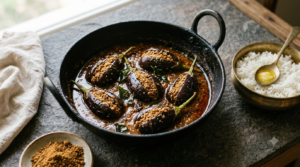
Gutti Vankaya Kura Brahmin style: small brinjals stuffed with roasted peanut and sesame masala, simmered in a tangy tamarind gravy.
It comes from a patiently roasted peanut and sesame masala. A pinch of hing goes into hot oil, and the tamarind arrives late so it never turns harsh. Below you get exact gram weights and a recalculated nutrition panel. You also get the four mistakes that turn stuffed brinjals bitter or mushy.
Gutti Vankaya Kura Brahmin Style at a Glance
- Prep: 25 minutes, plus a 20 minute tamarind soak
- Cook: 30 minutes
- Serves: 4 as a side with rice
- Diet: vegan, no onion, no garlic, satvik
- Contains: peanuts and sesame
- Energy: roughly 190 kcal per serving
- Skill: medium, because the stuffing and the simmer both need a light hand
What Makes Gutti Vankaya Kura Brahmin Style Different
Regular Andhra gutti vankaya usually starts with onion, and many restaurant versions add ginger garlic paste too. The Brahmin or satvik version drops both. That single change removes the sweetness an onion base normally provides. So the recipe has to rebuild that body somewhere else.
Three ingredients do that work. Roasted peanuts bring fat and nuttiness. Sesame and coconut add richness without any dairy.
Hing needs only a few seconds in hot oil. It then supplies the savoury allium note that onion and garlic would otherwise give.
Skip the hing and the curry tastes flat, even when everything else is correct. That is the most common reason a no onion no garlic version disappoints.
A Note on Hing and Family Tradition
Not every Brahmin kitchen uses hing. Some Saiva and strictly orthodox households avoid asafoetida too. They treat all three as belonging to the same category. Other Andhra Brahmin families use inguva daily and consider it essential.
Both practices are genuine. If your family avoids hing, increase the roasted sesame slightly. A small pinch of jaggery also helps, because it restores some of the missing roundness. Cook the dish the way your kitchen cooks it.
Ingredients for Gutti Vankaya Kura Brahmin Style
Main
- 12 to 14 small tender brinjals, about 250 g total
- Tamarind, 8 g, roughly half a tablespoon of tightly packed pulp
- Salt to taste, plus 1 tsp for the soaking water
- Warm water, about two thirds of a cup for the gravy
Stuffing masala
- Roasted peanuts, 36 g, about a quarter cup
- White sesame seeds, 2 tbsp
- Desiccated coconut or grated kopra, 2 tbsp
- Coriander seeds, 1 tbsp
- Cumin seeds, half tsp
- Fenugreek seeds, quarter tsp, optional but useful
- Dried red chillies, 4 to 5
- Turmeric powder, half tsp
Tempering
- Sesame oil or groundnut oil, 2 tbsp
- Mustard seeds, half tsp
- Cumin seeds, half tsp
- Hing, one generous pinch, optional by tradition
- Curry leaves, 1 sprig
Sesame oil suits this curry best because its flavour matches the sesame in the masala. Groundnut oil works well too. Coconut oil changes the character noticeably, so use it only if you like that profile.
How to Make Gutti Vankaya Kura Brahmin Style
1. Soak the tamarind, 20 minutes
Soak the tamarind in a quarter cup of warm water for 15 to 20 minutes. Squeeze it well and strain the extract. Discard the fibre and seeds, then set the extract aside.
2. Roast and grind the masala, 12 minutes
Heat a heavy pan on low. Dry roast the peanuts for 2 to 3 minutes until they smell toasty. Add sesame, coriander, cumin, fenugreek, chillies and coconut, then roast another 4 to 5 minutes.
Cool the mix completely before grinding, because warm spices turn oily and clump. Grind with turmeric and a little salt to a coarse, sandy paste. Do not grind it smooth, since a coarse texture holds inside the brinjal far better.
3. Prepare the brinjals, 7 minutes
Wash and dry the brinjals, keeping the stalks on. Cut a cross slit from the base upward. Stop about a centimetre short of the stalk, so each brinjal stays in one piece. Drop them into salted water for 10 minutes, then drain and pat dry.
4. Stuff them, 8 minutes
Open each slit gently and press the masala in with a small spoon or your thumb. Fill generously but stop before the brinjal strains. Keep whatever masala is left over, because it goes into the gravy later.
5. Sear and simmer, 30 minutes
Heat the oil in a wide pan. Add mustard seeds and wait for them to crackle, then add cumin, hing and curry leaves. Lower the flame while the hing blooms, since it burns within seconds.
Lay the stuffed brinjals in a single layer and sear them for 3 minutes, turning gently. Pour in the tamarind extract and two thirds of a cup of warm water. Then stir in the reserved masala, cover, and simmer on low for 15 to 18 minutes. Turn the brinjals once midway.
The curry is ready when the gravy coats the brinjals and oil rises to the surface.
Choosing Brinjals for Gutti Vankaya Kura Brahmin Style
Small purple or purple striped brinjals about 4 to 5 cm long work best. They cook evenly and hold the stuffing well. Look for firm skin, a bright green calyx and a light feel for their size. Heavy brinjals usually carry more developed seeds, which taste bitter.
Press the skin lightly with your thumb. If the dent stays, the brinjal is old and it will collapse during the simmer. Buy a couple extra, because one or two always split while you stuff them.
Why Stuffed Brinjals Go Wrong
| Problem | Cause | Fix |
|---|---|---|
| Bitter curry | Mature brinjals with hard seeds | Buy small firm ones, soak in salted water |
| Brinjals collapse | High flame or too much stirring | Simmer low, turn only once |
| Masala leaks out | Slit cut too deep | Stop 1 cm short of the stalk |
| Gravy stays thin | Tamarind added too early | Add after searing, then reduce uncovered |
| Flat taste | No hing, or spices under roasted | Bloom hing properly, roast on low longer |
Bitterness is the complaint that comes up most often. The brinjal causes it, not the recipe. So the fix happens at the vegetable shop rather than the stove.
Gutti Vankaya Kura Brahmin Style Nutrition, Recalculated
Nutrition figures for Gutti Vankaya Kura Brahmin style get copied from page to page across the internet. These numbers instead come from adding up the actual ingredients above and dividing by four servings. The composition values come from the Indian Food Composition Tables published by ICMR National Institute of Nutrition.
| Nutrient | Per serving |
|---|---|
| Energy | about 190 kcal |
| Fat | about 17 g |
| Carbohydrate | about 10 g |
| Protein | about 5 g |
| Fibre | about 5 g |
Oil is the biggest single variable here. Every extra tablespoon adds roughly 31 kcal per serving. So a heavy hand changes the panel quickly. Treat these figures as a calculated estimate rather than a lab measurement, because brinjal size and oil absorption both vary.
Allergen and Diet Notes
This curry contains peanuts and sesame. India’s food regulator, the Food Safety and Standards Authority of India, lists peanuts and tree nuts as declarable allergens. Sesame sits outside that Indian list. Yet the United States Food and Drug Administration has treated it as a major allergen since January 2023.
Mention both if you are serving guests. If peanuts are a problem, our gutti vankaya curry without peanuts rebuilds the masala around sesame and coconut instead.
One more detail surprises people. Most retail hing carries wheat flour or rice flour rather than pure resin. So the dish is naturally gluten free, but your hing tin may not be. Check the label if gluten matters to anyone at the table.
Pressure Cooker and Make Ahead Options
| Method | Active time | Result |
|---|---|---|
| Open kadai | 30 min | Best texture and colour |
| Pressure cooker | 15 min | Faster, softer, some brinjals split |
| Masala made ahead | 10 min | Same result if stored airtight |
For the cooker route, sear the brinjals first. Then add the tamarind and cook for one whistle on medium. Release pressure naturally and finish uncovered until the oil separates.
The masala keeps well for a week in the fridge and about a month in the freezer. Roasting a double batch on the weekend turns this into a 20 minute weeknight curry.
How This Version Compares
Gutti Vankaya Kura Brahmin style is only one of several versions in Telugu kitchens. The gravy, the fat and the finish all shift between regions and households. Each version suits a different meal.
- This satvik version: tamarind gravy, peanut and sesame masala, no alliums, best with plain rice and ghee
- Dry gutti vankaya: no gravy at all, packs well into a lunchbox
- Telangana style: hotter, thinner, usually eaten with jonna roti
- Coconut version: milder and sweeter, closer to coastal cooking
Serving and Storing Gutti Vankaya Kura Brahmin Style
Serve Gutti Vankaya Kura Brahmin style hot with steamed rice and a spoon of ghee. Jowar and bajra roti work well too. A simple pappu, papad and curd on the side turn it into a full Andhra meal.
Cool leftovers fully before refrigerating in an airtight box. The curry keeps for 3 days and tastes better on day two. That happens because the masala keeps soaking into the brinjals. Reheat gently with a splash of hot water.
Avoid freezing the finished curry, since the brinjals turn watery after thawing.
Cook’s Notes Most Recipes Skip
- Roast the peanuts separately first, because they need longer than sesame and coriander
- Salt the masala rather than the gravy, so the stuffing itself tastes seasoned
- Sear the brinjals before any liquid goes in, since seared skin holds shape through the simmer
- Add tamarind after searing, never before, as acid stops the brinjals from softening
- Rest the curry off heat for 10 minutes before serving, because the flavour settles noticeably
Before You Cook
Gutti Vankaya Kura Brahmin style rewards two things above everything else. Small firm brinjals come first, and a masala roasted slowly on a low flame comes second. Get those right and the missing onion never registers.
Keep the flame low during the simmer. Turn the brinjals only once, then let the oil surface before you switch off. If your family uses hing, bloom it for a couple of seconds only. That is the whole recipe in a nutshell.
Gutti Vankaya Kura Brahmin Style FAQs
Is Gutti Vankaya Kura Brahmin style the same as the no onion no garlic version?
Yes, in practice they are the same dish. Brahmin style simply means the satvik preparation without onion and garlic. The label differs by region and family, while the method and the peanut sesame masala stay identical.
Why does my gutti vankaya taste bitter?
Mature brinjals with hard developed seeds cause almost all bitterness. Choose small firm brinjals with a bright green calyx. Then soak the slit ones in salted water for 10 minutes. Under roasted fenugreek can also add a bitter edge, so keep that quantity small.
Can I make Gutti Vankaya Kura Brahmin style without peanuts?
Yes. Replace the peanuts with an equal volume of sesame seeds and desiccated coconut, roasted the same way. The curry turns lighter and less nutty, so add a small pinch of jaggery to balance the tamarind.
Which brinjal variety works best?
Small purple or purple striped brinjals about 4 to 5 cm long are ideal. They cook evenly and hold the stuffing. Green striped varieties work too. Large brinjals do not suit this dish at all, since you cannot stuff them whole.
Can I cook Gutti Vankaya Kura Brahmin style in a pressure cooker?
Yes. Sear the stuffed brinjals in the tempering, add tamarind extract and water, then cook for one whistle on medium heat. Let the pressure release naturally and simmer uncovered until the oil separates. Expect a softer texture than the open pan method.
Is this recipe vegan and gluten free?
The recipe is fully vegan, because it uses oil rather than ghee and contains no dairy. It is also naturally gluten free, although compounded hing often contains wheat flour. Check your hing label before serving anyone who avoids gluten.
How long does the curry keep?
Refrigerated in an airtight container, it keeps for 3 days and improves overnight. Reheat on low with a splash of water. Skip freezing, since thawed brinjals release water and lose their texture.
Can I prepare the masala in advance?
Yes, and it is the best shortcut for this dish. Roast and grind a double batch. Store it airtight for a week in the fridge, or a month in the freezer. Bring it to room temperature before stuffing, because cold masala packs poorly.