Gutti Vankaya Dry Curry: Authentic Andhra Stuffed Brinjal Recipe
Gutti Vankaya Dry Curry is the Andhra answer to a question most stuffed brinjal recipes quietly dodge. How do you get spice deep inside an eggplant without drowning it in gravy?
The answer lives in two small details that almost every online version gets wrong. One is where you cut the brinjal. The other is how coarsely you grind the masala.
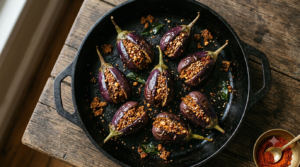
Stuffed baby brinjals pan-cooked slowly with roasted peanut and sesame masala, Andhra style.
Get both right and the stuffing clings to the flesh, the skin blisters gently, and each brinjal holds its shape on the plate. Get them wrong and you end up with a pan of collapsed purple mush and burnt spice powder. This recipe gives you exact quantities, honest timings, and the specific fixes for the mistakes that ruin the dish.
Gutti Vankaya Dry Curry at a Glance
- What it is: baby brinjals stuffed with a roasted peanut, sesame and coconut masala, then pan-cooked slowly with no added water.
- Region: Andhra Pradesh and Telangana, where “gutti” means stuffed and “vankaya” means brinjal.
- Total time: about 50 minutes, of which 25 minutes is hands-on prep.
- Serves: 4 people as a side with rice or roti.
- Diet: naturally vegan and gluten-free, though it does contain peanuts and sesame.
- Hardest part: cutting the brinjals correctly, because a wrong cut makes them fall apart in the pan.
What Makes Gutti Vankaya Dry Curry Different from the Gravy Version
The dry version cooks the stuffed brinjals in oil alone, so the masala toasts against the skin instead of dissolving into a sauce. Andhra homes call the gravy version gutti vankaya kura, and it uses tamarind water plus onion and tomato to build a pourable curry. The dry one is a vepudu, a fry, and it belongs beside rice as a side rather than over it.
Gutti Vankaya Dry Curry therefore changes the technique in three ways. First, the masala must be a coarse paste and not a fine powder, because powder scorches when it meets hot oil directly. Second, the flame stays low throughout, since there is no liquid to buffer the heat. Third, the brinjals need to be small and tender, as larger ones release water and turn the fry soggy.
Gutti Vankaya Dry Curry Recipe Card
| Detail | Value |
|---|---|
| Prep time | 25 minutes |
| Cook time | 25 minutes |
| Total time | 50 minutes |
| Servings | 4 people |
| Cuisine | Andhra, South Indian |
| Difficulty | Medium |
Gutti Vankaya Dry Curry takes roughly 50 minutes from board to table. Because the covered cooking stage runs unattended, you can lay the table while the brinjals finish.
Ingredients for Gutti Vankaya Dry Curry
These quantities feed four people. Measure the stuffing ingredients before you start roasting. The whole roast takes ten minutes, so spices burn while you hunt for the sesame jar.
Main Ingredients
- 12 to 14 small tender brinjals (baby eggplants), about 500 g
- 3 tbsp oil, ideally groundnut or sesame oil
- 1 tsp mustard seeds
- 1 tsp cumin seeds
- 1 sprig fresh curry leaves
- 1 green chilli, slit lengthwise
- 1 medium onion, finely sliced (about ¾ cup)
- ½ tsp turmeric powder
- ½ tsp red chilli powder, adjusted to taste
- 1 tsp salt, or to taste
- 2 tbsp coriander leaves, chopped, for garnish
Stuffing Masala Ingredients
- ¼ cup raw peanuts
- 2 tbsp white sesame seeds
- 2 tbsp grated dry coconut, or fresh if you prefer
- 1 tbsp coriander seeds
- ½ tsp cumin seeds
- 3 to 4 dried red chillies
- ½ tsp turmeric powder
- ½ tsp salt
- ½ tsp tamarind paste, optional
How to Choose the Right Brinjals
Pick brinjals that feel heavy for their size and look glossy rather than dull. A light, hollow-feeling brinjal is old inside, so it will be seedy and bitter. Wrinkled skin and a dried, brown calyx are the other warning signs.
Purple and striped green varieties both work well in Gutti Vankaya Dry Curry. Aim for fruit roughly the length of your thumb. Anything larger will not cook through before the masala starts to scorch.
Gutti Vankaya Dry Curry: Step-by-Step Method
Step 1: Prepare the Brinjals (10 minutes)
Wash the brinjals and pat them completely dry. Now the detail that matters most: make the cross-shaped slit at the base of each brinjal, at the rounded end opposite the stem. Cut down only about three-quarters of the way, so the fruit stays joined at the top.
Leave the green calyx and a short piece of stem attached. That stem is what holds the four petals together while the brinjal cooks and gets turned. Slitting from the stem end instead, as many recipes describe, cuts through the one part that keeps the brinjal intact.
Drop the slit brinjals into a bowl of water with ½ tsp salt while you make the masala. This stops the cut flesh from browning, and it also draws out a little bitterness. Lift them out and pat dry before stuffing.
Step 2: Roast the Stuffing Ingredients (10 minutes)
Heat a dry pan on medium-low. Roast the peanuts first until the skins darken and split, then set them aside to cool. Add the sesame seeds next. Pull them off the heat as soon as they start popping, because they turn bitter within seconds.
Roast the dry coconut for a minute until it smells sweet and turns pale gold. Finally, roast the coriander seeds, cumin seeds and dried red chillies together for one to two minutes. Let everything cool fully, since warm ingredients turn oily in the grinder instead of grinding coarse.
Step 3: Grind the Masala (5 minutes)
Tip the cooled ingredients into a grinder with the turmeric, salt and tamarind paste. Pulse in short bursts rather than running the motor continuously. You want a coarse, slightly damp paste that clumps when pressed, not a smooth chutney and not a dry powder.
If the mix stays too dry to hold together, stir in a teaspoon of oil rather than water. Oil binds the masala without steaming it later.
Step 4: Stuff the Brinjals (10 minutes)
Hold each brinjal upside down, open the petals gently with your thumb, and press the masala into the cavity. Fill generously but stop short of forcing the slit wide open. An overstuffed brinjal splits along the seam and empties itself into the pan.
Keep any leftover masala aside. It goes into the pan later and becomes the crumbly, savoury coating that makes this version worth cooking.
Step 5: Cook the Dry Curry (15 minutes)
Heat the oil in a wide, heavy pan over medium heat. Add mustard seeds and let them crackle, then add cumin seeds, curry leaves and the slit green chilli. Stir for about 30 seconds.
Add the sliced onion and cook until it turns translucent, roughly three to four minutes. Sprinkle in the turmeric and red chilli powder, then stir for another minute so the raw edge cooks off.
Now arrange the stuffed brinjals in a single layer and roll each one so the masala coats the outside. Scatter the leftover masala over the top. Lower the flame, cover the pan, and cook for 12 to 15 minutes, turning the brinjals gently every four minutes or so.
Gutti Vankaya Dry Curry is done when a knife slides into the thickest part with no resistance and the skin looks slightly wrinkled. Finish with chopped coriander and take the pan off the heat immediately, because residual heat keeps cooking them into mush.
Where Most Cooks Go Wrong with Gutti Vankaya Dry Curry
Four mistakes account for nearly every failed batch. Each one has a simple fix.
- Slitting at the stem end. The calyx is the natural hinge, so cutting through it makes the brinjal collapse. Always cut at the opposite, rounded base.
- Using masala powder instead of paste. Dry powder hits hot oil and scorches before the brinjals soften. A coarse, oil-bound paste survives the full cooking time.
- Cooking on high heat to save time. High flame blackens the skin while the inside stays raw. Low and covered is the only route that works.
- Crowding the pan. Brinjals stacked on top of each other steam rather than fry. Use a wide pan, or cook in two batches if needed.
Pro Tips from an Andhra Kitchen
Groundnut oil or cold-pressed sesame oil suits Gutti Vankaya Dry Curry far better than refined sunflower oil, since both carry a nuttiness that echoes the stuffing. Use a little more oil than feels comfortable, because slow roasting in generous oil is what separates a good vepudu from a dry one.
If the pan looks parched halfway through, sprinkle a teaspoon of water and cover it again immediately. Do not pour water in freely, or the dish turns into a weak curry.
A pinch of jaggery balances the tamarind if your batch tastes sharp. Andhra cooks often add it at the very end, after tasting, rather than building it into the masala.
Substitutions and Allergy Notes
Gutti Vankaya Dry Curry contains peanuts and sesame, and both rank among the more serious food allergens. If you are cooking for guests, say so before serving. The Food Safety and Standards Authority of India lists both among the allergens that packaged foods must declare. You can read the current framework on the FSSAI website.
- No peanuts: use roasted chana dal or sunflower seeds in the same quantity for a similar body.
- No sesame: increase the coconut slightly and add a teaspoon of poppy seeds.
- No coconut: roasted chana dal alone works, though the finish tastes leaner.
- No dried chillies: substitute 1 tsp red chilli powder, added after grinding rather than roasted.
Storing and Reheating Gutti Vankaya Dry Curry
Refrigerate leftovers in an airtight container for up to three days. Reheat in a pan on low with a teaspoon of oil, since a microwave softens the skin and loses the fried texture. Sprinkle a few drops of water if the masala looks dusty.
Freezing is not worth it here. Eggplant cells hold a lot of water, so they rupture on thawing and the brinjals turn to paste. The stuffing masala, on the other hand, freezes well on its own for up to a month.
Gutti Vankaya Dry Curry Nutrition per Serving
| Nutrient | Approximate amount |
|---|---|
| Calories | 265 to 290 kcal |
| Fat | 18 to 21 g |
| Carbohydrates | 16 to 19 g |
| Protein | 6 to 7 g |
| Fibre | 5 to 6 g |
These figures are estimates calculated from standard values for brinjal, peanuts, sesame, coconut and oil. Oil is by far the biggest variable, because brinjal absorbs it unevenly. A heavier hand alone can add 40 kcal per serving. For verified per-ingredient values, check USDA FoodData Central, which lists raw eggplant at roughly 25 kcal and 3 g of fibre per 100 g.
What to Serve with Gutti Vankaya Dry Curry
Hot steamed rice with a spoon of ghee is the classic pairing for Gutti Vankaya Dry Curry, and the dry masala clings to the grains beautifully. A thin pappu charu or sambar on the side keeps the meal from feeling heavy, since the fry itself carries no gravy.
Roti and chapati work equally well if you prefer wheat. For a fuller Andhra thali, add curd rice and a pickle. A light okra curry or a tamarind chickpea curry rounds out the protein.
Which Gutti Vankaya Version Should You Cook?
Andhra households cook several stuffed brinjal variants, and they are not interchangeable. Use this table to pick the one that matches your meal.
| Version | Texture | Best for |
|---|---|---|
| Dry curry (this recipe) | Fried, no gravy | Rice side, lunchbox |
| Coconut koora | Thick, sweet-nutty | Roti and chapati |
| Brahmin style kura | Tangy gravy | Festival meals |
| Without peanuts | Lighter gravy | Peanut allergies |
| No onion, no garlic | Mild gravy | Fasting days, prasadam |
If you are cooking this for the first time, start with the dry version. It uses fewer moving parts than the gravy recipes, so a mistake shows up early enough to correct.
Before You Cook Gutti Vankaya Dry Curry
The dish stands or falls on two decisions you make in the first ten minutes. Cut at the base, not the stem. Grind coarse, not fine. Everything after that is patience on a low flame.
Buy small brinjals even if it means buying fewer, because size matters more than quantity here. Keep the leftover masala for the pan rather than discarding it. Serve the curry within an hour of cooking, since brinjal texture is at its best while the skin still holds a little crispness.
Gutti Vankaya Dry Curry FAQs
Should I slit the brinjal at the top or the bottom?
Slit at the bottom, meaning the rounded end away from the stem. The stem and calyx act as a hinge that holds the four sections together during cooking. Cutting at the stem end removes that support, so the brinjal falls apart when you turn it.
Why does my stuffing masala burn?
Burning almost always means the masala was ground too fine or left dry. A powdered masala has no oil to protect it, so it scorches on contact with the pan. Grind coarse and bind with a teaspoon of oil before stuffing.
Is Gutti Vankaya Dry Curry vegan?
Yes, Gutti Vankaya Dry Curry is fully vegan as written, because it uses no dairy at all. Serve it with plain rice rather than ghee rice to keep the whole plate plant-based. Check your asafoetida brand if you add any, since some blends contain wheat flour.
How spicy is it?
Moderate as written, with roughly three dried chillies plus half a teaspoon of chilli powder for four servings. Reduce the dried chillies to two for a mild version. Andhra cooks often go higher, though heavy heat mutes the peanut aroma that makes the dish distinctive.
Can I use large eggplants instead?
Large eggplants are a poor fit because they hold more seeds and need longer cooking than the masala can withstand. If it is all you have, cut thick rounds, spread masala between two slices, and pan-fry them as sandwiches instead.
Can I make it without onion?
Yes, and it is common during fasting periods. Skip the onion entirely and add a little extra tamarind for depth. The site also has a dedicated no-onion, no-garlic gutti vankaya recipe if you want a version built for it.
Do I need to soak the brinjals in salt water?
It helps, though it is not strictly essential. Salted water stops the cut flesh from browning while you prepare the masala, and it pulls out some bitterness from older fruit. Ten minutes is enough, and drying them afterwards matters just as much.
How do I know when the brinjals are done?
Push a knife tip into the thickest part of one brinjal. It should slide in with no resistance, while the skin looks slightly wrinkled rather than glossy. If the knife meets a firm core, cover the pan and give it another three minutes.
Can I prepare the masala in advance?
Yes, and it is a genuine time-saver. Roast and grind the masala up to a week ahead, then refrigerate it in an airtight jar. Bring it to room temperature before stuffing, because cold masala sets stiff and tears the brinjal petals.
Want the botany behind the vegetable? The eggplant reference page covers varieties and history in more depth than a recipe page usefully can.