Gutti Vankaya Kura Recipe Without Onion and Garlic (Easy Andhra Style)
This Gutti Vankaya Kura recipe skips onion and garlic completely, yet the stuffed brinjals still taste deep, tangy, and nutty. Cooks in Telugu homes have made it this way for generations, so the flavour never depended on an onion-garlic base at all. The secret sits in a well-roasted peanut and sesame masala, a good pinch of asafoetida, and a sour tamarind gravy.
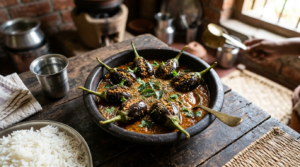
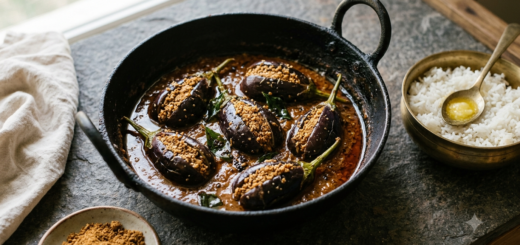
Andhra-style Gutti Vankaya Kura simmered in a nutty peanut-tamarind gravy, made without onion or garlic.
Because the dish stays fully satvik, it suits pooja days, Ekadashi meals, and Jain or Brahmin kitchens. You get a curry that pairs beautifully with hot rice or soft chapati. Best of all, this Gutti Vankaya Kura recipe comes together in about an hour with everyday pantry spices.
Gutti Vankaya Kura at a Glance
- What it is: an Andhra-style stuffed baby brinjal curry in a tamarind-peanut gravy.
- No onion, no garlic: asafoetida and roasted spices carry the savoury depth instead.
- Time: roughly 30 minutes prep plus 30 minutes cooking, so about one hour total.
- Serves: 4 people as a side with rice or roti.
- Best for: festival meals, fasting-friendly plates, and everyday satvik cooking.
Why This Gutti Vankaya Kura Recipe Works Without Onion or Garlic
Many people assume brinjal curry needs onion and garlic for flavour, but that is not true here. The savoury punch comes from asafoetida, also called hing, which is the traditional allium substitute in satvik cooking. A small pinch mimics the umami note that onion and garlic would normally add. You can read more about this resin spice in the Wikipedia entry on asafoetida.
Roasted peanuts and sesame seeds do the heavy lifting too. When you dry-roast them, they release oils and turn nutty, so the masala tastes rich on its own. Tamarind then brings the tang, while jaggery rounds off any sharp edges.
This version is common in temple kitchens and during festivals such as Sri Rama Navami or Varalakshmi Vratam. Because no onion or garlic goes in, families cook it on days when those ingredients are avoided. That practical reason is exactly why the no-onion-no-garlic style survives so widely across Andhra Pradesh and Telangana.
The Story Behind Gutti Vankaya
The word vankaya means brinjal in Telugu, while gutti points to the stuffing tucked inside each one. Families across the Telugu states each guard their own masala blend, so no two versions taste quite alike. Some lean on coriander seeds, while others push sesame or poppy seeds forward.
The onion-free style has deep roots in Brahmin and temple cooking, where satvik food rules the kitchen. Since that tradition never used alliums, the dish grew rich in other ways. That heritage is why this Gutti Vankaya Kura recipe still feels complete without a single onion.
Ingredients for This Gutti Vankaya Kura Recipe
Gather everything before you start, since the cooking moves quickly once the masala is ready. The quantities below serve four people. Fresh, tender brinjals matter most, so pick small ones with bright green stems.
| Ingredient | Quantity | Notes |
|---|---|---|
| Small tender brinjals | 10–12 | Baby purple or green variety |
| Tamarind | 1 tablespoon | Soaked for about ¾–1 cup extract |
| Peanuts | ½ cup | Dry-roasted, skins on or off |
| Sesame seeds | 2 tablespoons | White, adds nuttiness |
| Coriander seeds | 1 tablespoon | Whole, for roasting |
| Cumin seeds | 2 teaspoons | Split between masala and tempering |
| Dry red chilies | 6–10 | Adjust to your heat level |
| Asafoetida (hing) | ¼ teaspoon | The key onion-garlic substitute |
| Turmeric powder | ½ teaspoon | For colour and warmth |
| Jaggery | 1 teaspoon | Optional, balances the tamarind |
| Mustard seeds | 1 teaspoon | For tempering |
| Curry leaves | 1 sprig | Fresh, for aroma |
| Oil | 3–4 tablespoons | Sesame or groundnut oil works well |
| Salt | To taste | Added in stages |
Sesame seeds are the one flexible item here. If you skip them, just add two extra tablespoons of peanuts so the masala stays thick. The asafoetida, however, is not optional in a true no-onion-no-garlic version, since it delivers the missing savoury layer.
Recipe Card and Timing
| Stage | Time |
|---|---|
| Prep (incl. tamarind soak) | 30 minutes |
| Cook | 30 minutes |
| Total | 1 hour |
| Servings | 4 |
| Difficulty | Medium |
How to Make Gutti Vankaya Kura Recipe: Step by Step
Follow these seven steps in order, and the whole dish stays stress-free. Each stage builds on the last, so read through once before you light the stove.
Step 1: Soak the Tamarind
Soak one tablespoon of tamarind in a cup of hot water for about 30 minutes. Then squeeze it well and strain out the pulp. This sour extract becomes the base of your gravy, so set it aside.
Step 2: Slit and Soak the Brinjals
Wash the brinjals, then slit each one from the base upward, keeping the stem intact. Cut about three-quarters through, so the brinjal stays in one piece. Now drop them into salted water for 10 minutes. This small step removes bitterness and stops the cut flesh from browning.
Step 3: Roast and Grind the Masala
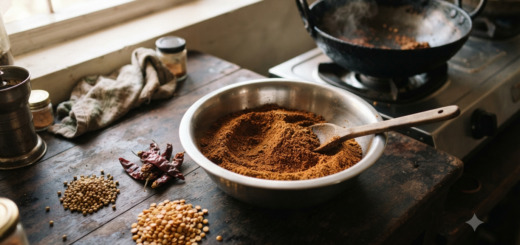
Heat a pan on low flame and dry-roast the peanuts, sesame seeds, coriander seeds, cumin, and red chilies. Stir often, because these spices burn fast. Once they smell fragrant and turn golden, let them cool.
Then grind the cooled mix with salt, turmeric, and jaggery into a coarse powder. Add a teaspoon of water only if the mix feels too dry. Keep this masala ready beside the stove.
Step 4: Stuff the Brinjals
Gently open each slit and press the masala inside. Fill them generously, yet do not force so much that they split. Whatever masala is left over goes straight into the gravy later, so keep it handy.
Step 5: Temper and Sear
Heat oil in a wide pan on medium flame. Add mustard seeds first, and wait until they splutter. Next add the asafoetida, cumin, and curry leaves for a few seconds. Then place the stuffed brinjals in gently and roll them so they coat with oil.
Step 6: Add Tamarind and Simmer
Pour in the tamarind extract along with enough water to reach halfway up the brinjals. Sprinkle a little turmeric and salt. Cover the pan and simmer on low heat for about 10 minutes. Turn the brinjals gently once or twice, so they cook evenly.
Step 7: Finish and Serve
Stir the reserved masala into the gravy and cook uncovered. Wait until the sauce thickens and the oil starts to separate at the edges. That oil-separation moment tells you the flavours have melded. Serve the curry hot with steamed rice or roti.
Pro Tips for the Best Gutti Vankaya Kura Recipe
A few small habits separate a good brinjal curry from a great one. These come from repeated home cooking, not theory.
- Pick brinjals with green, fresh stems, because older ones turn seedy and bitter.
- Roast the spices on low heat only, since high heat burns them and adds a harsh taste.
- Toast the asafoetida for just a second in hot oil, so it blooms without turning bitter.
- If the gravy tastes too sour, stir in a little extra jaggery instead of sugar.
- Let the curry rest for 10 minutes before serving, because the brinjals keep absorbing flavour.
Common Mistakes to Avoid
Most failures with this dish trace back to three errors. First, cutting the brinjals all the way through, which makes them fall apart in the gravy. Keep the stem end joined so each piece holds its shape.
Second, rushing the roast. Under-roasted peanuts taste raw, while burnt ones turn the whole masala bitter. So aim for a steady golden colour and a nutty smell.
Third, skipping the asafoetida. Without it, a no-onion-no-garlic curry can taste flat, since nothing else replaces that savoury base.
Tasty Gutti Vankaya Kura Recipe Variations
This dish has many regional cousins, and each swaps one part of the masala. If you cook for a nut allergy, try the Gutti Vankaya curry without peanuts instead. For a richer, creamier gravy, the coconut version of Gutti Vankaya Koora works beautifully.
You can also go drier for lunchboxes and travel. The Gutti Vankaya dry curry holds up well without gravy. For the strict temple-style masala, the Brahmin-style Gutti Vankaya Kura keeps the spice blend simple and pure.
Storage Tips for Gutti Vankaya Kura Recipe
Store leftover curry in an airtight box in the fridge for up to three days. Reheat it gently with a splash of water, since the gravy thickens as it sits. This Gutti Vankaya Kura recipe also freezes well for up to two months. Thaw it overnight in the fridge before you warm it through, so the brinjals do not turn mushy.
Nutrition and Allergen Notes
Exact values shift with your oil and portion size, so treat these as an approximate guide per serving. A peanut-and-brinjal curry like this is naturally high in fibre and healthy fats. Brinjal itself is low in calories, as noted in the Wikipedia entry on eggplant.
- Calories: around 280–360 kcal
- Carbohydrates: about 30–40 g
- Protein: roughly 8–12 g
- Fat: about 15–22 g, mostly from peanuts and oil
- Fibre: around 8–10 g
One safety note matters here. This recipe uses peanuts and sesame, so it is not suitable for anyone with those allergies. Also, most packaged asafoetida contains wheat flour, which means it is not gluten-free unless the label says so. If you cook for a coeliac guest, check the hing packet or use a compounding-free brand.
What to Serve With This Gutti Vankaya Kura Recipe
This Gutti Vankaya Kura recipe shines next to plain hot rice with a spoon of ghee. It also pairs well with lemon rice, curd rice, or soft chapatis.
For a fuller South Indian thali, serve it alongside a rasam or a simple dal. During festivals, it sits comfortably next to other satvik dishes on the plate. Many families also pack this Gutti Vankaya Kura recipe for train journeys, since it travels well and tastes even better the next day.
Final Thoughts on This Gutti Vankaya Kura Recipe
This Gutti Vankaya Kura recipe proves that onion and garlic are never the secret to a great curry. Roasted peanuts, tamarind, and a pinch of asafoetida do the real work.
Keep the brinjals tender, roast the spices slowly, and rest the curry before serving. Do those three things, and you will land a restaurant-worthy dish from a simple home kitchen. For more festival cooking, explore the Ekadashi fasting recipes on the blog.
Frequently Asked Questions
What makes this Gutti Vankaya Kura recipe taste good without onion or garlic?
Asafoetida is the answer. This spice, known as hing, delivers the savoury depth that onion and garlic usually provide. Combined with roasted peanuts and tamarind, it keeps the curry rich and full-flavoured.
Can I make this in a pressure cooker?
Yes, and it saves time. After stuffing and tempering the brinjals, add the tamarind extract and pressure cook for one whistle on medium flame. Then simmer briefly until the gravy thickens.
Is this dish Jain-friendly?
It suits Jain and Brahmin cooking, because it uses no onion or garlic. Brinjal itself is avoided in strict Jain diets, though, so confirm based on the household you cook for.
Is this Gutti Vankaya Kura recipe vegan?
Yes, the base recipe is fully vegan. It contains no dairy or animal products at all. Just serve it with rice instead of a ghee-topped plate to keep the whole meal vegan.
Why do my brinjals taste bitter?
Older, seedy brinjals cause most bitterness. Choose small, fresh ones with tight skin and green stems. Soaking the cut brinjals in salted water for 10 minutes also draws out any bitter juices.
What if I cannot find small brinjals?
Larger brinjals work as a backup. Cut them into thick wedges rather than stuffing them whole, and cook a little longer until they soften fully. The masala and gravy stay the same.
How long does the curry stay fresh?
It keeps for up to three days in the fridge in a sealed container. For longer storage, freeze it for up to two months. Reheat gently with a splash of water so the gravy loosens.
Can I skip the asafoetida?
You can, but the flavour will drop noticeably. Since this is a no-onion-no-garlic dish, asafoetida is the main savoury booster. If you have none, a tiny pinch of roasted cumin powder helps, though it is not a full replacement.