Gutti Vankaya Kura Telangana Style Recipe: Authentic Stuffed Brinjal Curry
Gutti Vankaya Kura Telangana style is the gravy version of stuffed brinjal curry, and the sesame in the masala is what sets it apart from its Andhra cousin. Most recipes online blur the two regions together. This one does not, because the difference decides how your gravy tastes, how thick it sits, and what you serve it with.
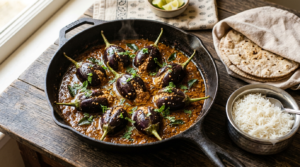
Small whole brinjals stuffed with roasted peanut-sesame masala, simmered in tamarind gravy until the oil separates.
Below you get the tested measurements for Gutti Vankaya Kura Telangana style, the roasting order that actually builds flavour, and fixes for the two problems every cook hits. Brinjals collapse, and gravy turns bitter.
Gutti Vankaya Kura Telangana Style at a Glance
- Dish type: Stuffed brinjal curry with gravy, served hot
- Cuisine: Telangana and Telugu home cooking
- Prep time: 25 minutes, plus 30 minutes tamarind soaking
- Cook time: 40 minutes
- Servings: 4 people
- Difficulty: Moderate, because the stuffing needs a light hand
- Diet: Vegan and gluten-free as written
- Contains: Peanuts and sesame seeds
The short answer to the core question: this is a tangy, nutty brinjal curry where small whole eggplants are slit, packed with a roasted peanut-sesame masala, then simmered in tamarind gravy until the skins give way under a spoon.
What Makes Gutti Vankaya Kura Telangana Style Different
Telugu households across both states cook stuffed brinjals, so the dish is genuinely shared. Still, the regional leanings are real, and they show up in the masala jar rather than the method.
Telangana kitchens lean harder on sesame seeds and groundnut, since both crops grow widely across the region. Coastal Andhra cooks tend to push the tamarind further and often add roasted lentils for body. Neither version is more authentic. They simply taste different, and knowing which one you want saves a disappointing dinner.
| Style | Masala base | Texture | Best with |
|---|---|---|---|
| Telangana | Sesame, peanut, mild coconut | Thick, nutty gravy | Jowar roti, rice |
| Coastal Andhra | Peanut, roasted dals, heavy tamarind | Sharper, tangier | Rice and ghee |
| Brahmin style | No onion, no garlic | Lighter, sweeter | Rasam rice |
| Vepudu or fry | Dry powder stuffing | No gravy at all | Sambar rice |
One naming point clears up most confusion. In Telugu, kura means a curry carrying gravy, while vepudu means a dry fry. So if you wanted the dry version, our Gutti Vankaya Vepudu recipe is the right page. For the no-onion-no-garlic version, try the Brahmin style stuffed brinjal curry instead.
Choosing Brinjals for Gutti Vankaya Kura Telangana Style
Here the vegetable matters more than the spice blend. Pick small purple brinjals roughly the size of a lime, ideally with a fresh green crown still attached.
A tender brinjal feels heavy for its size and has taut, glossy skin. If it feels light or hollow, the seeds inside have matured and the flesh will taste bitter. Wrinkled skin means the vegetable sat too long after harvest.
Buy ten and slit only nine. Keep one spare, because a hidden worm hole shows up in about one brinjal in every batch.
Ingredients for Gutti Vankaya Kura Telangana Style
Main Ingredients
- 10 small tender brinjals, washed and slit with the stalk left on
- 3 tbsp sesame oil, or any neutral cooking oil
- 1 tsp mustard seeds
- 1 sprig curry leaves
- 1 medium onion, finely sliced
- 1 tbsp ginger-garlic paste
- 2 green chillies, slit lengthwise
- ½ tsp turmeric powder
- 1½ tsp Kashmiri chilli powder, adjusted to taste
- ½ cup thick tamarind extract
- ½ cup hot water for the gravy
- Salt to taste
- 2 tbsp fresh coriander leaves, chopped
Stuffing Masala Ingredients
- ½ cup raw peanuts
- 2 tbsp white sesame seeds
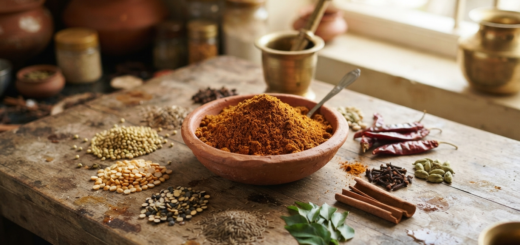
- 1 tbsp coriander seeds
- 1 tsp cumin seeds
- 3 to 4 dried red chillies
- ½ inch cinnamon stick
- 3 cloves
- 2 green cardamom pods
- 2 tbsp desiccated coconut
- ½ tsp grated jaggery
- Salt for the masala
Sesame oil is worth seeking out, because the nutty backnote it leaves is part of the regional signature. Refined oil works, yet the curry tastes flatter.
How to Make Gutti Vankaya Kura Telangana Style
Step 1: Extract the Tamarind (30 minutes)
Soak 1 tablespoon of tamarind in ¼ cup of warm water for 30 minutes. Then squeeze the pulp thoroughly and strain it. You want roughly ½ cup of thick, dark extract.
Start this first, since the soaking runs while you handle everything else.
Step 2: Roast and Grind the Masala (15 minutes)
Heat a dry pan on low flame. Roast the peanuts alone until the skins darken and split, which takes about 5 minutes. Remove them, then roast the sesame seeds separately until they begin to dance in the pan.
Now add coriander seeds, cumin, red chillies, cinnamon, cloves and cardamom. Roast for 3 to 4 minutes until the aroma lifts. Finally toss in the desiccated coconut for one minute only, because coconut burns fast.
Cool everything, then grind with jaggery, salt and a splash of tamarind water. Aim for a coarse paste, not a smooth one. A coarse grind clings inside the brinjal instead of leaking out.
Step 3: Slit and Stuff the Brinjals (10 minutes)
Cut a cross into each brinjal from the base upward, stopping about three quarters of the way. The stalk end must stay joined, otherwise the vegetable falls into quarters while cooking.
Spoon the masala into each slit and press gently. Fill them about two thirds full. Overstuffing splits the skin, so save the leftover masala for the gravy.
Step 4: Cook the Curry (40 minutes)
Heat the sesame oil in a wide, heavy pan. Add mustard seeds and wait until they pop. Then add curry leaves, sliced onion and green chillies, and sauté until the onion turns translucent.
Stir in the ginger-garlic paste and cook for a minute more. Sprinkle in turmeric and chilli powder, then lower the flame immediately so the powders do not scorch.
Place the stuffed brinjals in a single layer. Roll them gently in the oil until coated, then cook covered for 5 minutes. Pour in the tamarind extract, the leftover masala and ½ cup hot water.
Cover and simmer on low for 20 to 25 minutes. Turn the brinjals once or twice, never stir hard. The curry is ready when a spoon slides into a brinjal without resistance and oil beads on the surface. Scatter coriander leaves before serving.
Pressure Cooker Method for Gutti Vankaya Kura Telangana Style
A pressure cooker cuts the simmer to about 8 minutes, or two whistles on medium flame. Release pressure naturally, because a quick release makes the brinjals burst.
The masala keeps beautifully. Roast and grind it up to three days ahead, then refrigerate it in an airtight jar. On the day itself, the whole dish comes together in under half an hour.
This curry also improves overnight. The tamarind works into the flesh while it rests, so leftovers genuinely taste better than the first serving.
Mistakes That Ruin Gutti Vankaya Kura Telangana Style
Six errors account for almost every failed batch. None of them are obvious until it is too late.
- Grinding the masala too fine. A paste-like stuffing slides out during cooking and muddies the gravy.
- Roasting everything together. Sesame seeds burn long before peanuts brown, so roast them in separate batches.
- Stirring with a spoon. Shake the pan or turn each brinjal by hand instead.
- Adding cold water mid-cook. Cold water shocks the gravy and stalls the cooking. Use hot water.
- Cooking on high heat. The skins split before the flesh softens, which is the most common failure.
- Skipping the jaggery. That half teaspoon rounds off the tamarind sharpness, although it never makes the curry sweet.
Why Brinjals Turn Bitter or Black
Bitterness comes from mature seeds, not from the cooking. Slice one brinjal open before you start. If the seeds look brown rather than pale, that batch will taste bitter whatever you do.
Blackening is different and harmless. Cut brinjal flesh oxidises within minutes of meeting air. Drop the slit brinjals into salted water while you prepare the masala, then drain them before stuffing.
If the finished gravy tastes bitter despite good brinjals, over-roasted sesame is usually the culprit. Sesame seeds turn acrid within seconds of going past golden.
What to Serve With Gutti Vankaya Kura Telangana Style
Jowar roti is the traditional pairing across Telangana, since the millet flatbread balances the rich, oily gravy. Bajra roti works the same way.
Steamed rice with a spoon of ghee is the everyday choice, and it lets the tamarind come forward. For a fuller spread, serve it alongside a simple dal and papad. It also sits well next to vegetable dum biryani at a weekend lunch, where the tang cuts through the richness.
Curd rice afterwards is not traditional, though it helps if you went heavy on the chillies.
Storing Gutti Vankaya Kura Telangana Style Curry
Cool the curry fully, then refrigerate it in an airtight container for up to 3 days. Reheat gently on the stovetop with a splash of hot water, because microwaving turns the brinjal skins rubbery.
Freezing works for up to one month, although the texture softens noticeably. Thaw overnight in the refrigerator before reheating. Do not refreeze thawed curry.
Leave the curry out of the fridge for no more than two hours after cooking. Coconut and ground peanut spoil faster than most people expect in warm weather.
Nutrition and Allergen Notes
The figures below are calculated estimates for one of four servings, based on standard food composition values. They are not laboratory tested, and your numbers will shift with the oil you use and the size of your brinjals.
| Per serving | Approximate amount |
|---|---|
| Calories | 250 to 280 kcal |
| Total fat | about 20 g |
| Carbohydrates | about 14 g |
| Dietary fibre | about 6 g |
| Protein | about 7 g |
Most of the fat comes from peanuts, sesame and cooking oil rather than the vegetable itself. Brinjal is naturally low in calories at roughly 25 kcal per 100 g, according to the USDA FoodData Central database. Indian composition values are published by the ICMR National Institute of Nutrition in Hyderabad.
Allergen warning: this recipe contains peanuts and sesame seeds, and both are common allergens. Do not substitute your way around a diagnosed nut allergy. Sesame is now recognised as a major allergen in several countries, and India’s Food Safety and Standards Authority of India requires allergen declaration on packaged foods.
If you cook for guests, mention the peanuts before serving. The masala hides them completely, so nobody can tell by looking.
Substitutions That Actually Work
- No tamarind? Use 2 tablespoons of lemon juice, added at the very end instead of during the simmer.
- No desiccated coconut? Fresh grated coconut works, though roast it lightly first to drive off moisture.
- Peanut allergy? Roasted chana dal replaces peanuts reasonably well, and the curry stays nutty without the risk.
- No small brinjals? Cut a large one into thick wedges and layer the masala between them. It is not the same dish, yet it works.
- Want it milder? Deseed the dried chillies before roasting, since most of the heat sits in the seeds.
Before You Cook
Three things decide whether this curry succeeds. Choose small, heavy, glossy brinjals. Roast the sesame and peanuts separately, and stop while they are still golden. Simmer low and slow, turning the brinjals by hand rather than stirring.
Get Gutti Vankaya Kura Telangana style right on those three points and the rest is forgiving. If you enjoy this one, the dry Gutti Vankaya fry uses the same masala with a completely different result. Serve it with Andhra pesarattu for a memorable weekend breakfast spread.
Frequently Asked Questions
Is Gutti Vankaya Kura Telangana style the same as bagara baingan?
No, although they are close relatives. Bagara baingan is a Hyderabadi dish with a thinner, richer gravy and Mughlai spicing, so it is not the same as Gutti Vankaya Kura Telangana style. Gutti Vankaya kura keeps a thicker masala packed inside each brinjal and leans more on tamarind tang than on creaminess.
Can I make this recipe vegan and gluten-free?
Yes, and no changes are needed. The recipe uses no dairy and no wheat as written, so it is naturally vegan and gluten-free. Just confirm your asafoetida is gluten-free if you choose to add any, because many Indian brands use wheat flour as a carrier.
Why do my brinjals fall apart while cooking?
Your cut most likely went too deep. The slit should stop three quarters of the way up, leaving the stalk end intact. Large or over-ripe brinjals also collapse easily, so pick small tender ones and keep the flame low throughout.
How spicy is this curry?
Moderately spicy as written, with heat from three or four dried red chillies plus green chillies. Kashmiri chilli powder adds colour without much burn. Start low and taste the masala before stuffing, because you cannot reduce the heat afterwards.
Which brinjal variety works best?
Small purple or purple-striped brinjals hold their shape best. Green varieties cook faster and have thinner skin, although they tear more easily. Avoid the long slender types entirely, since they cannot be stuffed properly.
Can I make Gutti Vankaya Kura Telangana style without onion and garlic?
Yes. Skip both and increase the tamarind slightly to keep the flavour lively. Many households cook it this way for festival meals, and the masala carries enough depth on its own.
How long does Gutti Vankaya Kura Telangana style curry keep?
Refrigerated in an airtight container, it keeps for up to 3 days. The flavour peaks on day two once the tamarind soaks in fully. Freeze for up to a month if needed, though the brinjals soften considerably after thawing.
Why is my gravy watery instead of thick?
Either too much water went in, or the masala was ground too fine and dispersed. Simmer uncovered for a few extra minutes to reduce it. Adding a tablespoon of the reserved dry masala also thickens the gravy quickly.
What is the difference between kura and vepudu?
Kura means a curry with gravy in Telugu, while vepudu means a dry stir-fry. Both start with the same stuffed brinjals. The kura simmers in tamarind liquid, whereas vepudu cooks in oil until the outsides crisp.