Lemon Rasam Without Dal: Easy Instant South Indian Soup
This lemon rasam without dal is a tangy, feather-light South Indian broth ready in about 25 minutes. It needs no lentils and no rasam powder at all. Because you skip the dal, the soup stays thin and glossy instead of thick. It works as a warming drink, a rice-mixer, or a simple appetiser before the meal.
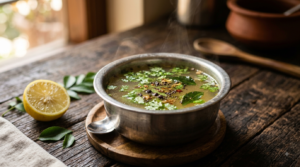
A hot, clear bowl of lemon rasam without dal, finished with fresh coriander.
The bright hit of fresh lemon lands right at the end, when the flame is already off. That one small habit separates a fragrant rasam from a dull, slightly bitter one.
Lemon Rasam Without Dal at a Glance
- Ready fast: about 25 minutes start to finish, since there is no dal to pressure-cook first.
- Pantry-simple: water, a lemon, ginger, green chillies, pepper, cumin and a quick tempering.
- Light on the stomach: thin and broth-like, so it soothes rather than fills.
- Naturally vegan-ready: swap ghee for coconut oil and the whole dish stays dairy-free.
- Key rule: add the lemon juice only after the stove is switched off.
What Makes Lemon Rasam Without Dal Different?
Most classic lemon rasam recipes cook toor dal first and mash it into the base for body. This lemon rasam without dal drops that step, so what you get is closer to a clear, spiced broth than a thick soup. The result is quicker, lighter, and easier for a first-timer to nail. A heartier, dal-based cousin like Andhra-style pappu charu shows the difference well.
Because the dal is gone, the flavour leans entirely on aromatics. Ginger, green chilli, cumin, crushed pepper and curry leaves carry the whole dish. The lemon supplies the sour edge that tamarind gives in other rasams. Skip the lemon-after-the-flame rule and the citrus turns flat, so timing matters more here than in a heavier dal version.
People across the south make this style often. It is called elumichai rasam in Tamil, nimmakaya charu or nimmakaya rasam in Telugu, and nimbu saaru or lemon saaru in Kannada. Cooks reach for it when they want something soothing after a rich meal, or when a cold is going around.
Recipe Card
| Detail | Value |
|---|---|
| Prep time | 10 minutes |
| Cook time | 15 minutes |
| Total time | 25 minutes |
| Servings | 4 servings |
| Cuisine | South Indian |
| Difficulty | Easy |
Ingredients You Will Need
Everything here is a regular Indian kitchen staple. Measure the spices ahead of time, because the tempering moves fast once the seeds start to crackle.
- 4 cups water
- 1 medium lemon, freshly squeezed (about 2 tablespoons juice)
- 2 green chillies, slit lengthwise
- 1 inch ginger, finely grated
- 1 medium tomato, chopped (optional, for colour and mild tang)
- ½ teaspoon turmeric powder
- ½ teaspoon crushed black pepper
- ½ teaspoon cumin seeds
- ¼ teaspoon asafoetida (hing)
- ½ teaspoon salt, adjusted to taste
- 1 tablespoon ghee or oil
- 1 teaspoon mustard seeds
- 10–12 curry leaves
- 2 dried red chillies (optional)
- 2 tablespoons fresh coriander leaves, chopped
How to Make Lemon Rasam Without Dal, Step by Step
The method splits into a simmered base and a quick tempering that you pour in at the end. Follow the timings below and the whole thing stays effortless.
Step 1: Build the base (2 minutes)
Pour 4 cups of water into a medium saucepan. Add the slit green chillies, grated ginger, turmeric and salt. Stir once, then bring it to a gentle simmer over medium heat.
Step 2: Simmer the aromatics (5 minutes)
Let the base simmer for about five minutes, so the ginger and chilli infuse the water. Drop in the chopped tomato now if you are using it, because it adds a little tang and a warmer colour. Keep the heat gentle and never let it boil hard.
Step 3: Make the tempering (3 minutes)
Heat the ghee or oil in a small pan over medium heat. Add the mustard seeds and wait until they crackle. Then add the cumin, curry leaves, dried red chillies and asafoetida. Stir for 30 to 40 seconds until fragrant, but take care not to scorch the spices.
Step 4: Combine and simmer (3 minutes)
Pour the hot tempering straight into the simmering base. Let it bubble lightly for about three minutes, so the flavours marry together. Do not overboil, since a good rasam stays thin and broth-like rather than reduced and heavy.
Step 5: Add the lemon and finish (2 minutes)
Switch off the stove and wait roughly 30 seconds for the bubbling to settle. Now stir in the fresh lemon juice and the crushed black pepper. Garnish with coriander leaves and serve hot, either over steamed rice or on its own as a soup.
Why You Add Lemon After the Flame Is Off
This is the single most important technique in the whole recipe, so it deserves its own note. Lemon juice turns bitter when it boils, because heat breaks down the delicate compounds that give it that fresh, zingy aroma. Add it to a bubbling pot and you lose the brightness that defines the dish.
Switch the heat off first, let the rasam settle for a moment, then squeeze in the juice. The same rule applies to leftovers. When you reheat rasam, warm the base only. Stir in a fresh squeeze of lemon afterwards rather than boiling the citrus again.
Pro Tips for the Best Flavour
- Use fresh lemon juice, not bottled. Bottled juice carries preservatives and loses the sharp zing that this rasam leans on so heavily.
- Crush the pepper and cumin coarsely just before cooking, because freshly crushed spices release far more aroma than pre-ground powder.
- Taste before serving and balance it. If it reads too sour, a tiny pinch of jaggery rounds it off without making the rasam sweet.
- Serve it piping hot. Rasam without dal is at its best fresh off the stove, especially when you drink it as a light soup.
Easy Variations to Try
Once you have the base method down, small tweaks change the whole character of the bowl. Each variation keeps the lemon rasam without dal light, quick and free of any spice blend.
- Garlic lemon rasam: crush 3–4 garlic cloves into the tempering for a deeper, punchier aroma that suits cold-weather evenings.
- Extra-pepper version: double the crushed black pepper when someone at home has a cold, so the broth turns warming and sharp.
- Tomato-forward version: add ½ cup chopped tomato to the base for more colour, gentle sweetness and a fuller body.
- Coriander-heavy finish: stir in a generous handful of chopped coriander stalks while simmering for a greener, herbier taste.
Lemon Rasam Without Dal for Colds and Easy Digestion
There is a reason south Indian homes reach for this bowl during the monsoon and through winter. The ginger, cumin, black pepper and asafoetida are warming spices. The hot broth feels soothing when a cold or a blocked nose is doing the rounds. The lemon also adds a dose of vitamin C to the meal.
In traditional kitchens, a thin, peppery rasam is a go-to comfort food after a heavy meal. The same spices are believed to settle the stomach. Treat these as time-honoured home wisdom rather than medical claims.
A warm bowl of rasam is lovely when you feel under the weather. Still, it is no substitute for proper treatment, so see a doctor if symptoms persist.
Chef’s Notes: Substitutions and Storage
- Vegan swap: use coconut oil or any neutral oil in place of ghee, and the dish stays fully dairy-free.
- No green chilli: lean on an extra pinch of black pepper for gentle heat if you want a milder bowl.
- Want more body: cook a spoon of toor dal separately and stir it in, though that shifts it away from the pure without-dal version.
- Storage: refrigerate leftovers in an airtight container for up to 2 days. Reheat only the base, then add a fresh squeeze of lemon before serving.
Nutrition Information Per Serving
The figures below are an approximate estimate for one serving of a basic lemon rasam without lentils. Actual numbers shift with the amount of oil, salt and tomato you use, so treat them as a guide rather than an exact count.
| Nutrient | Approx. per serving |
|---|---|
| Calories | ~49 kcal |
| Carbohydrates | ~6 g |
| Protein | ~1 g |
| Fat | ~2 g |
| Vitamin C | Moderate, from the lemon |
| Sodium | Varies with the salt added |
Because there is no dal, the protein stays low while the calorie count stays modest. That is exactly why this version doubles so well as a light soup on its own.
What to Serve With Lemon Rasam
A bowl of lemon rasam without dal suits almost any south Indian plate. The classic pairing is hot steamed rice with a spoon of ghee, topped with the rasam and a simple vegetable curry. When you want something lighter, serve it as a warm soup in a cup before the meal.
It also goes beautifully with podi idli or a crisp dosa. For a fuller thali, pair it with a bowl of hotel-style sambar too.
Common Mistakes to Avoid
A few small slips can dull even a good lemon rasam without dal, so watch for these before you serve.
- Boiling the lemon: the top reason a rasam turns bitter, so always add the juice off the heat.
- Reducing it too far: a rasam should pour like a broth, not sit thick like sambar, so watch the simmer.
- Burnt tempering: once the mustard crackles the spices catch quickly, so keep the flame moderate and stir.
- Old lemons: a dry, pale lemon gives weak juice, so pick a heavy, firm one for the brightest flavour.
Why Lemon Rasam Without Dal Works So Well
The magic sits in the balance. You get sour from the lemon, heat from the pepper and chilli, earthiness from cumin, and depth from curry leaves and asafoetida. None of it needs dal or a spice blend to shine. That is why this stays one of the easiest south Indian dishes a beginner can master.
If you enjoy this style, try the closely related rasam without tomato and tamarind next. For more on the dish and its regional forms, the Rasam entry on Wikipedia is a useful reference.
Final Thoughts
A good lemon rasam without dal proves that simple food can still feel special. Keep the broth thin, respect the lemon-after-the-flame rule, and lean on fresh aromatics for flavour. Make it once as written, then start playing with the garlic and pepper variations to find your household favourite. It is fast, forgiving, and endlessly comforting, whether you sip it plain or pour it over rice.
Frequently Asked Questions
Can I make this lemon rasam completely vegan?
Yes. Just swap the ghee for coconut oil or any neutral-flavoured oil. The rasam then stays fully dairy-free while tasting just as good, because every other ingredient is already plant-based.
Why is my lemon rasam bitter?
Bitterness almost always comes from boiling the lemon juice. Add the juice only after you switch off the stove, since heat destroys the fresh citrus notes and leaves a harsh edge. Never reheat rasam with the lemon already in it.
Is lemon rasam without dal good for digestion?
Traditionally, yes. The ginger, cumin and black pepper are long trusted in Indian homes to settle a heavy stomach. That is why a light rasam often closes a rich meal. Treat this as home wisdom, not a medical claim.
Can I add lentils later if I change my mind?
Certainly. Cook a small amount of toor dal separately until soft, then stir it in with a little of its cooking water before the final simmer. That gives more body, though it moves the dish away from the pure without-dal style.
What can I serve with lemon rasam?
It pairs beautifully with steamed rice and a vegetable curry, or you can drink it as a warm soup on its own. Podi idli, dosa and plain curd rice all work well alongside it too.
How long does lemon rasam keep?
Store it in an airtight container in the fridge for up to 2 days. Reheat only the base gently, then add a fresh squeeze of lemon just before serving so the flavour stays bright.
Do I need rasam powder for this recipe?
No. This version skips rasam powder entirely and relies on fresh ginger, crushed pepper, cumin and curry leaves instead. That is exactly what makes it a quick, instant-style rasam for busy days.
Can I make lemon rasam without tomato?
Absolutely. The tomato is optional here and only adds colour and mild tang. Leave it out for a clearer, more classic lemon broth, and the recipe still works perfectly.