Moong Dal Payasam with Condensed Milk: Easy Recipe
This moong dal payasam with condensed milk is a creamy South Indian-style dessert that needs no extra sugar when the sweetness is balanced carefully. The key is to roast the dal lightly, cook it until soft, then add milk and sweetened condensed milk over low heat. That order gives a smooth payasam without a raw dal taste or scorched milk.
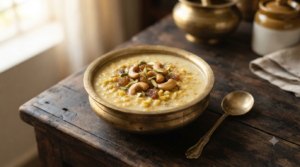
Creamy moong dal payasam made with condensed milk, cardamom, ghee-roasted cashews and raisins.
This version keeps the familiar cardamom, ghee, cashew and raisin finish from the older recipe. However, it uses a more flexible condensed-milk quantity, so the dessert does not become cloyingly sweet. You can serve it warm for a softer texture or chill it for a thicker, pudding-like finish.
Moong Dal Payasam at a Glance
- Prep time: about 10 minutes
- Cook time: about 30 minutes
- Total time: about 40 minutes
- Servings: 6 small dessert bowls
- Best texture: soft dal with a creamy but pourable milk base
- Sweetener: sweetened condensed milk; no extra sugar is needed
- Cooking options: pressure cooker or heavy-bottomed saucepan
Sweetened condensed milk already contains added sugar, so treat it as both dairy and sweetener. Nestlé India describes MILKMAID as a partly skimmed sweetened condensed milk and a dessert ingredient. You can check the Nestlé India MILKMAID page for the product description.
Ingredients for Moong Dal Payasam with Condensed Milk
Use the quantities below for a balanced batch that stays creamy after cooling. Since condensed milk brands differ in sweetness and thickness, begin with the lower amount. Then add more only after tasting.
- 1/2 cup yellow moong dal, split and skinned
- 1 1/2 cups water for cooking the dal
- 2 cups full-fat milk, preferably warm
- 150 to 220 g sweetened condensed milk, added to taste
- 1 tablespoon ghee
- 10 to 12 cashew nuts
- 10 to 12 raisins
- 1/2 teaspoon green cardamom powder
- 1 small pinch saffron, optional
- 1 tablespoon chopped pistachios or almonds, optional
The condensed milk range is deliberate. Start near 150 g if your family prefers gentle sweetness, while about 200 to 220 g gives a richer dessert. Avoid adding sugar before tasting because the condensed milk may already provide enough sweetness.
Condensed Milk Quantity and Texture Guide
| Condensed milk | Result | Best for |
|---|---|---|
| 150 g | Lightly sweet, looser | After-meal dessert |
| 180 to 200 g | Balanced and creamy | Most family servings |
| 220 g | Rich and sweeter | Small festive portions |
If you want an even sweeter result, add a little more condensed milk after the payasam has simmered. That method is safer than starting with a whole tin, because reducing sweetness later is difficult.
How to Make Moong Dal Payasam Step by Step
- Rinse and drain the dal. Wash the moong dal two or three times until the rinse water looks mostly clear. Drain it well, because excess surface water slows roasting.
- Roast for aroma. Heat a pressure cooker or heavy pan over low to medium heat. Add the drained dal and roast for 3 to 4 minutes, stirring often, until it smells nutty and turns slightly deeper yellow.
- Cook until soft. Add 1 1/2 cups water. Pressure cook for about 2 to 3 whistles on medium heat, then let the pressure fall naturally. If using a saucepan, cover and simmer until the dal mashes easily, adding a little hot water if needed.
- Mash lightly. Use the back of a ladle to mash only part of the cooked dal. This keeps some body while also giving the payasam a creamy base.
Finish the Moong Dal Payasam Base
- Add warm milk. Pour in 2 cups warm milk while stirring. Keep the heat low and simmer for 5 to 7 minutes, because milk can catch on the bottom of a thin pan.
- Add condensed milk gradually. Stir in 150 g first, then simmer for 3 to 4 minutes on low heat. Taste carefully, and add more condensed milk only if you want extra sweetness.
- Finish with cardamom. Add cardamom and optional saffron, then switch the heat to very low. Stir for another minute so the aroma spreads through the payasam.
- Fry the garnish. Heat ghee in a small pan. Fry cashews until golden, then add raisins and cook until they puff. Pour the ghee, nuts and raisins over the payasam.
- Rest before serving. Leave the pan covered for 5 minutes. The payasam will thicken slightly as the dal absorbs more liquid.
The most important checkpoint comes before you add condensed milk. The dal should mash easily between two fingers or against the side of the pan. If the grains are still firm, cook them longer because dairy will not soften undercooked dal quickly.
Moong Dal Payasam: Pressure Cooker or Stovetop?
Moong dal payasam works with either method, but the pressure cooker is faster and more forgiving. A saucepan gives you more control over the final texture, although it needs more stirring. In both methods, cook the dal in water first and add milk only after the dal has softened.
For a pressure cooker, use the water quantity in the recipe and cook until the dal is soft enough to mash. Cooker size and heat vary, so treat whistle counts as a guide rather than an exact timer. When using a saucepan, keep a kettle of hot water nearby because the dal may need a small top-up before it softens.
Why Roast the Moong Dal First?
Light roasting gives the lentils a warmer, nuttier aroma before they meet the milk. However, the goal is fragrance, not deep browning. Stop when the dal smells toasted and looks only slightly more golden, because dark roasting can make the flavour bitter.
Do not soak the dal after roasting. If you prefer to soak first, rinse and soak the raw dal for 15 minutes, then drain it thoroughly. In that case, roast gently because damp dal can stick to the pan.
How to Get the Right Payasam Consistency
The ideal texture is creamy and spoonable, yet still loose enough to pour into a bowl. It should not sit like halwa, and it should not run like plain milk. Since moong dal payasam thickens as it cools, stop cooking when it looks slightly thinner than your final target.
If the payasam becomes too thick, stir in warm milk a few tablespoons at a time. If it is too thin, simmer it uncovered on low heat and stir often. Avoid a hard boil after adding condensed milk because the base can catch and develop a cooked-milk taste.
What to Do If the Payasam Turns Grainy
Graininess usually comes from undercooked dal or from leaving the mixture unstirred while dairy heats. First, check whether the dal itself is firm. If it is, add a splash of hot water and cook gently until the grains soften, then restore creaminess with warm milk.
If the dal is soft but the payasam still looks uneven, whisk it gently with a ladle rather than using a blender. A few visible lentil grains are normal in paruppu payasam and give the dessert character.
Moong Dal Payasam Sweetness Without Extra Sugar
Moong dal payasam made with sweetened condensed milk normally does not need white sugar or jaggery. Condensed milk supplies sweetness and dairy solids at the same time, so adding another sweetener can quickly overpower the cardamom and roasted dal.
Taste only after the condensed milk has mixed through the hot base. The flavour will seem slightly less sweet when the payasam is hot, while chilling can make the sweetness feel more pronounced. Therefore, stop just before it tastes overly sweet when served warm.
Can I Add Jaggery Too?
You can, but it changes the recipe into a different flavour profile and adds another sweetness variable. For a classic jaggery-forward version, use the dedicated moong dal payasam with jaggery recipe instead. That keeps this condensed-milk version focused and easier to balance.
If you specifically want coconut milk and jaggery, the moong dal payasam with coconut milk version is a better fit. For a dairy version without coconut milk, see the moong dal payasam without coconut milk recipe.
Common Mistakes That Make Moong Dal Payasam Fail
- Adding milk before the dal is soft: the grains stay firm longer and the dessert loses its smooth texture.
- Using a full tin without tasting: condensed milk brands and family preferences differ, so gradual addition gives better control.
- Cooking on high heat after adding dairy: the bottom can scorch while the top still looks fine.
- Roasting the dal too dark: light golden is enough; dark brown dal can taste bitter.
- Judging thickness while piping hot: the payasam becomes thicker during resting and refrigeration.
- Frying raisins too long: add them after the cashews are nearly done and remove them once they puff.
Another common mistake is trying to correct everything with more condensed milk. If the payasam tastes flat, it may need cardamom or a tiny pinch of salt rather than more sweetness. If it feels heavy, loosen it with warm milk instead.
Serving Ideas and Easy Variations
Serve this dessert warm in small bowls after a South Indian meal, or chill it for a denser finish. A few roasted cashews on top add crunch, while saffron gives a gentle aroma. Keep garnishes simple because the dal and condensed milk already create a rich base.
For a festive serving, add chopped pistachios after the payasam leaves the heat. If you want stronger cardamom flavour, crush fresh seeds instead of increasing packaged powder. You can also reserve a spoonful of fried nuts for the top so each bowl gets a crisp garnish.
Can I Make It Without a Pressure Cooker?
Yes. Use a heavy-bottomed saucepan and simmer the roasted dal with water until very soft. Stir every few minutes, especially near the end, and add hot water only when needed. Once the dal mashes easily, continue with the milk and condensed milk steps.
Storage and Reheating
Because this recipe contains cooked milk, cool leftovers promptly and refrigerate them in a clean, covered container. FoodSafety.gov advises refrigerating leftovers within two hours and using refrigerated leftovers within three to four days. See its leftover food safety guidance for the general rule.
When reheating, use low heat and stir often because chilled moong dal payasam becomes much thicker. Add a splash of milk before reheating if needed. For the best texture, warm only the portion you plan to serve rather than repeatedly heating the whole batch.
Why This Condensed Milk Version Works
The recipe separates three jobs that older versions often combine: cooking the dal, building the milk base, and adjusting sweetness. That sequence matters because each ingredient behaves differently. Water softens the dal efficiently, while milk adds creaminess and condensed milk controls sweetness and body.
It also avoids unsupported nutrition promises. This is a dessert, so portion size and sweetness matter more than presenting it as a health food. If you need nutrition numbers, calculate them from the exact milk, ghee and condensed milk labels you actually use.
Before You Serve
For the best moong dal payasam, keep the heat gentle once milk enters the pan and add condensed milk in stages. Roast the dal only until fragrant, cook it fully before adding dairy, and stop simmering while the payasam is still slightly loose. Those three checkpoints prevent most texture problems.
If you are making it for guests, prepare it a little ahead and recheck the consistency before serving. Warm milk fixes a thick batch quickly, while a short low simmer fixes a thin one. Add the fried nuts just before serving if you want them at their crispest.
Frequently Asked Questions
Is moong dal payasam the same as moong dal kheer?
They refer to closely related lentil-based Indian desserts, although names and ingredient choices vary by region and household. Moong dal payasam is a common South Indian name, while moong dal kheer is more broadly understood across India. This version uses sweetened condensed milk for the dairy base and sweetness.
How much condensed milk should I add?
Start with about 150 g for 1/2 cup moong dal and 2 cups milk, then taste before adding more. Around 180 to 200 g gives a balanced result for many households, while 220 g makes it noticeably sweeter. The exact amount depends on your brand and preference.
Can I use a full can of condensed milk?
You can, but a full 380 to 400 g tin will make this batch much sweeter and thicker. If you want to use the whole tin, increase the milk and total batch size rather than forcing it into the same proportions. Add it gradually so you can stop when the sweetness is right.
Do I need sugar with condensed milk?
No. Sweetened condensed milk already contains added sugar, so extra sugar is usually unnecessary. Taste after the condensed milk has fully mixed into the hot payasam. If you want more sweetness, add another spoonful of condensed milk rather than a second sweetener.
Why is my moong dal payasam too thick?
It thickens because cooked dal continues absorbing liquid as it rests and cools. Stir in warm milk a little at a time until the texture becomes pourable again. When cooking, switch off the heat while the payasam looks slightly looser than you ultimately want.
Can I make moong dal payasam without dairy milk?
Yes, but use a plant-based condensed milk as well if you want the recipe fully dairy-free. Coconut milk gives the closest rich texture, while almond or oat milk tastes lighter. Heat plant milks gently because some products separate more easily than dairy milk.
Should moong dal be soaked first?
Soaking is optional because split yellow moong dal cooks fairly quickly. A short soak can reduce stovetop cooking time, but it is not required for a pressure cooker. If you roast the dal first, cook it directly after roasting rather than soaking it again.
Can I serve this payasam cold?
Yes. Chill it only after it has cooled enough for safe refrigeration, and expect it to become much thicker. Before serving, stir in a little cold milk if needed. Cold payasam usually tastes sweeter, so avoid over-sweetening the hot batch.