Parippu Payasam With Cow Milk: Creamy Jaggery Recipe
Parippu payasam with cow milk can be creamy, smooth, and deeply flavoured with jaggery, but the heat sequence matters. The safest method is to cook the moong dal and milk first, then add cooled jaggery syrup after the pan comes off the flame. That small change greatly reduces the chance of curdling.
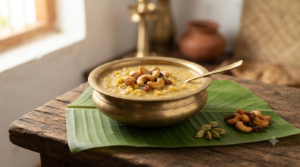
Creamy parippu payasam made with roasted moong dal, cow milk, jaggery, cardamom, ghee-roasted cashews and raisins.
This version keeps the familiar South Indian combination of cherupayar parippu, full-fat milk, jaggery, cardamom, ghee, cashews, and raisins. It also keeps the dessert pourable while warm, because the dal thickens it further as it rests.
Parippu Payasam With Cow Milk at a Glance
- Prep time: about 10 minutes
- Cook time: about 35 minutes
- Servings: 4 small dessert bowls
- Main dal: yellow split moong dal, also called cherupayar parippu or pasi paruppu
- Sweetener: jaggery
- Milk: full-fat cow milk for the creamiest texture
- Most important step: add jaggery only after switching off the heat
- Final texture: creamy and pourable when warm, thicker after cooling
Kerala Tourism lists payasam among the classic sweets of an Onam sadya and notes that versions may use milk, coconut milk, grains, or dals. This cow-milk version is therefore best understood as a household variation rather than the same thing as coconut-milk parippu pradhaman. See the Kerala Tourism payasam overview for the broader tradition.
Ingredients for Parippu Payasam With Cow Milk
These quantities make parippu payasam with cow milk moderately sweet with a clear dal flavour. Start with the lower jaggery amount if you prefer a lighter dessert, since jaggery varies in sweetness and intensity.
| Ingredient | Quantity | Purpose |
|---|---|---|
| Yellow split moong dal | 1/2 cup | Body and nutty flavour |
| Water | 1 1/2 cups | For cooking the dal |
| Full-fat cow milk | 3 cups | Creamy dairy base |
| Jaggery | 1/2 to 3/4 cup, grated | Sweetness and caramel notes |
| Water for jaggery | 1/4 cup | Helps make the syrup |
| Ghee | 1 tablespoon | Roasts the garnish |
| Cashews | 10 | Crunch |
| Raisins | 10 | Optional sweetness |
| Cardamom powder | 1/2 teaspoon | Aroma |
| Dry ginger powder | 1/8 teaspoon, optional | Warm spice note |
| Salt | Small pinch | Balances sweetness |
Use plain full-fat milk rather than flavoured or sweetened milk. Also, use clean jaggery and strain the syrup if it contains visible grit. The original recipe included optional coconut milk, but this refresh leaves it out so the cow-milk method stays distinct and predictable.
How to Make Parippu Payasam With Cow Milk
For dependable results, build the payasam in three parts: cook the dal, simmer it with milk, then sweeten it off the heat. This order gives the milk time to thicken without forcing hot jaggery and boiling dairy together.
- Dry-roast the dal. Heat a heavy pan on low to medium heat. Add 1/2 cup moong dal and stir for 2 to 3 minutes, until it smells nutty but does not turn dark.
- Rinse and cook. Let the dal cool for a minute, then rinse it well. Add 1 1/2 cups water and cook until soft, usually 12 to 15 minutes on the stovetop. You can also pressure-cook it until tender.
- Mash lightly. Press some of the cooked dal against the side of the pan. Keep a little texture because a completely smooth paste can make the payasam feel heavy.
- Add the milk. Pour in 3 cups full-fat cow milk. Simmer on low heat for 8 to 10 minutes, stirring across the base so the milk does not scorch.
- Make the jaggery syrup. Meanwhile, warm 1/2 to 3/4 cup grated jaggery with 1/4 cup water. Stir only until dissolved, then strain if needed.
Finish Parippu Payasam With Cow Milk Safely
The final stage is where parippu payasam with cow milk can either stay silky or turn grainy. Keep both mixtures away from a hard boil, then combine them gently.
- Cool the syrup slightly. Let the jaggery syrup stand until warm rather than boiling hot. Then switch off the dal-and-milk mixture and wait about 5 minutes.
- Combine off the heat. Slowly pour the warm jaggery syrup into the hot milk-dal mixture while stirring. Do not return the pan to a hard boil.
- Season. Stir in cardamom, optional dry ginger, and a small pinch of salt. Taste only after the jaggery has blended evenly.
- Finish with ghee-roasted nuts. Heat ghee in a small pan, fry the cashews until pale golden, then add raisins for a few seconds. Pour the garnish over the payasam and rest it for 10 minutes.
The finished payasam should fall easily from a ladle. If it already looks very thick while hot, loosen it with a little warm milk because the dal will continue to absorb liquid.
Why Jaggery Can Curdle Cow Milk
Jaggery composition varies by batch, while milk proteins also become less stable under some combinations of heat and pH. Dairy research has long shown that milk heat stability is strongly pH-dependent. See this Journal of Dairy Research record on milk heat stability. Therefore, the most reliable home method is to keep jaggery away from actively boiling milk.
The old version added jaggery to the cooked dal and then simmered the mixture again after adding milk. That can work with some jaggery, yet it creates an avoidable failure point. Adding the syrup after switching off the flame is safer and easier to repeat.
If the payasam develops tiny grains, stop heating immediately. A whisk may improve the look, but it cannot fully reverse curdling. Next time, let both the syrup and milk-dal base cool a little longer before combining them.
Parippu Payasam With Cow Milk Troubleshooting
| Problem | Likely cause | Best fix |
|---|---|---|
| Milk splits after jaggery | Mixture was too hot | Add warm syrup only after switching off heat |
| Payasam is too thin | Dal was not soft enough or milk needs reduction | Cook the dal-milk base longer before adding jaggery |
| Payasam becomes too thick | Dal keeps absorbing liquid | Stir in warm milk a little at a time |
| Bottom tastes scorched | Heat was high or stirring was infrequent | Transfer the unburnt top portion to a clean pan |
| Jaggery tastes gritty | Syrup contained impurities | Dissolve and strain it first |
| Dessert is too sweet | Jaggery amount was high | Start with 1/2 cup and increase only after tasting |
For parippu payasam with cow milk, do not keep reducing the mixture just because it looks loose straight from the stove. The texture changes during the next 10 to 20 minutes. A slightly loose pot often settles into the best serving consistency.
Cow Milk vs Coconut Milk: Which Version Is Better?
Neither is universally better because they produce different styles. Cow milk gives a soft dairy flavour and a lighter beige colour, while coconut milk produces a stronger Kerala-style coconut aroma. Traditional parippu pradhaman commonly uses coconut milk, whereas many home cooks also prepare lentil payasam with dairy milk.
| Feature | Cow milk version | Coconut milk version |
|---|---|---|
| Flavour | Milky and mellow | Rich coconut aroma |
| Main risk | Jaggery can curdle hot milk | Thick coconut milk can separate if boiled hard |
| Best finishing method | Add jaggery off heat | Add thick coconut milk near the end |
| Good for | Dairy-style home payasam | Kerala-style pradhaman flavour |
If you want the coconut-milk route, use the separate cherupayar parippu payasam with coconut milk recipe. Keeping the methods separate prevents the two versions from becoming a confusing hybrid.
What Makes This Version Taste Rich Without Heavy Cream?
The richness comes from reduction, not from adding cream. Soft moong dal gives natural body, while full-fat milk provides enough fat and milk solids for a creamy finish. Roasting the dal first also adds a deeper nutty note without another ingredient.
Use a wide, heavy-bottomed pan if possible because it reduces milk more evenly. Stir often near the end, since milk solids collect on the base. A small amount of ghee in the garnish is enough to carry the cardamom and toasted nut aromas.
Heavy cream is unnecessary here, and it can mute the lentil flavour. If you want a richer bowl, reduce the milk a little longer before the jaggery goes in.
Serving, Storage, and Reheating
Serve this payasam warm for the strongest cardamom aroma, or chill it for a thicker texture. If serving it after a large meal, use small bowls because jaggery and dairy make it quite rich.
For food safety, cool leftovers promptly and refrigerate them in a clean, covered container. The U.S. Department of Agriculture advises refrigerating perishable leftovers within two hours and using most cooked leftovers within three to four days. See the USDA leftovers guidance.
For best texture, this milk payasam is usually nicest within two to three days. Reheat only the portion you need on low heat, while stirring often. Add a splash of warm milk if it has thickened in the refrigerator.
How to Scale the Recipe for a Larger Batch
Doubling the ingredients is easy, but doubling the cooking time is not necessary. A larger pan needs more stirring because milk catches more easily near the base, while jaggery should still go in only after the heat is switched off.
- For 8 servings, use 1 cup moong dal, 6 cups milk, and about 1 to 1 1/2 cups jaggery.
- Use a broad heavy pot rather than a narrow saucepan, so the milk reduces evenly.
- Cook the dal until fully tender before milk goes in.
- Make the jaggery syrup separately, then cool it slightly before combining.
- Add cardamom gradually because doubling spices can make the aroma too strong.
Large batches also stay hot longer, so give the milk-dal base more time off the stove before adding jaggery. That matters more than following an exact waiting time.
Common Mistakes to Avoid
The first mistake is roasting the dal too dark. A light nutty aroma is enough, since over-roasted dal takes longer to soften and can taste bitter. The second is boiling hard after milk goes in, which raises the risk of scorching.
Another mistake is treating every jaggery batch the same. Some jaggery melts cleanly, while another batch may contain grit or react differently with milk. Dissolving, straining, and cooling the syrup makes the recipe more consistent.
Finally, avoid adding extra coconut milk, condensed milk, cream, and more jaggery in the same batch. Those additions blur the flavour and make the dessert unnecessarily heavy. If you want a rice-based milk dessert instead, see this paal payasam with jaggery method.
Parippu Payasam With Cow Milk: Final Notes
Parippu payasam with cow milk works best when you treat heat control as the main technique. Roast the dal lightly, cook it until soft, simmer it with milk, and then sweeten the mixture off the flame.
That sequence preserves the familiar jaggery flavour while reducing the chance of a split or grainy dessert. Keep the hot payasam slightly loose, since it thickens as it rests. Once you get the order right, the recipe is simple enough for festivals or a weekend dessert.
Frequently Asked Questions
Can I make parippu payasam with cow milk without coconut milk?
Yes. This recipe uses cow milk as the full liquid base, so coconut milk is not required. The flavour is milder and more dairy-forward than traditional coconut-milk parippu pradhaman.
Why did my cow milk curdle after I added jaggery?
The mixture was probably too hot, or that jaggery batch was more acidic. Switch off the flame, let the milk-dal base settle for a few minutes, and add warm rather than boiling jaggery syrup while stirring.
Can I add jaggery directly to boiling milk?
It is safer not to. Jaggery can make hot milk split, so dissolve it separately and cool the syrup slightly. Then add it only after the milk mixture comes off the heat.
Can I use sugar instead of jaggery?
Yes. Sugar can simmer with milk more easily, but the flavour will be cleaner and less caramel-like. If you use sugar, add it after the dal becomes soft and adjust the amount to taste.
Can I pressure-cook the moong dal?
Yes. Pressure-cooking is a convenient shortcut, especially for a larger batch. Cook the dal until tender but not watery, then continue with milk in an open pan so you can control the final consistency.
Why does parippu payasam become thicker after cooling?
Cooked moong dal continues to absorb liquid as the dessert rests. The starch also sets slightly as the temperature drops, so the payasam naturally becomes thicker. Keep it a little loose while it is hot.
How long can I keep cow-milk payasam in the refrigerator?
For best texture, use it within two to three days and keep it properly chilled. General food-safety guidance allows many cooked leftovers for three to four days when refrigerated promptly at 4°C or below.
Can I make this payasam ahead for a festival meal?
Yes, but make it only a day ahead for the best flavour and texture. Refrigerate it promptly after cooling, then reheat gently with a little milk. Add freshly roasted nuts just before serving if you want them crisp.