Coconut Milk Powder Payasam: Easy Parippu Payasam Recipe
Coconut milk powder payasam is the easiest way to make Kerala-style parippu payasam when fresh coconut milk is not practical. This version keeps the familiar moong dal, jaggery, cardamom and ghee base, but turns powder into separate thin and thick coconut milk before cooking. The result is rich, smooth and pourable rather than pasty.
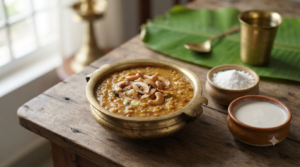
Kerala-style parippu payasam made with moong dal, jaggery and coconut milk prepared from coconut milk powder.
This is a recipe, not a travel guide. The key is to cook the dal first, reduce it with jaggery, simmer with thin coconut milk, then finish gently with thick coconut milk.
Coconut Milk Powder Payasam at a Glance
This coconut milk powder payasam serves about six people and takes roughly 40 minutes from start to finish. Roasting the moong dal adds a nutty aroma, while strained jaggery keeps the base clean. Because coconut milk powder varies by brand, make the thin and thick milk according to your pack instead of relying on one universal spoon ratio.
| Item | Details | Texture cue |
|---|---|---|
| Prep time | 10 minutes | Powder fully dissolved |
| Cook time | 30 minutes | Dal soft but not gluey |
| Servings | 6 | Pourable when hot |
| Main sweetener | Jaggery | Syrup strained before use |
| Coconut base | 2 cups thin + 1 cup thick | Thick milk added at the end |
Nestlé Professional says its coconut milk powder can be mixed with warm water and adjusted for thickness by changing the powder quantity. Its product specifications also give different yields for thin coconut milk and thick coconut cream. That is why this recipe specifies the finished milk volume, not a fixed number of tablespoons for every brand.
Ingredients for Parippu Payasam with Coconut Milk Powder
The ingredient list is intentionally simple because the dal, jaggery and coconut should remain the main flavours. Use yellow split moong dal, also called cherupayar parippu in many Kerala kitchens. Darker jaggery gives a deeper caramel note, while lighter jaggery produces a milder payasam.
- 3/4 cup yellow split moong dal, about 150 g
- 2 1/2 cups water for cooking the dal, plus more only if needed
- 250 to 300 g jaggery, grated or chopped
- 1/2 cup water for melting the jaggery
- Coconut milk powder, enough to make 2 cups thin coconut milk according to the pack
- Coconut milk powder, enough to make 1 cup thick coconut milk according to the pack
- 1/2 teaspoon cardamom powder
- 1/4 teaspoon dry ginger powder, optional
- 1 small pinch salt
- 2 tablespoons ghee
- 10 to 12 cashews
- 2 tablespoons small coconut pieces, optional
- 1 tablespoon raisins, optional
If you use a commercial powder, read its allergen label before serving. For example, the current MAGGI Professional coconut milk powder ingredient list includes sodium caseinate, which is a milk protein. Therefore, coconut milk powder payasam is not automatically dairy-free or vegan even though coconut milk itself is plant-based.
How to Mix Coconut Milk Powder for Payasam
Mixing the powder separately prevents pale lumps from floating in the finished dessert. Start with warm water, not boiling water, because the powder disperses more easily when you whisk it before it reaches the pan. Make the thin portion first, then prepare a smaller batch of thick milk in a separate bowl.
- Read the pack ratio. Brands differ in fat content and concentration, so follow the manufacturer’s directions for thin and thick milk.
- Use warm water. Nestlé Professional recommends warm water at about 35°C for its MAGGI coconut milk powder.
- Whisk gradually. Add the powder to part of the water first, whisk smooth, then add the remaining water.
- Keep the two strengths separate. You need 2 cups thin milk for simmering and 1 cup thick milk for finishing.
Avoid dumping dry powder straight into a hot, thick jaggery-and-dal mixture. It can form small stubborn lumps, especially when the mixture has already reduced.
How to Make Coconut Milk Powder Payasam
For the best coconut milk powder payasam, treat the thin and thick coconut milk as two different cooking ingredients. Thin milk can simmer with the dal and jaggery, while thick milk should go in near the end. This staged method gives the dessert body without muting the fresh coconut aroma.
- Roast the dal. Heat a heavy pan on medium-low. Add the dry moong dal and roast for 3 to 4 minutes until it smells nutty. Do not brown it deeply.
- Cook until soft. Rinse the roasted dal, then cook it with 2 1/2 cups water. Use a pressure cooker or a covered saucepan. The grains should crush easily between your fingers, but the mixture should not become a completely smooth paste.
- Make the jaggery syrup. Heat the jaggery with 1/2 cup water until it dissolves. Strain it through a fine sieve because jaggery can contain grit or fibres.
- Combine dal and jaggery. Add the syrup to the cooked dal and simmer for 5 to 7 minutes. Stir often, since jaggery can catch on the bottom of a thin pan.
Finish the coconut milk powder payasam gently
The final stage decides whether the coconut flavour stays clean and the texture stays smooth. Keep the heat moderate with the thin milk, then turn it down before the thick milk goes in. This prevents needless reduction at the point when the dessert is already close to finished.
- Add thin coconut milk. Pour in 2 cups of prepared thin coconut milk. Simmer gently for 6 to 8 minutes while stirring. The mixture should look slightly looser than the final texture.
- Finish with thick coconut milk. Lower the heat fully. Stir in 1 cup thick coconut milk, cardamom, dry ginger if using, and a pinch of salt. Warm for 2 to 3 minutes without a hard boil, then switch off the heat.
- Temper and rest. Heat ghee in a small pan. Fry cashews and coconut pieces until golden, then add raisins briefly if using. Stir everything into the payasam and rest it for 10 minutes before serving.
The payasam will thicken as it stands because the cooked dal keeps absorbing liquid. Therefore, stop cooking while the hot mixture is still a little more fluid than your ideal serving consistency.
What “Hotel Style” Should Mean Here
There is no single official hotel formula for parippu payasam. In practical terms, hotel style should mean a smooth, rich dessert that pours easily from a ladle and tastes balanced after a full meal. It should not set like halwa, and it should not taste like sweetened coconut water.
The easiest way to get that texture is to control reduction. Cook the dal and jaggery until cohesive, then let thin coconut milk carry the simmer. Thick coconut milk belongs near the finish because prolonged hard boiling can flatten its aroma and may make some prepared coconut milks look oily.
Why Coconut Milk Powder Payasam Can Turn Lumpy
Coconut milk powder payasam usually turns lumpy because the powder was added directly to a hot, concentrated base. Another common cause is using too little water while mixing the powder. Whisk the coconut milk separately until smooth, then add the prepared liquid to the pan.
If small powder lumps appear before cooking, pass the prepared coconut milk through a fine sieve. If the dal itself looks lumpy, that is different: lightly mashing the cooked dal is fine, because parippu payasam should retain some lentil texture.
Why does the payasam become too thick after cooling?
The cooked moong dal continues to absorb moisture after the heat is off, so the payasam naturally thickens. Keep the hot dessert slightly loose. If it becomes too thick later, stir in a little warm prepared coconut milk rather than plain water, since extra coconut milk preserves flavour.
Why does it taste flat even with enough jaggery?
Sweetness alone does not create balance. A pinch of salt sharpens the jaggery, while cardamom adds aroma and roasted dal adds depth. Dry ginger is optional, yet a small amount gives warmth without turning the dessert spicy.
Fresh Coconut Milk vs Coconut Milk Powder
Fresh coconut milk gives the most traditional extraction-based cooking experience, while powder offers speed and repeatability. The choice depends on whether you value fresh-coconut flavour or pantry convenience more. For a busy home kitchen, powder is especially useful because you can make thin and thick coconut milk on demand.
| Factor | Coconut milk powder | Fresh coconut milk |
|---|---|---|
| Prep | Fast; mix with warm water | Needs grating, grinding and straining |
| Thickness | Easy to adjust by ratio | Depends on each extraction |
| Flavour | Consistent, brand-dependent | Freshest coconut aroma |
| Storage | Dry pantry product before mixing | Shorter life once extracted |
| Diet check | Read label for milk additives | Plain coconut is dairy-free |
For a fresh-coconut version, see Bhimas Cook’s traditional cherupayar parippu payasam with coconut milk. If you specifically want a coconut-free variation, the site also has a parippu payasam without coconut milk.
How to Adjust Sweetness and Consistency
In coconut milk powder payasam, jaggery varies in sweetness and moisture, so 250 to 300 g is a useful working range for this batch. Start at the lower end if you prefer a dessert that is not intensely sweet. Taste after the jaggery has simmered with the dal, then add more syrup only if needed.
For a thinner sadya-style serving texture, add a little more thin coconut milk before the final thick milk. For a richer spoonable dessert, reduce the dal-and-jaggery base a little longer. However, do not solve thin payasam by aggressively boiling the thick coconut milk at the end.
Common Mistakes to Avoid
- Skipping the roast: the dal can taste flatter, so give it a brief dry roast before rinsing.
- Using one-strength coconut milk: separate thin and thick milk gives you better control over both simmering and finish.
- Adding dry powder to the pan: dissolve it first because concentrated jaggery mixtures encourage clumps.
- Over-mashing the dal: some soft lentil texture makes the payasam more interesting.
- Reducing too far: the dessert thickens while resting, so switch off before it reaches its final serving texture.
- Assuming every powder is vegan: check the ingredient and allergen panel because some products contain milk protein.
If you prefer a dairy-milk interpretation instead, compare this method with Bhimas Cook’s cherupayar parippu payasam with cow milk. That version has a different flavour profile and should not be treated as a direct substitute for coconut milk pradhaman.
Serving, Storage and Reheating
Serve this coconut milk powder payasam warm, at room temperature, or lightly chilled. The flavour becomes rounder after a short rest, so ten to fifteen minutes off the heat helps. Before serving, stir from the bottom because the heavier dal can settle slightly.
For food safety, cool leftovers promptly and refrigerate them in a clean covered container. Food Safety and Standards Authority of India guidance says cooked food should not stay at room temperature for more than two hours. Reheat only the portion you need, and warm it gently while stirring.
If refrigerated payasam becomes very thick, loosen it with a small amount of prepared coconut milk. Add the liquid gradually, since too much can dilute both sweetness and spice.
Ingredient Notes That Matter
Which dal works best?
Yellow split moong dal is the easiest choice because it cooks quickly and gives a soft, creamy base. Roast it lightly before rinsing. Chana dal creates a firmer, nuttier payasam, but it needs more cooking and produces a different result.
Should jaggery always be strained?
Straining is a good habit when you use block or loose jaggery because small fibres or grit can remain after melting. If your packaged jaggery is very clean, the step may seem unnecessary. Even so, it only takes a minute and protects the final texture.
Are cashews and raisins compulsory?
No. They are a garnish, not the structure of the dessert. Fried coconut pieces add a more distinctly coconut-led finish, while cashews add crunch. Skip nuts when needed for allergies, and use a clean separate pan if cross-contact is a concern.
Before You Serve
This recipe works because each ingredient has a separate job. Dal gives body, jaggery supplies depth, thin coconut milk carries the simmer, and thick coconut milk finishes the dish. Once you keep those stages separate, coconut milk powder payasam becomes much easier to control.
The most important practical rule is simple: prepare the coconut milk before it enters the pan. Follow the powder manufacturer’s ratio, keep the final boil gentle, and stop cooking while the payasam is still slightly loose.
Frequently Asked Questions
Can I make parippu payasam only with coconut milk powder?
Yes. You can make the full coconut component from powder as long as you prepare separate thin and thick coconut milk. Cook with the thin milk, then add the thick milk near the end for a richer finish.
How much coconut milk powder should I use?
Use enough powder to make 2 cups thin coconut milk and 1 cup thick coconut milk according to your pack. Brands have different concentrations, so one fixed tablespoon measure can be inaccurate. The manufacturer’s dilution guide is the safest reference.
Can I add coconut milk powder directly to payasam?
It is better not to. Dry powder can clump when it meets a hot, thick dal-and-jaggery mixture. First whisk the powder with warm water until smooth, then pour the prepared coconut milk into the pan.
Can I use sugar instead of jaggery?
You can, but the flavour changes noticeably. Jaggery gives parippu payasam its deeper caramel and mineral notes, while white sugar produces a cleaner, simpler sweetness. If you use sugar, add it to taste rather than copying the jaggery weight exactly.
Is coconut milk powder payasam vegan?
Not always. Some coconut milk powders contain dairy-derived ingredients such as sodium caseinate. Check the ingredient and allergen label, especially if you are cooking for someone who avoids milk or has a milk allergy.
Can I make this recipe without a pressure cooker?
Yes. Soak the roasted and rinsed moong dal for about 20 to 30 minutes, then simmer it in a covered heavy saucepan until soft. Add more hot water in small amounts if the pan dries before the dal is tender.
Why should thick coconut milk go in last?
Adding thick coconut milk near the end keeps the coconut flavour fuller and gives you better control over consistency. A long hard boil is unnecessary once the thick milk goes in. Warm it gently, then switch off the heat.
How long can I keep leftover parippu payasam?
Refrigerate leftovers promptly rather than leaving the dessert out after the meal. FSSAI advises refrigerating cooked food within two hours. For best quality, use the payasam soon, reheat gently, and discard it if it develops an unusual smell or appearance.