Paal Poli Recipe with Semolina & Condensed Milk
This paal poli recipe turns crisp, semolina-flecked pooris into a soft South Indian dessert by soaking them in warm cardamom milk sweetened with condensed milk. The key correction is simple: paal poli is a fried poori-and-milk sweet, not a semolina pudding. This version keeps the rava light in the dough, so the poli absorbs milk without turning hard.
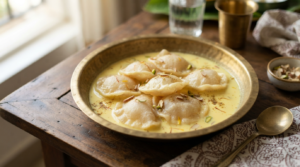
Golden semolina pooris soaked in saffron-cardamom milk sweetened with condensed milk.
The method also keeps the condensed milk in the soaking liquid rather than cooking it into the semolina. That gives you the creamy finish the old page promised, while keeping the dish recognisably paal poli. If you already make bobbatlu with chana dal and jaggery, think of this as a different branch of the poli family: fried, unstuffed, and soaked in sweet milk.
Paal Poli Recipe at a Glance
A paal poli recipe has three parts: a firm poori dough, quick frying, and a lightly reduced sweet milk soak. Semolina adds a gentle bite to the poori, while condensed milk brings sweetness and body to the milk. The finished poli should bend easily and hold milk without dissolving.
| Detail | Amount | What to expect |
|---|---|---|
| Prep time | 20 minutes | Plus 20 minutes dough rest |
| Cook time | 30 minutes | Milk reduction and frying |
| Soak time | 15 to 20 minutes | Soft but still intact |
| Yield | 8 small polis | About 4 dessert servings |
| Difficulty | Medium | Frying is the main skill |
Paal poli is also called milk poli or paal poori in many South Indian kitchens. Reputable recipe references describe it as fried poori soaked in sweetened milk, often with semolina in the dough. Some versions use condensed milk in the milk base, which is the approach used here.
Why This Paal Poli Recipe Uses Semolina and Condensed Milk
This paal poli recipe uses semolina for texture and condensed milk for a faster milk base. Too much coarse rava can make the poori tough, so this version uses a smaller amount with maida. Condensed milk already contains added sugar, so you should taste the milk before adding any extra sweetener.
The Food Safety and Standards Authority of India defines sweetened condensed milk as concentrated milk made with added sugar. That matters here because it changes both sweetness and thickness. You can read the FSSAI dairy standard if you want the formal definition.
Nestlé also describes sweetened condensed milk as a thick dessert ingredient made from milk solids and sugar. Its MILKMAID product information confirms that it adds both sweetness and creamy body. Therefore, there is no reason to start this recipe with a large separate dose of sugar.
Ingredients for Semolina Paal Poli
The quantities below make eight small polis. Use fine rava or chiroti rava if available, because coarse semolina can crack while rolling. Regular fine sooji works too, although it may need a few extra minutes of resting.
For the poori dough
- 1 cup all-purpose flour or maida, about 125 g
- 1/4 cup fine semolina or rava, about 40 g
- 1 teaspoon ghee
- 1 small pinch salt
- 1/3 to 1/2 cup warm water, added gradually
- Neutral oil for deep frying
For the condensed milk soak
- 750 ml full-fat milk
- 1/3 cup sweetened condensed milk, about 100 g
- 1/2 teaspoon cardamom powder
- 8 to 10 saffron strands, optional
- 2 tablespoons chopped almonds, pistachios, or cashews
- 1 to 2 tablespoons sugar only if needed after tasting
The 4:1 flour-to-rava balance is deliberate. It gives the poli some semolina character while keeping enough gluten for easy rolling. If you want a rava-forward version, use fine chiroti rava rather than increasing ordinary coarse sooji.
Paal Poli Recipe: Step-by-Step Method
This paal poli recipe works best when the milk is ready before you fry the pooris. That way each hot poli can go into warm milk soon after frying. The sequence also prevents fried pooris from drying out while you finish the milk.
Step 1: Mix and rest the dough
Combine maida, fine semolina, salt, and ghee in a bowl. Rub the ghee through the dry ingredients, then add warm water little by little. Knead until the dough feels smooth, firm, and pliable rather than soft like chapati dough.
Cover the dough and rest it for 20 minutes. During the rest, semolina absorbs moisture, so the dough becomes easier to roll. If it still cracks after resting, knead in one teaspoon of water at a time.
Step 2: Prepare the cardamom-condensed milk
Pour the milk into a wide, heavy pan and bring it to a gentle boil. Lower the heat, then simmer for about 10 minutes so the milk reduces slightly. Stir often because milk catches easily at the bottom.
Add condensed milk, cardamom, and saffron after the first reduction. Simmer gently for another 3 to 4 minutes, then taste. Add extra sugar only if your family prefers a sweeter dessert, since the condensed milk already contributes plenty of sweetness.
Step 3: Roll small, even pooris
Divide the rested dough into eight equal balls. Keep the unused pieces covered while you roll, because exposed dough dries quickly. Roll each piece into a small circle about 9 to 10 cm wide and roughly 2 to 3 mm thick.
A slightly thicker poori absorbs milk better than a paper-thin one. Still, avoid thick centres because they stay chewy after soaking. If the edges crack, let the remaining dough rest five more minutes before continuing.
Step 4: Fry until pale golden
Heat oil in a kadai over medium heat. Test with a tiny piece of dough; it should rise steadily without turning dark at once. Slide in one poori, press it gently with a slotted spoon, and let it puff.
Turn it once and cook the second side briefly. Remove the poori when it is pale golden, not dark brown, because over-fried poli resists the milk. Drain for only a few seconds before moving to the soak.
Step 5: Soak each poli while warm
Keep the sweet milk warm, but do not boil it while soaking. Dip each fried poori into the milk for 30 to 60 seconds, then arrange it in a shallow serving dish. Pour enough milk over the top to keep every poli moist.
Rest the tray for 15 to 20 minutes before serving. The centres should turn tender while the edges still hold their shape. If you prefer chilled paal poli, cool it first and refrigerate it promptly.
What Makes Paal Poli Soft Instead of Rubbery?
Soft paal poli depends on three controls: a rested dough, moderate frying, and a warm milk soak. If the dough is under-rested, semolina stays gritty. If the poori is fried too dark, its dry crust blocks the milk and the centre stays chewy.
The milk also needs the right consistency. Reduce it only slightly, because very thick rabri cannot move into the poori as easily. Condensed milk provides body quickly, so a long reduction is unnecessary in this version.
| Problem | Likely cause | Fix |
|---|---|---|
| Poli turns hard | Too much rava or over-frying | Use fine rava and fry only to pale gold |
| Dough cracks | Semolina not hydrated | Rest longer and add water by teaspoons |
| Milk feels too sweet | Extra sugar added too early | Taste after condensed milk before adding sugar |
| Poli becomes mushy | Too thin or soaked too long | Roll slightly thicker and shorten soaking |
| Milk stays watery | Not reduced before sweetening | Simmer plain milk first, then add condensed milk |
Paal Poli Recipe Troubleshooting for First-Time Cooks
A paal poli recipe can fail even when the ingredient list looks simple, because texture changes fast during frying and soaking. The easiest way to recover is to identify whether the problem sits in the dough, oil, or milk. Fix one variable rather than adding more flour or sugar blindly.
Why did my poli not puff?
The oil may be too cool, or the poori may be rolled unevenly. When the oil is ready, the dough should rise steadily and begin to puff. Pressing the surface gently with a slotted spoon also helps steam inflate the centre.
Why is the centre still chewy?
A thick centre usually stays chewy even after soaking. Roll from the middle outward and check that the centre is no thicker than the edges. If the poli is already fried, give it a little more warm milk and a longer rest.
Why does the milk split or look grainy?
High heat can scorch milk and create grainy milk solids around the pan. Keep the reduction gentle, while stirring the base and sides often. Add condensed milk after reducing the plain milk, then keep the heat low.
Paal Poli, Bobbatlu, and Puran Poli Are Not the Same Dessert
Paal poli is an unstuffed fried poori soaked in sweet milk. Bobbatlu and puran poli are stuffed flatbreads cooked on a tawa, usually with a sweet lentil filling. The shared word “poli” causes confusion, but their cooking methods and textures are very different.
If you want the stuffed festival version, use the Bhimas Cook bobbatlu recipe. For a broader festive menu, the site’s Diwali sweets recipes and Sankranti sweets and snacks guide give better pairings than treating paal poli as another dal-stuffed flatbread.
Serving Ideas for Paal Poli with Condensed Milk
Serve paal poli warm if you want the fried edges to remain slightly distinct. Serve it chilled if you prefer a softer, pudding-like finish. In either case, spoon a little extra cardamom milk over each piece just before serving.
- Garnish with pistachios and almonds for colour and crunch.
- Add only a few saffron strands, because too much can dominate the milk.
- Keep the milk pourable, so every poli receives enough liquid.
- Serve one or two small polis per person after a rich meal.
- For a festival spread, pair it with a savoury snack to balance the sweetness.
Do not pour cold milk over hot pooris straight from the refrigerator. The sudden temperature difference slows absorption, so the centres can stay firm. Warm or room-temperature milk gives a more even soak.
How to Store This Paal Poli Recipe Safely
This paal poli recipe contains milk, so refrigerate leftovers promptly in a covered container. The U.S. Department of Agriculture advises refrigerating perishable leftovers within two hours and using most cooked leftovers within three to four days. For the best texture, paal poli is usually better within one or two days.
You can read the USDA leftover safety guidance for the general storage rule. Keep the dessert at 4°C or below, and discard it if it has been left at room temperature too long. Freezing is possible from a safety standpoint, but the soaked poori often turns soft and patchy after thawing.
Make-Ahead Plan for Easier Festival Cooking
Prepare the milk base several hours ahead, then refrigerate it once cool. You can also mix and rest the dough earlier the same day, although it should stay covered. Frying is best done closer to serving, because fresh pooris absorb milk more evenly.
If you must fry ahead, store the cooled pooris in an airtight box without milk. Warm the milk before serving, then dip and soak the polis for 15 to 20 minutes. This approach gives you a fresher texture than storing them already soaked overnight.
Before You Serve
The biggest improvement in this refresh is not a new garnish or a longer ingredient list. It is the correction of the dish itself: paal poli needs a fried poori and a sweet milk soak. Semolina belongs in the poori dough, while condensed milk belongs in the milk base.
Keep the rava fine, fry only until pale gold, and let the milk stay pourable. Those three decisions give the best balance of soft centre, intact edges, and creamy cardamom flavour. Once you understand that structure, this paal poli recipe becomes much easier to repeat.
FAQ About Paal Poli Recipe
Is paal poli the same as puran poli?
No. Paal poli uses fried pooris soaked in sweetened milk, while puran poli uses a lentil-based sweet filling inside a griddled flatbread. Their names overlap, but the preparation and final texture are different.
Can I make paal poli with only semolina?
Yes, some versions use fine chiroti rava as the main dough ingredient. However, ordinary coarse sooji can crack and turn hard, so a maida-rava blend is easier for most home cooks. If using only rava, choose the finest grade available.
Can I use condensed milk instead of sugar?
Yes. Sweetened condensed milk can replace most or all added sugar in the milk base because it already contains sugar. Add it after the milk reduces slightly, then taste before deciding whether you need any extra sugar.
How long should paal poli soak in milk?
About 15 to 20 minutes gives a soft texture while keeping the poli intact. A very thin poori may need less time, while a thicker one can take longer. Check one piece before soaking the whole batch for extra time.
Can I make paal poli without deep frying?
You can cook small discs with less oil on a tawa, but the result will not absorb milk in the same way. Deep frying creates the porous structure associated with classic paal poli. Use the lighter method only if you accept a denser texture.
Why did my paal poli turn soggy?
The poori may have been rolled too thin or left in milk too long. Start with a slightly thicker disc and use a 15-minute soak. Also keep the milk pourable rather than extremely hot and thin.
Can I serve paal poli cold?
Yes. Many people enjoy it chilled after the polis have absorbed the cardamom milk. Cool the dish promptly, refrigerate it in a covered container, and add nuts just before serving for better texture.
What is the best semolina for paal poli?
Fine semolina or chiroti rava is the easiest choice because it hydrates quickly and rolls smoothly. Coarse sooji can make the dough grainy, so use a smaller amount if that is all you have. Resting the dough becomes even more important with coarser rava.