Rasam Recipe Tomato Puree Easy & Essential Recipe
This Rasam Recipe Tomato Puree turns a few ripe tomatoes into a tangy, peppery South Indian broth in about 35 minutes. Because you blend the tomatoes into a smooth puree first, the rasam cooks faster and tastes silkier than the chunky version.
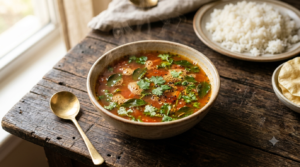
A steaming bowl of Rasam Recipe Tomato Puree, garnished with fresh coriander and curry leaves.
Traditionally called Thakkali Rasam or Tomato Charu, this bowl is comfort food that also settles a heavy stomach. Below you get exact quantities, a foolproof method, the two mistakes that turn rasam bitter, and the storage tips most recipes skip.
Rasam Recipe Tomato Puree at a Glance
Here is the short version of this Rasam Recipe Tomato Puree before we cook, so you know exactly what you are signing up for.
- Time: 15 minutes prep, 20 minutes cook, 35 minutes total.
- Yield: 4 generous bowls, or enough to flavour rice for 4–5 people.
- Texture: smooth and pourable, never chunky, because the tomatoes go in as puree.
- Skill level: easy, and hard to ruin once you avoid over-boiling.
- Best served: hot over steamed rice, or sipped like a spiced soup.
Recipe Card
| Detail | Value |
|---|---|
| Prep Time | 15 minutes |
| Cook Time | 20 minutes |
| Total Time | 35 minutes |
| Servings | 4 bowls |
| Cuisine | South Indian |
| Difficulty | Easy |
Why This Rasam Recipe Tomato Puree Works
Most rasam problems come from two things: watery tomatoes and over-boiling. This Rasam Recipe Tomato Puree fixes both. Blending gives you a concentrated tomato base, so the flavour stays bright even after you add four cups of water.
The tempering matters just as much as the tomatoes. When mustard seeds crackle in hot ghee, they release a nutty aroma that plain oil never gives you. Cumin and freshly cracked pepper then wake up the whole pot. Because the pepper goes in whole and freshly ground, the rasam gets warmth without harsh heat.
Tamarind is the third pillar. It adds the sour note that balances the sweetness of ripe tomatoes, so the finished broth tastes rounded rather than flat. Skip it and the rasam leans one-dimensional, even with good tomatoes.
What Goes Into Rasam Recipe Tomato Puree
These amounts make four bowls. Everything is a pantry staple, so you rarely need a special trip to the shop.
- 3 cups (about 700 g) fresh tomato puree, from 5–6 medium ripe tomatoes
- ¼ cup tamarind water, from a lime-sized ball soaked in warm water
- 4 cups water
- 1 tablespoon rasam powder, store-bought or homemade
- ½ teaspoon turmeric powder
- ½ teaspoon black pepper, freshly ground
- 1 teaspoon mustard seeds
- 1 teaspoon cumin seeds
- 2 dried red chillies (optional)
- 8–10 curry leaves
- 2 tablespoons fresh coriander, finely chopped
- 2 tablespoons ghee or sesame oil
- Salt to taste, about 1 teaspoon
- A pinch of asafoetida (hing)
If you want a richer bowl, keep a small ladle of cooked toor dal ready. It is optional, yet it turns a light rasam into something closer to a meal.
How to Make Rasam Recipe Tomato Puree Step by Step
Read all seven steps of this Rasam Recipe Tomato Puree once before you start, since the cooking moves quickly after the tempering. Total hands-on time is about 20 minutes.
Step 1: Prepare the tomato puree (5 minutes)
Wash the tomatoes well, then blanch them in boiling water for 3–4 minutes until the skins loosen. Peel off the skins and remove the stems. Blend the flesh into a smooth puree. Fresh puree tastes brighter than canned, though canned works in a pinch.
Step 2: Make the tamarind water (5 minutes)
Soak a lime-sized ball of tamarind in ½ cup warm water for five minutes. Squeeze and strain it to get smooth tamarind water, then discard the solids. Straining matters, because stray fibres make the rasam gritty.
Step 3: Start the rasam base (3 minutes)
Heat a heavy-bottomed pan over medium heat and add the ghee or sesame oil. Once it is hot, add the mustard seeds. When they crackle, add the cumin seeds, dried red chillies and curry leaves. Stir for about 30 seconds until fragrant.
Step 4: Add the ground spices (2 minutes)
Add the turmeric, black pepper and a pinch of asafoetida. Stir for a few seconds so the spices bloom in the hot fat. Keep the heat medium here, since burnt spices turn the whole pot bitter.
Step 5: Add the tomato puree (3 minutes)
Pour in the tomato puree and mix it gently with the tempering. Cook on medium heat for three minutes until it starts to simmer. The raw tomato smell should fade as it cooks.
Step 6: Add liquids and rasam powder (5 minutes)
Add the 4 cups of water and the tamarind water, then stir well. Add the rasam powder and salt. Bring it to a gentle boil, then lower the heat and simmer for about five minutes so the flavours meld.
Step 7: Finish and serve (2 minutes)
Turn off the heat and stir in the fresh coriander. Cover the pan for a minute to trap the aroma, then serve hot with steamed rice or in a mug as soup. A layer of froth on top is the sign of a well-made rasam.
Fresh Tomatoes or Store-Bought Puree?
Fresh puree wins on flavour, since you control ripeness and skip added preservatives. Five or six red, soft tomatoes give the sweetest base. When good tomatoes are out of season, unsalted canned puree is a fair backup.
Use about 1½ cups of canned puree in place of the 3 cups fresh, because canned is more concentrated. Then top up with a little extra water. Taste as you go, as canned brands vary in acidity and salt.
Common Mistakes That Ruin Tomato Rasam
Rasam looks simple, yet a few small errors show up again and again. Fix these five and your bowl turns out right every time, even on a busy weeknight.
- Boiling after the rasam powder goes in. Hard boiling drives off the aroma, so simmer gently instead.
- Burning the tempering. Scorched mustard or pepper leaves a bitter edge, so keep the flame medium.
- Raw tamarind taste. If you rush the simmer, the tamarind stays sharp, so give it the full five minutes.
- Too thin or too thick. Rasam should coat a spoon lightly, so adjust with a splash of water or a little more puree.
- Salt added too early. Season near the end, since the broth reduces and concentrates as it cooks.
Pro Tips for the Best Rasam Recipe Tomato Puree
These are the small habits that separate a good rasam from a memorable one. None of them add real work.
- Fresh home-made rasam powder gives the most vibrant flavour, and the difference is easy to taste.
- If the tomatoes are very sweet, add a teaspoon of lemon juice or a little extra tamarind for balance.
- Add a small ladle of cooked toor dal while it simmers when you want a heartier broth.
- Stir in the coriander only at the end, because its fragrance cooks off quickly.
- Let the rasam rest, covered, for five minutes before serving so the flavours settle.
Chef’s Notes: Rasam Recipe Tomato Puree Swaps and Storage
Missing an ingredient? These swaps keep the recipe on track without a shop run.
- Rasam powder substitute: mix ½ teaspoon each of cumin, coriander and freshly ground black pepper.
- Tamarind option: use lemon juice instead, starting with 1 tablespoon and adjusting to taste.
- Oil choice: sesame oil gives authentic flavour, while ghee makes it richer and vegetable oil works too.
- Milder version: drop the dried chillies and halve the pepper for children or sensitive palates.
Storing Rasam Recipe Tomato Puree
Cool the rasam completely, then refrigerate it in an airtight container for up to two days. Reheat it gently on the stove rather than boiling it hard. Freezing is not ideal, because the tomato texture turns grainy after thawing. For the best taste, make it fresh and store only the leftovers.
Rasam Recipe Tomato Puree Nutrition Per Serving
One bowl of this Rasam Recipe Tomato Puree is light at roughly 70 calories, so it fits an everyday meal easily. These figures are approximate and shift with the fat and salt you use.
| Nutrient | Amount (per serving) |
|---|---|
| Calories | about 70 kcal |
| Total fat | about 2.8 g |
| Carbohydrates | about 9–11 g |
| Protein | about 2–2.5 g |
| Fibre | about 2 g |
| Vitamin C | about 10 mg or more |
Tomatoes bring vitamin C that supports immunity, while pepper and cumin have long been used to aid digestion. You can read more on the culinary role of spices at the National Institutes of Health, and check tomato nutrition on USDA FoodData Central. For any specific dietary need, check with a qualified professional.
What to Serve With Tomato Rasam
This Rasam Recipe Tomato Puree is flexible, so it slots into almost any South Indian plate. The classic pairing is a mound of hot steamed rice with a spoon of ghee.
For a fuller meal, serve it after sambar rice, the way many Tamil homes do. A crisp side of appalam (papad) or a simple potato fry rounds it off. On a cold or sniffly day, skip the rice and drink it straight from a mug like a warm broth.
You can also build a small thali around this Rasam Recipe Tomato Puree. Pair it with rice, a dry vegetable curry, curd and a pickle, and you have a balanced South Indian lunch. Since the rasam carries most of the flavour, the other dishes can stay simple.
Regional Rasam Recipe Tomato Puree Variations
Every South Indian region has its own take on this bowl. Try these once you have the base method down.
- Andhra tomato charu: a little more water and extra tamarind for a sharper, tangier broth.
- Garlic tomato rasam: add 6–8 crushed garlic cloves to the tempering for a bold aroma.
- Milagu rasam: double the black pepper for a spicier bowl, which is lovely in winter.
- Lemon rasam twist: swap the tamarind for fresh lemon juice added right at serving.
If you enjoy exploring styles, our Kerala-style rasam and traditional Tamil Nadu rasam use the same core technique with different spice balances. The Andhra-style rasam leans tangier still.
Before You Cook This Rasam Recipe Tomato Puree
This Rasam Recipe Tomato Puree rewards two habits above all: use ripe tomatoes and never boil it hard once the rasam powder is in. Get those right and the rest is forgiving. Keep the tamarind, pepper and fresh coriander in balance, and you will land a bright, comforting bowl every time. Make a batch tonight, taste as you go, and adjust the sourness to your own palate.
Frequently Asked Questions
Can I make rasam without tamarind?
Yes. Use lemon juice or a few pieces of raw mango to add the sour note instead. Start small and taste, since both can turn sharp quickly.
Why is my rasam bitter?
Bitterness usually comes from over-boiling the tomato puree or burning the tempering spices. Keep the heat medium and simmer gently rather than boiling hard.
Can I use canned tomato puree instead of fresh?
Yes, canned puree works when fresh tomatoes are out of season. Use about half the quantity, because it is more concentrated, then adjust with extra water and taste for salt.
How do I make rasam thicker or thinner?
For a thicker rasam, add a ladle of cooked toor dal or a little more puree. For a thinner, soupier broth, simply stir in more water and re-season lightly.
Is tomato rasam healthy for kids?
Yes, this mild tomato soup supports digestion and hydration, so it suits older children when served warm. Drop the dried chillies and halve the pepper for a gentler version.
How long does tomato rasam keep?
It keeps well in the fridge for up to two days in an airtight container. Reheat it gently on the stove, and avoid freezing, because the tomato texture turns grainy.
Can I make this rasam without oil or ghee?
You can dry-roast the tempering spices and skip the fat for a lighter version. The aroma is milder, though, since ghee and sesame oil carry much of the flavour.
What is the difference between rasam and sambar?
Rasam is a thin, spiced, tangy broth, while sambar is a thicker lentil-and-vegetable stew. Rasam is meant to be sipped or poured over rice, whereas sambar eats more like a main dish.