Sweet Potato Poli Recipe: Soft Jaggery-Stuffed Bobbatlu
Sweet potato poli recipe gives you a soft, thin Indian sweet flatbread with a smooth jaggery filling instead of the usual lentil puran. The important part is not the ingredient list; it is getting the sweet potato filling dry enough to hold a ball while keeping the outer dough soft enough to stretch without tearing. This version keeps the original Bhimas Cook idea, but makes those texture cues much clearer.
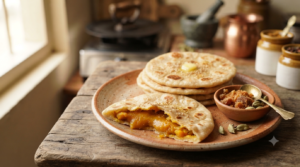
Soft homemade sweet potato poli filled with jaggery and cardamom, cooked gently on a tawa.
Sweet potato poli is a variation of the wider poli, bobbatlu, obbattu and holige family. The name changes by region, while the basic technique stays similar: wrap a sweet filling in soft dough, roll it gently, then cook it on a hot tawa with a little ghee.
Sweet Potato Poli Recipe at a Glance
- Prep time: about 30 minutes, plus 30 minutes for the dough to rest
- Cook time: about 35 to 40 minutes
- Yield: 8 to 10 medium polis
- Best filling texture: smooth, thick and cool enough to roll into soft balls
- Best dough texture: soft and supple, slightly softer than chapati dough
- Key mistake to avoid: stuffing the poli while the filling is warm or wet
The method is forgiving once the filling and dough have similar softness. If one is much firmer than the other, the poli tends to split, shrink or push the filling out while rolling.
Ingredients for Sweet Potato Poli Recipe
The quantities below keep the original recipe’s balance. However, sweet potatoes vary in moisture and sweetness, so the jaggery and cooking time may need a small adjustment.
| Ingredient | Quantity | Why it matters |
|---|---|---|
| All-purpose flour (maida) | 1 1/2 cups | Gives a soft, stretchable outer layer |
| Turmeric powder | 1/4 teaspoon | Adds the traditional warm yellow tone |
| Salt | 1/4 teaspoon | Balances the sweet filling |
| Oil | 2 tablespoons, plus a little for resting | Keeps the dough supple |
| Water | About 1/2 cup, added gradually | Amount varies with flour |
| Cooked sweet potato | 300 to 350 g | Forms the main filling |
| Grated jaggery | 3/4 cup | Adds sweetness and caramel flavour |
| Fresh grated coconut | 1/4 cup, optional | Adds body and a mild nutty bite |
| Cardamom powder | 1/2 teaspoon | Gives the filling its classic aroma |
| Ghee | 1 to 2 tablespoons for cooking | Helps the surface brown and stay tender |
If your sweet potatoes are very sweet, start with slightly less jaggery. You can taste the cooked filling before it cools, then add a little more jaggery only if needed.
How to Make Sweet Potato Poli Recipe Step by Step
This sweet potato poli recipe works best when you prepare the dough first, then make the filling while the dough rests. That order saves time and gives the flour enough time to hydrate before rolling.
1. Make a Soft, Rested Dough
- Mix the flour, turmeric and salt in a wide bowl.
- Add the oil, then rub it through the flour with your fingertips.
- Add water little by little until a soft dough forms.
- Knead for 6 to 8 minutes, so the dough becomes smooth and elastic.
- Rub a few drops of oil over the surface, cover and rest for at least 30 minutes.
Do not make the dough stiff. A stiff dough fights the filling and tears at the edges, while a softer dough stretches around the sweet potato more easily.
2. Cook and Mash the Sweet Potatoes
- Wash the sweet potatoes well and steam or boil them until a knife slides through easily.
- Drain completely, then let them cool until safe to handle.
- Peel and mash while still slightly warm.
- Remove every visible lump, because chunks can puncture the dough during rolling.
Steaming usually keeps the flesh drier than boiling. If you boil the sweet potatoes, drain them well and let excess surface moisture evaporate before mashing.
3. Make the Jaggery-Sweet Potato Filling
Place the mashed sweet potato in a heavy pan over medium-low heat. Add the grated jaggery and keep stirring, because jaggery initially makes the mixture looser as it melts.
Add coconut, if using, and cardamom after the jaggery dissolves. Continue cooking until the mixture gathers together and a spatula leaves a clean path across the pan for a moment.
Transfer the filling to a plate and cool it fully. Then divide it into 8 to 10 equal balls. If the mixture cannot hold a soft ball after cooling, cook it for another few minutes instead of adding lots of dry flour.
4. Stuff and Roll Without Breaking the Poli
- Divide the rested dough into the same number of pieces as the filling.
- Flatten one dough piece into a small disc with lightly oiled fingers.
- Place one filling ball in the centre.
- Bring the dough edges over the filling and pinch them closed.
- Flatten gently, then roll to about 15 to 17 cm wide.
Use only a light dusting of flour if the dough sticks. Too much dry flour makes the surface tough and can stop the edges from sealing properly.
5. Cook on a Medium-Hot Tawa
- Heat a tawa over medium heat before placing the rolled poli on it.
- Cook until small bubbles and light brown spots appear underneath.
- Flip, spread a small amount of ghee and cook the second side.
- Flip once more if needed, then remove when both sides have golden patches.
Very high heat browns the outside before the dough cooks through. Low heat can dry the poli, so keep the tawa at a steady medium heat and adjust as the pan gets hotter.
Why Sweet Potato Poli Filling Turns Runny
Runny filling is the most common problem with a sweet potato poli recipe. Jaggery draws moisture from the mashed sweet potato and melts into syrup, so a mixture that looked dry can suddenly become loose.
The best fix is simply to keep cooking it over medium-low heat. Stir often until the filling thickens and starts leaving the sides of the pan. It should feel soft, but it must hold its shape after cooling.
- If it is slightly loose: cook a few minutes longer.
- If it is very wet: use a wider pan, so moisture evaporates faster.
- If coconut is already in the recipe: a small extra spoonful can help absorb moisture.
- If the filling is already cold: return it to the pan rather than forcing in excess flour.
This matters because a wet filling spreads faster than the dough while rolling. Once that happens, the centre becomes thin and the sweet filling starts leaking through.
How to Keep Sweet Potato Poli Soft
Soft poli depends on three things working together: a relaxed dough, a smooth filling and moderate heat. The dough should not feel dry, while the filling should not be hot when you begin shaping.
Resting is especially useful because it lets the flour absorb water evenly. Meanwhile, a little oil keeps the surface flexible, so the dough stretches around the filling instead of springing back.
After cooking, stack the polis and cover them loosely with a clean kitchen towel. The trapped warmth helps them stay tender. Avoid sealing steaming-hot polis in an airtight box, because condensation can make the surface soggy.
Sweet Potato Poli Recipe Troubleshooting Guide
| Problem | Likely cause | Best fix |
|---|---|---|
| Filling leaks while rolling | Filling is wet or too much stuffing was used | Cook filling drier and reduce filling slightly |
| Dough tears | Dough is stiff, under-rested or rolled too thin | Add a little water, rest longer and roll gently |
| Poli turns hard | Too much dry flour or low, prolonged heat | Use less dusting flour and cook on medium heat |
| Filling has lumps | Sweet potato was not mashed smoothly | Mash well before adding jaggery |
| Poli shrinks while rolling | Dough has not relaxed enough | Rest it for another 15 to 20 minutes |
If the first poli breaks, do not keep repeating the same method. Check the filling first, then feel the dough. Small texture corrections usually solve the rest of the batch.
Can You Use Whole Wheat Flour?
Yes, but the result changes. Whole wheat flour absorbs more water and gives a firmer, more rustic poli, while maida produces a softer and more flexible wrapper.
For a middle ground, use half whole wheat flour and half maida. Add water slowly because the dough may need more than the all-maida version. Give it a longer rest, so the bran softens before you roll the stuffed discs.
If this is your first attempt, make the original maida version first. Once you understand the correct dough and filling feel, the whole-wheat variation becomes much easier to judge.
Is Sweet Potato Poli Healthier Than Regular Puran Poli?
Sweet potato changes the filling, but this is still a sweet made with jaggery and usually ghee. It is better to think of it as a different poli rather than automatically calling it a healthier dessert.
Sweet potato itself contributes carbohydrate, fibre and micronutrients. The USDA FoodData Central database provides ingredient-level nutrient data, but the nutrition of a finished poli depends on the amount of jaggery, flour, coconut and ghee used.
That is why this refresh removes the old fixed per-serving nutrition table. Without weighing the final batch and calculating every ingredient, a precise calorie number can look more certain than it really is.
Serving Ideas and Regional Context
Serve the poli warm with a light smear of ghee. It also pairs well with plain warm milk, while some families simply serve it as part of a festive sweet plate.
If you want to compare this sweet-potato version with a classic lentil filling, see the Bhimas Cook bobbatlu recipe. The site also has a Gujarati puran poli recipe and a broader Sankranti recipes guide for menu planning.
The names poli, bobbatlu, obbattu and holige can describe related stuffed flatbreads across different regions. However, the fillings and doughs vary by household, so this sweet-potato version should be treated as a variation rather than a single pan-Indian standard.
Storage and Make-Ahead Tips
You can prepare the filling one day ahead, then refrigerate it in a covered container. Bring it closer to room temperature before stuffing, because very cold filling can make rolling harder.
Cooked polis are best when fresh. For safe leftover handling, refrigerate cooked food promptly; the USDA Food Safety and Inspection Service advises refrigerating perishable leftovers within two hours and generally using refrigerated leftovers within three to four days.
For the best texture, reheat sweet potato poli on a tawa over low-to-medium heat. A microwave works in a hurry, but the surface can become chewy if overheated.
What Beginners Usually Get Wrong
The biggest mistake is judging the filling while it is still hot. Hot jaggery mixtures always feel softer, so let the filling cool before deciding whether it needs more cooking.
Another common error is matching equal-sized dough and filling balls by sight. A better approach is to keep the dough portion slightly smaller than the filling once you are confident with stuffing. That creates a thinner wrapper and a more generous sweet centre.
Finally, do not chase a perfectly round shape. Gentle rolling matters more than symmetry. If the filling stays inside and the thickness is even, the poli will cook far better than an overworked circle.
Sweet Potato Poli Recipe: Final Notes
A reliable sweet potato poli recipe comes down to texture, not speed. Cook the jaggery filling until it holds shape, rest the dough until it stretches easily, and use medium heat on the tawa.
Those three checks prevent most failures before they happen. Once you get them right, this sweet potato poli recipe gives you a smooth, naturally creamy filling with cardamom and a little ghee.
Frequently Asked Questions
Can I make sweet potato poli without coconut?
Yes. Coconut is optional, so you can leave it out without changing the basic method. However, the filling may need a little more cooking because coconut also helps absorb some moisture.
Can I use sugar instead of jaggery?
Yes, but the flavour will be cleaner and less caramel-like. Add sugar gradually because sweet potatoes vary naturally in sweetness, and cook until the filling becomes thick enough to hold a ball.
Why does my sweet potato poli break while rolling?
The usual causes are wet filling, stiff dough or too much pressure from the rolling pin. Cool the filling fully, soften the dough if needed, then roll from the centre outward with light pressure.
Can I make sweet potato poli recipe with whole wheat flour?
Yes. A whole-wheat sweet potato poli recipe is possible, but it will be slightly firmer and less stretchy. Start with a 50:50 mix of atta and maida if you want an easier first variation.
How do I know when the filling is ready?
The filling is ready when it gathers together and no longer spreads like mashed potato. After cooling, you should be able to roll a portion into a soft ball without it sticking heavily to your fingers.
Can I make the filling the day before?
Yes. Cook and cool the filling, then refrigerate it in a covered container. The next day, let it lose some refrigerator chill before stuffing, so the dough and filling have similar softness.
Can I make sweet potato poli vegan?
Yes. Use oil in the dough and on the tawa instead of ghee. The flavour will be different, but the stuffing and rolling method remain the same.
Is sweet potato poli gluten-free?
Not in this version because the wrapper uses wheat flour. A gluten-free flour blend needs a different dough formula and handling method, so a straight one-for-one swap with jowar or millet flour may crack while rolling.