Cucumber Sesame Pachadi: Small-Batch Chutney Trial
Cucumber sesame pachadi sounds simple, but the water in fresh cucumber can turn a promising chutney into a thin sauce. This small-batch trial keeps most cucumber in tiny pieces and grinds only a little into toasted sesame. The goal is a spoonable Andhra-inspired side with a clear sesame taste, not a watery puree.
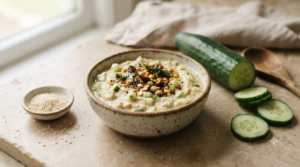
An illustrative cucumber sesame pachadi with chopped green cucumber, ground white sesame and mustard-curry-leaf tempering. The proposed recipe is not yet kitchen-tested.
Recipe status: This is a proposed kitchen trial, not a recipe that Bhimas Cook has cooked and verified. Ingredient weights, working time and yield below are starting estimates. They need a real kitchen test before anyone can describe them as proven results.
Cucumber Sesame Pachadi at a Glance
Cucumber sesame pachadi is a fresh cucumber chutney in which ground sesame gives body and nutty flavour. This trial uses a green English cucumber rather than the round yellow dosakaya common in other Andhra pachadi recipes. A small mustard-and-curry-leaf tempering finishes the bowl.
- Cucumber: Long, dark-green English or greenhouse cucumber; peeled and deseeded for a repeatable trial.
- Sesame: Plain white sesame seeds, toasted separately and ground before mixing.
- Texture: Coarse, spoonable paste holding small cucumber cubes, not a smooth dip.
- Batch: Proposed 180 g prepared cucumber; estimated two to three small side servings.
- Time: About 20–25 minutes is an untested planning estimate, not a measured result.
- Allergens: Contains sesame. Read packaged spice and oil labels for other allergens.
Which Cucumber Works for This Trial?
Choose one firm, long English cucumber, sometimes sold as a seedless or greenhouse cucumber. Its thin skin and relatively small seed core make it easier to prepare a consistent batch. For this test, peel it so varying skin thickness does not alter the texture. That makes cucumber sesame pachadi easier to compare across batches.
After peeling, split it lengthwise and scrape away any wet central seed mass. Then weigh 180 g of prepared cucumber. This target refers to the edible pieces after trimming, not the weight at the shop.
A local green keera dosakaya can work in another trial, but it may carry more developed seeds. Meanwhile, round yellow dosakaya has a different flavour and sometimes a sour edge. Swapping either cucumber means the same formula has not yet been checked.
Do not use any cucumber that tastes unusually bitter. Discard spoiled or damaged produce, too. Wash the whole cucumber under running water before peeling, even when the skin will not go into the pachadi.
Proposed Ingredients for Cucumber Sesame Pachadi
The amounts below form a single untested starting formula. The target is enough chutney for a small meal, so no one needs to make a large batch just to learn whether the balance works.
| Ingredient | Proposed amount | Purpose |
|---|---|---|
| English cucumber, peeled and deseeded | 180 g | Fresh base and crunch |
| White sesame seeds | 20 g | Nutty, thick paste |
| Small green chilli | 1, about 4 g | Gentle heat |
| Fresh lemon juice | 10 ml, about 2 tsp | Tart finish |
| Fresh coriander leaves | 8 g, chopped | Herbal flavour |
| Fine salt | 2 g to start | Seasoning |
| Neutral cooking oil | 10 ml, about 2 tsp | Tempering |
| Urad dal | 1/2 tsp | Crisp tempering texture |
| Black mustard seeds | 1/4 tsp | Tempering aroma |
| Cumin seeds | 1/4 tsp | Warm spice note |
| Dried red chilli | 1/2, broken | Tempering aroma |
| Curry leaves | 5–6, washed and dried | Fragrant finish |
Measure the oil in a spoon rather than pouring it straight from the bottle. Also use the same spoon sizes and pan for later trials. Those small controls make it easier to see whether a change came from the cucumber or the tempering.
This proposal uses lemon juice instead of tamarind for a measurable sour component. It is a test choice, not a claim that all Andhra households make this pachadi that way. A tamarind version needs a separate measured trial.
How to Make Cucumber Sesame Pachadi: Trial Method
The main idea is to keep water out of the grinder. Ground sesame forms a thicker base when only a small cucumber portion joins it. The remaining cucumber stays diced, while the tempering brings warmth and crunch to the finished mixture.
- Prepare a clean work area. Wash hands, the board, the knife and the mixing bowl. Then rinse and scrub the cucumber under running water. Dry it before peeling.
- Trim, peel and dice. Remove any watery seed core, then weigh 180 g. Cut the cucumber into roughly 5 mm pieces. Set aside about 35 g for grinding and keep the rest in a bowl.
- Toast the sesame. Put 20 g white sesame seeds in a dry, small pan over medium-low heat. Stir often until fragrant and lightly coloured, then tip them onto a plate. Do not rely on a fixed toasting time, because pan heat varies.
- Grind a coarse base. Once sesame cools, pulse it with the green chilli and reserved 35 g cucumber. Aim for a grainy, thick paste. Avoid adding water during the first trial.
- Fold, do not puree. Scrape the sesame base into the remaining cucumber cubes. Add lemon juice, coriander and 2 g salt. Fold gently and note whether liquid immediately collects at the bottom.
- Make the fixed tempering. Follow the sequence in the next section, using a dry small pan and measured oil.
- Finish and assess. Let violent sizzling subside before adding the tempering. Stir once, taste with a clean spoon, and record the texture before serving promptly.
Timing Notes for the First Attempt
The 20–25 minute total is an estimate for planning the first attempt. No actual preparation or toasting times have been measured for this exact formula. Record the stopwatch result instead of repeating the estimate as a fact.
A Consistent Tempering Method for Every Batch
For cucumber sesame pachadi, repeat the same tempering order instead of changing the order by instinct. This keeps browning and spice release more comparable between trials. Use a narrow, heavy-bottomed tadka pan if you have one, because the oil then covers the spices evenly.
- Dry the pan completely. Add 10 ml neutral oil and warm it over a steady medium-low flame until the oil moves freely, without smoking.
- Add 1/2 tsp urad dal. Stir until it starts turning pale gold; do not wait for deep brown.
- Add 1/4 tsp mustard seeds and 1/4 tsp cumin. Wait for the mustard to begin popping while keeping the pan under control.
- Turn off the flame. Carefully add the half dried chilli and 5–6 fully dried curry leaves. Stand clear of splashes.
- Let the sharp sputtering stop. Then spoon the tempering across the pachadi and fold it through once.
Mustard can burn quickly after the lentils colour, so watch the pan rather than a timer. If the dal goes dark brown or smells burnt, discard that tempering and start again. Adding it would hide the cucumber’s mild flavour.
Test log tip: Record the flame setting, pan type, order and actual seconds from the first spice to switching off. Repeat those details in trial two. The visual cues remain the safety check even if the recorded timing looks consistent.
Why Keep Some Cucumber in Pieces?
Blending all the cucumber releases more juice into the sesame mixture. The result may taste fine, yet it can slide off a spoon and soak a dosa. Leaving most pieces whole creates a different texture without adding flour, coconut or extra seeds.
There are two useful checkpoints. First, look at the bowl before adding salt, because water already present suggests a very ripe cucumber. Next, check again five minutes after seasoning. Salt may draw out more liquid, so the second observation matters.
If a puddle forms, do not immediately double the sesame. That changes the flavour and allergen load. Instead, record the water problem and try a drier cucumber preparation in the next batch.
Cucumber Sesame Pachadi: Trial Variables
Keep cucumber weight, sesame weight, lemon juice and tempering quantities constant in the first comparison. A cucumber sesame pachadi trial is useful only when the cook knows which variable changed. Then change only one feature at a time. Otherwise, no one can tell which adjustment improved the result.
| Trial | Change | What to compare |
|---|---|---|
| A: Starting batch | 35 g cucumber ground; rest diced | Thickness after five minutes |
| B: Finer texture | Grind 70 g cucumber; rest diced | More liquid or smoother body |
| C: Less sour | Reduce lemon from 10 ml to 5 ml | Balance without extra salt |
| D: Lower heat | Use half a green chilli | Whether sesame comes forward |
These are test designs, not four finished recipes. Do not call one version best until repeated tastings support that conclusion. Also avoid switching cucumber varieties halfway through the comparison.
What Can Go Wrong with Cucumber Sesame Pachadi?
Even a careful small-batch formula cannot guarantee the same result with every cucumber. Produce varies in moisture, sourness and seed size. Use the following fixes as troubleshooting hypotheses, then record whether they actually help.
The chutney turns watery
Drain any free water from the prepared cucumber before measuring the batch. Next time, remove more of the wet core and keep the grinding portion smaller. Adding extra sesame to an already watery bowl can make the taste heavy without fixing the cause.
The sesame tastes bitter
Check the colour of the toasted seeds and the tempering dal. Dark sesame or burnt lentils can taste harsh, so make a fresh small portion rather than masking bitterness with lemon. Also discard a cucumber that itself tastes unusually bitter.
The mustard stays raw or the leaves splatter
The oil may have been too cool when mustard went in. Use visible popping as the cue, while keeping heat moderate. Curry leaves can splatter when wet, so dry them well and add them after switching off the flame.
The chutney is too hot or sharp
Reduce chilli or lemon in the next trial, but do not change both together. Taste the pachadi with plain rice before making a decision. Spiced rice or pickle beside it can disguise the true balance.
Sesame Allergy and Ingredient Cross-Contact
Allergen warning: this recipe contains sesame seeds. Sesame can cause serious allergic reactions, so anyone with a sesame allergy should avoid this pachadi. Toasting the seeds does not make them suitable for a person who reacts to sesame.
The US Food and Drug Administration’s food allergy guidance identifies sesame as a major allergen. Check packaged spice blends, oils and prepared ingredients, too. Shared grinders, pans and serving spoons may carry traces from earlier cooking.
The trial uses no peanuts, dairy or coconut by design, but that does not guarantee an allergen-free serving. If you need to cook for someone with allergies, use their established safety plan and suitable clean equipment. Do not quietly replace sesame with another ingredient and call the result the same tested recipe.
Safe Refrigeration of Cucumber Sesame Pachadi
Fresh cucumber remains mostly uncooked in cucumber sesame pachadi. A brief hot tempering does not cook or sanitise the whole bowl, so clean handling and prompt chilling matter. Wash hands and utensils, keep raw meat away, and rinse cucumbers under running water before cutting.
The FDA’s fresh-produce guidance advises washing firm produce such as cucumbers with a clean brush. It also warns against using soap or detergent on produce. For a second practical reference, see FoodSafety.gov’s four food-safety steps.
Put the pachadi into a clean, covered, shallow container when it is not served immediately. Keep the refrigerator at 4°C or below. Refrigerate within two hours of preparation, or within one hour when the surrounding temperature exceeds 32°C.
For this untested raw-cucumber chutney, the editorial recommendation is to make only what you can eat the same day. If you refrigerate a leftover portion promptly, use it within 24 hours as a cautious household limit, not as a validated safe shelf life. Discard food left out beyond the time limits, and discard any portion with doubtful handling.
Do not treat lemon juice, salt or sesame as proof that the chutney will keep safely without refrigeration. Likewise, freezing is not part of this trial because it may change the cucumber’s texture. No frozen-storage result has been tested.
How to Serve Cucumber Sesame Pachadi
Try a small spoonful of cucumber sesame pachadi with plain steamed rice first. That gives you a clean view of sesame aroma, chilli and salt. Then taste it with dosa or idli, noting whether the mixture stays on the food or releases too much water.
This mild cucumber version differs from the stronger sour-leaf base in our gongura pachadi with green chillies. For another use of sesame in a cooked Andhra dish, compare the masala in our Andhra stuffed brinjal curry.
Sesame allergy information also matters for snack pairings. Our untested jowar sesame crackers explain a separate trial with the same declared allergen. Keep dishes labelled if sharing them with guests.
A Simple Kitchen Log Before Publishing Results
A cucumber sesame pachadi recipe card becomes reliable only after a cook checks the outcome, not just the ingredient list. For this trial, weigh the finished pachadi and record the number of actual portions. Note the time taken to wash, toast, grind and temper separately.
- Record cucumber type, prepared weight, seed-core removal and the amount ground.
- Record sesame weight, colour after roasting and whether the paste remained grainy.
- Record pan size, flame level, tempering order and observed popping and browning.
- Weigh the finished bowl, then write down the real yield and serving size.
- Check taste and water release immediately and again after five minutes.
- Retest a corrected version at least once before calling timings or results dependable.
A photo of the first bowl can help document texture, but it cannot prove the formula was successfully repeated. If the chutney splits or tastes unbalanced, state that result. A useful failed trial teaches more than an invented success.
Before You Make a Bigger Bowl
Cucumber sesame pachadi deserves a small test because a few extra spoonfuls of cucumber juice can change the entire texture. Keep the first batch measured, preserve the cucumber pieces, and use the same tempering order every time. Most importantly, treat all quantities and yields here as provisional until a real cook confirms them.
Frequently Asked Questions
Is cucumber sesame pachadi the same as dosakaya pachadi?
Not exactly. This version uses long green English cucumber and a deliberate toasted-sesame base. Many Andhra dosakaya pachadi versions use round yellow cucumber with a different balance of sourness and spice.
Can I use yellow dosakaya instead?
Yes, as a new experiment, but the substitution is not part of this measured proposal. Taste the cucumber first and check its seed core. Then log how the change affects moisture and acidity.
Should I peel the cucumber?
Peel it for the first controlled trial. English cucumber skin is often tender, yet peeling removes one texture variable. Once the base recipe works, you can test washed, unpeeled pieces separately.
Can I use black sesame seeds?
Black sesame may give a different flavour, colour and texture. The proposed formula uses plain white sesame seeds only. Treat a black-sesame batch as a separate trial rather than an equivalent result.
Does cucumber sesame pachadi need coconut or curd?
No. This proposed version gets its body from ground sesame, so it includes neither coconut nor curd. Adding either would change both the flavour and the storage considerations. Curd would also introduce a milk allergen.
Can I skip the tempering?
You can taste the sesame-cucumber mixture before tempering, but it will not be the same finished trial. The mustard, dal and curry leaves contribute the flavour and texture this method aims to measure.
How long does the pachadi last in the fridge?
No tested shelf life exists for this particular formula. Keep it covered at 4°C or below and make it for same-day eating. A 24-hour leftover limit is a cautious editorial recommendation, not a laboratory guarantee of safety.
Can I make it for someone with a sesame allergy?
No, not in this form. Sesame is a central ingredient and a recognised allergen. Choose a different sesame-free recipe using clean utensils and appropriate cross-contact precautions instead.
How much pachadi does one batch make?
Two to three small side servings are only an estimate. The finished weight and serving count still need measurement in a real kitchen. Cucumber trimming and water loss can change the yield.