Sweet Corn Sundal: Small-Batch Coconut Tempering Trial
Sweet corn sundal takes cooked corn kernels and coats them with a light mustard-seed, curry-leaf and coconut tempering. The challenge is not a long spice list. It is getting sweet, juicy corn into a dry South Indian snack without burning the tempering or leaving water at the bottom of the bowl.
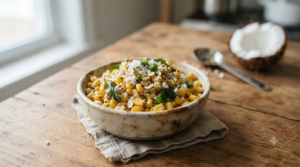
Illustrative sweet corn sundal with grated coconut, mustard seeds and curry leaves. Recipe quantities remain untested.
Recipe status: proposed and not kitchen-tested. The quantities below are starting points for a small experiment. Cooking times, seasoning balance and finished yield have not been measured in a Bhimas Cook trial. Use the texture checks, then record what actually happens in your kitchen.
Sweet Corn Sundal at a Glance
Sweet corn sundal is a South Indian-style snack that uses tender corn instead of the usual boiled pulses. A quick tempering of mustard seeds, optional urad dal, chillies and curry leaves adds savoury contrast. Grated coconut softens the spice, while careful draining keeps the finish loose rather than wet.
- Base: one cup of cooked and well-drained sweet corn kernels, measured after preparation.
- Method: cook or heat the corn as needed, temper spices, toss the kernels and finish with coconut.
- Trial yield: roughly one generous snack bowl or two small tasting portions; not measured.
- Timing: no verified total time; fresh corn and frozen packs need different preparation.
- Diet: vegetarian and potentially vegan with vegetable oil, subject to ingredient labels.
- Key test: the corn must taste tender, hot and lightly coated, with no pool of water.
Sweet Corn Sundal Ingredients for a Small Batch
Start with a little corn so you can change one seasoning at a time. These amounts are provisional recipe-development quantities, not a family-tested formula. Measure the corn after any boiling, heating and draining so comparisons between batches remain fair.
| Ingredient | Proposed starting amount | Purpose or adjustment |
|---|---|---|
| Prepared sweet corn kernels | 1 cup | Fresh, frozen or canned; cooked as needed and drained |
| Neutral cooking oil | 1 tsp | Enough to carry a small tempering |
| Black mustard seeds | 1/4 tsp | Wait for them to crackle |
| Split urad dal | 1/2 tsp, optional | Adds crunch; omit for a simpler batch |
| Green chilli | 1 small, slit | Start milder if serving children |
| Curry leaves | 5–6 leaves | Dry gently before adding to oil |
| Fresh grated coconut | 2 tbsp | Stir in near the end |
| Hing (asafoetida) | 1 tiny pinch, optional | Check its label for wheat |
| Salt | Start with a small pinch | Taste first, especially with canned corn |
| Lemon juice | A few drops, optional | Add off the heat after tasting |
Keep extra coconut and chilli aside rather than committing them all at once. Sweet corn already has a mild, sweet flavour, so a heavy tempering can overwhelm it. If the corn comes from a salted can, taste it before adding the proposed salt.
Fresh, Frozen or Canned Corn: Which Works Best?
All three forms can make a small corn sundal, but they should not share an identical cooking instruction. Fresh kernels need cooking; frozen kernels need the cooking method on their pack; canned sweet corn usually needs draining and thorough reheating. Their moisture and starting salt levels can also differ.
| Corn type | Preparation before tempering | Main texture risk |
|---|---|---|
| Fresh | Wash, cook until tender, then drain | Undercooked, firm kernels |
| Frozen | Cook according to the packet; drain | Watery kernels after heating |
| Canned | Drain; rinse if desired; heat through | Extra salt or soft kernels |
Fresh sweet corn: cook before seasoning
Choose sound, sweet-smelling corn and remove any damaged kernels. You can cook the cob first, cool it enough to handle safely, then slice away the kernels. Alternatively, cut raw kernels from a stable cob and simmer them until tender.
Test a few kernels rather than relying on a fixed number of minutes. The sweet corn sundal should retain a pleasant bite without tasting raw or starchy. Drain well, because leftover cooking water weakens the mustard and coconut coating.
Frozen sweet corn: follow the pack
Frozen corn may arrive blanched, but that does not always mean it is ready to eat without cooking. Follow the pack instructions and heat it thoroughly before seasoning. Food Standards Scotland advises cooking frozen vegetables before eating them.
After cooking, spread the kernels briefly in a sieve so excess water drains away. A wet batch will hiss and steam when it meets the tempering. Keep the next trial drier rather than compensating with extra spices.
Canned sweet corn: drain and check salt
Check that the tin or pouch contains plain sweet corn, not creamed corn or a sauce. Drain the liquid, and rinse the kernels if you want to reduce surface salt. The US Food and Drug Administration advises rinsing sodium-containing canned vegetables.
Commercially canned plain corn generally arrives cooked, so the main task is to heat it through and dry its surface. Taste before salting. If canned kernels seem fragile, fold them gently into the pan so they do not turn mushy.
Sweet Corn Sundal: Coconut Tempering Steps
This is a proposed stove-top sequence, not a validated cooking schedule. Prepare every ingredient before heating the pan because mustard, dal and leaves change quickly in hot oil. The finished dish should smell of curry leaves and coconut, without any scorched or greasy flavour.
- Prepare the corn. Cook fresh or frozen kernels until tender, following any packet directions. Drain well. For canned corn, drain and rinse if desired, then have it ready for thorough heating.
- Set the pan over medium-low heat. Add the proposed teaspoon of oil. Start with modest heat because this is a small tempering and the seeds may burn quickly.
- Crackle the mustard seeds. Add the seeds, then the optional urad dal. Stir until the dal looks light golden, not dark brown.
- Add aromatic ingredients. Lower the heat. Add the slit chilli, gently dried curry leaves and optional hing. Stand clear of splashes because wet leaves can make hot oil spit.
- Heat and coat the kernels. Add prepared corn. Toss gently until hot throughout, and allow visible surface water to evaporate. Add salt only after tasting the base.
- Finish with coconut. Add grated coconut near the end and mix briefly so it warms through. Turn off the heat. Add lemon drops only if the sweetness needs balance.
- Check and record. Taste a kernel, inspect the pan for water, and note whether the coconut looks separate or clumped. Serve promptly.
There is no guaranteed minute count for these steps. Fresh corn variety, pan width and the water left after draining will all change the result. Judge the sweet corn sundal by even heat, tender kernels and a clean, loose coating.
When Should You Add Coconut?
Stir grated coconut in near the end, once the corn feels hot and the pan looks almost dry. This is a practical test choice rather than a proven optimum. Adding it earlier may toast the coconut or let it soak up water before the corn finishes heating.
If the coconut forms wet clumps, the problem may be excess moisture rather than too much coconut. Cook off the water first in the next batch. If the finish tastes dry or bland, adjust the coconut and salt separately so you can identify which change helped.
Sweet Corn Sundal Troubleshooting: What Can Go Wrong?
The most useful test is to change only one thing between batches. A bigger chilli, a different corn pack and more coconut at the same time hide the real cause of a better result. Use the table to decide which variable to check next.
| Problem | Likely cause | Next trial adjustment |
|---|---|---|
| Water at the bottom | Corn drained poorly | Drain longer; evaporate moisture before coconut |
| Hard corn | Fresh kernels undercooked | Cook to tenderness before tempering |
| Mushy corn | Overcooking or rough tossing | Handle gently; shorten extra heating |
| Bitter seasoning | Dal, seeds or chilli scorched | Discard burnt tempering and restart |
| Too salty | Salted canned corn plus added salt | Check label, rinse and taste first |
| Coconut clumps | Too much moisture | Dry the corn before the final mix |
Do not try to rescue blackened mustard or burnt dal with extra coconut. Those bitter flavours spread through the whole pan. Start the tempering again in a clean pan while keeping the corn ready.
A Three-Batch Comparison Worth Trying
For an honest kitchen comparison, use the same prepared volume of corn each time. Keep the oil, mustard, chilli and coconut amounts constant. Change only the corn source: fresh in batch A, frozen in batch B and canned in batch C.
Record how much liquid drains away, the ease of reheating and the final bite. Then taste a spoonful from each batch while warm. A frozen pack may prove more convenient, but convenience alone does not establish which tastes best. The sweet corn sundal winner must come from your own trial notes.
Use a second experiment to test coconut quantity only after choosing your preferred corn. That approach separates sweetness and texture from the effect of extra grated coconut. It also avoids inventing a universal ratio for every brand and corn variety.
Allergens and Ingredient Checks
The recipe includes coconut and mustard, and optional urad dal adds a legume. These ingredients may matter to someone with a relevant allergy. Check packaged corn, spice blends and coconut for additional ingredients or cross-contact warnings before cooking for others.
Compounded hing deserves particular care. Some blends use wheat or other cereal flour, so never assume every hing powder is gluten-free. India’s Food Safety and Standards Authority of India gluten-free guidance specifically calls attention to compounded asafoetida. Omit hing unless the label meets the diner’s needs.
This small-batch sweet corn sundal uses vegetable oil and no dairy in the proposed formula. However, a dish is not automatically safe for every vegan, allergy or gluten-free diet. Verify each brand and prevent cross-contact with utensils, boards and shared cooking oil.
Cooling, Refrigeration and Reheating
Fresh coconut and cooked corn make this a perishable dish, so avoid leaving a prepared bowl on the counter for hours. The US Centers for Disease Control and Prevention advises refrigerating cooked leftovers within two hours. If the surroundings exceed 32°C, shorten that window to one hour.
Move leftovers into a clean, shallow covered container and chill promptly. Keep the fridge cold, ideally at 4°C or below. For a conservative home plan, aim to eat the refrigerated sundal by the next day; this is a quality preference, not a tested shelf-life result.
Food Standards Scotland advises using refrigerated leftovers within two days and reheating until steaming hot throughout. That general guidance is not a validation of this coconut recipe. Discard any batch left outside safe cooling limits, and avoid repeatedly reheating the same portion.
Serving Ideas and Festival Context
Serve sweet corn sundal warm as a small evening snack or a side with a simple South Indian meal. The bright kernels and coconut already offer contrast, so a heavy garnish is unnecessary. Lemon is optional and should follow a taste check, not hide burnt spices.
Families sometimes include sundal at Navratri gatherings or offer it as naivedyam. However, ingredient rules vary across households and fasting traditions. This corn version is not automatically suitable for a strict vrat; see Bhimas Cook’s Navratri fasting recipes guide for the broader distinction.
For a pulse-based alternative, compare the site’s chickpea sundal method or peanut sundal. Both need different cooking decisions. The site’s masala corn chaat offers a separate, tangier snack direction rather than this coconut-tempered finish.
Kitchen Log for the First Trial
Use a notebook instead of relying on memory, because small changes matter in a one-cup batch. Note the brand or variety of corn and whether you measured before or after cooking. Record the oil, coconut and salt actually used, not only the planned amounts.
- Corn source: fresh cob, frozen packet or canned pack; include the label instructions followed.
- Measured base: cooked and drained corn volume, plus optional weight.
- Actual heating: corn cooking time, tempering stage and any extra evaporation time.
- Texture: firm, tender, juicy or soft; any water left in the pan.
- Seasoning: mustard aroma, chilli heat, coconut level and final salt adjustment.
- Yield: finished weight and number of portions actually served.
These observations turn the untested sweet corn sundal formula into useful kitchen evidence. They also reveal whether frozen and canned corn need separate ingredient ratios. Do not publish a precise yield or total cooking time until a real trial establishes both.
Before You Make the First Bowl
Start with well-drained, tender kernels and a restrained coconut tempering. Compare corn forms only after using the same prepared volume, because extra liquid and salt can distort the result. This is a practical draft, not a kitchen-tested promise of speed or yield.
For the first sweet corn sundal trial, prioritise an even coating and safe handling over perfect measurements. Write down what works, then revise the recipe from actual results. That is how a useful small-batch method becomes reliable.
Frequently Asked Questions
Can I make sweet corn sundal with frozen corn?
Yes, frozen corn is a workable starting ingredient for this proposed recipe. Cook it according to the pack, then drain it thoroughly before adding the tempering. The finished taste and timing depend on the particular pack, so neither has been validated here.
Can I use canned sweet corn instead of fresh?
Yes, plain canned corn can replace fresh kernels for a trial batch. Drain it well and rinse if you wish to reduce surface salt, then heat it through. Because canned corn may already contain salt, check flavour before seasoning the pan.
Do I need to soak corn for sundal?
No, sweet corn does not need the overnight soaking used for dried chickpeas. Fresh corn needs cooking until tender, while frozen corn needs its packet cooking directions. Commercially canned corn generally arrives cooked, though it still needs careful draining and heating for this dish.
How much coconut should go into one cup of corn?
Two tablespoons of grated coconut is the proposed starting amount for one cup of prepared corn. It is not a tested or universal ratio. Add a little more only after tasting, because corn sweetness, coconut moisture and personal preference can change the balance.
Can I skip urad dal or hing?
Yes, both are optional in this small-batch version. Urad dal adds a crisp bite, while hing changes the aroma. Skip either if unavailable or unsuitable, and check hing labels for wheat or other cereal ingredients when allergies or gluten avoidance matter.
Is sweet corn sundal the same as masala corn chaat?
No. This method uses a mustard-seed and curry-leaf tempering with grated coconut for a relatively dry finish. Masala corn chaat tends to emphasise tangy spice seasoning instead. The two styles can start with similar corn, but their flavour goals differ.
Is this a tested recipe, and how many people does it serve?
No, Bhimas Cook has not reported a kitchen test of this proposed formula. The expected one or two small snack portions are only an estimate, not a measured yield. Weigh the finished batch and record real servings during the first trial.
How long can coconut corn sundal stay outside the fridge?
Refrigerate cooked leftovers within two hours, or within one hour when the surrounding temperature exceeds 32°C. Cool small portions promptly in shallow containers. This recipe has no tested room-temperature shelf life, so never use the clock alone to justify leaving it out for a gathering.
Can I make this for Navratri fasting?
Some households serve sundal during Navratri, but strict fasting rules differ by tradition. Corn, dal and certain tempering spices may not fit everyone’s observance. Check your family’s practice before treating sweet corn sundal as an approved vrat dish.