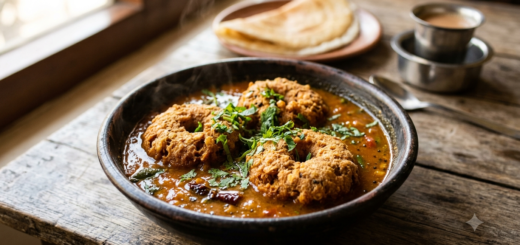
Rasam Recipe Kerala Style: Easy Coconut-Oil Method
Rasam Recipe Kerala Style is a thin, tangy tamarind-and-tomato broth that Kerala homes ladle over hot rice, and its secret is coconut oil in the tempering rather than the ghee that Tamil kitchens reach for. This version skips toor dal completely, so it comes together in about 30 minutes with pantry spices and a spoon of rasam powder. The result is light, peppery, and faintly sour.
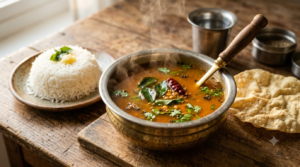
A steaming bowl of Kerala-style rasam, tempered in coconut oil, served with rice.
It soothes a heavy stomach, clears a blocked nose on a cold evening, and earns its place on the Onam Sadya feast. If your last batch turned bitter or dull, one small technique fixes it, and we will get to it below.
Kerala Rasam at a Glance
- Base: tomatoes plus tamarind, with no toor dal, so the broth stays clear and light.
- Signature fat: coconut oil for the tempering, which is the authentic Kerala touch.
- Ready in: roughly 30 minutes, start to finish.
- Serves: 4, as a rice accompaniment or a warm sipping soup.
- Golden rule: switch off the heat the moment it froths, because hard boiling turns rasam bitter.
Recipe Card
| Detail | Value |
|---|---|
| Prep time | 15 minutes |
| Cook time | 15 minutes |
| Servings | 4 |
| Difficulty | Easy |
| Cuisine | Kerala, South Indian |
What Makes Rasam Recipe Kerala Style Different
Every South Indian state makes rasam, yet the Kerala version has its own fingerprint. The clearest marker is the tempering fat. While Tamil Nadu cooks usually finish rasam with ghee, Kerala homes reach for coconut oil, which gives a rounder, nuttier aroma that suits a Sadya spread.
The second difference is the body. Many Tamil and Andhra rasams start with cooked toor dal for volume. This Rasam Recipe Kerala Style leans on tomatoes and tamarind alone, so the broth stays thin and drinkable. Small shallots and crushed garlic often join the pot too, adding a sweetness that pepper alone cannot give.
Context matters as well. Rasam is one of the poured dishes, or ozhichu curries, in the grand Onam and Vishu Sadya feast. It usually arrives after sambar, meant to loosen a full stomach before the payasam. That digestive role is exactly why the recipe stays light.
Ingredients for Rasam Recipe Kerala Style
These quantities make a Rasam Recipe Kerala Style that serves four. Keep everything measured and within reach, since the cooking moves quickly once the pot is hot.
- 2 medium ripe tomatoes (about 300 g), finely chopped
- 1 tbsp tamarind pulp, or a lemon-sized tamarind ball soaked and strained
- 1 tbsp Kerala-style rasam powder, store-bought or homemade
- ¼ tsp turmeric powder
- 1 tsp black pepper powder, freshly crushed if possible
- 1 tsp cumin seeds
- 3 to 4 cups water, adjusted to the tang you like
- Salt to taste, about 1 tsp
- 2 tbsp chopped coriander leaves, for garnish
For the tempering:
- 1 tbsp coconut oil
- 1 tsp mustard seeds
- 1 sprig curry leaves
- 2 dried red chillies, broken
- 2 to 3 garlic cloves, crushed (optional but traditional)
- 1 pinch asafoetida (hing)
Homemade Kerala Rasam Powder in Five Minutes
Store-bought powder works fine, yet a fresh batch lifts the whole pot of Rasam Recipe Kerala Style. Dry-roast the spices below on low heat until fragrant, cool them, then grind to a coarse powder. This makes enough for several rasams and keeps for a month in an airtight jar.
- 2 tbsp coriander seeds
- 1 tbsp cumin seeds
- 1 tbsp black peppercorns
- 1 tsp toor dal (for a gentle roasted note)
- 4 to 5 dried red chillies
- ½ tsp fenugreek seeds
- 1 sprig curry leaves
Roast each spice just until it smells nutty, because a burnt batch turns the rasam harsh. Fenugreek browns fastest, so add it last.
How to Make Rasam Recipe Kerala Style Step by Step
Follow the order below and the flavours build in layers. This Rasam Recipe Kerala Style needs only about 15 minutes of active cooking.
- Prepare tamarind water. Soak the tamarind in half a cup of warm water for 10 minutes. Then squeeze and strain out a smooth extract, and discard the seeds and fibre.
- Soften the tomatoes. Add the chopped tomatoes, turmeric, and salt to a pot with a splash of water. Cook on medium heat until they turn soft and mushy, which takes about 5 minutes.
- Bloom the spices. Stir in the rasam powder, crushed pepper, and cumin seeds. Sauté for a minute so the raw smell lifts and the aroma opens up.
- Add tamarind and water. Pour in the tamarind extract and 3 to 3½ cups of water. Taste and adjust the salt now, while the broth is still coming together.
- Simmer gently. Let it simmer uncovered on low heat for 8 to 10 minutes. Watch for a light froth forming on top, since that is your signal.
- Switch off at the froth. The moment the surface froths, turn off the heat. Do not let it roll into a hard boil, because that is what makes rasam bitter and flat.
- Temper in coconut oil. Heat the coconut oil in a small pan. Add mustard seeds, and once they splutter, add curry leaves, red chillies, crushed garlic, and asafoetida. Fry for a few seconds until aromatic.
- Rest and garnish. Pour the tempering over the rasam and cover the pot at once. Let it rest for 5 minutes so the flavours settle, then scatter coriander leaves on top.
The One Mistake That Ruins Rasam
Most disappointing home rasam fails for a single reason: it gets boiled too long. Rasam is not sambar. Once the raw tamarind smell has gone and the surface froths, the dish is done, and every extra minute of hard boiling strips the aroma and pushes it toward bitterness.
So treat the froth as a stop sign. Keep the flame low throughout the simmer, and never cover the pot while it boils. If you added the tempering and the pot is still on the stove, take it off the heat right away. This one habit separates a bright, fragrant rasam from a dull, flat one.
Pro Tips from Kerala Kitchens
- Let the finished rasam rest for 10 minutes after tempering, because the flavours mellow and marry as it sits.
- For a deeper aroma, lightly dry-roast the rasam powder before adding it to the tomatoes.
- Crush the pepper and cumin coarsely just before cooking, since freshly cracked spice beats a fine store powder.
- Add a few whole shallots while the tomatoes cook if you want that classic Kerala sweetness.
- Strain the broth once before tempering if you prefer a clear, restaurant-style rasam.
Easy Rasam Recipe Kerala Style Variations
The base recipe flexes in several directions, so you can match it to the day. Each variation keeps the same coconut-oil tempering.
- Poondu (garlic) rasam: double the garlic and crush it into the tempering for a warming, cold-weather bowl.
- Pepper-cumin rasam: skip the rasam powder and lean on freshly crushed pepper and cumin, which is the go-to when someone at home has a cold.
- Paruppu rasam: stir in half a cup of mashed cooked toor dal for a thicker, more filling version.
- Lemon rasam: replace tamarind with lemon juice squeezed in after you switch off the heat, for a fresher tang. Our lemon rasam without dal walks through this route.
What to Serve With Kerala Rasam
Rasam plays two roles at the table, and both are worth knowing. As a main pairing, ladle it over hot steamed rice with a spoon of ghee, a crisp papadam, and a simple thoran or poriyal on the side. The rice soaks up the broth and turns each mouthful comforting.
As a starter or a remedy, pour it into a small cup and sip it warm on its own. Many Kerala families serve rasam this way when the weather turns cold or when someone is recovering from a fever. It also rounds off a heavy Sadya, easing digestion before dessert.
How to Store Rasam Recipe Kerala Style
Rasam Recipe Kerala Style keeps well, which makes it a smart make-ahead dish. Cool it fully, then refrigerate in an airtight container for up to 3 days. Reheat gently on low heat, and never let it boil again, since a second hard boil dulls the flavour just as the first one would.
For longer storage, freeze it in portions without the coriander leaves for up to a month. Thaw overnight in the fridge, warm it slowly, and add fresh coriander before serving so it tastes lively again.
Troubleshooting Common Problems
A few quick fixes handle the usual complaints. Use them as a checklist next time the pot does not taste right.
- Too bitter? You boiled it too hard or over-roasted the rasam powder. Add a pinch of jaggery to balance it.
- Too sour? The tamarind was heavy. Dilute with a little hot water and a touch more salt.
- Too bland? The pepper faded. Crush a little fresh pepper into the hot rasam off the heat.
- Cloudy broth? Strain it once before tempering for a cleaner finish.
Rasam Recipe Kerala Style Nutrition (Approximate)
These figures are rough estimates for one of four servings, and they shift with the oil, salt, and tamarind you use. Treat them as a guide, not exact values.
| Nutrient | Approx. amount |
|---|---|
| Calories | ~150 kcal |
| Carbohydrates | ~20 g |
| Protein | ~4 g |
| Fat | ~6 g |
| Fibre | ~3 g |
| Sodium | ~450 mg |
Because rasam leans heavily on black pepper, a very spicy batch can bother anyone prone to acidity, so ease up on the pepper if that is a concern.
Before You Ladle It Out
A good Rasam Recipe Kerala Style rewards restraint, not effort. Keep the flame low, stop at the froth, and finish with coconut oil, and you land a bright, aromatic broth every time. Make the rasam powder fresh when you can, and rest the pot before serving.
Once this becomes muscle memory, you will reach for it on busy weeknights and festive Sadya days alike. For more South Indian broths, compare this with our Tamil Nadu rasam and Karnataka style rasam.
Frequently Asked Questions
What is rasam?
Rasam is a thin, tangy South Indian broth made from tamarind, tomatoes, and spices. People serve it over rice or sip it warm as a light soup. Across regions it is also called saaru, chaaru, or rasam in Kannada, Telugu, Tamil, and Malayalam homes.
What makes Rasam Recipe Kerala Style different from Tamil Nadu rasam?
The main difference is the tempering fat and the body. Kerala rasam uses coconut oil for tempering, while Tamil Nadu often uses ghee. This Kerala version also skips toor dal, so the broth stays thinner and lighter than a typical Tamil paruppu rasam.
Can I make Kerala rasam without rasam powder?
Yes, and many Kerala homes do. Skip the powder and use freshly crushed black pepper and cumin instead. This pepper-cumin version is the classic choice when someone has a cold, since it tastes sharper and more warming.
Why does my rasam turn bitter?
Bitterness almost always comes from boiling rasam too hard or too long. Once the surface froths, switch off the heat immediately. Over-roasted rasam powder can also cause it, so roast your spices only until they smell nutty.
Do I need dal for this Kerala rasam?
No. This is a no-dal, tomato-and-tamarind rasam, which keeps it quick and light. If you want a thicker, more filling bowl, stir in half a cup of mashed cooked toor dal near the end.
Ghee or coconut oil for tempering?
For an authentic Kerala taste, use coconut oil, since it gives the nutty aroma typical of a Sadya rasam. Ghee works too and adds richness, especially when you serve the rasam with plain rice. The choice is yours.
How long does rasam stay good?
Refrigerated in an airtight container, rasam keeps for up to 3 days. You can also freeze it without coriander for up to a month. Reheat gently on low heat, and avoid a second hard boil so the flavour stays bright.
Is Rasam Recipe Kerala Style healthy?
Rasam is light and low in calories, and its spices like pepper, cumin, turmeric, and garlic are valued in home tradition for aiding digestion and easing cold symptoms. It is a soothing choice on an off day, though it is comfort food rather than a cure.