Rasam Recipe Without Tomato and Tamarind (Easy Lemon Rasam)
This rasam recipe without tomato proves a bright, tangy bowl of rasam needs neither tomatoes nor tamarind to taste authentic. Lemon juice carries the sourness, while black pepper, cumin, and garlic bring the warmth. Because it uses only everyday pantry staples, you can have this light South Indian soup ready in about 40 minutes.
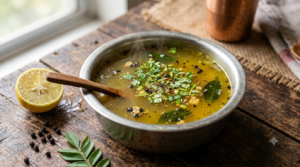
A steaming bowl of tangy rasam recipe without tomato, soured with fresh lemon and crushed black pepper.
Cooks reach for this version for solid reasons. Tomatoes turn expensive and watery off-season, tamarind can feel heavy in peak summer, and many households skip both during fasting days. Since the lemon goes in right at the end, its citrus stays fresh and never turns bitter. Whether you pour it over hot rice or sip it as a clear soup on a cool evening, this bowl delivers full comfort with zero tang from tomato or tamarind.
Rasam Without Tomato At A Glance
- Souring agent: fresh lemon juice, added off the heat
- Base: mashed toor dal for body and protein
- Key spices: black pepper, cumin, garlic, curry leaves, hing
- Total time: about 40 minutes, start to finish
- Best for: summer meals, fasting days, colds, and post-meal digestion
- Diet: naturally gluten-free, and vegan if you swap ghee for oil
What Makes This Rasam Recipe Without Tomato So Tangy?
A rasam recipe without tomato gets its tang from fresh lemon juice instead of tomatoes or tamarind. Lemon brings a clean, citrusy sourness that lifts the pepper and cumin, so the broth still tastes sharp and appetising. You add the juice only after the heat is off, which keeps the flavour bright and prevents any bitter edge.
This matters because sourness is the whole soul of rasam. Tamarind gives a deep, earthy tang, while tomatoes add a fruity acidity. Lemon replaces both with something lighter and fresher. Many South Indian homes actually prefer lemon in summer, since tamarind is believed to heat the body while citrus feels cooling and easy to digest.
Ingredients For Rasam Recipe Without Tomato And Tamarind
Everything here is a common Indian kitchen staple, so no special shopping is needed. The quantities below serve four people as a rice accompaniment or a light soup.
- ½ cup toor dal (split pigeon peas)
- 4 cups water, divided
- 2–3 tablespoons fresh lemon juice, adjusted to taste
- 1 tablespoon ghee or a neutral oil
- ½ teaspoon mustard seeds
- ½ teaspoon cumin seeds
- ½ teaspoon black peppercorns, crushed
- ¼–½ teaspoon turmeric powder
- 1–2 green chillies, slit
- 4–5 garlic cloves, crushed
- 1 sprig curry leaves
- 1 pinch asafoetida (hing)
- Salt to taste, about ¾ teaspoon
- 2–3 tablespoons fresh coriander leaves, chopped
Crushing the pepper and garlic fresh makes a real difference here. Because there is no tomato or tamarind to hide behind, every spice has to pull its weight. So use whole peppercorns you crush yourself rather than ready-made powder whenever you can.
Which Souring Agent Should You Use?
Lemon is the classic choice, yet it is not your only option when both tomato and tamarind are off the table. The table below compares the common substitutes so you can pick what suits your pantry and taste.
| Souring agent | Taste profile | How much to use |
|---|---|---|
| Fresh lemon juice | Bright, clean, citrusy | 2–3 tbsp, off the heat |
| Fresh lime juice | Sharper, slightly floral | 2–3 tbsp, off the heat |
| Amchur (dry mango) | Fruity, mild, earthy | ½–1 tsp, while simmering |
| Curd (yogurt) | Creamy, gentle tang | 2–3 tbsp, off the heat |
| Kokum | Deep, tart, coastal | 2–3 petals, while simmering |
Lemon and lime go in only after you switch off the flame, because boiling citrus turns it bitter. Amchur and kokum, on the other hand, can simmer with the rasam since they hold up to heat. If you use curd, whisk it smooth first and stir it in gently so it does not split.
How To Make Rasam Recipe Without Tomato Step By Step
This rasam recipe without tomato comes together in five simple stages. Follow them in order, and keep the lemon for the very last step.
- Rinse and cook the dal. Rinse ½ cup toor dal until the water runs clear. Add it to a pot with 2 cups water and ¼ teaspoon turmeric. Cook until the dal is soft and fully mashable, roughly 15–18 minutes, or pressure cook for 3–4 whistles. Mash it well and set it aside.
- Prepare the tempering. Heat 1 tablespoon ghee or oil in a deep pan on medium. Once the mustard seeds crackle, add cumin, crushed peppercorns, curry leaves, crushed garlic, and asafoetida. Sauté for 1–2 minutes, until the garlic turns light golden and the spices smell fragrant.
- Combine dal and spices. Add the mashed dal to the pan, then pour in the remaining 2 cups of water. Stir in the rest of the turmeric, the salt, and the slit green chillies. Simmer on medium-low for 8–10 minutes so the flavours meld.
- Add sourness with lemon. Turn off the heat first. Now stir in 2–3 tablespoons of fresh lemon juice, tasting as you go. Lemon delivers the tang that tomato or tamarind would normally give.
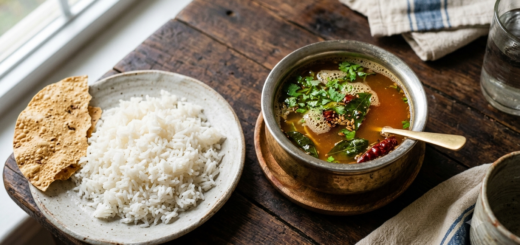
- Garnish and serve. Scatter chopped coriander over the top. Serve the rasam hot with steamed rice and papad, or ladle it into a mug as a soothing soup.
Best Dal For A Light, Silky Rasam
Toor dal is the traditional base, because it gives the rasam body without turning it heavy. That said, you can adjust the lentil to suit your time and texture.
- Toor dal: the classic choice, earthy and hearty, though it takes the longest to cook.
- Moong dal: cooks faster and tastes lighter, so it is ideal on a busy evening.
- Masoor dal: softens quickly and gives a smooth, mild broth.
You can also make a no-dal version, known as milagu rasam or pepper rasam. It skips the lentils entirely and leans on a spice decoction plus lemon, which makes it wonderfully soothing when you have a cold. Because it has no dal, it stays thin and clear rather than creamy.
Regional Twists Worth Trying
Every South Indian state bends rasam to its own taste, even the tomato-free versions. In Tamil Nadu, cooks make elumichai rasam with a generous squeeze of lemon and extra pepper. Andhra kitchens turn out a fiery nimmakaya charu that leans hard on garlic and green chilli.
Coorg and coastal Karnataka often swap lemon for kokum, giving a deeper, tart edge. Meanwhile, a Kerala-style rasam might add a whisper of coconut oil in the tempering for aroma. If you enjoy exploring these, the traditional Tamil Nadu rasam and the Andhra-style rasam are both worth a look.
Pro Tips Most Recipes Skip
A few small habits separate a flat rasam from a fragrant one. These come from repeated home cooking, not from a textbook.
- Always add lemon after switching off the flame, since boiled citrus turns bitter fast.
- Roast the peppercorns lightly before crushing them, because that deepens their heat and aroma.
- Do not over-boil the finished rasam. Once it froths at the edges, it is done.
- Crush the garlic rather than chopping it, so it melts into the broth and perfumes every spoonful.
- Keep the consistency thin. Rasam should pour, not sit like a thick dal.
Troubleshooting: When Your Rasam Goes Wrong
Even a simple rasam can miss the mark, so here is how to rescue the common problems. None of them means starting over.
- Too sour? Add a cup of hot water and a pinch of salt or jaggery to balance it.
- Tastes bitter? The lemon was likely boiled. Next time add it off the heat, though a pinch of jaggery can soften this batch.
- Flat and dull? Your pepper or hing may be stale. Bloom a little fresh crushed pepper in ghee and stir it through.
- Too thin or too thick? Adjust with hot water or a spoon more of mashed dal until it pours easily.
Serving And Storing Your Rasam Recipe Without Tomato
Rasam is endlessly flexible at the table. Most often it is served over hot steamed rice with a dollop of ghee, alongside a dry vegetable curry.
It pairs beautifully with potato fry, okra fry, or crisp papad. On a sniffly day, many people simply drink this rasam recipe without tomato warm, straight from a mug. To store leftovers, cool the rasam fully, then refrigerate it in an airtight container for up to 2 days. Reheat it gently on the stovetop, but avoid freezing, because the lemon flavour fades once frozen.
Is This Rasam Good For Digestion And Health?
Rasam has a long reputation as an after-meal digestive, and this tomato-free version keeps that quality. Black pepper, cumin, and asafoetida are traditionally valued for easing digestion, which is why rasam often closes a South Indian meal. The lemon adds a dose of vitamin C on top.
Because it is light and warm, this rasam is also a common home comfort during colds and coughs. You can offer a mild, less spicy version to young children, though it is best to check with your paediatrician before giving spiced foods to infants. As with any home remedy, treat these as traditional wellness habits rather than medical cures.
Nutrition Information (Per Serving)
| Nutrient | Approximate amount |
|---|---|
| Calories | 90–110 kcal |
| Protein | 4–5 g |
| Carbohydrates | 15–18 g |
| Fat | 3–4 g |
| Fibre | 3–4 g |
| Vitamin C | 10–15 mg (from lemon) |
These figures are estimates based on standard ingredient weights from general nutrition databases such as USDA FoodData Central. You get lean protein from the dal, vitamin C from the lemon, and gentle digestive support from the spices. Actual values shift with your exact quantities.
Before You Ladle It Out
A good rasam recipe without tomato shows that authentic flavour is about balance, not a long shopping list. Lemon handles the tang, fresh pepper carries the heat, and mashed dal gives it body. Keep the broth thin, add the lemon off the heat, and taste as you go. Do that, and you will have a bright, comforting bowl that stands proudly beside any tamarind or tomato rasam on your table.
Frequently Asked Questions
Can I make this rasam recipe without tomato and without dal too?
Yes. A no-dal version called pepper rasam or milagu rasam skips the lentils and relies on a spice decoction with lemon for tang. It stays thin and clear, and it works especially well when you have a cold. The dal version, however, gives more body and protein.
Why should lemon be added only at the end?
Lemon juice turns bitter when it boils, so you always add it after switching off the heat. This keeps the citrus flavour bright and fresh. If you accidentally boiled it, a small pinch of jaggery can soften the bitterness.
What can I use instead of lemon?
Fresh lime juice is the closest swap and goes in the same way, off the heat. Amchur (dry mango powder) or a splash of vinegar also work, though use them sparingly at about 1–2 teaspoons. Curd gives a gentler, creamier tang if whisked in smoothly.
Is this rasam recipe without tomato vegan?
It can be. Simply use a neutral oil in place of ghee for the tempering, and the whole dish becomes vegan. Every other ingredient here is already plant-based.
Can I make it gluten-free?
Yes, this rasam is naturally gluten-free. Dal, lemon, and the tempering spices contain no gluten, so it suits gluten-sensitive diets without any changes. Just check that your asafoetida is a gluten-free variety, since some brands mix in wheat flour.
Which dal is best for rasam?
Toor dal is traditional and gives the richest body, so most cooks reach for it first. Moong dal is a lighter, faster option, while masoor dal makes an especially smooth broth. Any of the three works well in this recipe.
How long does rasam without tomato keep?
Cooled and refrigerated in an airtight container, it keeps for up to 2 days. Reheat it gently on the stovetop until warm. Avoid freezing, because the fresh lemon flavour degrades once it is frozen and thawed.
Does this rasam help with colds?
Many South Indian homes serve pepper-heavy rasam during colds as a warming comfort food. The black pepper, garlic, and cumin feel soothing, and the warm broth is easy to sip. Treat it as a traditional home comfort rather than a medical treatment.