Sambar Recipe With Masoor Dal: Easy 45-Minute Method
Sambar recipe with masoor dal is a practical way to make a creamy South Indian-style sambar when red lentils are what you have at home. Masoor dal softens faster than toor dal, so the pot comes together quickly without losing the tamarind, vegetable and sambar-powder character people expect from the dish.
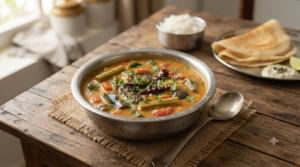
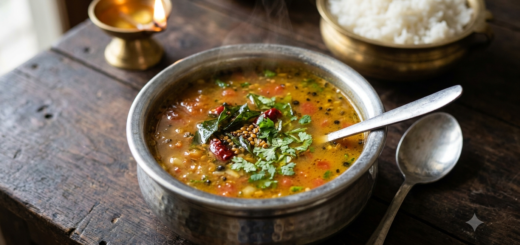
Creamy masoor dal sambar with mixed vegetables, tamarind and a mustard-curry leaf tempering.
The important part is not simply swapping one dal for another. Red lentils break down more completely, so they need a slightly different water ratio and a shorter final simmer. This method keeps the useful core of the original recipe, then adds better timing, texture control, troubleshooting and storage guidance.
Sambar Recipe With Masoor Dal at a Glance
This version uses one cup of split masoor dal, two cups of mixed vegetables and two tablespoons of sambar powder. The dal cooks until soft, while the vegetables cook separately so they keep their shape. Tamarind goes in after the vegetables are nearly tender, then the dal and tempering finish the pot.
- Prep time: about 15 minutes
- Cook time: about 30 minutes
- Total time: about 45 minutes
- Serves: 4 to 5
- Texture: creamy and medium-thick
- Best with: rice, idli, dosa, pongal or vada
Why Masoor Dal Works in Sambar
Toor dal remains the standard base in many South Indian sambar recipes, but masoor dal is a useful alternative. It cooks faster and breaks down into a smoother puree. That makes the finished sambar feel silky rather than grainy.
The trade-off is texture. Masoor dal can become very soft, so pressure-cooking it too long makes the base almost soup-like. For that reason, cook the lentils only until they mash easily, then control the final consistency with hot water.
A sambar recipe with masoor dal works especially well when you want the familiar tangy sambar profile with a faster-cooking lentil. The method below keeps that focus instead of turning into a general sambar formula.
Recipe Card
| Detail | Amount |
|---|---|
| Masoor dal | 1 cup, about 200 g |
| Mixed vegetables | 2 cups |
| Sambar powder | 2 tbsp |
| Tamarind | 15 to 20 g seedless tamarind |
| Water | About 4 cups total, adjusted as needed |
| Yield | 4 to 5 servings |
The water amount is a starting point because red lentils vary by age and brand. In this sambar recipe with masoor dal, add hot water near the end if the pot becomes thicker than you like.
Ingredients for Sambar Recipe With Masoor Dal
For the dal and vegetable base
- 1 cup masoor dal, rinsed well
- 2 cups mixed vegetables such as drumstick, carrot, pumpkin, brinjal or beans
- 1 medium onion, sliced
- 1 medium tomato, chopped
- 15 to 20 g seedless tamarind, soaked in 1/2 cup warm water
- 2 tbsp sambar powder
- 1/2 tsp turmeric powder
- 1/4 to 1/2 tsp red chilli powder, optional
- 1/2 tsp jaggery, optional
- Salt to taste
- About 4 cups water in total
For the tempering
- 1 tbsp oil, plus 1 tsp for cooking the vegetables
- 1 tsp mustard seeds
- 1/2 tsp cumin seeds
- 2 dried red chillies, broken
- 1 sprig curry leaves
- A small pinch of asafoetida
- 2 tbsp chopped coriander leaves for finishing
If your sambar powder already contains plenty of chilli, skip the extra chilli powder first. You can always increase the heat later, while removing excess heat is difficult.
How to Make Sambar Recipe With Masoor Dal
Cook the dal and vegetables in separate stages because they soften at different speeds. Masoor dal should collapse into the gravy, while drumstick, carrot and brinjal should still look like vegetables when you serve the sambar.
1. Rinse and cook the masoor dal
Rinse the dal three or four times until the water looks much clearer. Add it to a pressure cooker with 2 cups water and the turmeric. Cook for about two whistles on medium heat, then let the pressure fall naturally.
Open the cooker and check the texture before mashing. The lentils should crush easily under a spoon. If they still feel firm, simmer them with a little hot water for a few more minutes.
2. Make the tamarind extract
While the dal cooks, soak the tamarind in 1/2 cup warm water for about ten minutes. Squeeze it well, then strain the liquid. Keep the extract aside until the vegetables are almost tender.
The old version advised adding tamarind late because it could make vegetables mushy. The opposite is the more useful rule: acidic ingredients can keep vegetable fibres firmer, so they may extend cooking time. Cook hard vegetables first, then add the tamarind once they are close to done.
3. Cook the vegetables in stages
Heat 1 teaspoon oil in a deep pan, then add the onion. Cook for about two minutes until it begins to soften. Add the tomato and cook until it loses its raw look.
Add harder vegetables such as carrot and drumstick first with 1 cup water. After about five minutes, add faster-cooking pieces such as brinjal or pumpkin. Simmer until everything is nearly tender but still holds shape.
4. Add tamarind and sambar powder
Pour in the strained tamarind extract, then stir in the sambar powder and chilli powder. Simmer for five to seven minutes because the spice blend needs wet heat to lose its raw edge. Add the jaggery now if your tamarind tastes especially sharp.
Do not fry the full spoonfuls of sambar powder in very hot tempering oil. Ground spices can scorch quickly, which leaves a bitter or dusty flavour. Let the powder bloom in the simmering liquid instead.
5. Add the cooked dal and adjust the body
Mash the cooked masoor dal lightly, then pour it into the vegetable pot. Add salt and enough hot water to reach a medium-thick consistency. Simmer gently for another five minutes, stirring from the bottom so the lentils do not catch.
Masoor dal thickens quickly while it rests, so stop slightly thinner than your ideal serving texture. This sambar recipe with masoor dal loosens easily with hot water, but recheck the salt after you adjust it.
6. Make the tempering and rest the sambar
Heat 1 tablespoon oil in a small pan. Add the mustard seeds and wait until they pop, then add cumin, dried chillies and curry leaves. Add the asafoetida last, stir for a few seconds and pour the tempering over the hot sambar.
Cover the pot for five minutes before serving, because the trapped aroma moves through the dal as it rests. Finish with chopped coriander, then taste once more for salt, sourness and heat.
No Pressure Cooker? Use This Stovetop Method
You can make this red lentil sambar in an open pot because masoor dal cooks faster than many other whole pulses. Rinse the dal, then simmer it with about 3 cups water and turmeric. Stir every few minutes so it does not settle on the base.
Most split red lentils become soft in roughly 18 to 25 minutes, although older dal can take longer. Add more hot water if the pot starts drying before the lentils collapse. Mash when soft, then continue with the vegetable and tamarind stages above.
This method gives you more control over texture, although it needs more attention. It is also useful when you want to stop before the dal becomes completely smooth.
Masoor Dal Versus Toor Dal for Sambar
Both dals can make a good sambar, but they do not produce the same result. Choose the one that matches the texture and cooking time you want.
| Dal | Texture | Cooking behaviour | Best use |
|---|---|---|---|
| Masoor dal | Very soft and creamy | Cooks quickly | Fast weekday sambar |
| Toor dal | Fuller and slightly grainy | Needs longer cooking | Classic rice sambar |
| Half masoor, half toor | Creamy with more body | Moderate cooking time | Balanced substitute |
| Moong dal | Light and smooth | Cooks quickly | Tiffin-style sambar |
If you want a more traditional toor-dal profile without losing speed, use half a cup of each. The mix keeps some body while still softening faster than a full cup of toor dal.
Best Vegetables and When to Add Them
The easiest way to protect texture is to group vegetables by cooking speed. Hard pieces go in first, while soft vegetables join later. This matters even more in a fast sambar recipe with masoor dal because the lentils are ready before many vegetables.
- Add first: carrot, drumstick, potato, radish and beans.
- Add midway: pumpkin, bottle gourd and chayote.
- Add later: brinjal and okra, because they soften quickly.
- Add near the end: tomato if you prefer distinct pieces rather than a cooked-down base.
Okra can thicken the liquid and become soft if it cooks too long. If you use it, sauté the pieces separately and add them late.
Troubleshooting Sambar Recipe With Masoor Dal
Masoor dal forgives a lot, but its fast cooking exposes a few common mistakes. Diagnose the texture first, then adjust flavour. Adding more sambar powder without knowing the problem often makes the pot harsher.
| Problem | Likely cause | Fix |
|---|---|---|
| Too thick | Dal absorbed water while resting | Add hot water gradually and recheck salt |
| Too thin | Too much water | Simmer uncovered for 5 to 8 minutes |
| Too sour | Strong tamarind extract | Add more cooked dal or a small pinch of jaggery |
| Raw spice taste | Sambar powder did not simmer long enough | Simmer another 5 minutes |
| Bitter finish | Burnt tempering or scorched spice powder | Do not add more spice; dilute with dal and make a fresh tempering |
| Mushy vegetables | Soft vegetables went in too early | Stagger vegetables by cooking time next batch |
What the Original Recipe Needed to Correct
The older page had a solid base recipe, but two lines deserved correction. First, it said early tamarind could make vegetables mushy. Food-science guidance from the University of Illinois Extension notes that acidic ingredients can make vegetable fibres firmer and therefore extend cooking time.
Second, the old FAQ said cumin and asafoetida “aid digestion.” That is a health claim the recipe does not need. This refresh keeps the culinary role of those spices without promising a medical or digestive effect.
The earlier precise nutrition table also depended heavily on vegetable mix, oil and serving size. Instead of presenting a single fixed number, this version points readers to the ICMR-National Institute of Nutrition Indian Food Composition Tables for ingredient-level data.
Storage, Cooling and Reheating
Cool leftover sambar promptly and refrigerate it in a covered container. The Food Safety and Standards Authority of India advises keeping leftovers cold below 5°C and reheating cooked food thoroughly before eating.
For a practical home limit, use refrigerated sambar within three to four days. That also matches the USDA leftovers guidance for cooked foods. Freeze extra portions if you need longer storage.
Masoor dal thickens in the refrigerator, so add a splash of water while reheating. A sambar recipe with masoor dal usually needs a quick stir after heating because the lentils settle as they cool.
Serving Ideas and Small Adjustments
For rice, keep the sambar medium-thick so it coats each spoonful. For idli or dosa, add a little more hot water because a thinner gravy soaks into tiffin better. If you want a no-vegetable version, see our sambar without vegetables method.
If you already have a packet blend and want a more powder-focused method, use our sambar recipe with sambar powder. For an allium-free meal, the sambar without onion guide explains how to rebuild the flavour base.
Those pages answer different intents, so they should support this masoor-dal page rather than compete with it.
Before You Cook This Sambar Recipe With Masoor Dal
The best result comes from treating masoor dal as its own ingredient rather than as a direct toor-dal clone. Cook it only until soft, stagger the vegetables, and let the sambar powder simmer in liquid instead of scorching it in oil.
Keep the tamarind moderate at first because strength varies widely. You can add more sourness, but you cannot easily remove it. Finally, rest the finished pot for five minutes before serving so the tempering settles into the creamy dal.
Frequently Asked Questions
Can I make sambar with only masoor dal?
Yes. Masoor dal can make the full lentil base without any toor dal. The texture will be softer and smoother, so use less cooking time and adjust the final water carefully.
Does masoor dal change the taste of sambar?
It changes the background flavour slightly, but the tamarind, vegetables, sambar powder and tempering still dominate. The bigger difference is texture because red lentils break down more completely than toor dal.
Do I need to soak masoor dal before cooking?
No, split masoor dal usually cooks well without soaking. A short soak can reduce cooking time, although it is not necessary for this method. Rinsing well matters more.
Can I make sambar recipe with masoor dal without a pressure cooker?
Yes. Simmer the rinsed red lentils in an open pot until they become soft enough to mash. Keep extra hot water nearby because open-pot cooking loses more water through evaporation.
When should I add tamarind to sambar?
Add tamarind after the harder vegetables are nearly tender. Acidic cooking liquid can keep vegetable fibres firmer, so adding it too early may lengthen the time needed for vegetables to soften.
Can I use lemon instead of tamarind?
You can, but the flavour will not be the same. If you use lemon, add the juice near the end and start with a small amount. Tamarind gives the deeper sour note associated with sambar.
Why did my masoor dal sambar become too thick?
Red lentils keep absorbing liquid after cooking, so the sambar thickens as it rests. Stir in hot water a little at a time, bring it back to a simmer and adjust the salt again.
How long can I keep leftover sambar?
Refrigerate it promptly in a covered container and use it within three to four days. If you need longer storage, freeze portions once the sambar has cooled safely.