Sambar Recipe Without Coconut: Easy Tamil Nadu Home Method
This sambar recipe without coconut is the plain, everyday Tamil Nadu style sambar, built on toor dal, tamarind and sambar powder. There is no grinding step, no wet masala and no coconut to soak. Because the whole thing runs on one spice powder, it lands on the table in under an hour.
Most cooks assume the coconut-free version is a shortcut, so they treat it as second best. It is not. Across Tamil Nadu, plain podi sambar is the weekday default, while ground-coconut styles such as varutharacha sambar mainly appear at weddings and festival sadyas.
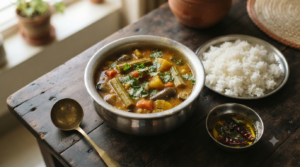
A thick Tamil Nadu style sambar made with toor dal, tamarind and sambar powder, with no coconut anywhere in the pot.
This guide to the sambar recipe without coconut also corrects two things almost every sambar page online gets wrong. First, the protein and calorie figures usually quoted are far too low. Second, the hing tin in your masala dabba is probably not gluten-free, even though the recipe itself has no wheat in it.
Sambar Recipe Without Coconut at a Glance
Here is the short version before the detail. If you already cook South Indian food regularly, this table and the ingredient list may be all you need.
| Detail | What to expect |
|---|---|
| Prep time | 15 minutes, since it is mostly chopping |
| Cook time | 40 minutes, though a pressure cooker trims this |
| Serves | 4 people when served with rice |
| Difficulty | Easy, because there is no grinding |
| Diet | Vegan, but check the hing label first |
The finished sambar should coat the back of a spoon without turning into a paste. So aim for a pourable, slightly thickened stew rather than a thin soup.
Why the Sambar Recipe Without Coconut Is the Tamil Nadu Standard
Coconut in sambar is a regional signature, not a universal rule. In Kerala and in Palakkad kitchens, cooks roast coconut with whole spices and grind it into a wet paste. That style is called varutharacha sambar, and it produces a thicker, darker, sweeter gravy.
Tamil Nadu households take a different route. They rely on a dry roasted spice blend, the sambar podi, which already carries coriander, chana dal, red chillies and fenugreek. Since the dal itself supplies body, coconut becomes unnecessary.
Both versions are traditional. A sambar recipe without coconut is simply the one cooked more often, because it needs no mixie and no advance planning. That is worth knowing if you have been treating it as a compromise.
Coconut still earns its place in three situations. It thickens a sambar made without dal, it softens an aggressively sour tamarind, and it adds richness for a festival spread. Otherwise, skipping it changes very little.
Ingredients for Sambar Recipe Without Coconut
Weights matter more than cup measures in a sambar recipe without coconut, so both appear below. If your dal is old, add a little extra water while pressure cooking.
- 1 cup toor dal, about 200 g, rinsed until the water runs clear
- 2 cups mixed vegetables such as drumstick, carrot, pumpkin and brinjal, roughly chopped
- 1 lemon-sized ball of tamarind, roughly 25 g, soaked in warm water before you start
- 1 medium tomato, chopped, though this is optional
- 2 to 3 tbsp sambar powder, since brands differ sharply in heat
- Half tsp turmeric powder, added while the dal cooks
- 1 tsp mustard seeds, dropped first into the hot oil
- Half tsp fenugreek seeds, because they carry the classic sambar bitterness
- 8 to 10 curry leaves, fresh if you can get them
- 2 to 3 dried red chillies, snapped in half so they release more heat
- A pinch of asafoetida, but read the label first if you eat gluten-free
- 2 tbsp sesame oil, though any neutral cooking oil also works
- Salt to taste, added after the tamarind goes in
- A handful of coriander leaves, chopped when you are ready to serve
What Replaces Coconut for Body and Thickness
This is the question the recipe cards skip. Coconut does two jobs in sambar, and both have simple replacements.
The first job is thickening. The toor dal already handles it, so mash the cooked dal well before it goes into the pot. If you still want more body, drop in one small piece of yellow pumpkin and let it dissolve completely.
The second job is rounding off sourness. A teaspoon of jaggery does the same work, and it does it faster. Alternatively, add a spoon of roasted gram powder, known as pottukadalai maavu, which thickens without any sweetness at all.
Cornflour and besan are tempting, yet both leave a pasty finish that a South Indian palate notices immediately. Coconut milk is also a poor stand-in here, because it flattens the tamarind edge that defines sambar.
How to Make Sambar Recipe Without Coconut Step by Step
The order in this sambar recipe without coconut is not arbitrary. Tamarind acid slows down both dal and vegetables, so anything that needs to soften must soften first.
Step 1: Cook the dal
Rinse the toor dal, then pressure cook it with 2 cups of water, half tsp turmeric and a pinch of salt. Three to four whistles on medium flame is usually enough. Let the pressure drop naturally before you open the lid, because a sudden release leaves the dal grainy.
Mash the dal with the back of a ladle until it turns smooth. This single step decides how thick your sambar looks at the end.
Step 2: Extract the tamarind
Squeeze the soaked tamarind in its water until the pulp loosens completely. Strain it, then discard the fibre and seeds. You should end up with roughly three quarters of a cup of tangy liquid.
Step 3: Temper and cook the vegetables
Heat the sesame oil in a wide pot. Add mustard seeds, and wait until they finish spluttering. Then add fenugreek seeds, red chillies, curry leaves and asafoetida, and stir for about thirty seconds.
Tip in the vegetables and sauté for three minutes. Add the tomato, a pinch of turmeric and one cup of water. Cover and cook until the vegetables turn tender, which usually takes ten to twelve minutes.
Step 4: Add tamarind and sambar powder
Pour in the tamarind water along with the sambar powder and salt. Simmer this uncovered for at least five minutes. Do not rush it, since raw sambar powder tastes chalky and the smell only disappears with proper boiling.
Step 5: Combine and finish
Add the mashed dal, then stir until the mixture looks even. Simmer gently for another eight to ten minutes so the flavours settle. Turn off the heat and scatter the coriander leaves on top.
Serve it hot with rice, idli, dosa or vada. If you want the tempering to stay aromatic, hold back a spoon of it and pour it over at the very end.
Getting the Consistency Right for Rice, Idli and Dosa
One pot from this sambar recipe without coconut rarely suits every dish. The table below shows what to aim for, and the numbers refer to how much extra water you add after the dal goes in.
| Served with | Consistency | Adjustment |
|---|---|---|
| Steamed rice | Thick, spoon-coating | No extra water, so simmer longer |
| Idli | Loose and pourable | Add half a cup of hot water |
| Dosa | Medium, slightly thinner | Add a quarter cup while simmering |
| Vada | Thin, because the vada soaks it up | Add three quarters of a cup |
Remember that sambar thickens as it cools. So a pot that looks perfect on the stove often turns stodgy after twenty minutes on the counter.
Sambar Recipe Without Coconut: Corrected Nutrition Per Serving
Most pages covering a sambar recipe without coconut quote around 150 calories and 7 g of protein per serving. Those figures are too low, and the arithmetic shows why.
One cup of toor dal weighs roughly 200 g dry. Split across four servings, that is 50 g of dry dal per person. According to the United States Department of Agriculture FoodData Central database, raw pigeon peas carry about 343 kcal and 21.7 g of protein per 100 g. So the dal alone contributes close to 170 kcal and 11 g of protein.
| Nutrient | Per serving, approximate |
|---|---|
| Calories | 260 to 285 kcal |
| Protein | 11 to 13 g |
| Carbohydrates | 33 to 38 g |
| Fat | 7 to 9 g |
| Fibre | 8 to 10 g |
The oil accounts for most of the gap. Two tablespoons across four servings adds roughly 60 kcal per person, while the vegetables contribute another 25 kcal. Cut the oil to one tablespoon if you want the total nearer 235 kcal.
These are estimates based on standard database values, so your exact numbers will shift with the vegetables you choose. You can check individual ingredients on USDA FoodData Central.
Is This Sambar Recipe Without Coconut Gluten-Free?
Not automatically. In this sambar recipe without coconut the dal, vegetables and tamarind contain no gluten at all, yet the asafoetida almost certainly does. Most commercial hing sold in India and abroad is compounded, which means the resin gets blended with wheat flour to make it measurable. That flour can make up a large share of the tin.
Older versions of this page called the recipe naturally gluten-free. That was wrong, and it matters for anyone managing coeliac disease.
How to make it genuinely gluten-free
Read the ingredient list on the hing tin before you cook. Brands that use rice flour or gum arabic as the carrier are safe, while wheat-compounded ones are not. Check your sambar powder too, since some blends include asafoetida as an ingredient. India’s Food Safety and Standards Authority of India requires packaged foods to declare wheat as an allergen, so the information should be printed on the pack.
If you cannot verify the label, simply leave the hing out. The sambar loses a little depth, though nothing else changes. This is label-reading guidance rather than medical advice, so anyone with diagnosed coeliac disease should follow their dietitian’s rules on cross-contamination.
Sambar Recipe Without Coconut Troubleshooting
Sambar fails in predictable ways. Each problem below has a cause and a fix you can apply mid-cook.
| Problem | Why it happens | Fix |
|---|---|---|
| Bitter aftertaste | Too much fenugreek, or burnt seeds | Add jaggery, then simmer briefly |
| Raw, chalky flavour | Sambar powder went in too late | Boil it uncovered for five more minutes |
| Watery gravy | Dal was undercooked or unmashed | Mash harder, or reduce it uncovered |
| Vegetables stayed hard | Tamarind went in before they softened | Cook the vegetables first next time |
| Overwhelming sourness | Tamarind ball was larger than it looked | Add hot water and a little jaggery |
| Dull, flat taste | Old sambar powder | Add fresh powder, since aroma fades in months |
The sourness problem has no clean reversal once it goes far enough. If the sambar is genuinely inedible, dilute it and cook an extra half cup of dal to absorb the acid.
How to Store a Sambar Recipe Without Coconut
Cooled sambar keeps for three days in an airtight container in the fridge. Reheat it gently on the stove with a splash of water, because the microwave tends to separate the dal.
Freezing works, although the texture changes. Vegetables such as drumstick and brinjal turn mushy after thawing, while pumpkin and carrot hold up well. So freeze a vegetable-light batch if you plan ahead, then add fresh vegetables on the day you serve it.
Sambar also tastes noticeably better on day two. The fenugreek and tamarind keep working after the pot comes off the heat.
What Experienced Cooks Do Differently
Small habits separate a good pot from a flat one. None of these takes extra time.
- Never dry-roast ready-made sambar powder, because it scorches within seconds
- Use sesame oil for the tempering, since it carries the flavour that ghee cannot
- Add salt only after the tamarind, as tamarind already tastes salty to some palates
- Snap the dried chillies rather than leaving them whole, so the heat spreads evenly
- Keep drumstick pieces long, because short ones fall apart during simmering
- Save a spoon of tempering for the end if you want a stronger aroma at the table
One more thing worth trying. Add a single crushed garlic clove to the tempering when you serve the sambar with rice, though skip it entirely for a temple-style or no-onion version. Our sambar without onion and garlic covers that route in full.
Before You Cook
Skipping coconut costs you almost nothing in this dish. A sambar recipe without coconut still delivers the full flavour. The dal supplies the body, the sambar powder supplies the depth, and the tamarind supplies the edge. So treat this as the standard Tamil Nadu preparation rather than a stripped-down one.
Get three things right and the rest follows. Mash the dal properly, boil the sambar powder long enough, and check the hing label if gluten matters in your household. If you have no tamarind on hand, our sambar recipe without tamarind uses tomatoes instead. There is also a stovetop version without a pressure cooker for anyone cooking in a hostel or a rented kitchen.
Frequently Asked Questions
Is a sambar recipe without coconut authentic?
Yes, completely. This is the everyday preparation across most of Tamil Nadu. Coconut-ground versions such as varutharacha sambar belong to Kerala and Palakkad kitchens, and cooks there usually reserve them for festivals.
Does sambar powder contain gluten?
Usually not, though some blends include asafoetida, which often carries wheat flour. Check the ingredient list rather than assuming. A powder listing only coriander, chillies, dals and fenugreek is safe for a gluten-free kitchen.
Can I make sambar without tamarind?
Yes. Use three ripe tomatoes, or add one to two tablespoons of lemon juice after you turn off the heat. Never boil lemon juice, because heat turns the flavour bitter rather than bright.
Which vegetables work best in a sambar recipe without coconut?
Drumstick, yellow pumpkin, brinjal and shallots give the most traditional flavour. Carrot, ash gourd and radish also work well. Avoid potato and okra, since one clouds the gravy while the other turns slimy.
Why is my sambar bitter?
Fenugreek is the usual culprit. Half a teaspoon is plenty for this quantity, and burnt seeds turn bitter almost instantly. Stir a teaspoon of jaggery in and simmer for two minutes to soften the edge.
Can I cook this in a pot instead of a pressure cooker?
Yes, although the dal needs longer. Simmer it covered for thirty to thirty-five minutes until it mashes easily against the side of the pot. Soaking the dal for an hour beforehand cuts that time by roughly a third.
Can I freeze sambar?
Yes, for up to two months. Freeze it in single-meal portions, then thaw overnight in the fridge before reheating. Expect softer vegetables, so add fresh ones after reheating if texture matters to you.
How much protein is in one serving?
Roughly 11 to 13 g when you use one cup of toor dal for four servings. That comes mainly from the dal itself. Pairing the sambar with rice improves the amino acid profile, because grains and legumes complement each other.
Why does my sambar taste flat?
Stale sambar powder is the most common reason. Ground spice blends lose aroma within three to four months, even in a sealed jar. Toasting whole spices and grinding a fresh batch fixes the problem immediately.