Bisibelebath Recipe Karnataka Style: Authentic Method
Bisibelebath Recipe Karnataka Style works best when the rice and toor dal turn soft. The homemade masala should stay fragrant, while tamarind, jaggery and ghee remain balanced. This version keeps the familiar Karnataka method. It also fixes two common problems: a dry final texture and masala that tastes like ordinary sambar powder.
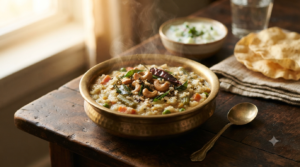
Traditional Karnataka-style bisi bele bath made with rice, toor dal, mixed vegetables, homemade masala and a fragrant ghee tempering.
Bisi bele bath refers to a hot lentil-rice preparation in Kannada. Karnataka Tourism describes it as a popular rice-and-lentil meal served across the state. Food histories often connect the dish with Mysuru’s royal kitchens. However, that origin story is better treated as culinary tradition, not a documented invention claim.
Karnataka Tourism’s bisi bele bath overview confirms the core structure: rice, lentils, vegetables, dedicated spice powder and hot tempering.
Bisibelebath Recipe Karnataka Style at a Glance
- Prep time: about 30 minutes.
- Cook time: about 55 minutes.
- Total time: about 1 hour 25 minutes.
- Serves: 5 to 6.
- Best rice: Sona Masuri or another short-grain raw rice.
- Main dal: toor dal or pigeon pea lentils.
- Signature flavour: roasted bisi bele bath masala, tamarind, a little jaggery and ghee.
- Final texture: soft and spoonable, slightly looser than you want at serving time.
The key is the last point because the mixture thickens quickly while resting. So, finish it with enough hot water to flow slowly from a ladle rather than sit like dry pulao.
What Makes Bisibelebath Recipe Karnataka Style Different from Sambar Rice?
Bisi bele bath and sambar rice both combine rice, dal, tamarind and vegetables, yet the flavour base differs. Bisi bele bath uses a more aromatic roasted masala with cinnamon and cloves. Some versions also use Marathi moggu, while sambar rice usually relies on sambar powder and a thinner lentil gravy.
| Point | Bisi Bele Bath | Sambar Rice |
|---|---|---|
| Spice base. | Dedicated roasted bisi bele bath powder. | Sambar powder or sambar masala. |
| Texture. | Soft, thick and spoonable. | Usually looser and more gravy-like. |
| Flavour. | Spicy, tangy, gently sweet and aromatic. | Tangy, savoury and sambar-forward. |
| Finish. | Ghee, mustard, curry leaves, nuts and dried chilli. | Tempering varies by household. |
This difference matters because replacing bisi bele bath powder with ordinary sambar powder changes the dish. It can still taste good, but it will not deliver the same Karnataka-style aroma.
Ingredients for Bisibelebath Recipe Karnataka Style
This ingredient list keeps the rice-to-dal ratio from the existing recipe. It produces a creamy body without turning the dish into pure dal. The vegetable quantity is higher, so the finished bowl feels like a complete meal instead of mostly rice.
For Rice, Dal and Vegetables
- 1 cup Sona Masuri rice.
- 3/4 cup toor dal, rinsed well.
- 1/4 teaspoon turmeric powder.
- 1/4 cup raw peanuts, optional.
- 2 cups mixed vegetables, cut into small even pieces.
- Suggested mix: carrot, French beans, green peas, brinjal and capsicum.
- 1 small tomato, chopped.
- 1 tablespoon tightly packed seedless tamarind.
- 1 to 2 teaspoons grated jaggery, optional.
- Salt to taste.
- Hot water as needed during final simmering.
Karnataka Tourism lists vegetables such as beans, capsicum and carrot among common additions. However, household versions vary, so use a balanced two-cup mix instead of treating one vegetable list as compulsory. Karnataka Tourism’s South Karnataka food trail also identifies bisi bele bath as a rice, lentil, vegetable and spice-blend dish.
For Homemade Bisi Bele Bath Masala
- 2 tablespoons coriander seeds.
- 1 tablespoon chana dal.
- 1 teaspoon urad dal.
- 6 to 8 Byadagi dried red chillies.
- 1/2 teaspoon cumin seeds.
- 1/2 teaspoon black peppercorns.
- 1/8 teaspoon fenugreek seeds.
- 3 cloves.
- 1 inch cinnamon.
- 2 green cardamom pods.
- 1 Marathi moggu or kapok bud, optional but useful for a deeper Karnataka-style aroma.
- 1 teaspoon poppy seeds, optional.
- 1 tablespoon dried coconut or copra.
- 8 to 10 curry leaves.
- 1/4 teaspoon asafoetida.
This makes more masala than the dish needs. Use about 3 tablespoons for this Bisibelebath Recipe Karnataka Style. Cool the remainder fully before storing it in a clean airtight jar.
Use the extra powder while its aroma is still fresh. For a dedicated batch, see the Bhimas Cook homemade bisibelebath powder guide.
For the Final Tempering
- 2 to 3 tablespoons ghee.
- 1 teaspoon mustard seeds.
- 12 to 15 curry leaves.
- 2 dried red chillies.
- 10 to 12 cashews.
- 1/4 teaspoon asafoetida.
- 1 Marathi moggu, optional.
Ghee gives the classic finish, although neutral oil works for a dairy-free version. If you use oil, expect a slightly lighter aroma because ghee carries the roasted spices especially well.
How to Make Bisibelebath Recipe Karnataka Style
The method works best when rice, dal and vegetables cook separately first. Each ingredient needs a different amount of water and time. Then combine everything with tamarind and masala. Simmer until the raw tamarind edge disappears, and finish with a fresh tempering.
1. Soak the Tamarind and Prep the Vegetables
Soak the tamarind in about 1/2 cup warm water for 20 minutes. Meanwhile, cut the vegetables into small, similar pieces so they cook at the same rate.
Squeeze the soaked tamarind well and strain the extract. Keep the pulp water aside because it goes in only after the vegetables have softened.
2. Cook the Rice and Dal Until Soft
Cook 1 cup rice with about 2 1/2 cups water until very soft. Add the peanuts with the rice if you are using them, because they soften nicely during the same cooking time.
Separately, pressure-cook 3/4 cup toor dal with turmeric and about 2 cups water until completely soft. Mash the dal after pressure releases naturally, since smooth dal gives the dish its creamy body.
3. Roast and Grind the Masala
Heat a heavy pan on low heat. First roast the coriander seeds, chana dal and urad dal until the lentils become lightly golden and aromatic.
Add the dried chillies, cumin, pepper, fenugreek, cloves, cinnamon, cardamom and Marathi moggu. Roast briefly, then add poppy seeds, dried coconut and curry leaves near the end because they colour faster.
Cool the mixture fully before grinding. Add asafoetida, then grind to a fine powder so the masala blends evenly into the rice and dal.
4. Cook the Vegetables Before Adding Tamarind
Add the chopped vegetables and tomato to a wide pot with about 2 cups water and a little salt. Cover and cook until the vegetables are tender but still hold their shape.
Now add the strained tamarind extract and jaggery. Simmer for 5 to 7 minutes because the tamarind needs a short boil to lose its raw, sharp edge.
5. Combine Rice, Dal and Masala
Add the cooked rice and mashed dal to the vegetable-tamarind base. Mix 3 tablespoons of homemade masala with 1/2 cup warm water. Then stir that slurry into the pot so the powder does not form dry lumps.
Add more hot water as needed and simmer for 8 to 10 minutes on low heat. Stir often because the thick rice-dal mixture can catch at the bottom once it starts bubbling.
6. Finish with Ghee Tempering
Heat ghee in a small pan, then crackle the mustard seeds. Add curry leaves, dried chillies, cashews, asafoetida and optional Marathi moggu, and fry until the cashews turn lightly golden.
Pour the hot tempering over the bisi bele bath and mix gently. Cover for 5 minutes so the aroma settles into the dish, then check salt and consistency before serving.
Bisibelebath Recipe Karnataka Style: The Texture Test
A good Bisibelebath Recipe Karnataka Style should look slightly looser in the pot than on the plate. Rice and dal keep absorbing liquid after cooking. The ideal texture is creamy and spoonable, not separate-grained like pulao or runny like soup.
- Too thick: stir in hot water, 1/4 cup at a time, then simmer for two minutes.
- Too thin: simmer uncovered on low heat while stirring often.
- Too sour: add a little more cooked rice-dal mixture or a small pinch of jaggery.
- Too sweet: add a little tamarind extract and salt, then simmer again.
- Too bland: add a small spoon of masala mixed with warm water rather than sprinkling dry powder directly.
Do not correct every problem with extra masala. Bisi bele bath tastes balanced when spice, sourness, salt, sweetness and ghee support one another.
Why Homemade Masala Matters in Bisibelebath Recipe Karnataka Style
The spice powder is the main flavour difference between bisi bele bath and other rice-dal dishes. Karnataka Tourism lists chilli, cloves, cumin, chana dal, cinnamon, coconut, urad dal and coriander seeds. Many household versions also add extra aromatic spices.
Fresh roasting gives you two advantages. First, you control the chilli heat without reducing the overall amount of spice powder. Second, you can keep the warm aroma of cinnamon, clove and Marathi moggu without making the mix taste harsh.
Store-bought powder is still practical, especially on busy days. For that method, use the separate bisi bele bath with readymade powder recipe. This page stays focused on the from-scratch Karnataka method.
Common Bisibelebath Recipe Karnataka Style Mistakes to Avoid
The first mistake is undercooking the dal. The finished dish needs soft dal because firm lentils prevent the rice and gravy from becoming cohesive.
The second mistake is adding tamarind before the vegetables soften. Acid can slow the softening of some vegetables, so cook them first and add tamarind later.
The third mistake is burning the spice powder. Roast on low heat and remove ingredients as they become aromatic. Then cool everything before grinding because residual heat continues cooking the spices.
Finally, do not make the dish dry before serving. It tightens as it sits. So, the pot should look a little looser than the bowl you want to eat.
Vegetable Choices for Bisibelebath Recipe Karnataka Style
Carrot, beans, peas, brinjal and capsicum give a familiar Karnataka-style mix, while some versions also use drumstick, potato or knol-khol. Choose vegetables that keep some shape after simmering because the rice and dal already provide the soft base.
If you want a strictly no-onion, no-garlic variation, the masala and tamarind provide enough flavour without them. Keep that version distinct from richer restaurant-style variations that may use onion, more ghee or extra nuts.
For an appliance-specific method, use the Bhimas Cook Instant Pot bisibelebath recipe. That guide handles its own timing, so this traditional stovetop version stays focused.
How to Serve Bisibelebath Recipe Karnataka Style
Serve bisi bele bath hot because its name and texture suit a freshly finished bowl. A spoon of ghee deepens the aroma. Meanwhile, boondi, potato chips, banana chips or papad add crisp contrast to the soft rice-dal base.
Curd, cucumber raita or onion raita can cool the chilli heat. However, keep side dishes simple because the main bowl already carries tamarind, spice, vegetables and a rich tempering.
Storage and Reheating for Bisibelebath Recipe Karnataka Style
Bisi bele bath contains cooked rice and dal, so cool and store leftovers promptly. Do not leave a large pot sitting at room temperature. The Food Safety and Standards Authority of India advises storing leftovers below 5°C. It also advises thoroughly reheating cooked food before eating.
For home use, transfer leftovers to shallow covered containers so they cool faster. Reheat only the portion you need. Add a splash of water to restore the texture, then heat it until steaming hot throughout. See the FSSAI Food Safety at Home guidance for general leftover safety practices.
Bisibelebath Recipe Karnataka Style: Final Checks Before Serving
Before you switch off the stove, check four things. The dal should be fully soft, and the tamarind should no longer smell raw. The masala should taste rounded rather than bitter.
Finally, the consistency should still flow slowly. These checks matter more than an exact minute count because rice, dal and cooker strength vary.
If you remember one rule from Bisibelebath Recipe Karnataka Style, keep the final pot slightly loose. Five minutes of resting will thicken it naturally.
Bisibelebath Recipe Karnataka Style FAQs
What does bisi bele bath mean?
Bisi bele bath is commonly understood as “hot lentil rice” in Kannada. The name reflects the dish’s hot serving temperature and its core combination of rice and lentils.
Can I make Bisibelebath Recipe Karnataka Style without homemade powder?
Yes, you can make Bisibelebath Recipe Karnataka Style with a good readymade bisi bele bath powder. However, the from-scratch version gives you better control over chilli heat, roasted dal flavour and aromatic spices.
Is bisi bele bath the same as sambar rice?
No. They share rice, dal, vegetables and tamarind. However, bisi bele bath uses its own roasted spice blend and usually finishes thicker and more aromatic than sambar rice.
Which rice is best for Bisibelebath Recipe Karnataka Style?
Sona Masuri works very well for Bisibelebath Recipe Karnataka Style because it softens easily and blends with dal. Another short-grain raw rice can also work, so use the rice you normally cook soft for South Indian meals.
Which vegetables are traditional in bisi bele bath?
There is no single compulsory list across Karnataka households. Carrot, beans, peas, brinjal and capsicum are common. Drumstick, potato and knol-khol also appear in regional and family versions.
Why does my bisi bele bath become thick after cooking?
Rice and dal continue absorbing water after the stove is switched off. So, finish the dish slightly looser than you want, and add hot water during reheating when needed.
Can I skip jaggery?
Yes. Jaggery is optional, and its purpose is to round the tamarind and chilli rather than make the dish sweet. Skip it if you prefer a sharper savoury profile.
Can I make bisi bele bath vegan?
Yes. Replace ghee with a neutral cooking oil, and the rest of the recipe can remain the same. The aroma will be lighter, but the roasted masala and tamarind still provide the main flavour.