Ukadiche Modak Recipe: Soft Steamed Modak, Step by Step
This ukadiche modak recipe gives you soft, steamed rice-flour dumplings with a warm coconut-jaggery filling, the sweet offered to Lord Ganesha during Ganesh Chaturthi. The softness is not luck.
It comes down to two things: a hot-water dough kneaded while it is still warm, and a filling that stays moist. Get those two right, and the shell turns glossy and tender every time. Miss them, and the modak sets hard within an hour, which is the problem most home cooks run into.
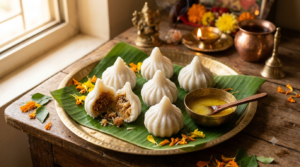
Soft steamed ukadiche modak with a sweet coconut-jaggery filling, offered to Lord Ganesha.
According to Wikipedia, the classic modak is a sweet dumpling of freshly grated coconut and jaggery inside a rice-flour shell, counted among Ganesha’s favourite sweets. So this ukadiche modak recipe keeps the traditional method, yet it also fixes the small mistakes that make modaks crack, leak, or turn rubbery.
Ukadiche Modak at a Glance
- What it is: a steamed rice-flour dumpling with a coconut and jaggery filling.
- Core ingredients: fine rice flour, fresh coconut, jaggery, cardamom, ghee.
- Time: about 30 minutes prep, plus shaping and 12 to 15 minutes steaming.
- Yield: roughly 12 to 15 modaks.
- The softness secret: hot water in the dough, and a filling that is cooked until just moist.
What Is Ukadiche Modak?
Ukadiche modak is a steamed rice-flour dumpling filled with sweetened coconut and jaggery. The word ukad means steam in Marathi, so ukadiche modak simply means steamed modak. It is a Maharashtrian festive sweet, and people offer it as prasad to Lord Ganesha.
The same sweet travels across South India under other names. Tamil homes call it kozhukattai, while Telugu kitchens make kudumu and Kannada cooks make kadubu. Because the filling and the steaming stay similar, the skill you build here works for all of them.
Ingredients For This Ukadiche Modak Recipe
The ingredient list is short, yet the quality of the rice flour and the coconut decides the result. Use a fine, fresh rice flour and freshly grated coconut where you can. Below are the exact quantities that make about 12 to 15 modaks.
For the outer dough
- 2 cups fine rice flour (about 250 to 300 g)
- 2 to 2¼ cups water (adjust by flour, see the ratio note below)
- 1 tbsp ghee
- ½ tsp salt
For the sweet coconut filling
- 2 cups freshly grated coconut (about 180 to 200 g)
- 1¼ cups grated jaggery (about 150 g)
- 1 tsp cardamom powder
- ⅛ tsp nutmeg powder (optional)
- 1 to 2 tsp ghee for sautéing
- 2 tbsp chopped cashews or almonds (optional)
For steaming
- A steamer, idli pot, or pressure cooker with water
- Modak moulds (optional, but they help beginners)
The Water-To-Rice-Flour Ratio That Keeps Ukadiche Modak Soft
Get the water right and half the battle is won in this ukadiche modak recipe. A good starting point is roughly equal parts water and rice flour, with a little extra water for drier flours. Too little water leaves the dough dry, so it cracks while shaping. Too much water makes it sticky, and then the modak turns gummy after steaming.
| Rice flour | Water | Result |
|---|---|---|
| 1 cup | 1 cup | Firm, easy to shape |
| 1 cup | 1¼ cups | Softer, best for very fine flour |
| 1 cup | 1½ cups | Too wet, dough gets sticky |
Since brands differ, add the last splash of water slowly. The dough should feel soft and smooth, never wet. If it sticks to your palm, dust in a little more rice flour and knead again.
Step-By-Step Ukadiche Modak Recipe
There are three parts to this ukadiche modak recipe: the filling, the dough, and the shaping. Make the filling first so it has time to cool while you prepare the dough.
Step 1: Make the coconut-jaggery filling
Heat 1 to 2 tsp ghee in a pan on medium heat. Add the grated coconut and stir for a minute until it smells fragrant. Now add the grated jaggery and keep stirring, because the jaggery melts first and then binds with the coconut.
Cook for about 8 to 10 minutes until most of the moisture dries off and the mixture looks slightly sticky. Stir in the cardamom, the nutmeg, and the chopped nuts if you like. Then turn off the heat and spread the filling on a plate to cool completely. Warm filling tears the dough, so do not rush this step.
Step 2: Prepare the dough
Bring the water, salt, and 1 tbsp ghee to a rolling boil in a heavy pan. Lower the heat and add the rice flour gradually, stirring hard so no lumps form. Once it comes together, switch off the flame and cover the pan for 5 minutes. This resting steam finishes cooking the flour.
Next, tip the dough into a wide bowl while it is still warm. Knead it with wet hands until it turns smooth and pliable, which takes about 5 minutes. Add a few drops of water or ghee if it feels dry. Kneading while warm is the single biggest reason a modak stays soft.
Step 3: Shape by hand (without a mould)
Grease your palms with a little ghee. Pinch a lime-sized ball of dough and press it into a shallow cup with your thumbs. Keep the edges thin and the centre slightly thick, so it holds the filling without breaking.
Spoon 1 to 1½ tsp of cooled filling into the cup. Now pinch small pleats around the rim with your thumb and finger, then gather the pleats up and seal them into a pointed tip. Beginners can start with five or six pleats, since neat shaping comes only with practice.
Step 4: Shape with a mould
Grease the modak mould with ghee so nothing sticks. Press dough evenly into the mould walls, add a small ball of filling, then close a little dough over the base. Snap the mould shut, scrape off the extra, and open it gently. This method is fast and gives uniform modaks, so it suits large batches.
Step 5: Steam the modaks
Let the water in your steamer come to a full boil before the modaks go in. Grease the plate or line it with a banana leaf, then arrange the modaks with gaps between them. Steam on medium heat until the shells turn glossy and slightly see-through.
Timing changes a little with the vessel you use. The table below gives a safe range for each.
| Method | Steam time | Note |
|---|---|---|
| Steamer / idli pot | 12 to 15 min | Medium heat, lid on |
| Pressure cooker | 10 to 12 min | No whistle, vent open |
| Instant Pot (Steam) | 10 to 13 min | Vent in venting, use an external timer |
After steaming, rest the modaks for 5 minutes so they firm up before you lift them. Finally, drizzle a little warm ghee over the top and serve.
Why Ukadiche Modak Turns Hard — And How To Fix It
Most modak failures trace back to three small errors. Once you know them, you can fix the dough or filling on the spot instead of throwing a batch away.
Why did my modak turn hard?
A hard modak usually means the dough was kneaded cold, or the filling was overcooked. Rice-flour dough sets stiff as it cools, so knead it while warm and keep it covered. Overcooked jaggery also hardens, therefore stop cooking the filling while it still looks a touch moist.
Why does the dough crack while shaping?
Cracks mean the dough is too dry. Sprinkle a little warm water, then knead again until it feels smooth. Keep the rest of the dough under a damp cloth while you work, because exposed dough dries within minutes and starts to split at the pleats.
Why is the filling leaking or soggy?
Leaking happens when the filling is too wet or the seal is loose. So cook the coconut and jaggery until the moisture dries and the mix holds together. Then seal the pointed tip firmly with damp fingers, since even a tiny gap lets melted jaggery escape during steaming.
Pro Tips For A Soft Ukadiche Modak Recipe
These small habits separate a good ukadiche modak recipe from a great one, and none of them take extra time.
- Cool the filling fully before you stuff it, because warm filling softens and tears the dough.
- Sift the rice flour first if it feels gritty, so the shell steams up smooth.
- Dip your fingers in warm water to smooth any cracks before you seal.
- A few strands of saffron soaked in milk, brushed on before steaming, add aroma and a soft glow.
- Fresh grated coconut beats desiccated for both texture and flavour.
Variations And Substitutions
The classic filling in this ukadiche modak recipe is coconut and jaggery, yet you can adapt it easily. Add roasted poppy seeds or chopped dry fruits for crunch, or a pinch of dry ginger for warmth. For a richer version, fold in a spoon of khoya.
If fresh coconut is not available, desiccated coconut works, although you should add a splash of water and cook it for less time. Sugar can replace jaggery for a milder sweetness, though you lose the earthy caramel note. When you cannot find good rice flour, a fine idiyappam or kozhukattai flour is a reliable swap. For more festive ideas, this pairs well with a plate of rava laddu or jaggery-sweet palathalikalu.
Storage And Reheating
Steamed modaks taste best warm and fresh, on the day you make them. If you have leftovers, keep them in an airtight box. They hold at room temperature for a day, and in the fridge for 2 to 3 days.
To bring back the softness, steam the modaks again for 3 to 5 minutes before serving. A quick microwave works in a pinch, although the shell can turn a little chewy. Freezing is not ideal, since the rice shell tends to dry out once thawed.
How Many Modaks To Offer And How To Serve
By tradition, families offer 21 modaks to Lord Ganesha, though any odd number such as 5, 7, or 11 is fine too. Arrange them on a clean banana leaf or a steel thali, often stacked in a small mound.
Serve the modaks warm with a drizzle of ghee, as prasad after the puja or as a sweet with a festive meal. During Ganesh Chaturthi, they sit beautifully alongside other homemade Indian sweets. You can read more about the festival itself on Wikipedia.
A Quick Safety Note
The jaggery syrup and the fresh dough both get very hot, so let the dough cool enough to handle before kneading. Keep children away from the boiling steamer. If you add nuts, remember the modaks then carry a tree-nut allergen.
Nutrition (Approximate, Per Modak)
| Nutrient | Per modak |
|---|---|
| Calories | about 125 to 130 kcal |
| Carbohydrates | about 20 g |
| Protein | about 1.5 g |
| Fat | about 5 g |
These figures are a general guide for a coconut-jaggery modak. Actual values shift with the amount of ghee, nuts, and jaggery you use.
Before You Start Steaming
A soft ukadiche modak recipe really does come down to a warm, well-kneaded dough and a filling cooked to just-moist. Make the filling first, respect the water ratio, and keep every bit of dough covered as you shape. If your first few pleats look uneven, do not worry, because the mould gives neat results while your hands learn the rhythm. Steam a small test batch, check the glossy shell, and you will have festive modaks ready to offer.
Ukadiche Modak Recipe: Common Questions
Can I make ukadiche modak without a mould?
Yes, and handmade pleated modaks look beautifully traditional. Grease your palms, keep the edges thin, and use damp fingers to smooth any cracks. Practice makes the pleats neat, so start with a smaller batch.
Why did my modak turn hard after cooling?
The dough was likely kneaded cold, or the filling was overcooked. Always knead the rice dough while warm and keep it covered. Stop cooking the jaggery filling while it still looks slightly moist.
Can I use desiccated coconut instead of fresh?
Yes, desiccated coconut works when fresh is not available. Add a tablespoon or two of water to bring back moisture, and cook it for a shorter time. The flavour is milder than fresh coconut.
Can I use sugar instead of jaggery?
You can, though jaggery gives the traditional caramel depth. Sugar makes the filling sweeter and lighter in colour. Use the same quantity and cook it just until it binds with the coconut.
How many modaks does this recipe make?
This ukadiche modak recipe makes about 12 to 15 medium modaks. You will get more if you shape them smaller. Double the quantities easily if you plan to offer 21.
Can I freeze ukadiche modak?
Freezing is not recommended, since the rice shell dries and turns chewy after thawing. It is better to make them fresh. If needed, refrigerate for 2 to 3 days and steam again before serving.
Which rice flour is best for soft modak?
A fine, fresh rice flour gives the softest shell. Sift it before use if it feels gritty. Fine idiyappam or kozhukattai flour also works well.
How long do modaks stay fresh?
They stay good for one day at room temperature and 2 to 3 days in the fridge. Store them in an airtight box. Steam for a few minutes before serving to soften them again.