Palathalikalu Recipe with Jaggery: Soft Andhra Payasam
This palathalikalu recipe with jaggery turns humble rice flour, milk, and bellam into a soft, creamy Andhra payasam that tastes exactly like festival naivedyam made at home. The magic is in the tiny rice-flour noodles, called thalikalu, that drink up sweet milk and turn pillowy. Most online versions skip the parts that actually decide whether yours comes out silky or curdled, so this guide fixes that. You get exact measures, two shaping methods, jaggery timing that stops the milk from splitting, and a troubleshooting section, all in one place.
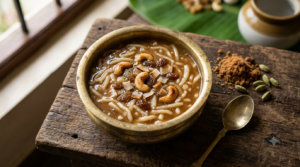
Soft rice-flour thalikalu simmered in creamy jaggery milk, served warm.
Palathalikalu Recipe with Jaggery at a Glance
- What it is: soft rice-flour noodles simmered in milk and sweetened with jaggery.
- Region: Andhra Pradesh and Telangana, with a version in coastal Karnataka too.
- Best for: Vinayaka Chavithi, Sankranti, and family celebrations.
- Time: about 1 hour 5 minutes, plus soaking.
- Key rule: cool the jaggery syrup fully before it meets the hot milk.
What Is Palathalikalu?
Palathalikalu is a traditional Andhra sweet where “pala” means milk and “thalikalu” means little noodles. So the name simply describes the dish: rice-flour noodles cooked in milk. Families across the Godavari and Krishna delta prepare it as naivedyam for Lord Ganesha, then share it as prasadam.
The sweet is close cousin to undrallu payasam, though the shapes differ. While undrallu are tiny balls, thalikalu are rolled into short cylinders. According to Wikipedia, the dish is a rice-based payasam flavoured with jaggery, ghee, and dry fruits, and it stays popular in Telugu homes because it is both festive and forgiving once you know the steps. That balance is exactly why this palathalikalu recipe with jaggery earns a place on the festival table.
Recipe Card for Palathalikalu with Jaggery
| Detail | Value |
|---|---|
| Prep Time | 20 minutes |
| Cook Time | 45 minutes |
| Total Time | 1 hour 5 minutes (plus soaking) |
| Servings | 6 |
| Course | Dessert, Naivedyam |
| Difficulty | Medium |
Ingredients for This Palathalikalu Recipe with Jaggery
The ingredient list stays short, because the flavour comes from good jaggery and full-fat milk. Measure everything before you start, since the cooking moves quickly once the milk boils.
- Wet rice flour – 1 cup (freshly ground, or fine store-bought rice flour)
- Jaggery (bellam) – 1 cup, grated
- Full-fat milk – 4 cups
- Water – 1 cup
- Sago pearls (sabudana) – 2 tbsp, optional but traditional
- Cardamom powder – ½ tsp
- Ghee – 3 tbsp
- Cashew nuts – 2 tbsp
- Raisins – 2 tbsp
- Dried coconut pieces – 2 tbsp, optional
These proportions follow the classic home version and scale cleanly if you double the batch. When you double it, use a wide, heavy pot so the thalikalu cook without clumping.
Why Jaggery, Not Sugar?
Jaggery gives this payasam its deep amber colour and a mild caramel note that plain sugar cannot match. Because jaggery is less refined, it also carries a faint earthy warmth that pairs beautifully with cardamom. Sugar works in a pinch, yet the dish then loses the very character that makes it a festival sweet. For more on the ingredient itself, see this overview of jaggery.
How to Make Palathalikalu Recipe with Jaggery, Step by Step
Follow the steps in order, because a few of them overlap. While the milk heats, you can shape the thalikalu, so read through once before you begin. This palathalikalu recipe with jaggery comes together in nine easy stages.
1. Prepare the Wet Rice Flour
Wash 1 cup of rice and soak it for 4 to 6 hours. After draining, spread it on a clean cloth until it is barely moist, then grind to a very fine powder. Sift the flour so the thalikalu turn out smooth and soft.
2. Make the Jaggery Syrup
Add the grated jaggery and ½ cup water to a pan. Heat gently until the jaggery fully dissolves, then strain the syrup to remove grit. Set it aside to cool completely, because this cooling step is what protects the milk later.
3. Soak the Sago
If you are using sago, wash 2 tbsp and soak it in warm water for 15 minutes. Drain it before adding it to the milk. Soaking first means the pearls turn soft and clear instead of staying chewy.
4. Boil the Milk
Pour 4 cups milk and 1 cup water into a heavy saucepan. Bring it to a boil on medium heat, and stir now and then so it does not catch at the bottom. Once it boils, add the soaked sago and cook until it is half done, about 5 minutes.
5. Shape the Thalikalu
Mix the wet rice flour with a few tablespoons of water to make a soft, non-sticky dough. Pinch off marble-sized pieces and roll each into a short cylinder about 3 to 4 inches long. Rest them on a plate dusted with flour so they hold their shape.
6. Cook the Thalikalu in Milk
Gently slide the rolled thalikalu into the simmering milk. Leave them undisturbed for 5 minutes so they firm up before you touch them. After that, stir softly and cook another 10 minutes until they are cooked through the centre.
7. Thicken the Payasam
Mix 2 tbsp of the remaining rice flour with a little water until smooth. Pour this slurry slowly into the simmering payasam while you stir, so no lumps form. Cook for 3 to 5 minutes until the milk thickens just slightly.
8. Add Jaggery and Aromatics
Turn off the heat first, because this is the moment that decides your texture. Now stir in the cooled jaggery syrup and the ½ tsp cardamom powder. The residual warmth melts the jaggery in without curdling the milk.
9. Garnish and Serve
Heat 3 tbsp ghee in a small pan. Roast the cashews, raisins, and dried coconut until golden, then pour them over the payasam. Serve it warm, or let it cool to room temperature for a thicker set.
Two Ways to Shape Palathalikalu
The noodles can be made by hand or with a press, and each method has a trade-off. Beginners often prefer the press for speed, while purists roll by hand for a firmer bite.
| Method | Best For | Watch Out For |
|---|---|---|
| Hand-rolled cylinders | Firm, even noodles that hold shape | Time-consuming for a large batch |
| Murukku or sev press (large disc) | Speed and uniform thickness | Thin strands can break or melt into the milk |
If you use a press, choose the biggest-holed disc, and steam the pressed strands for a few minutes before they go into the milk. Steaming first stops them from dissolving, which is the most common beginner slip. Either shaping route works well for this palathalikalu recipe with jaggery.
Pro Tips for the Best Palathalikalu Recipe with Jaggery
- Smaller thalikalu absorb milk more evenly, so keep the cylinders short.
- Always cool the jaggery syrup fully, because hot syrup poured into hot milk curdles it instantly.
- Full-fat milk gives a richer body than toned milk, so use it when you can.
- Rest the finished payasam off the heat for a few minutes, since the jaggery flavour blooms as it settles.
- Remember that the payasam thickens as it cools, so keep it a touch loose on the stove.
Common Mistakes in Palathalikalu Recipe with Jaggery
Most palathalikalu problems trace back to two things: water in the dough and heat when adding jaggery. Fix those and the dish rarely fails.
Why does the milk curdle?
Curdling happens when jaggery meets milk that is still on the boil. Turn off the flame, let the pan settle, and add only cooled, strained jaggery syrup. If you add grated jaggery directly, do it off the heat and stir until it melts.
Why do the thalikalu turn sticky or hard?
Sticky noodles usually mean the dough held too much water, so use less and dust with flour while rolling. Hard noodles mean the dough was too tight, so add a splash of water until it feels soft. A soft, barely sticky dough is the sweet spot.
Why did my noodles dissolve into the milk?
Very thin strands from a press can melt if dropped straight into boiling milk. Steam them first, or roll slightly thicker cylinders by hand. Thicker thalikalu keep their shape and give that signature bite.
Jaggery vs Sugar and Other Substitutions
| Swap | Use Instead | Effect |
|---|---|---|
| Jaggery | Edible brown sugar or regular sugar | Lighter colour, milder flavour, less festive depth |
| Wet rice flour | Fine store-bought rice flour | Quicker, slightly less soft texture |
| Sago pearls | Omit, or use a few cooked rice bits | Less chew, still creamy |
| Dairy milk | Coconut milk (vegan) | Nutty flavour, fully plant-based |
Storage Tips
Refrigerate leftovers in an airtight container for up to 3 days. Reheat gently with a splash of milk, because the payasam thickens in the fridge and needs loosening. Avoid freezing, since the texture turns grainy after thawing.
When to Make Palathalikalu Recipe with Jaggery
This sweet shines during Vinayaka Chavithi, when Telugu families offer it to Lord Ganesha alongside undrallu and modak. In 2026, Vinayaka Chavithi falls on Monday, 14 September, so that is the peak week to prepare this palathalikalu recipe with jaggery as naivedyam. Many households also make it for Sankranti and for wedding feasts, though you can enjoy it any day you crave a warm payasam.
If you are planning a full festival menu, pair it with soft ukadiche modak for Ganesh Chaturthi, or a jaggery-rich Tirupati-style laddu for the sweet platter.
Nutrition in Palathalikalu Recipe with Jaggery (Per Serving)
| Nutrient | Amount |
|---|---|
| Calories | ~320 kcal |
| Carbohydrates | 45 g |
| Protein | 7 g |
| Fat | 12 g |
| Sugar | 22 g (mainly from jaggery and milk) |
| Calcium | ~200 mg |
These figures are estimates based on typical values for milk, jaggery, and rice flour. Your numbers will shift with the exact brands and quantities you use.
How to Serve Palathalikalu Recipe with Jaggery
Palathalikalu tastes best fresh and warm, when the thalikalu are soft and the jaggery aroma is strongest. For a homestyle Andhra touch, serve it after mudda pappu and a spoon of ghee. It also sets thicker when chilled, so some families enjoy it cold the next day, much like a jaggery sakkarai pongal.
Before You Serve
A good palathalikalu comes down to three habits: grind or buy fine rice flour, keep the thalikalu small, and add jaggery only off the heat. Get those right, and you will pull off a soft, glossy payasam on the first try. Make this palathalikalu recipe with jaggery once for a festival, and it quickly becomes the dish everyone asks for. Keep the syrup cool, the milk gentle, and the flame patient.
Frequently Asked Questions
Is this palathalikalu recipe with jaggery hard to make?
No, it is a medium-effort recipe once you prep ahead. The only tricky moment is adding jaggery, which must go in off the heat. Roll the thalikalu small and the rest is simple simmering.
Can I use dry rice flour instead of wet rice flour?
Yes, fine store-bought rice flour works well. Wet, freshly ground flour gives softer, more milk-absorbing thalikalu, while dry flour makes them a little firmer. Both taste delicious in the finished payasam.
Why does my palathalikalu become sticky?
Stickiness usually means too much water in the dough. Use less water while shaping, and dust the noodles lightly with flour. The dough should feel soft yet hold a clean cylinder.
Can I make palathalikalu vegan?
Yes, swap the dairy milk for coconut milk and use ghee-free roasting or a plant oil. The flavour turns slightly nutty but stays rich and festive. Choose unsulphured jaggery to keep it fully plant-based.
How long does palathalikalu stay fresh?
It keeps for up to 3 days in the fridge in an airtight container. Reheat with a splash of milk, because it thickens as it sits. Do not freeze it, since thawing spoils the texture.
Do I have to add sago to palathalikalu?
No, sago is optional and traditional rather than essential. It adds a gentle chew that many people love. Skip it if you prefer a smoother payasam, and the dish still works.
Is jaggery better than sugar for palathalikalu?
Jaggery gives the payasam its amber colour and caramel-like depth. Sugar makes it lighter and less festive. For an authentic Andhra taste, jaggery is the traditional choice, and it is what defines this palathalikalu recipe with jaggery.
The Tradition Behind Palathalikalu Recipe with Jaggery
In Andhra homes, palathalikalu is more than dessert. It carries the memory of festival mornings, of jaggery and cardamom filling the kitchen while the family waits for naivedyam. Cook it once, and that aroma alone tells you why it has stayed on the festival table for generations.