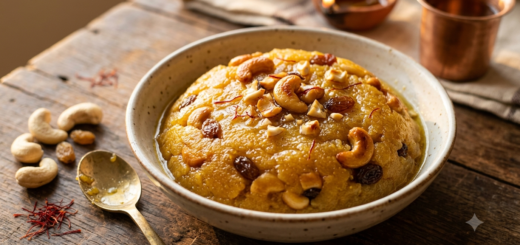
Sweet Pongal With Coconut Milk: Easy Jaggery Recipe
Sweet pongal with coconut milk should be soft, glossy and spoonable, with the flavour of jaggery, cardamom and coconut coming through without becoming overly heavy. The easiest way to get that texture is to cook the rice and moong dal until very soft, add the jaggery only after the grains are fully cooked, and stir in the coconut milk near the end.
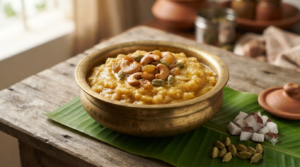
Creamy sweet pongal with coconut milk, jaggery, roasted cashews and raisins served warm.
This home-style version uses simple ingredients and gives you enough cooking liquid for a creamy consistency. It also includes practical fixes for pongal that turns too thick, thin or grainy.
Sweet Pongal With Coconut Milk at a Glance
This recipe combines rice and yellow moong dal with jaggery, coconut milk, cardamom, ghee, cashews and raisins. Unlike a firmer rice dessert, sweet pongal is usually cooked until the rice and dal lose most of their separate texture and become soft enough to mash easily.
The coconut milk is added after the jaggery has been incorporated. This helps preserve its flavour and avoids prolonged high-heat cooking.
- Main ingredients: rice, moong dal, jaggery and coconut milk
- Texture: soft, creamy and spoonable
- Flavour: caramel-like jaggery, coconut and cardamom
- Best served: warm
- Cooking options: pressure cooker or stovetop
Ingredients for Coconut Milk Sweet Pongal
Use unsweetened coconut milk so you can control the sweetness with jaggery. Short-grain raw rice works particularly well because it softens readily and gives the pongal a cohesive texture.
- 1 cup raw short-grain rice
- 1/4 cup yellow moong dal
- 3 1/2 cups water, plus more if needed
- 1 to 1 1/4 cups jaggery, according to taste
- 1/2 cup water for dissolving the jaggery
- 1 cup unsweetened coconut milk
- 3 tablespoons ghee
- 12 to 15 cashews
- 1 tablespoon raisins
- 1/2 teaspoon ground cardamom
- A small pinch of salt
Jaggery varies in sweetness and intensity, so the amount can be adjusted. Start with the lower quantity if you prefer moderate sweetness.
How much jaggery should you use?
For 1 cup of rice and 1/4 cup of moong dal, 1 cup of jaggery gives a balanced sweetness for many home kitchens. Increase it toward 1 1/4 cups if you prefer a richer, sweeter pongal.
The type of jaggery also affects the final colour. Dark jaggery can produce a deeper brown pongal, while lighter jaggery gives a more golden finish. Colour alone is not a reliable indication of sweetness.
How to Make Sweet Pongal With Coconut Milk
Cook the rice and dal base
Rinse the rice thoroughly and drain it. Dry-roast the moong dal over low to medium heat for a few minutes until it smells lightly nutty. It does not need to become dark brown.
Add the rice, roasted dal and 3 1/2 cups of water to a pressure cooker. Cook until the rice and dal are extremely soft. Allow the pressure to release naturally when possible.
Open the cooker and mash the mixture gently with a ladle. If it already looks dry or stiff, mix in a little hot water before adding the sweetener. The base should be softer than the final consistency you want because jaggery and resting will thicken it.
If you prefer a dedicated cooker method, see our pressure cooker sweet pongal recipe.
Sweeten and finish the coconut milk pongal
In a separate pan, combine the jaggery with about 1/2 cup of water. Heat gently until the jaggery dissolves. Strain the liquid if your jaggery contains visible impurities.
Add the jaggery syrup to the cooked rice and dal. Mix well and simmer gently for about 3 to 5 minutes so the sweetness is distributed throughout the mixture.
Reduce the heat before adding the coconut milk. Stir it in and cook gently for another 2 to 3 minutes. Avoid a vigorous boil after adding coconut milk.
Add the cardamom and a small pinch of salt. The salt should not make the dish taste salty; it simply balances the sweetness.
Heat the ghee separately. Fry the cashews until golden, then add the raisins and cook just until they puff. Pour the ghee, cashews and raisins over the pongal and mix.
Let the pongal rest for about 5 minutes before serving. If it becomes thicker than you like, loosen it with a small amount of hot water or warm coconut milk.
Pressure cooker versus stovetop
A pressure cooker is convenient because it softens the rice and dal quickly and consistently. However, the recipe can also be prepared in a heavy-bottomed pot.
For stovetop cooking, use enough water to keep the grains from drying out and stir periodically. Add more hot water whenever necessary. Continue cooking until both the rice and dal mash easily between your fingers or with the back of a spoon.
The exact stovetop cooking time can vary with the rice variety, pan and heat level, so texture is a better guide than the clock.
Why Add Coconut Milk Near the End of Sweet Pongal?
Coconut milk contributes both flavour and richness. Adding it near the end means it needs only brief, gentle heating instead of prolonged boiling.
Once the coconut milk is mixed in, keep the heat low and stir gently. The pongal does not need to boil hard to become creamy. In fact, reducing it aggressively at this stage can make the final dish much thicker after it cools.
This approach also makes it easier to adjust consistency. If the cooked rice and dal are already very thick, you can loosen them before adding the coconut milk instead of relying on coconut milk alone as the cooking liquid.
Coconut Milk Sweet Pongal vs Regular Sakkarai Pongal
Traditional sakkarai pongal recipes commonly centre on rice, moong dal, jaggery and ghee. Coconut milk is a home-style variation rather than a universal ingredient in every traditional preparation.
Adding coconut milk gives the dessert a noticeable coconut aroma and a creamier finish. It can be especially useful when you want a coconut-forward variation without replacing the basic rice, dal and jaggery structure of the dish.
If you enjoy coconut-based South Indian sweets, you can also try our coconut payasam recipe.
Common Mistakes When Making Sweet Pongal With Coconut Milk
Using too little cooking liquid
Sweet pongal needs a very soft rice-and-dal base. If there is too little water, the grains may remain separate and the finished pongal can feel dry rather than creamy.
If the mixture looks firm immediately after pressure cooking, add a little hot water and mash it before proceeding.
Adding jaggery before the grains are soft
Cook the rice and dal completely before introducing the jaggery syrup. This gives you much better control over the texture and ensures the grains have already reached the desired softness.
Boiling coconut milk aggressively
After coconut milk is added, gentle heating is enough. A hard, prolonged boil is unnecessary and can reduce the mixture too far.
Reducing the pongal until it looks perfect in the pan
Pongal continues to thicken as it rests. Switch off the heat while it is still slightly looser than your ideal serving consistency.
Calling date syrup sugar-free
Date syrup may be used as an alternative sweetener in some home variations, but it is still a source of sugar. Replacing jaggery with date syrup does not make the dish sugar-free.
If you need to manage sugar intake for a medical reason, choose ingredients and portions based on advice from your doctor or registered dietitian rather than relying on a sweetener substitution alone.
How to Fix Sweet Pongal When It Goes Wrong
| Problem | Likely cause | Easy fix |
|---|---|---|
| Pongal is too thick | Too little liquid or excessive reduction | Stir in hot water or warm coconut milk a little at a time. |
| Pongal is too thin | Too much liquid | Simmer gently while stirring until it reaches a spoonable consistency. |
| Rice feels grainy | Rice and dal were not cooked long enough | Add a little hot water and continue cooking until soft enough to mash. |
| Too sweet | Too much jaggery for your preference | Add more plain cooked rice and dal if available, or serve a smaller portion. |
| Not sweet enough | Mild jaggery or a smaller quantity | Dissolve a little extra jaggery separately and stir it into the pongal. |
| Pongal becomes thick after resting | Normal starch thickening | Loosen it with a small splash of hot water or warm coconut milk. |
Sweet Pongal Variations and Practical Substitutions
Vegan coconut milk sweet pongal
For a vegan version, replace the ghee with a neutral cooking oil or a suitable plant-based fat. Coconut oil can also be used if you want a stronger coconut aroma.
The remaining core ingredients—rice, moong dal, jaggery and coconut milk—are plant-based.
Using fresh coconut milk
Freshly extracted coconut milk can be used in place of packaged unsweetened coconut milk. Add it near the end and heat gently rather than boiling it for a long time.
Without raisins or nuts
Cashews and raisins are optional. They add contrast and richness but are not necessary for the basic pongal texture. If you are cooking for someone with a nut allergy, omit the nuts and take appropriate care to avoid cross-contact.
Using edible camphor
Some festive sweet preparations use a tiny amount of culinary edible camphor for aroma. However, it is optional and easy to overuse. The simplest choice for home cooks is to omit it unless you have a product clearly labelled for culinary use and know how it should be used.
Never substitute household, medicinal or puja camphor for culinary edible camphor.
Festival Context and Serving Ideas
Sweet pongal is closely associated with the Pongal harvest festival in South India, particularly Tamil Nadu. It is also prepared in homes for celebrations, religious occasions and family meals. For background on the festival, see the Government of India’s Incredible India overview of Pongal.
Coconut milk is one variation of the dish rather than a requirement for every traditional sakkarai pongal recipe. Home recipes naturally differ by region and family preference.
Serve this version warm in small bowls. For a festive meal, it can be paired with other traditional preparations. You may also like our panakam and vadapappu recipe when planning a festival menu.
How to Store Sweet Pongal With Coconut Milk
Because this recipe contains cooked rice and coconut milk, avoid leaving it at room temperature for extended periods. Refrigerate leftovers promptly in a covered, shallow container.
The Food Safety and Standards Authority of India advises refrigerating perishable foods within two hours. You can review its safe-food guidance for general handling advice.
For broader leftover guidance, the USDA food-safety guidance notes that most cooked leftovers are generally refrigerated for about three to four days.
When reheating, take out only the amount you plan to serve. Add a splash of water or coconut milk because refrigerated pongal becomes considerably thicker. Reheat until properly hot, stirring so the centre heats evenly.
Sweet Pongal With Coconut Milk: Final Texture Check
The best time to stop cooking is before the pongal becomes stiff. Drag a spoon through the pan: the mixture should slowly flow back rather than remain in a firm mound.
If you plan to serve it later, leave it slightly looser because both rice and dal continue absorbing moisture. A final spoonful of warm coconut milk can restore a creamy consistency just before serving.
Most importantly, taste before serving. Jaggery varies from batch to batch, so sweetness may need a small adjustment. Cardamom should be noticeable without overpowering the coconut and jaggery.
Sweet Pongal With Coconut Milk FAQs
Can I make sweet pongal with coconut milk instead of dairy milk?
Yes. This recipe uses coconut milk and does not require dairy milk. Add the coconut milk near the end and heat it gently.
When should I add coconut milk to sweet pongal?
Add it after the rice and dal are fully cooked and after the jaggery syrup has been mixed in. Keep the heat low and cook briefly after adding it.
Can I make coconut milk sweet pongal without ghee?
Yes. For a vegan version, replace ghee with a neutral oil or another suitable plant-based fat. The flavour will differ because ghee contributes its own aroma.
Why did my sweet pongal become hard after cooling?
Rice and dal continue absorbing moisture as the dish rests. The pongal was probably reduced a little too far. Stir in hot water or warm coconut milk until it becomes soft again.
Can I prepare sweet pongal without a pressure cooker?
Yes. Cook the rice and moong dal in a heavy pot with sufficient water until both are extremely soft. Add more hot water during cooking if required.
Can I use canned coconut milk?
Yes. Use unsweetened coconut milk. If the product is exceptionally thick, you can adjust the final consistency with a little hot water.
Is sweet pongal with coconut milk the traditional version?
Coconut milk is used in some home and regional variations, but it is not a universal ingredient in traditional sakkarai pongal. Rice, moong dal, jaggery and ghee are more typical core ingredients.
Can I make sweet pongal ahead of time?
Yes, although it thickens considerably as it stands. Refrigerate it promptly, then reheat the required portion with a little water or coconut milk to restore its soft, spoonable texture.