Sweet Pongal Recipe With Sugar: Easy Hotel-Style Guide
Sweet pongal recipe with sugar is the easiest way to make a pale, creamy South Indian sweet pongal when you want clean sweetness instead of the deeper caramel flavour of jaggery. This version uses rice, moong dal, milk, ghee, cardamom, cashews and raisins. The key is to cook the rice and dal until very soft before adding sugar.
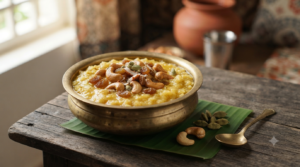
Creamy sugar sweet pongal finished with golden cashews, raisins, cardamom and ghee.
There is no single official “hotel-style” formula. In practice, that description usually means a loose, glossy texture, enough ghee for aroma, and a smooth finish without dry grains. This method keeps those qualities while avoiding an unnecessary sugar-syrup step.
Sweet Pongal Recipe With Sugar at a Glance
| Detail | Amount | Why it matters |
|---|---|---|
| Rice | 1 cup | Use short- or medium-grain raw rice for a soft texture |
| Moong dal | 1/4 cup | Adds body, aroma and a creamy finish |
| Water | 4 cups | Cooks the rice and dal until very soft |
| Milk | 1/2 cup | Added after pressure cooking for extra richness |
| Sugar | 1/2 to 3/4 cup | Use 3/4 cup for a clearly sweet dessert |
| Ghee | 3 tbsp | Gives the glossy hotel-style finish |
| Prep time | 10 minutes | Includes rinsing and measuring |
| Cook time | 25 to 30 minutes | Includes pressure release and finishing |
| Yield | 4 servings | Serve warm in small dessert portions |
This sweet pongal recipe with sugar is vegetarian and naturally gluten-free when every packaged ingredient is certified free from cross-contact where that matters. It is also easy to scale because the rice-to-dal ratio stays at 4:1.
What Is Sugar Sweet Pongal?
Sugar sweet pongal is a soft rice-and-lentil dessert made by cooking rice and moong dal until mushy, then sweetening the mixture with white sugar. Ghee, cardamom, cashews and raisins finish the dish. Milk is optional, although it gives this version a softer and more dessert-like texture.
Sweet pongal is closely associated with South Indian harvest celebrations. India’s Ministry of Tourism describes Pongal as a major harvest festival and notes that sweet pongal is prepared as part of the celebration. See the Ministry of Tourism harvest-festival page for cultural context.
Jaggery remains the better-known sweetener for many traditional sakkarai pongal recipes. However, sugar versions also appear in home cooking, Andhra-style chakkara pongali and restaurant-style preparations. If you are cooking for naivedyam, follow your family or temple custom rather than assuming sugar and jaggery are interchangeable for every ritual.
Ingredients for a Creamy Hotel-Style Batch
- 1 cup raw short- or medium-grain rice, such as Sona Masoori or Ponni
- 1/4 cup yellow moong dal
- 4 cups water
- 1/2 cup full-fat milk, warmed
- 3/4 cup white granulated sugar, or 1/2 cup for a mildly sweet version
- 3 tablespoons ghee
- 10 to 12 cashew nuts
- 1 tablespoon raisins
- 1/2 teaspoon freshly ground cardamom
- 1 small pinch salt
- Optional: an extremely tiny pinch of food-grade edible camphor
Use only camphor that is specifically sold for food use. Never use puja camphor or a household camphor product in food. If you are unsure about the product, skip it because cardamom alone gives excellent aroma.
Why Add Sugar Only After the Rice Is Soft?
Add sugar after the rice and dal have fully softened because sweetness belongs in the finishing stage, not the pressure-cooking stage. Cooking the grains first also makes it easier to judge texture. You can mash the base, add warm milk, then dissolve the sugar directly into the hot mixture.
The old extra step of boiling and straining white sugar syrup is usually unnecessary. Clean packaged white sugar dissolves quickly in hot pongal. A separate syrup is more useful with some jaggery because jaggery may contain visible particles that need straining.
This change also makes the sweet pongal recipe with sugar faster. More importantly, it lowers the chance of overcooking syrup until it becomes sticky or crystallises.
How This Sweet Pongal Recipe With Sugar Works
- Dry-roast the moong dal. Heat a heavy pan over low to medium heat. Roast 1/4 cup moong dal for 2 to 3 minutes, stirring often, until it smells nutty and shows only a light golden tint.
- Rinse the rice and dal. Put the roasted dal with 1 cup rice in a bowl. Rinse two or three times with clean water, then drain.
- Pressure-cook until very soft. Add the rice, dal, 4 cups water and a small pinch of salt to a pressure cooker. Cook on medium heat for 3 to 4 whistles, then allow natural pressure release. Cooker sizes vary, so judge the texture rather than the count.
- Mash the base. Open the cooker only after pressure has released. The grains should crush easily with a ladle. Mash briefly while the mixture is hot.
- Add warm milk. Stir in 1/2 cup warm milk. Simmer on low heat for 2 minutes, so the mixture becomes loose and creamy.
- Add sugar. Stir in 3/4 cup sugar. Keep the heat low and mix until the crystals dissolve completely. The pongal loosens first, then thickens again.
- Fry the garnish. Heat 3 tablespoons ghee in a small pan. Fry cashews until golden, then add raisins and cook just until they puff.
- Finish the pongal. Pour the ghee, cashews and raisins into the cooker. Add cardamom and mix well. If using food-grade edible camphor, use only a trace amount at the end.
- Rest before serving. Switch off the heat while the pongal is still slightly looser than your ideal serving texture. Rest for 5 minutes because it thickens as it stands.
Sweet Pongal Recipe With Sugar: Texture and Sweetness Guide
The best hotel-style texture is spoonable and soft, not firm like cooked rice. When you drag a ladle through the pot, the pongal should flow back slowly. If it sits in a stiff mound, add a few tablespoons of hot milk or hot water and mix on low heat.
For sweetness, 3/4 cup sugar gives a dessert-style result for this quantity. This sweet pongal recipe with sugar also works with 1/2 cup for milder sweetness. Taste only after the sugar has fully dissolved because the hot starch can mask sweetness at first.
Do not keep boiling simply to make it look thick in the pot. The sweet pongal recipe with sugar becomes noticeably thicker during the first 10 to 15 minutes after cooking.
Common Problems and Fast Fixes
| Problem | Likely cause | Fix |
|---|---|---|
| Pongal is grainy | Rice and dal were not cooked soft enough | Add hot water and simmer covered until mashable |
| Pongal is too thick | It cooled or lost too much moisture | Mix in hot milk or water a little at a time |
| Pongal is too thin | Too much liquid was added at the end | Simmer uncovered on low heat for a few minutes |
| Sugar tastes flat | Not enough salt or cardamom | Add a tiny pinch of salt and fresh cardamom |
| Cashews taste burnt | Ghee was too hot | Fry on medium-low heat and remove once golden |
| Pongal turns firm after cooling | Normal starch thickening | Reheat with a small splash of milk or water |
One old tip worth correcting is that roasting moong dal “prevents mushiness.” It does not need to prevent mushiness here because sweet pongal should be soft. Roast the dal for aroma, then cook it until it almost disappears into the rice.
Sugar vs Jaggery: Which Version Should You Make?
Choose sugar when you want a lighter colour, a cleaner sweet taste and a quick method. Choose jaggery when you want a deeper cane flavour and the more familiar festive profile found in many sakkarai pongal recipes. Neither version needs to be presented as the only correct South Indian style.
For a jaggery-based version, see Bhimas Cook’s sweet pongal with jaggery. If you prefer a dairy-free creamy variation, the sweet pongal with coconut milk keeps the same soft dessert idea with a different finish.
You can also use the same 4:1 rice-to-moong-dal ratio and reduce the milk if you want a firmer prasadam-style serving. For another lentil variation, compare the sweet pongal with chana dal.
Can You Make It Without Milk?
Yes. Replace the 1/2 cup milk with hot water and the recipe still works. The result will taste a little less rich, but ghee and cardamom provide enough aroma for a satisfying finish.
This is also the easiest adjustment when cooking for someone who avoids milk but still eats ghee. For a fully dairy-free version, replace ghee with a neutral cooking fat or coconut oil, although the flavour will move away from classic ghee-finished pongal.
Serving, Storage and Reheating
Serve sugar sweet pongal warm, ideally soon after the final ghee tempering. A small bowl is enough because rice, sugar and ghee make this a rich dessert. If serving as a festive offering, prepare and serve it according to your household practice.
For food safety, cool leftovers quickly and refrigerate them rather than leaving the pot at room temperature. FSSAI’s Eat Right India home guidance lists cooked food for short refrigerated storage and advises prompt chilling. See the Eat Right India home food-storage guidance.
For this milk-containing rice dish, a cautious home rule is to use refrigerated leftovers within 24 hours for best safety and quality. Reheat only the amount you need until steaming hot, and add a splash of water or milk because the starch firms up in the fridge.
Nutrition and Portion Notes
This is a festive dessert, not a low-sugar breakfast. The recipe contains up to 3/4 cup added sugar plus 3 tablespoons ghee across four servings. If you are tracking calories, carbohydrates or added sugar for a medical reason, calculate the recipe from the exact brands and amounts you actually use.
Reducing sugar from 3/4 cup to 1/2 cup lowers sweetness without changing the cooking method. You can also serve smaller portions rather than altering the rice-to-liquid ratio, which keeps the intended creamy texture.
What Makes This Version More Reliable?
This refresh removes three common failure points: undercooked grains, an unnecessary white-sugar syrup, and cooking until the pongal looks thick in the pot. Instead, it uses a very soft rice-dal base, direct sugar addition and a final consistency that is slightly loose before resting.
That sequence matters because each stage has one job. First, cook the starch fully. Next, sweeten this sweet pongal recipe with sugar. Finally, add the ghee tempering so cashews stay crisp and cardamom stays fresh.
Before You Serve
Make the sweet pongal recipe with sugar when you want a quick, creamy alternative to jaggery pongal without changing the core rice-and-dal structure. Keep the base soft, add sugar only after cooking, and stop the heat before the mixture becomes stiff. Those three choices do more for texture than adding extra ghee at the end.
If you are cooking for a festival or offering, use the sweetener and ingredients your family tradition requires. For everyday dessert, this sugar version is simple, predictable and easy to adjust.
Frequently Asked Questions
Can I make sweet pongal with sugar instead of jaggery?
Yes. White sugar works well and gives a lighter colour and cleaner sweetness. Add it only after the rice and dal are completely soft, then simmer briefly until dissolved.
How much sugar should I use for 1 cup of rice?
Use 1/2 to 3/4 cup sugar for 1 cup rice plus 1/4 cup moong dal. Start with 1/2 cup for mild sweetness, while 3/4 cup gives a more dessert-like result.
Why does my sweet pongal become hard after cooling?
Rice starch continues to absorb moisture as the pongal cools, so thickening is normal. Reheat it gently with a small splash of hot milk or water until it becomes spoonable again.
Do I need to make sugar syrup for sweet pongal?
No. For clean packaged white sugar, a separate syrup is unnecessary because the sugar dissolves directly in the hot rice-dal mixture. Use low heat and stir until no crystals remain.
Can I make this sweet pongal recipe with sugar without a pressure cooker?
Yes. Use a heavy-bottomed pot and cook the rice and dal with enough water until both are extremely soft. Stir more often near the end, then add warm milk and sugar after the grains mash easily.
Should moong dal be roasted before making sweet pongal?
Roasting is optional, but a short dry roast adds a pleasant nutty aroma. Do not roast until dark because the dal still needs to cook very soft and blend into the rice.
Can I add milk while pressure cooking?
You can, but adding warm milk after pressure release is simpler and reduces the chance of foaming or cooker mess. Water alone is enough to soften the rice and dal.
Is edible camphor required?
No. Edible camphor is optional and should only be used if the product is clearly food-grade. Never substitute puja camphor, and skip camphor entirely if you have any doubt.
How long can I store leftover sweet pongal?
Refrigerate leftovers promptly in a covered container and use them quickly. For this milk-based rice dish, using it within 24 hours is a cautious choice that aligns with FSSAI’s short-storage guidance for cooked food.