Sweet Pongal Pressure Cooker Recipe: Easy Sakkarai Pongal
Sweet pongal pressure cooker cooking gives you the soft, glossy texture of traditional sakkarai pongal without a long stovetop simmer. The key is simple: cook the rice and moong dal until very soft, add jaggery only after pressure cooking, then finish with ghee, cardamom, cashews and raisins.
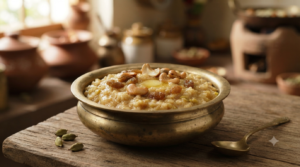
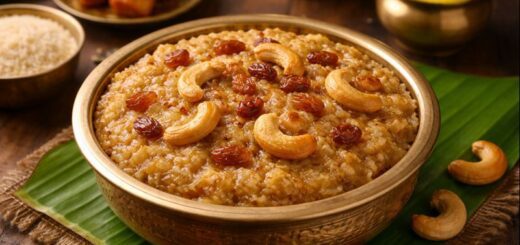
Homemade sweet pongal prepared with soft-cooked rice, moong dal, jaggery, ghee, cashews and cardamom.
This recipe uses a balanced jaggery ratio, enough water for a soft cooker texture, and a separate jaggery step for better control. It also includes practical storage guidance for cooked leftovers.
Sweet Pongal Pressure Cooker Recipe at a Glance
This version makes about 5 to 6 modest servings. The rice and dal cook first, while the jaggery melts separately. Then you combine both on low heat, so the pongal stays creamy instead of turning grainy or stiff.
- Prep time: about 10 minutes
- Pressure cooking: about 12 to 18 minutes, depending on your cooker
- Finishing time: about 10 minutes
- Total time: roughly 30 to 40 minutes
- Servings: 5 to 6
- Texture: soft, spoonable and slightly loose while hot
- Best rice: raw short-grain rice such as Sona Masoori or Ponni
- Sweetener: jaggery, preferably clean and good quality
Why This Sweet Pongal Pressure Cooker Method Works
The sweet pongal pressure cooker method works best when the rice and dal almost lose their separate shape. A pressure cooker does that quickly because it traps steam and cooks the grains in plenty of water. You should therefore aim for a soft porridge-like base, not fluffy rice.
Jaggery goes in after pressure cooking. This makes the process easier to control, and it lets you strain the melted jaggery if your block contains grit. The final low-heat simmer then brings the rice, dal and jaggery together without scorching.
Dry-roasting the moong dal is optional, but it adds a gentle nutty aroma. Roast only until fragrant and pale. If the dal becomes dark brown, the flavour can turn bitter and the colour of the pongal may look muddy.
Sweet Pongal Pressure Cooker Ingredients
The ratio below is designed for a rich but balanced sweet pongal. Jaggery varies in sweetness, so start at the lower end if you prefer a milder dessert. You can add a little more only after tasting the finished mixture.
| Ingredient | Quantity | Purpose |
|---|---|---|
| Raw short-grain rice | 1 cup | Creates the creamy base |
| Yellow moong dal | 1/4 cup | Adds body and a mild nutty taste |
| Water | 4 cups | Softens rice and dal |
| Jaggery | 1 1/4 to 1 1/2 cups, grated or powdered | Sweetens and gives caramel depth |
| Water for jaggery | 1/4 cup | Helps the jaggery melt |
| Ghee | 4 tablespoons, divided | Adds richness and gloss |
| Cashews | 2 tablespoons | Adds crunch |
| Raisins | 1 tablespoon | Adds sweetness and texture |
| Cardamom powder | 1/2 teaspoon | Adds the classic aroma |
| Salt | 1 small pinch | Balances sweetness |
| Food-grade edible camphor | Optional, a pinhead-sized amount | Traditional aroma; skip if unsure |
Use only edible, food-grade camphor if you choose to add it. Regular camphor used for lamps or puja is not a cooking ingredient. When in doubt, leave it out because cardamom alone gives the pongal a lovely aroma.
How to Make Sweet Pongal Pressure Cooker Style
The method has three stages: soften the rice and dal, melt the jaggery, then combine everything on low heat. Keep the mixture slightly loose at the end because sweet pongal thickens as it cools.
- Rinse the rice and dal. Wash 1 cup rice and 1/4 cup yellow moong dal two or three times. Drain well.
- Optional roast. Heat the cooker base on low and dry-roast the drained moong dal for 2 to 3 minutes. Stop when it smells nutty but has not browned.
- Add rice and water. Add the rinsed rice, 4 cups water and a small pinch of salt. Stir once so nothing sticks in a dry layer.
- Pressure cook until very soft. Close the cooker and cook on medium heat until the rice and dal are fully soft. For many stovetop cookers, 3 to 4 whistles works well, but cooker size and flame strength vary. Let the pressure release naturally.
- Mash the base. Open the cooker after the pressure has dropped. Mash the rice and dal lightly with a ladle until the mixture looks creamy.
Sweet Pongal Pressure Cooker Finishing Steps
- Melt the jaggery separately. Warm 1 1/4 cups jaggery with 1/4 cup water over low heat. Stir only until dissolved, then strain if the jaggery has visible grit or sediment.
- Combine on low heat. Pour the warm jaggery liquid into the mashed rice and dal. Keep the cooker uncovered and stir over low heat for 5 to 7 minutes.
- Add flavour. Mix in the cardamom and 2 tablespoons ghee. Add a tiny amount of food-grade edible camphor only if you use it regularly and trust the product.
- Fry the nuts. Heat the remaining ghee in a small pan. Fry the cashews until golden, then add the raisins and cook just until they puff.
- Finish and rest. Fold the fried cashews, raisins and ghee into the pongal. Switch off the heat while it is still slightly loose, then rest it for 5 minutes before serving.
How Many Whistles for Sweet Pongal in a Pressure Cooker?
There is no universal whistle count because pressure cookers differ in size, weight design and heat response. For the sweet pongal pressure cooker method, 3 to 4 whistles on medium heat is a practical starting point. The rice and dal should be soft enough to mash with almost no resistance.
If the grains still look separate after opening, add 1/2 cup hot water and simmer uncovered for a few minutes. You can also close the cooker and cook briefly again if the grains are clearly underdone. Texture matters more than chasing an exact whistle number.
How Much Jaggery for Sweet Pongal?
For this sweet pongal pressure cooker ratio, 1 cup rice, 1/4 cup moong dal and 1 1/4 cups jaggery give a moderately sweet pongal. Increase toward 1 1/2 cups if you prefer a more festive sweetness. Using 2 1/2 to 3 cups in this ratio can overpower the grain and make each serving extremely sweet.
Jaggery also varies by batch, so taste after the first short simmer. If you want more sweetness, dissolve a small extra amount separately before adding it. Avoid throwing dry chunks into finished pongal because they may not melt evenly.
FSSAI has reported quality variation across jaggery samples in India, so buying from a reliable food seller matters. You can read the Food Safety and Standards Authority of India material on national food surveys for broader jaggery quality context.
Getting the Right Sweet Pongal Pressure Cooker Texture
A good sweet pongal should look creamy and glossy, not dry enough to hold a firm mound. It should slowly fall from a spoon while hot. As it cools, the rice absorbs more moisture and the mixture becomes thicker.
If your sweet pongal pressure cooker batch looks too thick, add hot water 2 tablespoons at a time. Stir on low heat until it loosens. Warm milk also works for a richer version, but use it only if you plan to eat the pongal promptly and refrigerate leftovers quickly.
If the mixture looks too thin, keep it uncovered over low heat for a few more minutes. Stir often because jaggery and rice can catch at the bottom. Do not try to fix a thin pongal with extra uncooked rice.
Common Sweet Pongal Pressure Cooker Mistakes
- Using too little cooking water: the rice stays separate instead of becoming soft and creamy.
- Adding jaggery before the grains soften: this makes texture control harder and can leave the rice firmer than expected.
- Over-roasting moong dal: deep browning can dominate the delicate jaggery and cardamom flavour.
- Cooking the final mixture too long: it may look perfect in the pan but become stiff after cooling.
- Using too much edible camphor: even food-grade camphor is powerful, so use almost none or skip it.
- Skipping low heat after adding jaggery: higher heat increases the risk of scorching at the bottom.
One more common mistake is treating the whistle count as a fixed rule. A larger cooker on a low flame may need more time, while a smaller cooker can finish sooner. Judge by the softness of the grains.
Sweet Pongal: Pressure Cooker, Instant Pot or Open Pot?
| Method | Main advantage | Best for |
|---|---|---|
| Stovetop pressure cooker | Fast and familiar in Indian kitchens | Classic home method |
| Electric pressure cooker | Hands-off timed cooking | Set-and-monitor convenience |
| Open pot | Easy visual control | Cooks without a pressure cooker |
This page is intentionally focused on the stovetop cooker method. If you want a different prasadam-style recipe from Bhimas Cook, see the Panakam and Vadapappu recipe. For another festival preparation, the Ugadi Pachadi recipe covers the traditional six-taste method.
Sweet Pongal Pressure Cooker Storage and Reheating
Fresh sweet pongal pressure cooker servings taste best warm, but leftovers need normal cooked-food safety. Do not keep a cooked rice-and-dal dessert on the counter for long periods, especially in a warm kitchen.
Food-safety guidance recommends chilling cooked leftovers promptly. The Food Safety and Standards Authority of India advises keeping leftovers cold below 5°C or hot above 60°C, and reheating cooked food thoroughly. See FSSAI’s Food Safety at Home guidance.
For a conservative home rule, refrigerate leftovers within 2 hours, or sooner in very hot conditions. Store them in a shallow covered container and use most cooked leftovers within 3 to 4 days. The USDA gives the same 2-hour cooling rule and 3-to-4-day general leftover window in its food-safety basics.
Reheat only the portion you need. Add a splash of hot water, then warm until steaming throughout. The pongal will loosen as it heats, so add liquid gradually.
Sweet Pongal, Sakkarai Pongal and Chakkara Pongal
Sweet pongal appears under several regional names, including sakkarai pongal in Tamil usage and chakkara pongali or chakkara pongal in Telugu-speaking homes. The core idea stays similar: soft rice and dal, jaggery, ghee and warm spices.
Pongal is closely linked with the harvest festival celebrated across South India, especially Tamil Nadu. India’s Ministry of Tourism describes Pongal as a harvest celebration centred on gratitude and the idea of boiling or overflowing. Its Pongal festival page gives the broader cultural setting.
Recipes still vary by family. Some use milk, some add cloves or nutmeg, and some prefer a darker jaggery for a deeper colour. Those are style choices rather than strict requirements for a good pressure-cooker sweet pongal.
Sweet Pongal Pressure Cooker Tips Before You Serve
The most reliable sweet pongal pressure cooker result comes from judging texture, not just time. Cook the rice and dal until fully soft, add jaggery afterward, and stop the final simmer while the pongal is still slightly loose.
Use the 1 1/4-cup jaggery level first if you are unsure about sweetness. You can increase it later, but you cannot easily remove sweetness once the syrup is mixed in. Finish with fresh cardamom and enough ghee to give the dish aroma and gloss.
Sweet Pongal Pressure Cooker FAQs
Can I make sweet pongal without roasting the moong dal?
Yes. Roasting is optional, so you can rinse the moong dal and pressure cook it directly with the rice. Roasting adds a nutty aroma, while the unroasted version tastes softer and more neutral.
Can I add milk to sweet pongal?
Yes, but milk is optional. Add a small amount after the rice and dal have cooked if you want extra richness, then keep the heat low. Refrigerate leftovers promptly because the finished dish remains a perishable cooked food.
Why does pressure cooker sweet pongal become hard after cooling?
It was probably cooked too dry at the finishing stage. Sweet pongal thickens as it sits, so switch off the heat while it still looks slightly loose. To fix a thick batch, reheat it with small splashes of hot water.
Can I put jaggery directly into the pressure cooker?
It is better to pressure cook the rice and dal first, then add jaggery. This gives you more control over softness and lets you strain the jaggery separately if needed. It also reduces the chance of a sticky base catching during pressure cooking.
Which rice is best for sweet pongal?
Raw short-grain rice such as Sona Masoori or Ponni works well because it softens easily and blends with the dal. You do not need an expensive specialty rice. Avoid expecting basmati to give the same creamy, porridge-like texture.
How do I make sweet pongal less sweet?
Start with 1 cup to 1 1/4 cups jaggery for every 1 cup rice if your family prefers a milder dessert. Keep the water and dal the same. A pinch of salt and enough ghee also help the flavour feel rounded without adding more sugar.
Can I use sugar instead of jaggery for sweet pongal?
Yes, but the taste will change. Jaggery gives the caramel-like flavour associated with sakkarai pongal, while white sugar tastes cleaner and simpler. If you use sugar, add it after the rice and dal are fully cooked.
How do I stop pressure cooker sweet pongal from burning?
Keep the heat low after adding jaggery and stir frequently. A thick cooker base also helps. If your mixture becomes tight, add a little hot water rather than turning up the flame.
Can I double this sweet pongal pressure cooker recipe?
Yes, if your pressure cooker has enough safe capacity for the extra liquid and expansion. Do not overfill the cooker, and follow the manufacturer’s fill limits. Cooking time may change slightly, so check softness before adding jaggery.