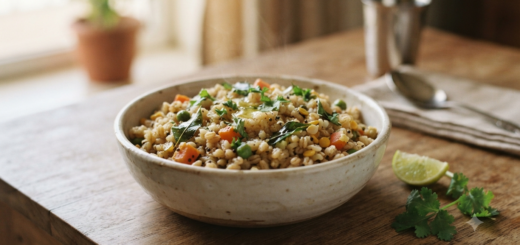
Wheat Rava Upma Recipe with Vegetables: Easy Method
Wheat rava upma recipe is easiest to get right when you treat wheat rava differently from fine sooji: use enough water, cook the vegetables before adding the grain, and give the finished upma a short covered rest. This vegetable version uses a dependable 1:3 rava-to-water ratio for a soft stovetop texture, with simple adjustments for coarser or finer brands.
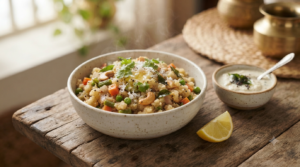
Soft wheat rava upma cooked with carrots, beans, peas, curry leaves and a simple South Indian tempering.
Wheat rava is sold under several names, including godhuma rava, godhumai rava, broken wheat and dalia. Granule size varies between brands, so the same cup of grain can absorb water at a different speed. The method below shows how to judge that difference instead of relying on cooking time alone.
Wheat Rava Upma Recipe at a Glance
- Prep time: about 10 minutes
- Cook time: about 20 minutes
- Total time: about 30 minutes
- Yield: 4 moderate servings
- Main ratio: 1 cup wheat rava to 3 cups water
- Best pan: a wide, heavy kadai or saucepan with a lid
- Texture: soft grains that hold shape rather than a paste
The 1:3 ratio is a practical starting point for medium-coarse wheat rava. A Telugu-style godhuma rava method from HomeCooking Telugu also uses 3 cups water for 1 cup rava, while other coarse broken-wheat recipes use slightly less. That variation is why packet size and grain texture matter.
Ingredients for Wheat Rava Upma Recipe
| Ingredient | Quantity | Purpose |
|---|---|---|
| Wheat rava / godhuma rava | 1 cup | Main grain |
| Water | 3 cups | For a soft stovetop texture |
| Oil | 2 tbsp | For tempering and vegetables |
| Mustard seeds | 1/2 tsp | Tempering |
| Cumin seeds | 1/2 tsp | Warm aroma |
| Urad dal | 1 tsp | Nutty crunch |
| Chana dal | 1 tsp | Nutty crunch |
| Asafoetida | 1 pinch | Optional seasoning |
| Onion | 1 medium, finely chopped | Sweet savoury base |
| Green chillies | 2, slit | Heat |
| Ginger | 1 inch, finely chopped | Fresh aroma |
| Curry leaves | 8 to 10 | Tempering aroma |
| Carrot | 1/2 cup, small dice | Vegetable |
| Green peas | 1/2 cup | Vegetable |
| Beans | 1/2 cup, finely chopped | Vegetable |
| Salt | 3/4 tsp, then adjust | Seasoning |
| Coriander leaves | 2 tbsp, chopped | Fresh finish |
| Lemon juice | 1 to 2 tsp | Optional finish |
| Cashews | 8 to 10 | Optional garnish |
Cut the carrot and beans into small pieces because they need to soften before the wheat rava goes in. Frozen peas can go straight into the pan. If your rava packet says “pre-roasted,” you may skip the separate roasting step.
How to Make Wheat Rava Upma Recipe Step by Step
1. Lightly roast the wheat rava
Heat a dry heavy pan over medium-low heat. Add 1 cup wheat rava and stir for 2 to 3 minutes, until it smells lightly nutty. Do not wait for deep browning because the grain can taste toasted rather than clean and wheaty.
Transfer the rava to a plate. If you use a pre-roasted product, simply warm it for a minute or skip this stage.
2. Build the tempering
Add 2 tablespoons oil to the same pan. When the oil is hot, add mustard seeds, cumin, urad dal and chana dal. Let the mustard crackle and the dals turn pale golden before adding the curry leaves, green chillies, ginger and asafoetida.
Keep the heat at medium because burnt dal makes the whole dish bitter. If you are using cashews, fry them now and remove them once golden.
3. Cook the onion and vegetables
Add the onion and cook for about 2 minutes, until it turns translucent. Then add carrot, beans and peas. Sauté for 3 to 4 minutes, so the vegetables begin cooking before the grain absorbs the liquid.
This order matters more with wheat rava than with fine sooji. Coarse grains take longer to soften, so undercooked vegetables can stay hard after the water disappears.
4. Add water and season it well
Pour in 3 cups water and add 3/4 teaspoon salt. Bring the water to a full boil. Taste a spoonful of the liquid carefully; it should taste slightly more seasoned than the final upma because the grain will dilute it.
If your wheat rava is unusually fine, keep 1/4 cup of the water aside at first. You can add it later only if the grains still feel firm.
5. Add wheat rava without making lumps
Lower the heat to medium-low. Pour the wheat rava in a slow stream while stirring the water continuously. Stir only until the grain is evenly dispersed, then stop aggressive mixing because constant stirring can make the texture pasty.
Once the mixture returns to a gentle simmer, cover the pan. Cook on low heat for 7 to 10 minutes, depending on the rava size.
6. Check texture, rest and finish
Open the lid when most of the water has disappeared. Taste a few grains. They should feel tender with a slight bite, not hard in the centre.
If the grain is still firm, add 2 to 4 tablespoons hot water and cook covered for another 2 minutes. Turn off the heat and rest the upma, covered, for 5 minutes. Finish with coriander, lemon juice and the fried cashews.
Wheat Rava Upma Recipe Water Ratio Explained
A 1:3 ratio means 1 cup wheat rava to 3 cups water. It gives a soft result for many medium-coarse products, but the exact need changes with granule size and processing. This is one reason two correct recipes can use different water quantities.
| Type of wheat rava | Starting water | Expected texture |
|---|---|---|
| Fine or bansi-style rava | 2 1/2 to 2 3/4 cups | Softer and quicker to cook |
| Medium-coarse godhuma rava | 3 cups | Soft, separate grains |
| Very coarse broken wheat | 3 to 3 1/4 cups | Chewier and slower to soften |
Use the table as a kitchen adjustment, not as a rigid rule. Brand instructions should take priority when the packet gives a specific ratio. Also, a wider pan loses steam faster than a deep pot, so it may need a little more water.
Why Wheat Rava Upma Turns Sticky or Hard
Sticky upma usually comes from too much stirring, excess water for a fine rava, or very high heat after the grain goes in. Hard upma has the opposite problem: too little water, too much evaporation, or a coarse grain that needed a longer covered cook.
- Lumpy: add the rava slowly into boiling water while stirring.
- Gummy: stop stirring once the grains are evenly mixed.
- Hard in the centre: add a small splash of hot water and cook covered.
- Vegetables still crunchy: sauté them longer before adding water.
- Flat flavour: season the boiling water before the rava goes in.
- Heavy texture: rest for 5 minutes, then fluff gently instead of pressing it.
The covered rest is especially useful. Steam moves through the grain after the heat is off, so the upma settles without extra stirring. It also makes reheating easier later.
What Exactly Is Wheat Rava?
Wheat rava is a coarse wheat product sold in several regional forms. Depending on the mill and label, it may resemble broken wheat, coarse semolina or bansi rava. For this recipe, choose a product with visible granules rather than the fine sooji used for classic rava upma.
The terms are not perfectly standard across Indian shops. Therefore, the packet texture tells you more than the name alone. If the grain looks like tiny broken kernels, expect a longer cook; if it looks close to coarse sooji, reduce the starting water slightly.
If you want the classic semolina version instead, use our vegetable rava upma recipe. For another no-fermentation South Indian breakfast, the Andhra pesarattu recipe is a useful alternative.
Vegetable Choices and Useful Variations
Carrot, peas and beans are dependable because they cook at similar speeds when chopped small. Capsicum can go in during the last 2 minutes of sautéing, while corn can go in with peas. Avoid large potato cubes unless you partly cook them first.
For an onion-free version, leave out the onion and increase ginger, curry leaves and coriander slightly. For a richer finish, replace 1 tablespoon oil with ghee or add 1 teaspoon ghee after cooking. A spoonful of grated coconut at the end also works well.
You can make the dish without vegetables, but that becomes a simpler godhuma rava upma. Keep the water ratio similar and reduce the sautéing time. If you want a different comforting breakfast, our ven pongal recipe covers a rice-and-moong-dal option.
Nutrition, Gluten and Portion Notes
This recipe contains wheat, so it is not gluten-free. The U.S. National Institute of Diabetes and Digestive and Kidney Diseases notes that wheat and semolina naturally contain gluten. Anyone with coeliac disease needs a genuinely gluten-free grain and should also avoid cross-contact.
Vegetables add variety, but the finished dish is still grain-based. The ICMR-National Institute of Nutrition recommends varied meals built from several food groups rather than treating one grain dish as a complete diet. Pairing upma with curd, sambar, a pulse-based chutney or another protein source can make breakfast more balanced.
Do not treat wheat rava upma as a diabetes remedy. Blood-glucose response depends on the grain, portion, cooking method and the rest of the meal. If you manage diabetes or another medical diet, follow the plan given by your doctor or dietitian.
How to Store and Reheat Wheat Rava Upma Recipe
Serve upma fresh when possible because the grains firm as they cool. If you have leftovers, move them to a shallow covered container and refrigerate promptly. The Food Safety and Standards Authority of India advises keeping prepared leftovers cold and reheating cooked food thoroughly.
For best texture, use refrigerated wheat rava upma within 1 to 2 days. Reheat it in a pan with 1 or 2 tablespoons water per serving, cover for a minute, then fluff. A microwave also works if you cover the bowl loosely and add a small splash of water first.
Freezing is possible, but the vegetables and wheat grains can turn softer after thawing. For a breakfast recipe this quick, refrigeration gives a better result.
Serving Ideas for Wheat Rava Upma Recipe
This wheat rava upma recipe works with coconut chutney, peanut chutney, tomato chutney or a spoonful of plain curd. A squeeze of lemon is enough when the tempering is strong. For a larger breakfast, serve a smaller portion with sambar or a pulse-based side.
Serve it hot rather than piping dry. If the upma waits before serving, loosen it with a spoonful of hot water and keep it covered on the lowest heat for a minute. That restores moisture without turning the grain into paste.
Before You Cook
The best wheat rava upma recipe result comes from matching the water to the actual grain in your packet. Start with 3 cups for medium-coarse wheat rava, keep the heat low after mixing, and use a short covered rest. Those three choices matter more than adding extra oil or stirring constantly.
This refreshed wheat rava upma recipe also avoids a common shortcut: calling every wheat-rava dish automatically “diabetic-friendly.” It is better to describe the ingredients accurately and let readers fit the meal into their own nutrition needs.
Wheat Rava Upma Recipe FAQs
Do I need to roast wheat rava before making upma?
Roasting is useful but not always essential. A short 2 to 3 minute dry roast adds a nutty aroma and can help the grains stay separate. If the packet says the rava is already roasted, you can skip this step.
What is the best water ratio for wheat rava upma?
Start with 3 cups water for 1 cup medium-coarse wheat rava. Fine rava may need only 2 1/2 to 2 3/4 cups, while very coarse broken wheat may need slightly more. Check the grain after cooking because brand texture changes absorption.
Can I make this wheat rava upma recipe in a pressure cooker?
Yes, but the required water and pressure time vary more by grain size than in a stovetop pan. Use your cooker manual and packet directions as the first guide. A stovetop kadai is easier for beginners because you can check the grain before it overcooks.
Is wheat rava the same as sooji?
Not always. In many shops, wheat rava or godhuma rava is coarser and closer to broken wheat, while sooji is finer semolina. Labels vary, so compare the granule size rather than assuming the names mean exactly the same product.
Can I make wheat rava upma without vegetables?
Yes. Keep the onion, ginger, chillies, curry leaves and tempering, then leave out the carrot, peas and beans. The cooking method stays the same, though the sautéing stage becomes shorter.
Is wheat rava upma gluten-free?
No. Wheat naturally contains gluten, so wheat rava upma is not suitable for someone who must follow a strict gluten-free diet. Use a genuinely gluten-free grain recipe instead and avoid cross-contact if coeliac disease is involved.
Why does my wheat rava upma become hard after cooling?
The grain may have started with too little water or may be very coarse. Use a little more water next time and keep the pan covered during the resting stage. For leftovers, reheat with a spoonful of water so the grains regain moisture.
Can I prepare wheat rava upma the night before?
You can refrigerate cooked upma and reheat it the next morning, although fresh texture is better. Cool leftovers promptly, refrigerate them in a covered container, and reheat thoroughly. Add a small splash of water before reheating so the grains do not dry out.