Little Millet Upma Recipe with Vegetables – Easy Samai Upma
This little millet upma recipe uses little millet, mixed vegetables and a simple South Indian tempering. It keeps the familiar mustard, curry leaf and lentil flavours of upma without using wheat rava. The quantities below are a practical starting formula, not a kitchen-tested result from this refresh.
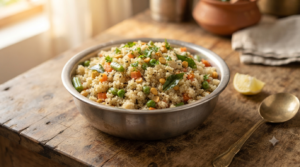
South Indian little millet upma, also called samai upma, with vegetables and traditional spice tempering.
Cooking time, water needs and serving size can vary with little millet. Therefore, this guide gives visible doneness checks instead of promising a perfect pan in 20 minutes.
Little millet upma recipe at a glance
Use little millet (samai) for the main method. Foxtail millet (thinai or tenai) is another option, but it may need a different liquid level or cooking period. The Indian Council of Agricultural Research’s Indian Institute of Millets Research lists these as distinct millet varieties.
| Detail | Starting guide | Status |
|---|---|---|
| Main grain | 1 cup uncooked little millet | Original quantity; untested here |
| Water | 2 cups hot water initially | Unverified starting ratio |
| Salt | Start with 1/2 tsp; adjust to taste | New editorial estimate; untested |
| Prep and cooking | About 35–50 minutes including rest | Planning estimate; not timed in a test |
| Yield | About 2–3 portions | Estimated; not measured |
The amounts in this little millet upma recipe are not laboratory-tested nutrition values or guaranteed cooking specifications. Your pan, grain brand and vegetable size may change the result.
Ingredients for the little millet upma recipe
This little millet upma recipe combines little millet with onion, carrot, beans, peas and a basic tadka. This refreshed list retains that flavour profile while stating the salt amount explicitly. Measure the millet dry, before washing it.
Main ingredients
- 1 cup uncooked little millet (samai), cleaned and rinsed; original amount, not retested
- 2 cups hot water as an initial guide; keep extra hot water nearby if needed
- 1 medium onion, finely chopped
- 1 medium carrot, cut into small pieces
- 8–10 green beans, finely chopped
- 1/4 cup green peas, fresh or thawed
- 1–2 green chillies, slit; reduce for a milder plate
- 1/2 teaspoon salt to start, then taste and adjust; editorial estimate, not tested
Tempering and finishing
- 1 tablespoon coconut oil or groundnut oil
- 1 teaspoon mustard seeds
- 1 teaspoon split urad dal
- 1 teaspoon chana dal
- 1 sprig fresh curry leaves
- A small pinch of asafoetida (hing), optional; read the pack label first
- Up to 1 tablespoon lemon juice, optional
- About 2 tablespoons chopped coriander leaves, optional
All spoon and cup amounts are inherited from the original recipe unless noted otherwise. The list describes a proposed batch, so it should not be presented as an independently measured kitchen trial.
Little millet upma recipe: step-by-step method
This little millet upma recipe uses one pan and a separate vessel of hot water. Keep the flame low after adding the grain, and check tenderness before you turn off the heat. The minute ranges are estimates, while the texture cues are the important cooking guide.
- Rinse and drain. Pick out any grit, rinse the little millet two or three times and drain it. While the grain drains, chop the vegetables into small, even pieces. This helps the vegetables finish cooking alongside the millet.
- Make the tempering. Heat oil over medium heat in a wide, heavy-bottomed pan. Add mustard seeds and let them crackle. Add urad dal and chana dal, then stir until they take on a light golden colour. Add curry leaves, chilli and optional hing without burning the spices.
- Soften the vegetables. Add the onion and stir until it loses its raw look. Mix in carrot, beans and peas. Cook briefly, stirring so the dal does not catch on the base. If the pan looks dry, reduce the heat rather than pouring in unmeasured oil.
Simmer and finish the grains
- Add millet, water and salt. Stir the drained millet into the vegetables for about one minute. Pour in the initial 2 cups of hot water carefully. Add the estimated 1/2 teaspoon salt, stir once and bring the liquid to a gentle simmer.
- Cover and check. Cover the pan and cook on low heat. Begin checking after about 12 minutes; allow roughly 12–18 minutes as an untested guide. If the grain remains firm and the pan looks dry, add a little hot water and cook longer. If liquid remains, leave it on low heat briefly with the lid partly open.
- Rest and finish. When the grains are tender and free liquid has disappeared, turn off the heat. Rest covered for about five minutes, then loosen gently with a fork. Taste before adding lemon juice, coriander or more salt.
Time note: Allow roughly 10–15 minutes to prepare ingredients, 8–12 minutes for tempering and vegetables, 12–18 minutes to simmer and five minutes to rest. That gives a planning range of about 35–50 minutes, not a tested completion time.
How much water does little millet need?
Start this little millet upma recipe with two cups of water for one cup of dry little millet, but do not treat that ratio as exact. Millet size, pre-soaking, pan width and heat all affect absorption. The goal is tender grain without standing liquid, rather than blindly following a fixed clock.
For example, a broad uncovered pan loses more steam than a tight-lidded saucepan. If the base dries out while the millet stays hard, add hot water in small splashes. Wait for it to absorb before adding more. If the upma turns wet, let excess moisture evaporate gently.
Can I substitute foxtail millet?
Yes, but treat foxtail millet as a separate variation rather than a direct, proven swap. For foxtail millet, follow the packet instructions rather than assuming the little millet ratio will work.
Check the grain packet for cooking guidance, then watch texture during the simmer. If you make a foxtail version, record the brand, water added and actual cooking time before publishing that variation as tested.
Vegan ingredients, dairy additions and label checks
This little millet upma recipe is vegan when you use plant oil, vegetables, millet and plant-based seasonings. Ghee and dairy curd are optional serving choices, not ingredients in the vegan version. Therefore, add them only to a portion you want to serve as vegetarian rather than vegan.
| Ingredient or addition | Vegan status | What to check |
|---|---|---|
| Coconut or groundnut oil | Plant-based | Check the packaged product if flavoured |
| Plain millet and vegetables | Plant-based | Check processing and cross-contact needs |
| Hing or asafoetida mix | Often plant-based | Check fillers, especially wheat flour |
| Ghee | Not vegan | Dairy fat; optional topping only |
| Regular curd | Not vegan | Use plain plant-based curd if preferred |
Do not call this dish coeliac-safe just because millet itself has no gluten. Compounded hing may include cereal flour, and some products contain wheat. India’s Food Safety and Standards Authority of India standards allow edible cereal flour in compounded asafoetida.
For someone with coeliac disease, choose millet and seasonings with suitable gluten-free labelling. Keep them away from wheat flour, shared utensils and other sources of cross-contact. The Celiac Disease Foundation and the US National Institute of Diabetes and Digestive and Kidney Diseases both explain these risks. When in doubt, ask a qualified dietitian about safe ingredients.
Millet upma and diabetes or weight goals
This little millet upma recipe makes a grain-based meal, so it contains carbohydrate and can affect blood glucose. It is not a diabetes treatment, and its glycaemic response is not identical for everyone. A label such as “diabetic-friendly” cannot replace individual portion guidance.
The US Centers for Disease Control and Prevention includes cooked millet among starchy carbohydrate foods. If you manage diabetes, account for the millet and peas in your meal plan. A clinician or registered dietitian can help with portions and monitoring.
This recipe also makes no weight-loss promise. The effect of a breakfast on body weight depends on total intake, portions and broader habits. Adding vegetables can improve variety, while nuts, oil and side dishes change the meal’s overall energy and nutrient content.
Serving and storage
Serve this little millet upma recipe while warm with tomato chutney, coconut chutney or a modest side of homemade sambar. Add plain dairy curd only if you do not need the meal to stay vegan. A squeeze of lemon also works without dairy.
For a different Andhra breakfast, a small spoonful can accompany pesarattu, the green gram dosa. However, avoid packing very hot upma into a tightly closed lunchbox for hours without temperature control.
Cool leftovers promptly and refrigerate in a shallow, covered container within two hours. In hot conditions above 32°C, use a one-hour limit. Reheat until piping hot throughout, ideally to 74°C, and add a small splash of water only to restore texture. The FoodSafety.gov guidance explains these refrigeration time limits for leftovers.
Why millet upma becomes sticky or dry
Sticky upma can result from too much water, vigorous stirring or cooking the grain past tenderness. Stop stirring continuously once the lid goes on, since breaking soft grains changes their texture. Also, let the cooked millet rest before fluffing.
If the pan dries out too soon, do not turn up the heat. Add small amounts of hot water and return the lid, then check again. For the next batch, note the exact brand and liquid used. That record is more reliable than assuming every millet behaves the same way.
Large carrot or bean pieces may remain firm when the millet finishes. Chop them finely or soften them longer before adding the grain. If the tempering burns, start it again; burnt dal will give the entire dish a harsh taste.
Before serving this little millet upma recipe
Use the little millet version as a starting point, not a guaranteed formula. Check tenderness, taste for salt and decide whether dairy additions suit your diet. Above all, record the actual water used, elapsed time and cooked yield in your own kitchen before labelling the recipe tested.
Frequently asked questions
Is millet upma naturally gluten-free?
Plain millet does not naturally contain wheat gluten. However, packaged millet, compounded hing and kitchen equipment may introduce gluten through ingredients or cross-contact. A person with coeliac disease should use appropriately labelled products and careful preparation.
Can people with diabetes eat millet upma?
It may fit some individual eating plans, but it still provides carbohydrate. Portion size and the rest of the meal matter, so there is no blanket diabetes-safety guarantee. Follow professional guidance if you monitor blood glucose.
Is this little millet upma recipe vegan?
Yes, the oil-based base method uses plant ingredients. However, dairy ghee and regular curd make the finished plate non-vegan if added. Check packaged hing and other seasoning labels for ingredients relevant to your needs.
Why is salt not listed in older recipe versions?
The earlier main ingredient list omitted salt even though the method told readers to add it. This revision includes a starting estimate of 1/2 teaspoon. It has not been batch-tested, so taste and adjust rather than treating that amount as exact.
How long does millet upma take to cook?
Plan roughly 35–50 minutes from preparation to serving for this method. That range includes chopping, tempering, simmering and resting; it is not a measured test result. Check tenderness because grain type, lid and stove can change the time.
Can I use foxtail millet instead of little millet?
Yes, but foxtail millet is a distinct grain and may need different water or time. No separate foxtail cooking trial has been documented here. Start with the packet directions and adjust using the grain’s texture.
How many servings does one cup of millet make?
The old recipe gave two to three servings, which remains a provisional estimate here. Actual portions depend on the cooked volume, added vegetables and appetite. Weigh or measure a finished batch before publishing a definitive yield.
Can I prepare millet upma in advance?
Yes, if you cool it quickly, refrigerate safely and reheat thoroughly. Store it covered and avoid leaving it at room temperature for extended periods. A splash of water can help restore softness during reheating.