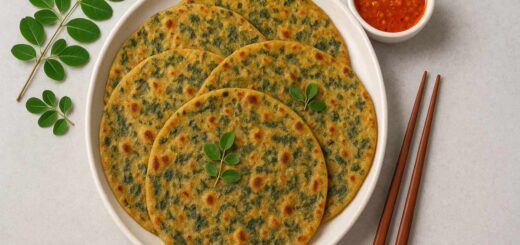
Andhra Pesarattu Recipe: Crispy Green Moong Dosa & Fixes
This Andhra pesarattu recipe uses a practical 1-cup green gram batch, with rice kept optional rather than treated as a rule. No kitchen trial was recorded for this refresh, so the yield, diameter and batter-per-piece figures below are untested planning estimates rather than verified batch results. The batter needs soaking and grinding, but it does not need fermentation.
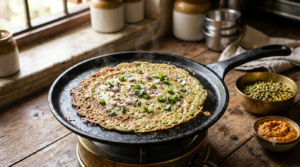
Fresh green-moong pesarattu cooking on a hot tawa with finely chopped onion, cumin and crisp browned edges.
Household formulas for pesarattu vary, so this version avoids claims that one single ratio is the only “authentic” way to make it. It uses whole green gram as the base, then shows rice-free, sprouted, yellow-moong and upma-filled variations separately. More importantly, the method explains what to change when the batter sticks, tears, refuses to spread, or cooks soft instead of crisp.
Andhra Pesarattu Recipe at a Glance
- Main ingredient: 1 cup whole green gram, also called pesalu or whole green moong.
- Optional crisping ingredient: 2 tablespoons raw rice.
- Soaking: 4 to 6 hours, or overnight when convenient.
- Fermentation: not required for this method.
- Estimated yield: about 8 large or 10 medium pesarattu; this has not been kitchen-tested.
- Estimated size and portion: roughly 20–22 cm with about 75 ml batter for a large piece, or 17–18 cm with about 60 ml for a medium piece; these are untested planning figures.
- Best texture: crisp edges with a cooked, flexible centre.
- Common serving choices: allam pachadi, coconut chutney, or upma.
Because no kitchen trial was performed, treat the 8–10 piece yield and the stated diameters as estimates only. The figures assume roughly 60 ml batter for a medium crepe and about 75 ml for a wider one. Your actual count can change with soaking, grinder water, ladle size, pan diameter and how thinly you spread each pesarattu.
Ingredients for This Andhra Pesarattu Recipe
The base ratio below is a working formula built around whole green gram, but it was not kitchen-tested for this refresh. Start with less grinding water because soaked gram carries water of its own. You can always add another tablespoon, whereas an over-thinned batter is harder to correct.
| Ingredient | Quantity | Practical note |
|---|---|---|
| Whole green gram. | 1 cup, about 190–200 g. | Use whole green moong with the skin for the classic green colour. |
| Raw rice. | 2 tablespoons, about 20–25 g. | Optional; helps the crepe cook a little crisper. |
| Fresh ginger. | 1-inch piece. | Roughly chop before grinding. |
| Green chillies. | 2 to 3. | Adjust to taste. |
| Cumin seeds. | 1 teaspoon. | Use in the batter or reserve some for the topping. |
| Salt. | 3/4 teaspoon, then adjust. | Add after grinding. |
| Fresh water. | 1/2 to 3/4 cup. | Start with 1/2 cup and add gradually. |
| Onion. | 1 medium, finely chopped. | Optional topping. |
| Coriander leaves. | 2 tablespoons, chopped. | Optional topping or grinder addition. |
| Oil or ghee. | 2 to 3 tablespoons total. | Use only as much as your tawa needs. |
Two tablespoons of rice is a useful middle ground, not a purity test. Some Andhra homes make pesarattu without rice, while other versions use rice or another pulse for texture. That variation is normal, so choose the version that suits the result you want.
Step-by-Step Andhra Pesarattu Recipe
- Rinse the green gram well. If using rice, rinse it at the same time.
- Soak both in plenty of water for 4 to 6 hours. Overnight soaking also works when that fits your schedule.
- Drain thoroughly, then transfer the soaked gram and rice to a mixer jar.
- Add ginger, green chillies and cumin. Pour in 1/2 cup fresh water to start.
- Grind until smooth but not watery. Add more water 1 tablespoon at a time if the blades struggle.
- Transfer the batter to a bowl, add salt and mix. The batter should pour easily but still coat the ladle.
- Heat a well-seasoned cast-iron tawa or a reliable non-stick dosa pan over medium heat.
- As an untested starting guide, pour roughly 60–75 ml batter in the centre, then spread outward in a gentle spiral.
- Scatter onion, coriander or extra cumin while the top is still wet, then press lightly.
- Drizzle a little oil around the edge and over a few dry spots.
- Cook until the bottom browns and the top loses its raw shine. Flip briefly only if your crepe is thick or the topping needs more cooking.
- Fold and serve immediately. Then adjust the next crepe if the first one was too thick, too soft or hard to spread.
This Andhra pesarattu recipe works best when you treat the first crepe as a pan check rather than a final exam. A cast-iron tawa may need a little more oil at first, while a non-stick pan may need almost none. Also, pan heat changes during a batch, so reduce the flame if each new crepe spreads less easily.
How to Judge the Batter Consistency
Good pesarattu batter should flow off the ladle in a thick ribbon. It should not fall in a heavy lump, yet it should not splash like water. When you test with roughly 1/4 cup as a starting estimate, the ladle should glide without dragging up the batter you just laid down.
If the batter is too thick, add water 1 tablespoon at a time and mix before testing again. If it is too thin, do not keep adding large amounts of flour blindly. Instead, let the batter stand for a few minutes first; if it still runs, mix in 1 to 2 teaspoons of rice flour and retest.
Andhra Pesarattu Recipe Variations That Actually Change the Result
This Andhra pesarattu recipe treats variations as choices rather than mistakes. Variations make more sense when you know what each change does. Whole green gram with a little rice gives an easy-to-handle crisp version. Rice-free batter tastes more strongly of moong and can cook softer, while sprouted gram usually needs less soaking because the sprouting process has already hydrated the seed.
| Variation | What to change | What to expect |
|---|---|---|
| Rice-free pesarattu. | Omit the 2 tablespoons rice. | Softer, more bean-forward texture; spread a little thicker if it tears. |
| Extra-crisp version. | Keep 2 tablespoons rice and spread thinner. | Crisper edges without turning the batter into a rice dosa. |
| Sprouted green gram. | Use drained sprouts in place of soaked whole gram. | Different grinding behaviour; add water slowly. |
| Yellow moong version. | Use split yellow moong and shorten soaking. | Paler colour and a softer, milder crepe. |
| MLA-style pesarattu. | Fill the cooked crepe with soft rava upma. | More substantial tiffin with a soft filling inside a crisp crepe. |
| No-onion version. | Skip onion topping. | Clean moong, ginger and cumin flavour. |
The yellow-moong version is worth treating as a variation, not as a mistake. It will not look or taste identical to whole-green-gram pesarattu, but many cooks use split or hulled moong in related crepes. If yellow moong is what you have, Bhimas Cook also has a separate moong dal chilla recipe built around that ingredient.
How to Make MLA-Style Pesarattu with Upma
For the upma-filled version, cook the pesarattu until the top is set and the underside has browned. Spoon a modest amount of soft upma across the centre, then fold the crepe over it. Too much dry upma makes the fold bulky, so a soft spoonable filling works better.
You can use a plain rava upma or a vegetable version. Bhimas Cook’s rava upma recipe with vegetables gives a reliable water ratio if you need the filling separately. The name “MLA pesarattu” is widely used, but stories about exactly where the name began are best treated as food lore rather than documented history.
Troubleshooting This Andhra Pesarattu Recipe
For this Andhra pesarattu recipe, check pan heat and batter thickness before changing the ingredient ratio. Most pesarattu problems come from three variables: batter thickness, pan condition and heat. Fix one variable at a time because changing all three makes it hard to learn what worked. The table below starts with the symptom, then gives the fastest correction for the next crepe.
| Problem | Likely cause | Fix |
|---|---|---|
| Batter will not spread. | Too thick or pan too hot. | Add 1 tablespoon water, or cool the pan briefly before retrying. |
| Pesarattu sticks. | Pan not seasoned, batter too thin, or crepe lifted too soon. | Let the base brown fully; grease lightly and check batter thickness. |
| Crepe tears while spreading. | Too much pressure, very thin batter, or rice-free batter spread too thin. | Use a lighter hand and make the next one slightly thicker. |
| Soft and pale. | Pan too cool or batter spread too thick. | Raise heat slightly and use less batter per crepe. |
| Dark edges, raw centre. | Pan too hot. | Lower heat and wait briefly before pouring the next ladle. |
| Edges turn hard. | Too little batter or excessive cooking. | Spread a touch thicker and remove as soon as the base is browned. |
| Onion falls off. | Topping added after surface set. | Add onion immediately after spreading and press lightly. |
| Batter became too watery. | Too much grinding water. | Rest briefly, then add 1–2 teaspoons rice flour only if still needed. |
Why Does Pesarattu Stick to the Tawa?
Sticking does not have one single cause. A poorly seasoned cast-iron tawa can grab the batter, but very thin batter can also glue itself to the surface. In addition, trying to lift the crepe before its underside has browned will make even a good batter seem sticky.
Start with a medium-hot pan and a thin film of oil. After spreading, leave the crepe alone until the edge looks dry and begins to release. If the first pesarattu still tears, test batter thickness before adding more oil because excess oil can make spreading harder.
Why Does the Batter Set Before I Can Spread It?
The pan is usually too hot when the batter freezes in place under the ladle. Reduce the flame and wait for the surface temperature to drop slightly. On cast iron, you can wipe the surface carefully with a barely damp cloth between crepes, but avoid splashing water onto hot oil.
A pan that is too cold creates the opposite problem, so do not chase a dramatic water-sizzle test. You want steady medium heat that gives you a few seconds to spread. Once the pan settles into that zone, keep the flame fairly constant.
What This Recipe Does Not Claim
This refresh deliberately avoids a nutrition calculation per pesarattu because the serving size, oil use and final yield change the number substantially. It also avoids calling one formula the only authentic Andhra method. Pesarattu has a recognisable green-gram base, yet home and tiffin-shop versions vary in rice, toppings, extra pulses and thickness.
The article also does not promise a fixed multi-day shelf life for batter. Home fridge temperatures and handling vary too much for a recipe-specific guarantee. The Food Safety and Standards Authority of India (FSSAI) publishes the Pink Book home food-safety guide; its official PDF advises cold storage below 5°C for prepared foods kept ahead. For best texture, grind what you plan to cook and avoid making a recipe-specific shelf-life promise without controlled storage data.
Serving Pesarattu Without Losing the Crisp Texture
Pesarattu is at its best straight from the tawa because steam softens the underside quickly after stacking. Serve each one as it comes off the pan when possible. If you must hold a few, keep them in a loose single layer instead of sealing a hot stack under a lid.
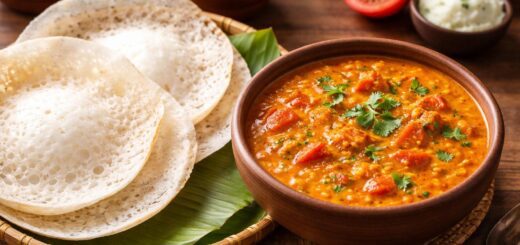
Allam pachadi is a popular match because its sharp ginger flavour cuts through the earthy moong. Coconut chutney also works well. For a bigger breakfast, use upma as a filling or side; for another quick no-fermentation breakfast later in the week, try the site’s instant jowar dosa.
Before You Make This Andhra Pesarattu Recipe
The most useful starting point for this Andhra pesarattu recipe is simple: soak the green gram until it grinds smoothly, begin with less water, and learn the heat of your own tawa. Rice is optional, onion is optional, and flipping is optional when the crepe is thin enough to cook through from one side.
For the first batch, try roughly 60 ml batter as an untested starting portion, then judge the spread on your own tawa. Adjust only one thing at a time. A tablespoon of water fixes a thick batter, while a lower flame fixes a pan that sets the batter too fast.
Andhra Pesarattu Recipe FAQs
Does pesarattu batter need fermentation?
No. This Andhra pesarattu recipe is designed to cook after soaking and grinding, so fermentation is not required. Some household versions may rest the batter, but you do not need an overnight rise to make a good pesarattu.
How long should I soak whole green gram for pesarattu?
Four to six hours is a practical range for whole green gram, and overnight soaking is convenient when you want breakfast ready to grind in the morning. The useful test is whether the gram grinds smoothly without forcing you to add too much water.
Is rice necessary in pesarattu?
No. Rice is optional. In this batch, 2 tablespoons help the edges crisp and make the batter forgiving, while a rice-free version gives a more bean-forward taste and may benefit from a slightly thicker spread.
Can I make pesarattu with yellow moong dal?
Yes, but expect a different result. Yellow moong gives a paler, softer crepe and usually needs less soaking than whole green gram. Treat it as a useful variation rather than expecting the same colour and texture.
Why is my pesarattu sticking even though the tawa is hot?
A hot tawa can still stick if it is poorly seasoned, if the batter is too thin, or if you try to lift the crepe too early. Let the underside brown first, then check whether the batter needs a small consistency adjustment.
Do I need to flip pesarattu?
Not always. A thin pesarattu can cook through from one side once the top looks dry, especially without a heavy onion topping. Flip briefly when the crepe is thicker or when you want the topping side cooked more firmly.
How do I fix pesarattu batter that is too thick?
Add water 1 tablespoon at a time, mix well and test again. Small additions matter because soaked green gram already holds moisture. Stop once the batter falls in a thick ribbon and spreads without dragging.
How do I fix pesarattu batter that is too thin?
First let the batter stand for a few minutes and reassess. If it still runs like water, mix in 1 to 2 teaspoons of rice flour and test one crepe. Adding a large amount at once can make the next batch stiff.