Moong Dal Sambar for Idli: Soft, Pourable Tiffin Sambar in 45 Minutes
A good moong dal sambar for idli should pour, not sit in a lump on the plate. That one difference is consistency, and it separates tiffin sambar from the thicker sambar you ladle over rice. Most home recipes skip past it.
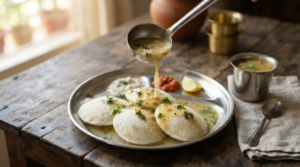
Thin, pourable moong dal sambar for idli, ladled hot over freshly steamed idlis.
Moong dal makes the job easy because it breaks down completely in about twelve minutes. So you get a smooth, mild, protein-rich sambar without soaking anything overnight. Below you will find exact quantities for four people, the full method, and fixes for the three ways this sambar usually goes wrong.
Moong Dal Sambar for Idli at a Glance
- Total time: 45 minutes, though the sambar alone needs only about 25 minutes.
- Serves: 4 people, roughly 12 idlis with sambar to spare.
- Lentil: yellow split moong dal (pasi paruppu), no soaking needed.
- Texture target: thin and pourable, not thick like sambar rice sambar.
- Spice level: mild by default, so it suits children and older family members.
- Also called: pasi paruppu sambar, payatham paruppu sambar, or simply tiffin sambar.
Moong dal sambar for idli is the version cooked in South Indian homes when idlis are on the stove and nobody has an hour to spare. Because moong dal cooks fast and needs no soaking, the whole dish fits inside a normal weekday morning.
Why Moong Dal Sambar for Idli Works Better Than Toor Dal
Moong dal sambar for idli is milder, thinner and quicker than the toor dal version, and those three qualities are exactly what an idli needs. A steamed idli is porous, so it soaks up whatever it sits in. A thick, heavily spiced sambar coats the outside instead of soaking through.
Toor dal has a stronger, earthier flavour and holds more body after cooking. That suits sambar rice, where you want the gravy to cling. For tiffin items the balance flips, since the sambar has to travel into the idli rather than sit on it.
| Point | Moong dal (pasi paruppu) | Toor dal (thuvaram paruppu) |
|---|---|---|
| Cooking time | 10–12 minutes, no soaking | 20–25 minutes, soaking helps |
| Final texture | Light, thin, pourable | Thicker, clings to rice |
| Flavour | Mild and slightly sweet | Earthy and robust |
| Best served with | Idli, dosa, pongal, upma | Rice, vada, mixed-veg sambar |
| Digestibility | Generally lighter on the stomach | Heavier, more filling |
Plenty of recipes online insist you must soak moong dal for thirty minutes first. You do not. Split moong dal is already dehusked, so it softens in the cooker without any pre-soak, and skipping that step saves half an hour.
Ingredients for Moong Dal Sambar for Idli
These quantities make moong dal sambar for idli for four people, with a little left over. Measure the dal and tamarind carefully, because those two decide the body and the tang.
For the Sambar Base
- Yellow split moong dal — 1/2 cup (about 100 g), rinsed until the water runs clear
- Turmeric powder — 1/4 tsp
- Onion — 1 medium, finely chopped, or 8–10 shallots
- Tomato — 1 medium, finely chopped
- Green chillies — 1 to 2, slit lengthways
- Mixed vegetables (optional) — 1/2 cup of carrot, beans, drumstick or brinjal
- Tamarind — a small lemon-sized ball, or 1 tsp thick tamarind paste
- Sambar powder — 1 tsp, adjusted to taste
- Jaggery — 1/4 tsp, optional but recommended
- Salt — 3/4 tsp, or to taste
- Water — about 3 cups in total
For the Tempering
- Sesame oil or ghee — 1 tbsp
- Mustard seeds — 1/2 tsp
- Urad dal — 1/2 tsp
- Cumin seeds — 1/4 tsp
- Dried red chillies — 1 to 2
- Curry leaves — one sprig
- Asafoetida (hing) — a generous pinch
- Coriander leaves — 2 tbsp, chopped, for garnish
For the Idlis
- Idli batter — 3 cups, fermented and at room temperature
- Oil or ghee — for greasing the idli moulds
- Water — for the steamer
Use sesame oil if you have it, because gingelly oil is the traditional fat here and it changes the aroma noticeably. Otherwise any neutral oil works, while ghee gives the richest finish.
How to Make Moong Dal Sambar for Idli Step by Step
1. Pressure Cook the Dal (12 minutes)
Rinse the moong dal three times until the water runs clear. Add it to a pressure cooker with 1 cup water, the turmeric and a pinch of salt. Cook on medium flame for 3 whistles, then let the pressure drop naturally.
The dal should collapse when you press it. Mash it with the back of a ladle until it is completely smooth, since any whole grains left behind will make the sambar look grainy.
2. Soak the Tamarind (10 minutes)
Soak the tamarind in 1/2 cup of warm water for 10 minutes. Squeeze it thoroughly with your fingers, then strain the extract and discard the fibre. If you are using paste instead, simply dissolve 1 tsp in the same amount of warm water.
3. Temper the Spices (2 minutes)
Heat the oil in a deep pan on medium flame. Add the mustard seeds first and wait until they finish spluttering. Then add the urad dal, cumin, dried red chillies and curry leaves.
Fry for about 20 seconds, until the urad dal turns pale gold. Add the asafoetida last, because it burns quickly and turns bitter if it goes in early.
4. Build the Base (6 minutes)
Add the onions and green chillies to the same pan. Cook until the onions turn translucent, which takes 3 to 4 minutes. Then add the tomatoes and cook until they break down completely.
Now add the chopped vegetables if you are using them, along with 1 cup of water. Cover and simmer for 6 to 8 minutes, until a fork slides through the carrot without resistance.
5. Combine and Simmer (7 minutes)
Pour in the tamarind extract and let it boil hard for 3 minutes. This step matters, because raw tamarind tastes sharp and metallic until the boil cooks it off. Then stir in the sambar powder, salt and jaggery.
Add the mashed dal and about 1 cup of hot water. Simmer on low for another 4 minutes, stirring now and then so the dal does not catch at the bottom. The sambar should coat a ladle thinly and run off freely.
6. Finish and Garnish (1 minute)
Turn off the heat and stir in the coriander leaves. If you want the hotel-style aroma, heat 1 tsp of ghee separately, crackle a pinch of cumin and hing in it, and pour that over the top. Cover the pan for two minutes so the aroma settles in before serving.
Steaming Soft Idlis While the Sambar Simmers
Time the idlis so they finish just as the sambar does. Bring 2 inches of water to a rolling boil in the idli steamer before the moulds go in. Grease the plates lightly, then pour the batter to about three-quarters of each mould so the idlis have room to rise.
Steam on medium flame for 10 to 12 minutes. A skewer pushed into the centre should come out clean and dry. Rest the plates for 2 minutes off the heat, because idlis unmould cleanly once they contract slightly.
Dip a spoon in water before scooping each idli out. Warm, wet metal releases the idli without tearing the base, which is the trick most kitchens learn only after ruining a plateful.
Getting Moong Dal Sambar for Idli to the Right Consistency
This is where most versions fail. Moong dal sambar for idli should be noticeably thinner than the sambar you serve with rice, roughly the thickness of tomato soup rather than dal.
Test it with a ladle. Lift some sambar and let it fall back: it should stream down in a continuous thread, not drop in blobs. If it drops in blobs, add hot water a quarter cup at a time until it streams.
Always use hot water for thinning, never cold. Cold water dulls the tempering aroma instantly and makes the sambar taste flat, so keep the kettle on while you cook.
Moong Dal Sambar for Idli: What Goes Wrong and How to Fix It
Almost nothing goes permanently wrong with moong dal sambar for idli. Each of these problems is fixable while the pan is still on the stove, so nobody needs to start again.
| Problem | Cause | Fix |
|---|---|---|
| Tastes flat or dull | Not enough salt or no jaggery | Add 1/4 tsp salt, then a pinch of jaggery, and taste again |
| Too sour | Excess tamarind | Add 1/2 cup hot water plus a little more mashed dal |
| Bitter aftertaste | Burnt asafoetida or fenugreek | Cannot be undone, so add hing last next time |
| Grainy texture | Dal not mashed enough | Whisk it briefly, or blend a ladleful and stir it back |
| Too thick after resting | Moong dal keeps absorbing water | Thin with hot water while reheating, then check salt |
| Sambar looks separated | Boiled hard after adding dal | Simmer gently and stir; it comes back together |
Moong dal thickens more than toor dal as it cools. So a sambar that looks perfect on the stove will often be too thick twenty minutes later, and that is normal rather than a mistake.
What Most Recipes Leave Out
These are the small habits that separate a decent moong dal sambar for idli from a memorable one. None of them adds cooking time.
- Sambar powder is optional here. Many traditional pasi paruppu versions use only green chillies and hing, which gives a cleaner, milder result.
- Boil the tamarind before the dal goes in. Adding both together leaves that raw sour edge nobody can identify afterwards.
- Shallots beat onions if you have them, since they hold their shape and add a gentle sweetness.
- A quarter teaspoon of jaggery is not a sweetener. It rounds off the tamarind so the sambar tastes finished rather than sharp.
- Roast the moong dal dry for two minutes before rinsing when you want a nuttier, deeper flavour.
- Make the sambar first and the idlis second, because sambar improves while it rests but idlis harden.
Substitutions and Storage for Moong Dal Sambar for Idli
Moong dal sambar for idli adapts easily when the pantry is short. If you have no moong dal, use 1/3 cup toor dal with 2 tbsp moong dal and add 15 minutes to the cooking time. For a richer texture, half and half works well too.
Lemon juice replaces tamarind at a pinch. Add 1 tbsp after the heat is off, since boiling lemon juice turns it bitter. Kokum is another workable swap in coastal households.
Refrigerate leftovers in an airtight container for up to 3 days. Reheat on the stove with a splash of hot water, and taste for salt afterwards because dilution flattens it. The sambar also freezes for about a month, though the vegetables soften considerably.
You can cook and mash the dal the night before. Keep it refrigerated, then build the rest of the sambar fresh in the morning in under fifteen minutes.
Nutrition in Moong Dal Sambar for Idli
The figures below are estimates for one serving of moong dal sambar for idli, roughly three idlis with a ladle of sambar. Actual values shift with your batter, oil quantity and vegetables, so treat them as a guide rather than a label.
| Nutrient | Approximate value per serving |
|---|---|
| Energy | 260–310 kcal |
| Protein | 9–12 g |
| Carbohydrates | 45–52 g |
| Fat | 3–6 g |
| Dietary fibre | 5–8 g |
Dry mung beans carry about 24 g of protein and 347 kcal per 100 g according to USDA FoodData Central, though the cooked weight in a serving is far smaller. The Indian Food Composition Tables published by ICMR-NIN give comparable values for Indian green gram varieties.
Steamed idli with moong dal sambar is naturally low in added fat and reasonably high in fibre. That said, this is general nutrition information and not dietary advice, so anyone managing diabetes, kidney disease or a specific eating plan should confirm portions with a qualified dietitian.
Before You Start Cooking
Keep three things in mind and moong dal sambar for idli rarely fails. Cook the dal until it collapses, boil the tamarind separately before combining, and finish thinner than feels right because it will thicken.
Start the dal in the cooker, soak the tamarind while it whistles, and put the idli steamer on once the base is simmering. Handled in that order, breakfast lands on the table in about 45 minutes with almost no waiting between steps.
For a fuller spread, this sambar sits naturally alongside our South Indian idli, sambar and chutney trio, and it pairs just as well with foxtail millet pongal or a plate of Andhra pesarattu. If you are still buying mixes, our guide to using readymade sambar powder covers how to adjust quantities.
Frequently Asked Questions
Can I Make Moong Dal Sambar for Idli Without a Pressure Cooker?
Yes. Simmer the rinsed moong dal in a covered pan with 1.5 cups of water for 20 to 25 minutes, stirring occasionally. Add hot water if it dries out before turning mushy. Moong dal is forgiving here because it softens far faster than toor dal.
Do I Need to Soak Moong Dal First?
No soaking is required. Split yellow moong dal is already dehusked, so it cooks through in about 12 minutes under pressure. A 15-minute soak shaves off a whistle at most, which is why most South Indian home cooks skip it entirely.
Can I Make Sambar Without Tamarind?
Yes. Stir in 1 tbsp of lemon juice after switching off the heat, since boiling it turns the flavour bitter. Kokum also works, added during the simmer. Tomatoes alone give some tang, though the result tastes noticeably rounder and less bright.
Why Is My Moong Dal Sambar for Idli Watery?
The dal was probably undercooked or under-mashed. Properly cooked moong dal dissolves and thickens the liquid on its own. Whisk the sambar briefly, or blend one ladleful smooth and stir it back in, then simmer for two more minutes.
How Do I Adjust the Spice Level?
Reduce or remove the green chillies for a child-friendly version and keep the sambar powder at 1/2 tsp. For more heat, add a second dried red chilli to the tempering rather than extra sambar powder, because powder changes the colour and thickness too.
Is Moong Dal Sambar Good for Weight Management?
It is a lower-fat, fibre-rich option compared with fried breakfasts, which is why it appears in many balanced meal plans. Portion size still decides the outcome. This is general information only, so speak to a dietitian before building it into a specific weight plan.
What Is the Difference Between Tiffin Sambar and Regular Sambar?
Moong dal sambar for idli is thinner, milder and lighter so idlis and dosas absorb it properly. Regular sambar uses toor dal, more vegetables and stronger spicing so it clings to rice. The cooking method is similar, but the consistency and dal choice differ.
How Much Sambar Should I Serve Per Idli?
Allow roughly 1/3 cup of moong dal sambar for idli for every two idlis, which works out to about 3/4 cup per person. Serve it steaming hot and ladle it over the idlis a minute before eating, because that gives the idli time to soak without going soggy.
Can I Make This Sambar in an Instant Pot?
Yes. Saute the tempering and base on the saute setting, add the dal, vegetables and 2.5 cups of water, then pressure cook on high for 6 minutes with natural release. Add the boiled tamarind extract afterwards and simmer on saute for 3 minutes.