Authentic Tamilnadu Sambar Recipe Without Onion And Garlic
A good Tamilnadu sambar recipe without onion and garlic does not taste like a compromise. The depth was never coming from alliums in the first place. In Tamil Nadu kitchens three other things build the flavour: fenugreek in the sambar powder, hot oil hitting asafoetida, and tamarind extracted properly. Get those right and nobody at the table asks what is missing.
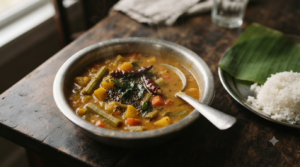
Tamil Nadu style sambar simmered with drumstick, carrot and pumpkin, finished with a mustard and asafoetida tempering.
This guide gives you exact measures and the staged vegetable timing most recipes leave out. It also covers one label check on your hing that almost every Tamilnadu sambar recipe skips.
This Tamilnadu Sambar Recipe at a Glance
- Serves 5–6 bowls from 1 cup of toor dal, so it comfortably feeds a family meal.
- Total time is about 55 minutes, of which roughly 20 minutes is hands-on.
- Asafoetida and fenugreek replace onion and garlic as the savoury base.
- Naturally vegan when you temper in oil, though it is only gluten-free if your hing is rice-flour based.
- Pairs with steamed rice, idli, dosa, pongal or chapati.
| Detail | Value |
|---|---|
| Prep time | 20 minutes |
| Cook time | 35 minutes |
| Total time | 55 minutes |
| Servings | 5–6 bowls |
| Cuisine | Tamil Nadu, South Indian |
| Difficulty | Easy to medium |
Why This Tamilnadu Sambar Recipe Skips Onion and Garlic
Households skip onion and garlic for several different reasons, and the cooking method barely changes for any of them. In Tamil homes the most common reason is ritual. Food cooked for a deity, or eaten on Ekadasi and Aadi days, traditionally leaves out alliums. Temple kitchens follow the same rule, which is why temple sambar tastes noticeably rounder and sweeter than restaurant sambar.
Others avoid them for health or comfort. Onion and garlic are high in fructans, so some people with irritable bowel symptoms find them hard to tolerate. Jain cooking excludes them along with root vegetables. Many Ayurvedic and yogic diets also classify them as rajasic, so they leave them out year round.
Whichever camp you are in, the technique below is identical. A Tamilnadu sambar recipe without alliums simply moves the savoury load onto asafoetida, curry leaves and a balanced tamarind base.
Ingredients for This Tamilnadu Sambar Recipe
This Tamilnadu sambar recipe needs nothing exotic beyond a decent sambar powder. Measure everything before you start, since the tempering stage moves fast once the mustard seeds pop. Quantities below are for 5–6 servings.
- Toor dal (thuvaram paruppu) – 1 cup, about 200 g
- Tamarind – one lemon-sized ball, or 2 tbsp thick tamarind paste
- Sambar powder – 2 tbsp to start, plus more to taste
- Turmeric powder – ½ tsp in total
- Mixed vegetables – about 2 cups, chopped (see the timing table below)
- Jaggery – ½ tsp, optional but useful for balance
- Curry leaves – 12 to 15
- Asafoetida (hing) – a generous pinch
- Mustard seeds – 1 tsp
- Split urad dal – 1 tsp
- Cumin seeds – ½ tsp
- Fenugreek seeds – ¼ tsp, only if your sambar powder is mild
- Dry red chillies – 2
- Coriander leaves – 2 tbsp, chopped
- Gingelly or coconut oil – 2 tbsp
- Salt – to taste
Start at 2 tbsp of sambar powder rather than the 2½ tbsp many recipes list. Brands differ enormously in chilli heat. You can stir in another half spoon after the first simmer, but you cannot take it out.
Choosing and Timing the Vegetables
Most failures in a Tamilnadu sambar recipe are timing failures, not seasoning failures. Vegetables go in at different moments because they cook at wildly different speeds. Use this table as your order of operations.
| Vegetable | Cut size | When to add |
|---|---|---|
| Drumstick | 5 cm batons | First — needs 12 to 15 minutes |
| Carrot | 1 cm dice | First |
| Potato | 1.5 cm dice | First |
| Radish (mullangi) | Thin rounds | First |
| Yellow pumpkin | 2 cm dice | After 5 minutes |
| Brinjal | 2 cm wedges | After 5 minutes |
| Okra (vendakkai) | 2.5 cm pieces | Sauteed separately, stirred in last |
Pick three or four vegetables, not seven. A crowded pot dilutes the tamarind and the sambar starts tasting like vegetable stew. Drumstick with carrot and pumpkin is the classic Tamil Nadu combination.
Step-by-Step Tamilnadu Sambar Recipe Method
Work through these six stages in order. Because the tempering finishes in under a minute, keep everything measured and within reach before you start.
1. Cook the Dal Until It Collapses
Rinse the toor dal until the water runs clear, then soak it for 10 minutes. Pressure cook with 3 cups of water, a pinch of turmeric and a few drops of oil. Give it 4 to 5 whistles, or roughly 12 to 15 minutes.
The dal must mash into a smooth paste with the back of a ladle. If it still holds its shape, cook it longer, because undercooked dal is the main reason sambar turns out thin.
2. Extract the Tamarind Properly
Soak the tamarind ball in ¾ cup of hot water for 10 minutes. Squeeze it hard with your fingers, then strain and discard the fibre. You want about ¾ cup of extract that looks like weak tea. Thick, syrupy extract makes sambar aggressively sour, so dilute rather than guess.
3. Cook the Vegetables in Stages
Heat 1 tbsp oil in a heavy pan on medium flame. Add the slow vegetables first with ¼ tsp turmeric, salt and ½ cup water. After about 5 minutes, add the softer ones. Cook uncovered for 10 to 12 minutes until a knife slides in but the pieces still hold together.
Okra is the exception. Saute it separately in a teaspoon of oil until the edges brown, then stir it in right at the end. Boiling okra in tamarind water is exactly how sambar turns slimy.
4. Combine and Simmer
Pour the tamarind extract over the vegetables and add the sambar powder. Simmer this uncovered for at least 8 minutes before the dal goes in. Raw spice powder tastes dusty until it has cooked in liquid.
Then add the mashed dal with 1 to 1½ cups water and the optional jaggery. Simmer another 8 to 10 minutes on low.
The consistency should coat a spoon lightly and still pour. Sambar thickens as it sits, so leave it slightly looser than you want it.
5. Make the Tempering (Thaalippu)
Heat the remaining oil in a small pan until it shimmers. Add mustard seeds and wait for them to pop, which takes about 30 seconds. Next add urad dal, cumin, fenugreek if using, and the red chillies.
When the urad dal turns pale gold, add curry leaves and the asafoetida. Count five seconds, then pour the whole thing over the simmering sambar.
That five-second bloom matters more than the quantity of hing. Asafoetida added off the heat, or stirred into cold liquid, never develops the savoury note that stands in for onion.
6. Rest Before Serving
Switch off the flame, scatter the coriander leaves and cover the pot. Let it stand for at least 5 minutes so the tempering oil spreads through. Sambar genuinely tastes better after 20 minutes, which is why leftover sambar is a South Indian in-joke.
What Actually Replaces Onion and Garlic
Onion contributes sweetness and body, while garlic contributes pungency. A Tamilnadu sambar recipe without onion and garlic covers both gaps with different tools. Knowing which tool does what lets you fix a flat pot on the spot.
- Asafoetida supplies the sulphurous, allium-like note. It is the single most important substitution here.
- Fenugreek gives the faint bitterness that keeps tamarind from tasting one-dimensional. Keep it under ¼ tsp or it turns harsh.
- Jaggery replaces onion sweetness. Half a teaspoon is enough to round the sourness without making it a Udupi-style sweet sambar.
- Curry leaves add aroma, so add them to hot oil rather than sprinkling them raw.
- Fresh ground masala is the upgrade. Roast coriander seeds, chana dal, methi and chillies, then grind them with 2 tbsp coconut. That gives you arachuvitta sambar, and the difference over packet powder is dramatic.
Common Mistakes That Ruin a Tamilnadu Sambar Recipe
These are the failures that send people back to search results, and every one of them is fixable mid-cook.
| Problem | Cause | Fix |
|---|---|---|
| Too sour | Over-strong tamarind extract | Add ½ cup hot water plus 1 tsp jaggery, then simmer 5 minutes |
| Dusty, raw taste | Sambar powder added near the end | Simmer the powder in tamarind water for at least 8 minutes |
| Thin and watery | Dal undercooked or unmashed | Mash thoroughly, then reduce uncovered for 5 minutes |
| Flat, no savoury depth | Hing added off the heat | Bloom hing in hot oil for five seconds before pouring |
| Bitter aftertaste | Fenugreek burnt or overdosed | Roast methi only to pale gold and cap it at ¼ tsp |
| Slimy texture | Okra boiled in the pot | Saute okra separately and fold it in at the end |
| Vegetables collapsed | Everything added together | Follow the staged timing table above |
Is Your Hing Actually Gluten-Free? The Label Check Most Recipes Skip
Plenty of recipes describe sambar as naturally gluten-free. For anyone with coeliac disease that claim is unsafe. Most compounded asafoetida sold in India and abroad is bulked out with wheat flour. Pure resin is difficult to measure, so manufacturers cut it, and wheat flour is the cheapest carrier.
The proportion is not trivial. Some commercial hing products list wheat flour as the majority ingredient, well above the asafoetida content itself. So a single pinch still matters, even though it looks like nothing in the pan.
Check the ingredient panel before you assume. Rice-flour compounded hing and gluten-free labelled hing both exist and behave identically in tempering.
The Food Safety and Standards Authority of India publishes labelling rules for compounded asafoetida on the FSSAI website. If you cook for someone with coeliac disease, treat the label as the deciding evidence. Their dietitian can confirm which brands are safe.
One more honest note. Asafoetida is traditionally added to lentils to ease bloating, and that belief is centuries old in Indian kitchens. Still, it is a culinary tradition rather than a proven medical treatment. Do not rely on it for a digestive condition.
Nutrition Notes for This Tamilnadu Sambar Recipe
A Tamilnadu sambar recipe earns its healthy reputation honestly, because toor dal is genuinely nutrient dense. According to the Indian Food Composition Tables from the ICMR–National Institute of Nutrition, raw toor dal carries roughly 22.3 g of protein per 100 g. The same tables put dietary fibre at about 15 g per 100 g. Cooked dal is far more dilute, since it absorbs several times its weight in water.
| Per serving (approx. 1 cup) | Amount |
|---|---|
| Energy | 150–200 kcal |
| Protein | 6–9 g |
| Carbohydrate | 22–30 g |
| Fat | 3–6 g |
| Fibre | 5–8 g |
These are estimated ranges, not lab values, because your vegetable mix and oil quantity swing the numbers. Serve it with rice and the meal becomes a complete protein, since cereal and pulse amino acids complement each other. You can read more about pulse composition on the ICMR–National Institute of Nutrition site.
Storing This Tamilnadu Sambar Recipe
This Tamilnadu sambar recipe keeps well, so cook the full batch. Cool the sambar fully before it goes anywhere near the fridge. Stored in an airtight steel or glass container, it keeps for 2 days refrigerated, and the flavour deepens overnight. Reheat gently on the stove with a splash of water, because it thickens considerably as the dal starch sets.
Freezing works, although the texture shifts. Freeze in portions for up to a month, then thaw overnight in the fridge before warming. Avoid freezing sambar that already contains okra or brinjal, since both go mushy.
For make-ahead cooking, prepare the dal and tamarind extract a day early and refrigerate them separately. The vegetables and tempering then take about 20 minutes on the day itself.
Where Sambar Really Came From
You will read everywhere that the Maratha prince Sambhaji invented sambar at Thanjavur after running out of kokum. It is a good story. Still, it is a legend rather than documented history, and food writers repeat it far more confidently than the evidence allows.
The honest position is that the recorded history is thin. The food historian K.T. Achaya dated the earliest literary mentions to around the 17th century.
Tamil cuisine already had tamarind-and-lentil kuzhambu long before that, so the dish did not arrive in a vacuum.
Whether the Thanjavur court named the dish or simply popularised an existing one remains unsettled. The Wikipedia entry on sambar summarises the competing accounts.
Which Sambar Should You Make Tonight?
Sambar is not one recipe, so it helps to know which version suits the meal in front of you.
| Style | Character | Best with |
|---|---|---|
| Tamilnadu sambar recipe (this one) | Tangy, spice-forward, no coconut | Rice, idli, dosa |
| Kerala with coconut | Mellow, thick, coconut-rich | Rice and thoran meals |
| Udupi with jaggery | Distinctly sweet-sour | Idli and tiffin |
| Readymade powder | Fast weeknight version | Any everyday meal |
If you prefer a coconut-thickened pot, the Kerala style sambar with coconut follows a different grinding method. For the sweeter tiffin version, try the Udupi sambar with jaggery. On a weeknight, the readymade sambar powder method gets dinner done faster. Jain cooks who also avoid root vegetables should use the Jain sambar for Paryushan instead of this one.
Before You Cook
A Tamilnadu sambar recipe without onion and garlic rewards attention at three specific moments. Cook the dal until it truly collapses. Simmer the sambar powder in tamarind water before the dal joins it, then bloom the asafoetida in genuinely hot oil.
Stage your vegetables instead of tipping them in together, and taste before you reach for more chilli. Serve it with hot rice and a spoon of gingelly oil. It also works ladled over foxtail millet pongal for a lighter meal.
Frequently Asked Questions
Can I make this Tamilnadu sambar recipe without sambar powder?
Yes, and freshly ground masala tastes better. Dry roast 1 tbsp coriander seeds, 1 tsp chana dal and 6 dry red chillies. Add 1 tsp cumin and ¼ tsp fenugreek, then roast until aromatic. Grind coarsely, then add it at the same stage you would add packet powder.
Is this Tamilnadu sambar recipe vegan?
It is vegan as written, because the tempering uses gingelly or coconut oil. Some Tamil households temper in ghee instead, which makes it vegetarian but not vegan. Simply keep the oil and the dish stays fully plant-based.
Is this Tamilnadu sambar recipe gluten-free?
Not automatically. The dal, tamarind and vegetables are all gluten-free, but compounded asafoetida is usually cut with wheat flour. Read the hing label and choose a rice-flour or certified gluten-free version if coeliac disease is a concern.
What can I use instead of drumstick?
Carrot, yellow pumpkin, brinjal and radish all work well. Drumstick contributes a distinctive mild sweetness, so if you cannot find it, add a little extra pumpkin to compensate. Frozen drumstick is widely available and performs almost as well as fresh.
Why does my Tamilnadu sambar recipe taste bland without onion?
Usually the asafoetida was not bloomed in hot oil, or there was simply too little of it. Increase to a generous pinch and add it to shimmering oil for five seconds. A half teaspoon of jaggery also restores the sweetness onion would have contributed.
Can I make this in an Instant Pot or without a pressure cooker?
Yes to both. In an Instant Pot, cook the dal on high pressure for 12 minutes with natural release. Without a cooker, simmer soaked dal in a covered pot for 40 to 45 minutes. Top up the water as needed until it mashes easily.
How much tamarind should I use?
One lemon-sized ball yielding about ¾ cup of extract suits 1 cup of dal. Tamarind sourness varies by age and variety, so taste the extract before adding it. If it makes you wince undiluted, add water until it tastes like weak tea.
What do I serve with this sambar?
Steamed rice with a spoon of gingelly oil is the standard Tamil Nadu pairing. It also works with idli, dosa, pongal and chapati. Papad and coconut chutney round out the plate nicely.