Jain Sambar Recipe for Paryushan: Rules and Method
A Jain sambar recipe for Paryushan needs more than the usual no-onion, no-garlic swap. Some families also avoid all fresh vegetables, fruit and herbs during these observances. This version starts with a simple toor dal and dried-spice base, then explains which optional ingredients depend on your household’s rules.
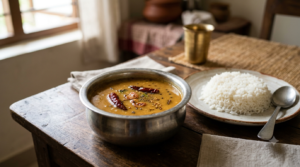
A simple dal-based Jain sambar without fresh vegetables or herb garnishes.
Dietary note: There is no single ingredient list that covers every Jain sect, sangh or personal vow. Check the day’s permitted foods with your family or religious guide before cooking. This recipe is for people who are eating a cooked meal; it is not intended for a day of complete fasting.
Testing and image disclosure: This recipe’s cooking method has not been kitchen-tested or supported by a documented cooking trial. The preparation time, cooking time, final yield and serving sizes are untested estimates. Any accompanying food image is illustrative only; it is not photographic evidence that this specific recipe was prepared or tested.
Jain Sambar Recipe for Paryushan at a Glance
The base is a tangy lentil stew without onion, garlic, fresh vegetables, fresh herbs or dairy. It tastes closer to a thin dal-based sambar than the vegetable-rich restaurant version. The timings and yield below are untested planning estimates; the nutrition figures are ingredient-based estimates.
| Detail | Untested planning estimate |
|---|---|
| Preparation | 10–15 minutes |
| Cooking and pressure release | 30–45 minutes |
| Total time | About 40–60 minutes |
| Yield | About 1–1.2 litres |
| Servings | 4 small bowls, roughly 250–300 ml each |
| Difficulty | Easy with a pressure cooker |
No documented batch has confirmed these timings, volumes or portions. These figures assume a stovetop pressure cooker and split pigeon peas that cook readily. Older dal, cooker size and natural pressure release can all add time. In addition, final yield depends on how much water evaporates.
Which Rules Apply to a Jain Sambar Recipe for Paryushan?
Ordinary Jain food rules and stricter Paryushan practice are not identical. Many Jain kitchens avoid roots throughout the year. During Paryushan or Das Lakshan, some observant families also exclude every fresh vegetable, fruit and herb. That includes bottle gourd, pumpkin, drumstick pods and tomatoes.
That difference shapes this Jain sambar recipe for Paryushan. The Jain Ahimsa Initiative’s festival cooking guidance describes this more restrictive fresh-produce approach. It also offers dry spices, grains and pulses as alternatives. However, its vegan guidance is one particular approach, not a rule that every Jain household follows.
| Ingredient | How to treat it here |
|---|---|
| Onion, garlic, potato, carrot, fresh ginger | Exclude from the base recipe |
| Bottle gourd, pumpkin, beans, tomato | Add only if your household allows fresh produce |
| Fresh curry leaves, coriander, coconut | Exclude from the base recipe |
| Dry spices, amchur or kokum | Check your specific observance and product labels |
| Mustard, cumin, fenugreek seeds | Optional; stricter observance may limit seeds |
| Ghee and other dairy | Household-dependent; the base uses oil |
| Fermented batter, sprouts, food held overnight | Avoid when your observance excludes them |
Are dried spices always permitted?
No. Some Paryushan food guides permit dry ginger, dry chillies and other dried seasonings. Other households follow narrower lists, especially during a personal fast. Therefore, the recipe does not make a blanket claim that turmeric, hing, seeds or dried coconut are suitable for everyone.
Packaged sambar powder can also contain onion, garlic, starches or mixed seasonings. Read the full label if you use it. The method below works without a bought masala blend.
What about dairy and fermented ingredients?
Practices differ here too. The Jain Ahimsa Initiative’s festival guide promotes a vegan approach and excludes dairy. That choice should not be described as a universal Jain prohibition. This particular pot uses vegetable oil so that no dairy is necessary.
Some observances avoid fermented foods, sprouts and overnight soaking. Rinse the dal and cook it that day. If your tradition restricts even same-day soaking or specific pulses, follow that rule instead.
Ingredients for This Jain Sambar Recipe for Paryushan
These quantities are intended to make four modest servings of the Jain sambar recipe for Paryushan, but that yield has not been tested. The base contains no fresh produce, so you can keep it simple before deciding on household-specific additions. Measure the dry dal before cooking because water changes its weight considerably.
- 3/4 cup dry toor dal (split pigeon peas), about 145 g
- About 4 cups (960 ml) water to start, plus a little hot water if needed
- 1 tablespoon neutral cooking oil
- 1–2 dried red chillies, if permitted
- 1 teaspoon dry coriander powder, if permitted
- 1/2 teaspoon dry cumin powder, if permitted
- 1 teaspoon amchur (dry mango powder), or 2–3 pieces of dried kokum, if permitted
- 1 teaspoon jaggery, optional
- Salt to taste
- A small pinch of asafoetida (hing), optional and label-checked
Souring option: Dried tamarind is traditional in sambar. If your family permits it, replace the amchur with a little strained tamarind extract. Otherwise, dried amchur or kokum gives the dal a sour note without requiring fresh tomatoes.
Tempering option: If your household permits mustard and cumin seeds, add 1/4 teaspoon of each to the hot oil. For a practice that restricts seeds, leave them out. Even permitted dried spices should match the specific rules you follow.
How to Make the Jain Sambar Recipe for Paryushan
Untested method: The five steps below are a proposed cooking method, not instructions confirmed by a documented kitchen test. Cook the dal until it mashes easily, add the souring and dry seasonings, then finish with a short tempering. Five clear steps keep this method manageable. Use a larger pot if you expect the dal to foam or boil up.
Step 1: Rinse and cook the dal
Rinse the 3/4 cup of toor dal thoroughly. Put it in a pressure cooker with about 2 1/2 cups of the measured water. Cook according to your cooker’s instructions until the dal becomes soft enough to mash.
Allow pressure to release safely before opening the cooker. Do not force the lid. The time will vary, so judge doneness by the texture rather than an exact whistle count.
Step 2: Mash and thin the dal
Mash the cooked dal with a ladle until it looks smooth. Transfer it to a saucepan if needed, then add the remaining water gradually. Bring it to a gentle simmer while stirring the bottom.
This Jain sambar recipe for Paryushan should pour easily over rice. If the dal looks like a thick paste, add hot water a little at a time. The amount you add will also change your final yield.
Step 3: Balance the sour and savoury flavours
Add your permitted dry coriander, cumin, amchur or kokum, salt and optional jaggery. Stir well and simmer for about five to eight minutes. If using kokum, remove the pieces after the flavour has developed.
Taste before adding more souring powder because its strength varies by brand. A small amount of jaggery can soften excessive sourness. However, it is optional rather than a required religious ingredient.
Step 4: Make a brief tempering
Warm one tablespoon of oil in a small pan. Add the dried chillies and any permitted whole seeds. Stir briefly until fragrant, but do not let the spices blacken.
Turn off the heat before adding optional hing because it can scorch quickly. Then pour the tempering into the simmering dal. Cover the pan for a minute so the aroma settles into the broth.
Step 5: Rest, check the yield and serve
Let the pot stand for about three to five minutes. Check the salt and thickness one last time. If you want equal portions, divide the finished sambar among four small bowls.
The projected yield of about 1–1.2 litres is untested, not a measured or guaranteed final volume. Use a measuring jug after cooking if precise portions matter. Serve freshly cooked with rice only if your observance permits that meal.
Why This Jain Sambar Recipe for Paryushan Omits Fresh Vegetables
Leaving out greens alone is not enough for every festival diet. Some families also set aside gourds, beans, pumpkin and tomatoes. Therefore, this recipe starts without them rather than claiming all above-ground vegetables are automatically suitable.
If your household permits fresh produce, you can simmer small pieces of bottle gourd or pumpkin separately until tender. Fold them into the dal before the final simmer. This is an optional household variation, not part of the conservative base recipe.
That choice changes the Jain sambar recipe for Paryushan, including its preparation time, final yield and nutrient content. For a vegetable-free everyday version with a different seasoning profile, see our Jain sambar without vegetables. Check its ingredients against your festival rules too.
Getting the Right Flavour in a Jain Sambar Recipe for Paryushan
Ordinary South Indian sambar gains a lot from curry leaves, tamarind and vegetables. This festival version has fewer flavour layers. Still, you can build a balanced bowl with careful dal cooking and the dry seasonings your household allows.
- Cook the dal fully: Soft dal gives body, so the sambar does not rely on vegetable starch.
- Bloom spices gently: Briefly heating dried chillies or approved spices in oil brings out aroma.
- Add souring gradually: Amchur and kokum are not identical to tamarind, so taste as you go.
- Keep hing optional: Check both its ingredients and your household’s rule about the source material.
Fresh grated coconut is not the default garnish here. Some festival guides instead allow desiccated coconut, though stricter practices may limit that too. Serve without a garnish if there is any doubt.
When to Cook and Eat During Paryushan
There is no reliable all-India serving time for a Jain sambar recipe for Paryushan. People following a sunset-based eating rule must use the sunset in their own location. Personal vows can also be stricter than the general practice.
As an untested planning estimate, allow around an hour from washing the dal to serving it. Add extra time if your cooker releases pressure slowly. If your observance requires finishing a meal before sunset, work backwards from the local sunset and leave a comfortable margin.
Chauvihar and other vows may restrict eating or drinking after sunset. Do not assume every person follows the same vow. Anyone planning a full or extended fast should also consider their health needs before deciding on food or fluid restrictions.
Jain Sambar Recipe for Paryushan: Yield and Nutrition
The estimate below assumes one-quarter of the proposed base batch, using about 145 g dry toor dal, one tablespoon of oil and the listed small amounts of seasonings. It excludes rice, optional vegetables, extra garnishes and any larger oil addition.
| Nutrient | Approximate amount per bowl |
|---|---|
| Energy | 160–190 kcal |
| Protein | 7–9 g |
| Carbohydrate | 24–30 g |
| Fat | 4–5 g |
| Fibre | 4–6 g |
These are rough ingredient-based estimates, not laboratory analysis or a nutrient label. Dry dal weight matters more than bowl size because extra water lowers concentration without removing the batch’s nutrients. Values for ingredients can be checked in USDA FoodData Central.
A bowl of rice adds calories and carbohydrates, so it needs a separate calculation. If you change the dal quantity, oil or toppings, do not reuse this table unchanged. For medical diets, measure your ingredients and seek individual advice.
What If the Sambar Goes Wrong?
Dal texture, souring strength and spice labels cause most practical problems. Fortunately, most cooking mistakes have simple fixes. An ingredient that conflicts with your vow is different: cooking cannot remove it once added.
- Too thick: Add hot water in small amounts, then simmer briefly.
- Too thin: Simmer uncovered while stirring, or mash more of the dal.
- Too sour: Dilute with more plain cooked dal or water. Add a little jaggery only if permitted.
- Dal still hard: Cook it longer with enough water. Do not force a pressure-cooker lid open.
- Restricted spice discovered: If it has not gone into the pot, replace the blend. If it has, do not claim the result meets your observance.
There is no way to guarantee an exact finishing time because stoves and dals differ. A small batch and a quick ingredient check before cooking reduce both waste and last-minute surprises.
Fresh Cooking and Storage for a Jain Sambar Recipe for Paryushan
Many families preparing a Jain sambar recipe for Paryushan avoid keeping cooked food for another day. Make only what the household expects to eat, especially when no one will take leftovers. Refrigeration does not change a religious rule about previously cooked food.
Food safety is a separate question. Outside those observances, chill unused cooked dal promptly instead of leaving it on the stove overnight. The USDA’s leftover safety advice recommends refrigeration within two hours, or within one hour in very hot conditions.
For ordinary-day cooking, the broader sambar without onion and garlic guide offers a different flavour profile. It includes root vegetables as written, so do not treat that version as Jain-compliant without adjusting the ingredients.
Before You Cook
The key question is not simply whether the recipe contains onion or garlic. Check whether your observance allows fresh produce, seeds, spices and this type of cooked meal. Then make a small amount that fits your eating schedule.
For a conservative starting point, use the plain dal-and-dry-seasoning base. Add fresh vegetables only with clear household approval. That approach keeps the recipe useful without claiming one family’s practice represents all Jain traditions.
Frequently Asked Questions
Is every Jain sambar suitable for Paryushan?
No. An ordinary Jain sambar may omit roots yet still include fresh vegetables and curry leaves. Some Paryushan observers avoid all fresh produce, so check each ingredient against the practice you follow.
Can I use tomatoes, pumpkin or drumstick pods?
Only if your household’s festival rules allow them. These items grow above ground, but that does not make them universally permitted during Paryushan. The base recipe therefore omits all three.
Can I make this Jain sambar recipe for Paryushan without tamarind?
Yes. Try a modest amount of permitted amchur or dried kokum for sourness. Both change the flavour, so add a little at first and taste before using more.
Is dry ginger or turmeric powder permitted?
There is no universal answer for every observance. Some published festival cooking guides allow dried spices, including dry ginger. Others follow stricter household restrictions, so leave either powder out when uncertain.
Can I use fresh curry leaves or coriander?
Not in the conservative base version. Fresh leaves are among the items avoided in stricter Paryushan cooking. Dried leaves may have different treatment, but only use them if your observance permits them.
Can I prepare this sambar the night before?
That may conflict with your household’s rule about fresh, same-day food. Prepare a smaller batch on the day you plan to eat it. Safe refrigeration and religious permission are two separate issues.
Is the recipe gluten-free and vegan?
It contains no dairy ingredients and can be vegan. However, compounded hing or packaged masala can contain wheat or other additives. Check labels if you need a gluten-free dish or have a food allergy.
Can someone who is fully fasting eat this sambar?
Not if their fast excludes cooked food. This is a meal recipe for people whose observance allows eating. If fasting may affect diabetes treatment, pregnancy, hydration or another health condition, seek qualified medical advice beforehand.