Sambar With Readymade Sambar Powder: The Best Method
Sambar with readymade sambar powder can taste as good as a version made with freshly ground masala. Most home cooks never get there, though, because one step quietly goes missing. Store-bought powder is not something you stir in at the end.
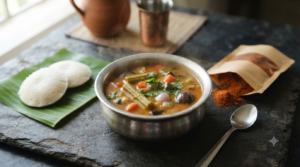
A finished pot of sambar made with store-bought powder, simmered long enough to lose the raw, chalky edge.
The powder carries raw ground lentils and fenugreek, so it needs real simmering time to lose its dusty edge. That single detail separates a flat, chalky pot from a glossy, aromatic one. Below you get exact ratios, per-vegetable timings, and a fix-it table for when things still go sideways.
Sambar With Readymade Sambar Powder at a Glance
- Total time: about 55 minutes — 15 minutes prep, 30 minutes cooking, 10 minutes resting.
- Powder ratio: 2 level tablespoons for every 1 cup of dry toor dal.
- The step nobody mentions: simmer at least 8 minutes after the powder goes in.
- Chilli correction: the powder already carries chilli, so use only 2 dry red chillies in the tempering.
- Serves: 4 to 6 people alongside rice, idli, dosa or vada.
What Store-Bought Sambar Powder Actually Contains
Readymade sambar powder is a roasted blend of coriander seeds, dry red chilli, fenugreek, cumin and turmeric. Most brands also grind in roasted lentils such as chana dal, because those lentils thicken the pot. Since they are already milled fine, they sink and scorch if you stop stirring.
Two mix-ups cost people a good dinner. Rasam powder leans hard on pepper and cumin, so it never builds sambar’s body. An instant “sambar masala” mix, meanwhile, often carries added salt and thickeners, which means it needs a smaller dose than plain powder.
Good sambar with readymade sambar powder starts at the ingredient panel, so read it before your first pot. If salt sits in the top three ingredients, start at 1.5 tablespoons and season the sambar later.
How Much Readymade Sambar Powder Per Cup of Dal?
Use 2 level tablespoons of readymade sambar powder for every 1 cup of dry toor dal, which feeds four to six people. Drop to 1.5 tablespoons when the label lists salt near the top, or when the blend is a fiery Andhra style. Then taste and add the rest.
| Dry toor dal | Sambar powder | Tamarind paste | Total water | Serves |
|---|---|---|---|---|
| ½ cup | 1 tbsp | 2 tsp | 3 cups | 2–3 |
| 1 cup | 2 tbsp | 1 tbsp | 5–6 cups | 4–6 |
| 1½ cups | 3 tbsp | 1½ tbsp | 8 cups | 7–9 |
Stated plainly: one cup of dry toor dal, two tablespoons of powder, and roughly five to six cups of water in total. That ratio holds across brands, although a very hot blend deserves trimming.
Ingredients for Sambar With Readymade Sambar Powder
- 1 cup toor dal (split pigeon peas)
- 3 cups mixed vegetables: carrot, drumstick, potato and brinjal, ½ cup each
- 2 tbsp readymade sambar powder
- 1 tbsp tamarind paste, or a lemon-sized ball of tamarind soaked in warm water
- 1 medium onion or 10 shallots, chopped
- 1 medium tomato, chopped
- ½ tsp turmeric powder
- 1 tsp jaggery, optional but recommended
- Salt to taste
- 2 tbsp sesame oil, coconut oil or ghee
- 1 tsp mustard seeds
- ¼ tsp fenugreek seeds
- 2 dry red chillies, broken
- 10–12 curry leaves
- A pinch of asafoetida
- Fresh coriander leaves, chopped, for garnish
Sesame oil is the Tamil Nadu default, while coconut oil pushes the pot toward a Kerala profile. Ghee works too, though it mutes the tamarind slightly.
How to Make Sambar With Readymade Sambar Powder
Step 1: Pressure cook the dal
Rinse the toor dal until the water runs clear. Add it to the cooker with 2.5 cups of water, the turmeric and a few drops of oil, then cook for four whistles. Once the pressure drops, whisk the dal until it turns creamy and smooth.
Step 2: Simmer the vegetables in tamarind water
Dilute the tamarind paste in 2 cups of warm water. Add the onion, tomato and the harder vegetables first, because carrot and drumstick need longer than brinjal. Simmer uncovered until everything turns just tender, which usually takes 10 to 12 minutes.
Use a steel or clay pot rather than uncoated iron or aluminium. Tamarind is acidic, so reactive metal leaves a metallic aftertaste.
Step 3: Add the powder and boil it properly
Stir the sambar powder into the vegetable pot, not into the hot tempering oil, since direct oil contact scorches the ground lentils within seconds. Add the mashed dal, the salt and the jaggery. Now simmer for a full 8 to 10 minutes on medium heat.
This single rule decides whether sambar with readymade sambar powder tastes finished or floury. If you serve after two minutes, the fenugreek stays raw and the sambar tastes chalky and slightly bitter.
Step 4: Make the tempering
Heat the oil until it shimmers, then add mustard seeds and wait for them to pop. Add fenugreek seeds, the two dry chillies, curry leaves and asafoetida in that order. Pour the tempering over the sambar and cover the pot at once so the aroma stays in.
Step 5: Rest before serving
Turn off the heat and let the sambar sit for 10 minutes. The lentil solids in the powder keep absorbing liquid during this rest, so the consistency thickens noticeably. Garnish with coriander and serve hot.
Vegetable Timings That Prevent a Mushy Pot
Most soggy sambar comes from one mistake: everything going into the pot together. Add vegetables in stages instead, working backwards from the longest cook time.
| Vegetable | Simmer time | Add at |
|---|---|---|
| Drumstick | 12–14 min | First |
| Carrot, potato, yam | 10–12 min | First |
| Shallots, onion | 8–10 min | First |
| Brinjal, pumpkin | 6–8 min | Midway |
| Ladies finger, tomato | 4–5 min | Last |
Ladies finger needs one extra move. Sauté it separately in a teaspoon of oil first, otherwise it turns the whole pot slimy.
Five Fixes That Close the Gap With Homemade Masala
Store-bought blends sit in a warehouse for months, so their volatile oils fade. These five adjustments bring sambar with readymade sambar powder much closer to the fresh-ground version.
- Dry-roast the powder. Warm the 2 tablespoons in a dry pan for 30 seconds before use, until it smells nutty.
- Add jaggery. One teaspoon rounds off the sharp edge that mass-produced chilli leaves behind.
- Double the curry leaves. Fresh leaves in the tempering supply the top note that packaged powder loses first.
- Finish with a second tempering. A fresh spoonful poured on just before serving revives a reheated pot.
- Buy small packs. A 100 g pouch finished within eight weeks beats a 500 g box that sits open for a year.
Fixing Sambar With Readymade Sambar Powder When It Goes Wrong
Every cook has served a disappointing pot at least once. Almost all of it traces back to four causes, and each one has a rescue you can run mid-cook.
| Problem | Cause | Fix |
|---|---|---|
| Tastes raw or chalky | Powder simmered under 8 minutes | Keep simmering; add hot water if it thickens |
| Bitter finish | Fenugreek burnt, or too much powder | Stir in jaggery and a splash of coconut milk |
| Too sour | Excess tamarind | Add cooked dal or a boiled potato, never more water alone |
| Too thin | Dal undercooked or over-diluted | Simmer uncovered, or whisk in 1 tbsp roasted gram flour |
| Too spicy | Hot blend plus tempering chillies | Add jaggery, tomato and extra dal; skip the chillies next time |
One warning about the sour fix. Extra water dilutes the salt and spice together, so the pot ends up bland rather than balanced. More dal is the correct answer.
Nutrition Per Serving
These figures are calculated estimates from the ingredient quantities above, divided across five servings. They are not laboratory values, and your oil quantity and vegetable mix will shift them.
| Nutrient | Per serving (estimate) |
|---|---|
| Calories | 150–180 kcal |
| Protein | 7–9 g |
| Carbohydrates | 22–28 g |
| Fat | 5–7 g |
| Fibre | 4–6 g |
Dry toor dal supplies roughly 343 kcal and 21.7 g of protein per 100 g, according to USDA FoodData Central. One cup of dry dal therefore carries most of the protein here. Indian reference values from the ICMR National Institute of Nutrition land in a similar range.
Packaged spice blends also carry sodium, especially instant mixes. If you manage blood pressure, diabetes or any medical condition, treat these numbers as rough guidance and speak to a qualified dietitian rather than relying on a recipe page.
Storing and Reheating Sambar Safely
Cool the sambar and refrigerate it within two hours of cooking, because tamarind and cooked lentils spoil quickly at room temperature. Stored in an airtight steel or glass container, it holds well for three days. FSSAI guidance on cooked food handling follows the same two-hour principle.
Reheat only the portion you plan to eat. Add a splash of hot water while reheating, since the lentils keep thickening in the fridge. A fresh 30-second tempering poured over the reheated bowl restores most of the lost aroma.
Freezing works, although the texture suffers. Freeze the cooked dal and the spiced vegetable base separately for up to a month, then combine them fresh.
Readymade Powder or Homemade Masala?
Freshly ground masala wins on aroma, and no packet fully matches it. That advantage fades fast, however, because homemade powder also loses its volatile oils within a few months of grinding.
Packaged powder wins on consistency and time. You skip roasting, cooling and grinding, which saves a 30-minute session and gives the same result every week. For a weeknight pot served with idli or dosa, sambar with readymade sambar powder wins on sheer reliability.
A practical middle path works best for most kitchens. Use a good packaged blend as your base, then boost it with the five fixes above. If you cook sambar more than twice a week, grind a small batch fresh and store it in the freezer.
If you would rather work without a packet at all, our Kerala style sambar with coconut grinds its masala fresh. For a no-vegetable weekday version, the plain sambar recipe uses the same powder ratio. The same packaged-masala logic drives our bisi bele bath with MTR powder.
The Bottom Line
Sambar with readymade sambar powder fails for one reason far more often than any other: the pot never simmers long enough after the powder goes in. Give it eight to ten minutes and most complaints disappear on their own. Hold the ratio at two tablespoons per cup of dal, cut the tempering chillies to two, and stage the vegetables by cooking time. Add a teaspoon of jaggery and a fresh final tempering, and your packet-based sambar will hold its own against any freshly ground version.
FAQs About Sambar With Readymade Sambar Powder
Can readymade sambar powder replace homemade masala completely?
Yes, for everyday cooking it replaces homemade masala with no real loss. Aroma is the only gap, and dry-roasting the powder for 30 seconds closes most of it. Reserve freshly ground masala for festival sambar if you want the extra fragrance.
How much sambar powder should I use for 1 cup of dal?
Two level tablespoons per cup of dry toor dal is the standard ratio. Reduce it to 1.5 tablespoons if the blend contains added salt or comes from a hot Andhra style range. Taste at the eight-minute mark before adding any more.
Why does my sambar taste raw or slightly bitter?
Under-simmering causes the raw taste, because ground lentils and fenugreek in the powder need eight to ten minutes of heat. Bitterness usually means burnt fenugreek in the tempering, or simply too much powder. Jaggery and a spoon of coconut milk soften both problems.
Can I make sambar without a pressure cooker?
Yes. Soak the toor dal for 30 minutes first, then boil it in a heavy pot with three cups of water until it collapses, which takes 30 to 40 minutes. Everything after that stays identical.
Is sambar powder the same as rasam powder?
No, and swapping them ruins the dish. Rasam powder is built on pepper and cumin for a thin, peppery broth, while sambar powder relies on coriander, chilli and roasted lentils that give body. Keep the two jars clearly labelled.
Can I skip the tamarind?
You can, but the sambar loses its defining sourness. Squeeze half a lemon in after switching off the heat, or add two extra tomatoes during the vegetable stage. Never boil lemon juice, since it turns unpleasantly sharp.
Which vegetables suit sambar best?
Drumstick, brinjal, shallots, carrot, pumpkin, yam and ladies finger all work well together. Beetroot bleeds colour and cabbage overwhelms the tamarind, so most cooks avoid both. Three or four vegetables in one pot beat a crowded mix.
How long does sambar with readymade sambar powder keep?
Refrigerated in an airtight container, it keeps for three days. Reheat only the portion you need, because repeated heating and cooling degrades both flavour and safety. Frozen dal and vegetable base separately last about a month.