Baked Methi Mathri for Diwali: Untested Recipe Trial
Untested recipe trial: Baked methi mathri is the Diwali snack this first-batch test is trying to develop, but the Bhimas Cook kitchen has not yet tested the formula below. The goal is a crisp, flaky-style baked cracker with visible methi, even thickness and controlled browning. Until the kitchen test confirms the dough, water, oven setting and final texture, treat every number below as a starting point rather than a finished recipe.
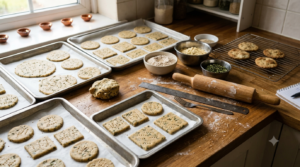
Illustrative image of baked methi mathri for Diwali, showing fork-docked crackers. This is an untested recipe trial, not an actual kitchen-tested batch.
This is a first-batch experiment rather than a tested recipe because a baked snack can fail in several quiet ways. A dough can look right yet bake hard, while a thicker piece may stay tender in the centre. Therefore, the trial records dough feel, rolling thickness, docking, cooling and final snap before any claim of success.
Image note: Any accompanying food image is illustrative unless explicitly identified as a photograph of an actual tested batch. It does not demonstrate the result of this untested recipe.
Baked Methi Mathri Untested Trial at a Glance
- Test status: untested first-batch formulation; do not label it “tested” yet.
- Texture target: firm dough that rolls without sticky patches or deep edge cracks.
- Starting thickness: about 5–6 mm, kept as even as possible across the sheet.
- Docking: prick the surface evenly with a fork so trapped steam has an escape path.
- Starting oven setting: 180°C in a fully preheated conventional oven; verify the final setting in the actual oven.
- Yield: unknown until a real batch has been counted or weighed after cooling.
- Storage duration: not established. Crispness alone cannot show that stored food is safe to eat.
The most useful result from this trial is not a guessed “perfect” bake time. It is a repeatable method that tells the next cook what the dough should feel like and what to change if the first tray misses the mark. That is the same test-first approach used in Bhimas Cook’s ragi ribbon pakoda trial, which also makes appliance variation part of the trial.
Why This Untested Trial Needs a Real Kitchen Test
Published baked mathri formulas do not agree on one exact oven temperature, thickness or flour mix. Some use mostly atta and besan, while others include maida or semolina. Baking guidance also varies, so copying one minute mark would create false precision before this kitchen has tested its own tray and oven.
The stronger common pattern is technical rather than numerical. Keep the dough firm, rub fat through the flour, roll the pieces evenly, and prick the surface before baking. Comparable cracker guidance from King Arthur Baking also uses docking to limit puffing and recommends rotating trays for more even browning.
One common claim also deserves correction. Baking avoids deep-frying, but that does not automatically make a snack “healthy” or “guilt-free.” Mathri still needs enough fat for the intended short, crisp bite, so the better description is simply oven-baked rather than deep-fried.
Ingredients for the First Kitchen Trial
This starting formula uses atta and besan because that combination appears repeatedly in baked methi mathri methods. However, these amounts remain provisional until a test confirms the balance. Measure by weight where possible, since flour packed tightly into a cup can change the water requirement.
| Ingredient | Starting quantity | Role in the trial |
|---|---|---|
| Whole wheat flour (atta) | 195 g | Main structure and wheat flavour |
| Besan | 52 g | Nutty flavour and a shorter bite |
| Kasuri methi (dried fenugreek leaves) | 2 tbsp, lightly crushed | Fenugreek aroma and visible flecks |
| Ajwain | 3/4 tsp, lightly crushed | Classic savoury note |
| Sesame seeds | 1 tsp | Nutty texture |
| Red chilli powder | 1/4 tsp | Mild heat |
| Turmeric | 1/8 tsp | Warm colour |
| Salt | 1 tsp | Seasoning baseline |
| Baking powder | 1/4 tsp | Small amount of lift |
| Ghee or neutral oil | 80 ml | Shortens the dough and limits toughness |
| Water | Start with 100 ml; add by teaspoon as needed | Hydration; record the actual total used |
Ingredient and allergen note: Atta contains wheat (gluten), and this trial includes sesame seeds. Ghee contains milk ingredients, so choose the neutral-oil option if avoiding dairy, while checking all ingredient labels and cross-contact risks. Kasuri methi means dried fenugreek leaves; fresh methi contains much more water and is not a direct spoon-for-spoon substitute. Fresh leaves would need their own test because they can change dough hydration and baking.
Do not taste the raw dough to adjust seasoning because uncooked flour is not ready-to-eat. Instead, keep the first batch conservative and adjust salt or chilli only after tasting a fully baked, cooled sample. This also keeps the trial controlled because flavour changes happen after the kitchen establishes the texture baseline.
Dough Texture Matters More Than an Exact Water Number
The dough should feel firm and compact, not soft like roti dough. When squeezed, it should hold together without smearing onto the palm. Yet it should not split into dry chunks, because deep cracks at the edges usually mean it needs a little more water or rest.
First, mix the flours, methi, spices, salt and baking powder thoroughly. Then add the ghee or oil and rub it through with the fingertips until the flour feels evenly sandy. This step matters because small films of fat coat part of the flour and reduce the chance of a leathery, overworked bite.
Add 100 ml water gradually, then stop and squeeze the mixture together. If dry flour remains, add one teaspoon at a time. Record the actual water total, since that number belongs in the final recipe only after the dough behaves the same way in a repeat batch.
Once the dough comes together, knead only until it looks uniform. Cover it and rest it for about 15–20 minutes while the oven preheats. After resting, the dough should roll with firm pressure but should not spring back aggressively.
How to Roll Baked Methi Mathri to Even Thickness
For this untested baked methi mathri trial, use 5–6 mm as the starting thickness rather than rolling paper-thin crackers. That range sits close to several published mathri methods, while still giving enough body for a recognisable mathri bite. Judge whether the thickness works by testing the cooled texture.
Divide the dough into manageable portions and keep unused pieces covered. Roll from the centre outward, then turn the sheet often so one edge does not become much thinner. A ruler beside the board is useful during the first test because “medium thick” is too vague to reproduce later.
Uniformity matters more than perfect circles. Thin edges can brown before the middle dries, while thick centres may stay soft. King Arthur’s cracker guidance likewise notes that cracker thickness changes both crispness and baking time, which is exactly why this trial should log thickness instead of guessing.
Why Docking Matters for Baked Methi Mathri
Docking means making small holes in the rolled dough before baking. For baked methi mathri, those holes give expanding steam places to escape, so the pieces stay flatter instead of ballooning into hollow pockets. A flatter piece also gives you a more useful read on whether the centre has dried evenly.
Use a dinner fork and prick across the full surface, including the centre. Keep the holes close enough to control puffing, but do not stab so hard that the piece tears. If one test piece is left undocked, it can serve as a comparison and show how much puffing the dough naturally creates.
Docking is not decoration in this trial. It is a process variable, so photograph the raw tray before baking. That photo makes it easier to compare puffing, blistering and browning after the tray comes out.
How to Bake Baked Methi Mathri in This Untested Trial
This untested baked methi mathri method starts at 180°C in a conventional oven, but that is a calibration point rather than a guaranteed final setting. Ovens vary in thermostat accuracy, tray colour and airflow. Therefore, treat the first tray as a test tray, not as proof of a universal bake time.
- Preheat fully. Set the oven to 180°C and allow it to reach temperature before loading the tray.
- Line one light-coloured tray. Use baking parchment so sticking does not confuse the texture test.
- Arrange one layer. Leave a little space between pieces, since crowded pieces can dry less evenly.
- Start the test. Put the tray on the middle rack and begin checking at about 15 minutes.
- Rotate the tray. Turn front to back at the first check if one side colours faster.
- Continue in short intervals. Add only a few minutes at a time until the surface looks dry and the edges deepen slightly.
- Cool a sample before deciding. Move one piece to a rack and wait several minutes before testing the snap.
There is no established final bake time for this version. Record the minute at which the cooled sample becomes crisp without tasting scorched or feeling tooth-breakingly hard. If the tray browns too fast before the centre dries, lower the temperature on the next test rather than simply pulling it early.
How to Judge Doneness After Cooling
A hot mathri can feel softer than it will after steam escapes, so judging it straight from the oven can lead to overbaking. The better test is a cooled sample. Look for a dry surface, a clean break and a centre that does not bend or taste floury.
Colour is only one clue because turmeric, methi and whole wheat already darken the dough. Instead, note the aroma and edge colour while the tray is hot, then judge texture after cooling. If the centre stays leathery, the next test needs either a thinner roll or more drying time.
Also listen to the break. A clean snap suggests moisture has left the centre, while a dull bend points to retained moisture. However, a very hard snap with dense chewing can mean the dough was too dry or the tray baked too long.
What to Change if the First Batch Fails
Change one variable at a time, because multiple changes make the next result impossible to diagnose. The table below is a troubleshooting map for the second test, not a promise that every oven will react identically.
| Problem after cooling | Likely cause | Next test |
|---|---|---|
| Hard and dense | Dough too dry, too little fat, or overbaked | Keep fat fixed first; add slightly more water or shorten the bake |
| Soft centre | Too thick or not dried enough | Roll more evenly or extend baking in short intervals |
| Edges dark, centre soft | Oven too hot or edges too thin | Lower temperature and improve rolling uniformity |
| Puffed pockets | Docking too light or uneven | Prick the centre and edges more consistently |
| Crumbly before rolling | Not enough water or insufficient rest | Add water by teaspoon, then rest covered |
| Greasy mouthfeel | Fat level may be too high for this flour batch | Reduce fat only in a separate controlled test |
| Weak methi flavour | Kasuri methi too mild or quantity too low | Increase methi in the next batch after the texture works |
The priority order should be texture first, flavour second. If the base is hard, changing chilli or sesame will not solve the real problem. Once the snap and bite are right, a second tasting can fine-tune methi, ajwain and salt without confusing the structural test.
Diwali Prep: Where This Trial Fits on the Snack Table
Baked mathri gives a Diwali spread a savoury counterpoint to laddus, barfi and other sweets. If the trial succeeds, it can sit beside Bhimas Cook’s Diwali sweets recipes as the crunchy snack option. The site’s biyyam pindi chekkalu also offers a useful contrast because chekkalu use a different flour system and cooking style.
For the test day, make this trial on its own rather than during a crowded festival cook. A calm first batch makes it easier to weigh ingredients, photograph the dough and log the oven behaviour. If it works, repeating the batch will help show whether the result is reliable.
Pairing can stay simple during evaluation. Taste one cooled piece plain first, because pickle or chai can hide dryness or excess salt. After the baseline tasting, serve it with tea or pickle if you want to judge how the seasoning performs in normal use.
Storage for This Untested Baked Methi Mathri Trial
There is no established safe storage duration for this untested batch. Shelf life depends on moisture, ingredients, handling, temperature and the storage container. Once the mathri is fully cool, place the test batch in a clean, dry, closed container. The Food Safety and Standards Authority of India advises keeping food preparation and storage areas clean and using closed containers for food storage.
If you are tracking texture, check and record when crispness changes. A crisp texture, pleasant smell or normal appearance cannot establish food safety or a safe storage period. Do not assume a batch is safe to eat simply because it still snaps. If you are unsure about storage conditions or notice signs of spoilage, discard it.
If moisture softens the snack, that change is useful to record, but reheating does not guarantee food safety. An extra oven pass can also darken methi and spices quickly.
Baked Methi Mathri Kitchen-Test Record
The final recipe should replace assumptions with measured values from the actual kitchen. Keep this record beside the tray, since details written after the fact are easy to misremember.
| Test item | Record during test | Pass cue |
|---|---|---|
| Total water used | Measure in ml | Firm dough rolls without sticky patches or deep cracks |
| Dough rest | Minutes | Dough relaxes but stays firm |
| Rolled thickness | Measure in mm | Pieces bake evenly from edge to centre |
| Docking pattern | Photo or short note | No large hollow bubbles |
| Oven type | Conventional or fan | Setting repeats reliably |
| Tray and rack | Colour, material, rack position | Browning pattern is understood |
| First check | Minute mark | Surface dry, edges beginning to colour |
| Final bake time | Minutes | Clean snap only after cooling |
| Final yield | Count and/or weight | Measured after complete cooling |
| Storage observation | Texture notes over time | Texture alone does not establish a safe shelf life |
What a Successful Baked Methi Mathri Trial Would Show
A successful baked methi mathri trial would produce a clean snap and pleasant bite with a repeatable dough and oven method. Until that happens, the formula remains untested. To compare your own batch, note the actual water used, oven setting, bake time and cooled yield.
A good texture result does not prove safe storage life. Establishing a safe storage period needs food-safety evidence beyond home crispness checks. Per-piece nutrition values also remain unknown without a measured yield and a defined piece size.
This test-first approach makes the variables visible. Many online recipes present one thickness and one timing as universal, while ovens and dough hydration vary. Here, you can use the observations to decide what to change if your trial batch is too hard or too soft.
Frequently Asked Questions
Is this baked methi mathri recipe tested?
No. This is an untested recipe trial designed to guide the first kitchen batch. The ingredient ratio, thickness and oven setting are starting points, not confirmed results. Keep track of your actual water use, bake time, texture and yield.
What should baked methi mathri dough feel like?
The dough should feel firm, compact and non-sticky, while still rolling without deep cracks. It should be firmer than roti dough because a very soft dough can lose shape and bake with a different texture. Add water slowly, then record the total actually used.
How thick should baked methi mathri be rolled?
For this first trial, aim for about 5–6 mm and keep the sheet as even as possible. That is a test target rather than a final specification. If the cooled centre stays soft, test a slightly thinner roll before changing several other variables.
Why do you prick mathri with a fork before baking?
Fork holes, or docking, give steam paths to escape as the dough heats. That helps limit large puffed pockets and makes the pieces bake more evenly. Prick across the whole surface, but avoid tearing the dough.
What temperature should I use for this untested trial?
Start the conventional oven test at 180°C after a full preheat, then record how the actual oven behaves. This is not yet the final Bhimas Cook temperature. If the edges brown before the centre dries, lower the setting in the next controlled test.
How long should baked methi mathri bake?
This untested trial has no confirmed final bake time. Begin checking around the first quarter-hour, then continue in short intervals. Judge the result only after a sample cools and reaches its final crispness.
Can I call baked mathri healthier than fried mathri?
It is accurate to say this version uses baking instead of deep-frying. However, “healthy” is too broad a claim because the recipe still uses fat and salt. Describe the cooking method plainly, then let readers decide how it fits their diet.
How long does baked methi mathri stay fresh?
This untested trial has no established safe storage duration. Cool the trial batch fully and use a clean, dry container, but remember that crispness, taste and smell cannot prove food is safe. If storage conditions are uncertain, discard the batch rather than relying on a texture check.