Chickpea Sundal Recipe: Soaking, Cooking and Tempering Trial
This chickpea sundal recipe is a proposed small-batch method for white kabuli chana, fresh coconut and a mustard-seed tempering. The goal is simple: chickpeas that feel tender inside, stay whole in the pan and carry the flavour of curry leaves. Recipe status: untested. No kitchen trial was provided for this formula, so ingredient quantities, stage times and finished yield are estimates, not trial results.
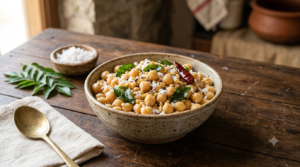
Illustrative chickpea sundal with white kabuli chana, fresh coconut, mustard seeds and curry leaves. The proposed recipe has not yet been kitchen-tested.
That distinction matters with dried chickpeas. A clock cannot tell you whether an old batch has softened, and a fixed pressure-cooker whistle count cannot guarantee the right bite. This guide gives a practical first attempt, texture checkpoints and a log for recording what actually happens.
Chickpea Sundal Recipe at a Glance
- Style: South Indian dry chickpea snack with coconut, mustard seeds, urad dal and curry leaves.
- Main pulse: white kabuli chana, not split chana dal or black kala chana.
- Proposed dry quantity: 1 cup dried chickpeas; the weight depends on the brand and cup.
- Soak: allow roughly 6–8 hours or overnight in the refrigerator, based on North Dakota State University Extension guidance.
- Stovetop simmer: NDSU’s general chickpea guidance gives about 90–120 minutes; this batch has not been timed.
- Estimated finished amount: about 2 cups of cooked chickpeas before additions, with roughly 3–4 small snack portions; neither result has been measured here.
- Texture target: soft at the centre, intact outside, with no pool of cooking liquid in the serving bowl.
The cooking references come from North Dakota State University (NDSU) Extension’s chickpea preparation guidance. Its soaking advice and approximate dry-to-cooked yield are general guidance, not proof that this recipe has passed a kitchen test.
Chickpea Sundal Recipe: Proposed Ingredients
These are untested first-batch estimates for a modest household trial. They are not copied from a measured Bhimas Cook cooking session. Use the chickpea texture and salt level to decide what to change next time.
| Ingredient | Proposed amount | Why it is here |
|---|---|---|
| Dried white chickpeas | 1 cup | Base of the dish |
| Water | Enough for soaking; fresh water to keep chickpeas covered while cooking | Hydration and cooking |
| Neutral oil or coconut oil | 2 tsp | Tempering |
| Black mustard seeds | 1/2 tsp | Nutty, sharp aroma |
| Split white urad dal | 1 tsp | Light crunch |
| Dried red chilli | 1 small, broken | Gentle heat |
| Fresh curry leaves | 8–10 leaves, dry on the surface | Fragrance |
| Asafoetida (hing) | A small pinch, optional | Savoury depth |
| Fresh grated coconut | 1/3 cup | Soft, sweet finish |
| Fine salt | Start with about 1/2 tsp, then taste | Seasoning |
| Lemon juice | 1 tsp, optional | Finish after switching off heat |
All spoon and cup measures in the table are starting points. The oil-to-chickpea ratio and coconut amount still need a real batch test. Keep the lemon optional, especially when preparing food for a family offering with its own ingredient rules.
Why Use White Chickpeas in This Chickpea Sundal Recipe?
White kabuli chana creates a different sundal from black chickpeas. Its larger, pale grains give more room for a light coating of coconut without a thick spice masala. It also makes the texture test easy to see: the seed should hold its round shape after stirring.
Black kala chana has a different size and bite, so do not transfer pressure-cooking times without checking. Bhimas Cook already has a sukha kala chana recipe, but that dish uses a dry curry-style spice mix. This sundal aims for a lighter mustard-and-coconut finish instead.
In Tamil recipe names, whole-chickpea sundal often appears as kondakadalai sundal; this proposed version uses the white variety. Chana dal is another ingredient entirely. It consists of split pulses, not whole white chickpeas. Using it would change the soak, cooking time and final texture, so it needs a separate recipe rather than a casual substitution.
How to Soak Chickpeas Without Guessing
Sort the dry chickpeas first, since packets can contain stray grit or damaged seeds. Rinse under clean running water, then transfer them to a roomy bowl. Cover well with cold drinking water because the chickpeas expand as they soak.
For this chickpea sundal recipe, plan a refrigerated soak of about 6–8 hours or overnight. NDSU Extension recommends that general window for dry chickpeas. Refrigeration is a safer choice than leaving a long soak in a warm kitchen, especially during hot weather.
- Inspect and rinse the dry chickpeas.
- Add enough fresh water to leave space for swelling, then cover and refrigerate.
- After soaking, drain the water and rinse the chickpeas again.
- Cook in a clean pan with fresh water; do not use the soaking water as the cooking liquid.
If your plans change, keep the soaking bowl refrigerated rather than leaving it on the counter all day. Also, do not assume that soaking alone makes dried chickpeas ready to eat. They still need thorough cooking.
Cooking White Chickpeas for Sundal
Cooking should leave each chickpea tender but firm enough for a short toss in hot oil. That is the point of this chickpea sundal recipe: fully cooked grains, not crunchy centres or a soft paste. Check a few chickpeas from different parts of the pot before draining.
Place the drained, soaked chickpeas in a saucepan and cover with fresh water. Bring to a full boil, then reduce to a steady simmer. Add hot water if the level drops below the chickpeas during cooking.
NDSU Extension lists roughly 90–120 minutes for simmering soaked chickpeas. Treat that as published general guidance, not an observed cooking time for this batch. Dried bean age, water and stove heat can all change the result.
To test doneness, press a cooled chickpea with a spoon or between clean fingers. It should flatten without a hard centre, while most skins stay intact. If it remains chalky inside, keep cooking and check again; do not try to finish an undercooked batch in the tempering pan.
Can a pressure cooker replace the saucepan?
Yes, a pressure cooker can cook soaked chickpeas for this chickpea sundal recipe. However, no single whistle count works across all cookers, fuel settings, bean ages or batch sizes. Follow your cooker’s instructions for liquid, fill level and pressure release, then check the beans after opening safely.
If the centre is still firm, add water if needed and cook again according to the appliance manual. If the chickpeas already split and collapse, shorten the cooking stage in the next trial. Never force a pressure-cooker lid open before the pressure has released.
Chickpea Sundal Recipe: Coconut Tempering
The tempering should perfume the oil without scorching the urad dal or curry leaves. Heat the proposed 2 teaspoons of oil in a wide pan over moderate heat. Add mustard seeds and wait for them to begin popping before adding the urad dal.
- Lower the heat once the mustard seeds crackle, then add urad dal. Stir until it starts turning pale gold.
- Add the broken dried chilli and curry leaves carefully. The leaves may splutter if water remains on them.
- Stir in the optional pinch of hing, then add the drained, fully cooked chickpeas.
- Fold gently until the tempering coats the chickpeas. Add a small splash of water only if the pan looks dry and catches.
- Season gradually with salt. Switch off the heat, then fold in fresh coconut and optional lemon juice.
The active tempering stage may take only a few minutes, but that remains an untested estimate. Follow the colour and aroma rather than a stopwatch. Coconut goes in last because prolonged frying can dull its fresh flavour and make the mixture seem dry.
How Dry Should the Finished Sundal Be?
Sundal should look lightly coated, not drenched in gravy. After adding cooked chickpeas to the tempering, you should see individual beans moving freely as you stir. A little moisture helps distribute salt, but a puddle in the pan makes the coconut clump.
Drain the chickpeas well before tempering, while keeping a little clean cooking liquid nearby for rescue. If the mixture feels wet, let excess water evaporate gently before adding coconut. If it feels dry, moisten it by the teaspoon rather than pouring in a ladleful.
For this chickpea sundal recipe, the main quality check is a spoonful after cooling slightly. Taste the centre as well as the outside. Salt and spices can coat a chickpea even when its centre remains undercooked, so texture comes before final seasoning.
Dry Chickpeas, Canned Chickpeas or Black Chana?
Each route for this chickpea sundal recipe saves a different kind of effort. Dry white chickpeas give control over tenderness but need advance planning. Canned chickpeas remove the overnight soak, while black chana changes the bite and produces a different variation.
| Starting ingredient | What changes | Best use |
|---|---|---|
| Dry white chickpeas | Soak and fully cook before tempering | Testing the proposed formula |
| Canned or packaged cooked white chickpeas | Drain, rinse and warm through; check salt | Quick weekday snack |
| Dry black chickpeas | Different texture; cooking needs its own check | Separate kala chana sundal trial |
If using canned chickpeas, begin with roughly 2 cups drained and rinsed as an untested substitution estimate. Because some packs contain salt, taste before adding the full proposed seasoning. Skip the soak and cook stages, but still heat the beans thoroughly with the tempering.
What Can Go Wrong with This Chickpea Sundal Recipe?
A recipe cannot guarantee a good result before someone cooks it. The most likely weak points are a hard chickpea centre, excess water, burnt tempering and a coconut finish that disappears. Each has a practical response, although the exact adjustments still need testing.
| Problem | Likely cause | Next move |
|---|---|---|
| Firm, chalky centre | Not fully cooked | Return chickpeas to water and cook until tender |
| Split, mushy grains | Overcooked | Reduce stirring now; shorten cooking next batch |
| Watery finish | Beans not drained | Evaporate moisture before adding coconut |
| Bitter, dark tempering | Mustard or urad dal scorched | Make a fresh tempering rather than hiding burnt oil |
| Flat flavour | Salt or acid too low | Taste first; add small amounts at the end |
| Coconut clumps | Wet pan or too much stirring | Dry the beans better; fold coconut in off heat |
When testing this chickpea sundal recipe, do not judge the batch only while it is piping hot. Taste a cooled spoonful too, since chilli heat and salt become easier to assess. Record which change helped before changing several ingredients at once.
Kitchen Test Log for This Chickpea Sundal Recipe
There is no completed kitchen-trial record for this chickpea sundal recipe. The table below is a proposed test plan, not a diary of work already done. It separates measurable observations from recipe guesses, so a later revision can honestly describe a cooked and checked version.
| Checkpoint | What to record | Current status |
|---|---|---|
| Dry ingredient | Chickpea weight and brand | Not measured |
| Soak | Start and finish time; fridge temperature | Not tested |
| Cook | Cooker type, water added, time to tender centre | Not tested |
| Tempering | Oil amount, heat, urad colour, aroma | Not tested |
| Finish | Actual yield, portions, moisture and taste | Not measured |
For the first trial, change only one major variable at a time. Keep the proposed coconut and oil amounts steady while finding the right chickpea tenderness. Next, adjust salt, chilli or coconut based on a written tasting note rather than memory.
A proper published trial should state the actual chickpea weight, appliance, measured times and final yield. It should also say what failed. Until then, this page is a recipe proposal with evidence-based preparation guidance, not a first-hand kitchen report.
Serving, Festival Customs and Other Sundal Styles
Serve the sundal warm as a small snack, or alongside a simple South Indian meal. The mustard, curry-leaf and coconut finish needs no onion or garlic in this version. Families may also prepare sundal during festival gatherings or as an offering, depending on their customs.
Do not assume every household permits all legumes or seasonings during a fast. Bhimas Cook’s Navratri fasting recipes guide explains why those rules vary. This chickpea dish is a general snack recipe, not a universal fasting prescription.
If you want a different texture, compare the existing peanut sundal method. Peanuts give a more compact bite, while whole white chickpeas make a larger, softer mouthful. Avoid treating the two cooking methods as interchangeable.
Food Safety for This Chickpea Sundal Recipe
Wash your hands and equipment before cooking, and use clean water for soaking. Hot oil can spit when wet curry leaves hit the pan, so dry them gently first. Follow your pressure cooker’s safety directions if using one.
The fresh coconut and cooked chickpeas in this chickpea sundal recipe need prompt cold storage. FoodSafety.gov’s food safety guidance says refrigerate perishables within two hours, or within one hour above 32°C. Keep the fridge at 4°C or colder; do not leave a bowl out overnight.
For general leftovers, FoodSafety.gov advises using refrigerated cooked leftovers within four days. That is a food-safety ceiling, not a tested quality life for coconut sundal. Eat it sooner if the texture or flavour declines, and discard food left outside safe temperature limits.
Chickpeas are legumes, coconut can pose an allergy concern for some people, and commercial hing blends may contain wheat flour. Check every packet, especially when cooking for someone with allergies or coeliac disease. The US Food and Drug Administration advises reading ingredient and allergen labels; never assume a spice blend is free from cross-contact.
Before Making Your First Batch
The strongest approach to this chickpea sundal recipe is to test the chickpea first and season second. Use the ingredient table as a starting point, not a claim of an exact family-tested formula. Record actual soak time, cooking method, coconut quantity and finished weight.
Once you have a real result, refine the measurements and replace every untested estimate with observations. Until then, the honest promise is a clear plan, useful texture checks and a way to avoid the most common kitchen mistakes.
Frequently Asked Questions
How long should I soak chickpeas for sundal?
A refrigerated soak of roughly 6–8 hours or overnight follows NDSU Extension’s general dry-chickpea guidance. That is not a measured soaking result from this recipe. Drain and rinse afterward, then cook the chickpeas until fully tender.
How do I know chickpeas are cooked enough?
Press a cooled chickpea with a spoon or clean fingers. The centre should give without a dry or chalky core, while most beans remain intact. If the centre stays firm, return the chickpeas to the cooking pot rather than frying them longer.
Can I make this chickpea sundal recipe without a pressure cooker?
Yes. Simmer soaked white chickpeas in a saucepan with enough fresh water to keep them covered. NDSU’s broad guidance is about 90–120 minutes, but the real time varies, so judge doneness by texture.
Can I use canned chickpeas for sundal?
Yes, canned chickpeas are already cooked, so you can drain and rinse them before tempering. About 2 cups is a proposed substitution for this untested batch, not a verified conversion. Taste before adding salt because packaged chickpeas can contain it.
Should I add coconut before or after tempering?
Add fresh grated coconut near the end, preferably after lowering or switching off the heat. This keeps the coconut from frying for too long. If the chickpeas are still wet, evaporate that liquid before adding the coconut.
Is white chana sundal the same as kala chana curry?
No. White chickpea sundal commonly relies on a lighter mustard, curry-leaf and coconut finish. Bhimas Cook’s kala chana curry uses black chickpeas and a fuller dry masala, so its cooking and seasoning should remain a separate method.
Is chickpea sundal suitable for Navratri fasting?
This chickpea sundal recipe suits some festival meals, but fasting rules depend on the household and observance. Some families serve sundal at festival gatherings, while strict vrat diets may exclude legumes or certain spices. Check your own tradition before treating any recipe as fasting food.
How long does homemade coconut sundal keep?
There is no tested shelf-life result for this exact formula. Refrigerate promptly, following the two-hour food-safety rule or one hour above 32°C. General leftover guidance permits up to four days under safe refrigeration, but fresh coconut may lose quality sooner.
Can I leave out hing or urad dal?
Yes, both are optional for a simple home variation. Hing adds savoury depth, while urad dal adds a light crunch. Check hing packets for wheat or other allergens, then make the change deliberately and note the result in your trial log.