Poori Without Baking Powder: Easy Atta Recipe & Tips
Poori without baking powder needs no raising agent: whole-wheat atta, water, salt and hot frying oil are enough. Steam makes the dough swell while it fries, giving poori its familiar puffed shape. The method below keeps the original recipe’s simple ingredients, while making its timing, yield and nutrition limits clear.
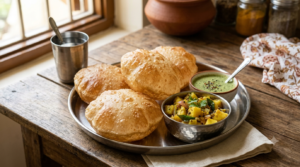
Freshly fried, golden and puffed whole-wheat pooris made without baking powder or baking soda.
Recipe note: The preparation and frying times, as well as the number of pooris, are estimates from the earlier article. They have not been independently kitchen-tested for this update. Use the dough’s texture and the colour of each poori as your main guides.
Recipe at a glance
| Item | Planning estimate, not tested |
|---|---|
| Preparation | About 15 minutes |
| Cooking | About 30 minutes for the batch |
| Total | About 45 minutes; resting or heating may change this |
| Yield | Roughly 10–12 small pooris, depending on portion size |
| Method | Deep-fried, with no baking powder, baking soda or yeast |
For poori without baking powder, the estimated yield counts individual pieces, not meal servings. If you roll larger discs or make thicker portions, the same dough will produce fewer pieces. Also, a wide pan may cook more than one poori at a time, which changes the batch timing.
Ingredients for poori without baking powder
- Whole-wheat atta: 2 cups, roughly 250 g, depending on how the flour is measured.
- Fine semolina (sooji or rava): 1 tablespoon, optional, for a slightly crisper edge.
- Salt: ½ teaspoon, or adjust to taste.
- Water: start with about ½ cup and add small amounts as needed. The actual amount depends on your atta.
- Neutral cooking oil: enough for each poori to float while frying. The volume depends on the kadai.
The earlier recipe suggested ¾–1 cup of water. However, pouring that much in at once can make this small batch too soft. Add water gradually instead, because different brands of atta absorb it differently.
For poori without baking powder, there is no need for curd, milk or an egg. Semolina is optional, so you can leave it out without changing the main technique. The oil in the kadai is a cooking medium, not an ingredient that the dough absorbs in full.
How to make poori without baking powder
The key steps for poori without baking powder are a firm but workable dough, even rolling and sufficiently hot oil. These steps describe what to look for rather than promise the same cooking time in every kitchen. Keep children and pets away from the frying area.
1. Mix and knead the dough
Place the atta, optional fine semolina and salt in a bowl. Mix well so the semolina spreads evenly. Add water a little at a time and bring the flour together.
Knead until the dough feels firm, smooth and pliable. It should resist your fingers more than chapati dough, yet it must not crumble. The original 5–7 minute kneading time is only an untested guide, so judge the dough by feel.
If it sticks to your hands, work in a little more atta. If cracks appear and the dough will not hold together, wet your hands and knead again. Avoid adding a large splash of water to fix dryness.
2. Give it a short, covered rest
Cover the dough with a clean, slightly damp cloth while you prepare the rolling area. The earlier article suggested an optional 5–10 minute rest; that duration is not a tested requirement. A short rest can make firm dough easier to roll.
Keep it covered because a dry surface can crack while rolling. If the dough becomes noticeably soft or sticky after resting, knead in a light dusting of atta before dividing it.
3. Heat the frying oil
Use a stable, deep kadai and pour in enough fresh oil for a rolled disc to float. Leave plenty of space above the oil, since it can rise and bubble during frying. Heat it gradually over medium to medium-high heat.
The old five-minute heating instruction is not reliable because pans and burners vary. Instead, test with a tiny piece of dough. It should rise and sizzle promptly, without turning dark at once. If the oil smokes, reduce the heat and let it cool.
4. Roll evenly sized discs
Divide the dough into roughly 10–12 portions if you want small pooris. This is an approximate yield, not a measured result. Shape each portion into a smooth ball, then flatten it gently.
Roll into a round disc about 3–4 mm thick, using the original recipe as a starting point. Aim for even thickness from the centre to the edge. Too much dry flour on the surface can fall into the oil and burn, so use only a little.
Roll a few at a time while the oil heats. Keep the remaining balls covered, because the surface dries quickly in a warm kitchen.
5. Fry until puffed and cooked
Carefully slide one disc away from you into the oil. When it rises, gently nudge the top with a slotted spoon to encourage steam to spread inside. Do not splash oil or push the poori below the surface.
Once it puffs and the underside looks cooked, turn it and fry the other side. The original article gave roughly 30–40 seconds on one side and about 30 seconds on the other. Those figures remain untested estimates, not a doneness rule.
Remove the poori when both sides look cooked and lightly golden. If it darkens at once, the oil may be too hot. If it stays pale and greasy, the oil may need more heat. Adjust between batches.
6. Drain and serve
Lift each poori with a slotted spoon and allow excess oil to drip back into the pan. Then place it on a rack or a paper-lined plate. Do not stack too many while steaming hot, because trapped moisture softens the crust.
Serve soon after frying with potato bhaji, chickpea curry or chutney. Pooris taste best fresh, since the crisp surface softens as they cool.
Why poori without baking powder puffs up
A poori puffs because water in the dough turns to steam in hot oil. When a smooth, evenly rolled disc forms two cooked surfaces, steam pushes them apart. Baking powder and yeast are not necessary for this kind of lift.
That is also why a soft chapati-style dough is not ideal here. An overly wet disc may stretch unevenly, while a very dry disc can crack. The goal is a firm, flexible dough with no torn edges.
A full puff is not guaranteed for every piece of poori without baking powder. A disc can fry through without making a full balloon, and it remains edible if fully cooked. Consistent rolling and oil heat matter more than adding a raising agent.
Poori without baking powder: troubleshooting dough, rolling and oil
If your poori without baking powder stays flat, change one thing at a time. Otherwise, you may not know whether the dough, rolling or frying heat caused the problem. This quick guide covers the most common results.
| What happens | What to try next |
|---|---|
| Poori stays flat | Check for cracks, uneven thickness and oil that is not hot enough. |
| Poori browns too fast | Lower the heat before frying the next disc. |
| Poori tastes greasy | Check whether the oil cooled after adding dough; drain well. |
| Dough sticks to the board | Use a little dry atta and keep the remaining dough covered. |
| Edges tear while rolling | Work in a few drops of water if the dough is too dry. |
A tiny hole can let steam escape, so you may see a half-puffed poori even when the oil is hot. Also, uneven discs tend to cook at different rates. Re-roll a badly shaped piece gently instead of stretching it thin.
Frying safely and looking after the oil
Deep-frying needs care because hot oil can cause severe burns. Use a steady pan, keep its handle away from the edge and never pour water into hot oil. Lower the dough gently and avoid overcrowding the kadai.
The Food Safety and Standards Authority of India’s Eat Right guidance advises avoiding prolonged heating and repeated frying in the same oil. It also recommends a smaller vessel for home frying, which can reduce the volume needed.
Do not keep heating oil once it smokes or develops an unpleasant smell. If you plan another batch, remove stray flour bits before they darken. Let used oil cool completely before you handle or discard it.
Flour itself is a raw food. The US Food and Drug Administration advises against tasting raw flour or dough. Wash hands and utensils after kneading, and cook every poori thoroughly.
Substitutions and allergen guidance
Contains wheat and gluten. Poori without baking powder still uses whole-wheat atta as its main ingredient. Semolina, if you add it, also comes from wheat. Skipping baking powder does not make a poori gluten-free or suitable for a person with wheat allergy.
The US National Institute of Diabetes and Digestive and Kidney Diseases lists wheat and semolina among gluten sources. People with coeliac disease need a genuinely gluten-free recipe and must avoid cross-contact.
- Without semolina: use only atta, water and salt. The poori may have a softer edge.
- With some maida: replace part of the atta for a different texture. Maida still contains wheat and gluten.
- Without dairy or eggs: the listed basic dough has neither. Check packaged ingredients and accompaniments before making allergen claims.
- For a wheat-free alternative: use a different recipe designed for wheat-free flour. A direct one-for-one swap may not puff the same way.
If you cook for someone with an allergy, check the oil and utensils too. Shared frying oil or equipment can carry allergens from earlier food. The FDA’s food-allergen guidance identifies wheat as a major food allergen.
Storing and reheating poori without baking powder
Poori without baking powder has its best texture straight from the kadai. If you have leftovers, let the steam escape briefly on a clean rack and pack them in a shallow, covered container. Do not leave cooked pooris beside unrefrigerated curry for hours.
For a conservative approach, follow general cooked-leftover rules. FoodSafety.gov advises refrigerating perishable leftovers within two hours, or one hour when the air is above 32°C. Keep the fridge at 4°C or below.
For best eating quality, plan to finish refrigerated pooris within a day or two. General guidance permits many properly refrigerated cooked leftovers for three to four days, but it does not guarantee a good poori texture. Throw food away if storage conditions were unsafe; reheating does not undo careless storage.
Warm leftovers on a dry tawa over moderate heat, turning until hot throughout. A microwave can soften them, but it rarely restores a crisp surface. Keep cooked pooris separate from moist potato curry or chutney until serving.
Nutrition of poori without baking powder: what can be estimated?
The old article stated 219 calories and 300 mg sodium for each piece of poori without baking powder. Those values were not tied to weighed portions or measured oil absorption. Therefore, they should not appear as verified nutrition for this recipe.
USDA FoodData Central lists generic whole-grain wheat flour at about 340 kcal per 100 g in its legacy reference data (food ID 168893). On that basis, 250 g of flour provides roughly 850 kcal before frying. This is a flour-only calculation, not a finished-poori calorie count.
| Nutrition item | What is supportable |
|---|---|
| Flour energy | About 850 kcal for 250 g generic whole-grain wheat flour |
| Flour energy per piece | About 70–85 kcal if divided into 10–12 pieces, before oil or optional semolina |
| Finished calories | Not determined; absorbed frying oil was not measured |
| Finished fat and carbohydrate | Not tested for this batch |
| Sodium per poori | Not verified; depends on actual salt and portion size |
The optional semolina and any oil absorbed during frying add energy. The amount of oil you pour into the kadai is not the amount the pooris absorb. For an accurate per-piece figure, weigh the ingredients, record the finished yield and use an appropriate tested nutrition method.
These examples are not dietary advice or a substitute for a laboratory-tested nutrition panel. A person managing a medical diet should use measured portions and personalised advice.
Serving ideas and recipe variations
Serve hot pooris with a gently spiced potato bhaji for the familiar breakfast combination. Chickpea curry makes a filling alternative, while aamras adds a sweet contrast. Keep dips and curries in separate bowls until you eat.
For another take on the same flour, see the atta-flour poori recipe. If you like the added bite of rava, compare the semolina poori variation. Both use a different ingredient emphasis from this no-baking-powder method.
Readers avoiding wheat can explore the site’s wheat-free poori variation. Check every ingredient and shared utensil before relying on any recipe for a medically necessary gluten-free diet.
Before you serve
For poori without baking powder, focus on texture instead of the clock. Knead a firm but flexible dough, roll each piece evenly and fry in oil that is hot but not smoking. Enjoy the pooris fresh, and treat the old timing and yield figures as estimates rather than promises.
Most importantly, do not use the earlier per-poori calorie and sodium claims as nutrition facts. Wheat and gluten remain present even though this recipe contains no raising agent.
Frequently asked questions
Can I make poori without baking powder and without baking soda?
Yes. Traditional atta poori uses neither baking powder nor baking soda. Steam formed during frying separates the cooked surfaces and makes the disc puff. However, even rolling and the right oil heat still matter, so a full puff is not guaranteed.
Is semolina necessary for poori?
No. Semolina is optional, and the basic recipe works with wheat flour, salt and water. Adding a spoonful may change the bite slightly, but it does not replace baking powder. Semolina also contains wheat gluten.
Why is my poori hard instead of soft?
A dry dough, a thick disc or over-frying can make poori tough. If the dough cracks, work in a small amount of water before rolling. Fry only until the surfaces are cooked, then serve promptly.
Can I prepare poori dough in advance?
You can prepare the dough ahead, but this version has no tested make-ahead holding time. Keep it covered and refrigerated rather than leaving raw dough out for hours. Bring it to a workable texture before rolling, and never taste raw dough.
Can I bake or air-fry this dough instead?
You can experiment with baking or air-frying, but the results will differ from deep-fried poori. The original fixed air-fryer time and temperature were not kitchen-tested for this version. Do not assume the discs will puff, or that a particular health benefit is guaranteed.
Is poori without baking powder gluten-free?
No. Wheat atta contains gluten, and optional semolina contains gluten as well. People with coeliac disease or wheat allergy should not eat this recipe. Choose a suitable separate recipe and prevent cross-contact during preparation.
How many calories are in one homemade poori?
A verified number is not available for this batch. Flour alone would contribute roughly 70–85 kcal per small disc at the untested 10–12-piece yield. Frying oil and optional semolina increase the total, so that number is not the finished calorie value.
How long can I keep leftover pooris?
For texture, eat refrigerated leftover pooris within one or two days when possible. Refrigerate promptly rather than leaving them at room temperature for hours, especially in hot weather. General cooked-leftover guidance allows three to four refrigerated days for many foods, but quality declines sooner.