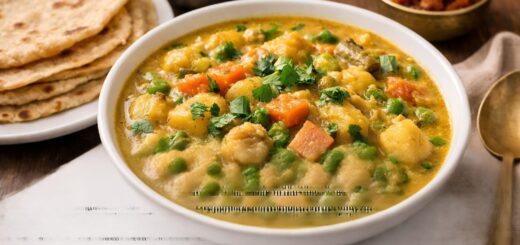
Chettinad Vada Curry Recipe Easy Tamil Nadu Style
This Chettinad Vada Curry Recipe turns crisp chana dal vadas and a spicy roasted-spice tomato gravy into the classic Tamil Nadu breakfast side that idli and dosa were built for. Most home versions skip the one step that makes it truly Chettinad: a small batch of whole spices, dry-roasted and freshly ground into the gravy. That single habit is why a roadside vadakari in Karaikudi tastes deeper than the plain onion-tomato version. Below you get both the easy method and the authentic touches, so you can cook it your way the very first time.
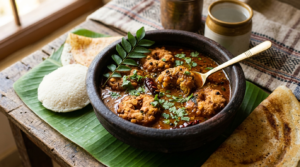
Crisp chana dal vadas soaking in a spicy roasted-masala tomato gravy, served Chettinad style.
Chettinad Vada Curry Recipe at a Glance
Here is the quick snapshot of this Chettinad Vada Curry Recipe before you start. Because the dal needs a soak, plan the timing around that rather than the active cooking, which is short.
| Detail | Value |
|---|---|
| Prep time | 20 mins (plus 2–3 hrs soaking) |
| Cook time | 35 mins |
| Total active time | Around 55 mins |
| Servings | 4 |
| Cuisine | Chettinad, Tamil Nadu |
| Best paired with | Idli, dosa, appam, idiyappam |
The active work takes under an hour once the dal has soaked. So if you soak in the morning, a weekend brunch spread comes together fast.
What Makes This Chettinad Vada Curry Recipe Authentic
A true Chettinad Vada Curry Recipe stands apart because of its freshly roasted masala, not just chilli powder from a jar. Cooks in the Chettinad region dry-roast fennel, poppy seeds, cinnamon, cloves and cardamom, then grind them into a fragrant paste. This is the layer that the milder hotel-style vada curry and the coconut-forward Kerala-style version usually leave out.
Two other markers matter. Shallots, called small onions, bring a sweeter base than large onions. Kalpasi, the black stone-flower spice, adds a smoky, earthy note that is a Chettinad signature. Both are optional, yet they move the dish from good to memorable.
The vada itself uses chana dal, known locally as kadalai paruppu. Because the dal is ground coarse and never smooth, the fried nuggets stay firm while they drink up the gravy. That contrast of crisp edges and soft, curry-soaked centres is the whole point of the dish.
Ingredients for the Chettinad Vada Curry Recipe
Gather everything in three groups: the vadas, the roasted masala, and the gravy. Keeping them separate makes the cooking flow calmly, since each stage has its own bowl ready to go.
For the vadas
- Chana dal (kadalai paruppu) – 1 cup, soaked 2–3 hours
- Dried red chillies – 2, adjust to taste
- Fennel seeds – 1 tsp, lightly crushed
- Curry leaves – 10, chopped
- Rice flour – 1 tbsp, for crispness
- Salt – ¾ tsp, or to taste
- Oil – for deep or shallow frying
For the roasted Chettinad masala
- Fennel seeds – 1 tsp
- Poppy seeds (khus khus) – 1 tsp
- Cinnamon – 1 small piece
- Cloves – 2
- Green cardamom – 2
- Kalpasi (black stone flower) – a small piece, optional
For the gravy
- Oil – 2 tbsp
- Mustard seeds – 1 tsp
- Urad dal – ½ tsp
- Bay leaf – 1
- Curry leaves – 1 sprig
- Shallots – 12, or 2 medium onions, finely sliced
- Ginger-garlic paste – 1 tbsp
- Tomatoes – 2 cups, finely chopped
- Turmeric powder – ½ tsp
- Red chilli powder – 1 tsp
- Coriander powder – 2 tsp
- Water – 1 to 1½ cups
- Coconut milk or ground coconut paste – ½ cup, optional
- Salt – 1 tsp, or to taste
- Fresh coriander – 2 tbsp, to garnish
How to Make Chettinad Vada Curry Recipe Step by Step
The method breaks into four clear stages. Read each one first, because a little prep between stages keeps the gravy from catching while you shape the vadas.
Step 1: Soak and grind the dal
Rinse 1 cup chana dal, then soak it for 2–3 hours until the grains swell. Drain well and grind with the red chillies and crushed fennel to a coarse, crumbly mix. Do not add water unless the mixer stalls, since a wet batter makes soggy vadas. Stir in the chopped curry leaves, rice flour and salt by hand.
Step 2: Shape and fry the vadas
Heat oil in a deep pan on medium flame. Wet your hands, shape small flattened balls, and slide them in gently away from you to avoid splashes. Fry until golden and crisp, about 5–7 minutes, then drain on paper towels. Take care with the hot oil, and never overcrowd the pan.
Once cool, break each vada into two or three pieces so they soak up more curry later. Short on time? Shallow-fry the pieces instead to cut the oil. For a fully oil-free take, our vada curry without frying uses steamed vadas and works well too.
Step 3: Roast and grind the Chettinad masala
Dry-roast the fennel, poppy seeds, cinnamon, cloves, cardamom and kalpasi on low heat until fragrant, which takes barely a minute. Watch closely, because poppy seeds burn fast and turn bitter. Cool the spices, then grind to a fine powder or paste with a splash of water. This is the step that gives the dish its true Chettinad depth.
Step 4: Build the gravy and simmer
Heat 2 tbsp oil and crackle the mustard seeds, then add urad dal, bay leaf and curry leaves. Sauté the shallots until soft, stir in ginger-garlic paste, and cook off its raw smell. Add the tomatoes and cook until they turn mushy and the oil separates. Sprinkle turmeric, chilli and coriander powders, then the ground Chettinad masala, and fry for a minute so the spices bloom.
Pour in water, add coconut milk if using, and let it come to a gentle boil. Drop in the vada pieces, cover, and simmer on low for 8–10 minutes. Finish with fresh coriander and rest it 5 minutes before serving.
Pro Tips for the Best Chettinad Vada Curry Recipe
These are the small habits that separate a decent gravy from a standout one. None of them add real effort, yet each one lifts the final plate.
- Grind the dal coarse, never smooth, so the vadas stay firm and porous.
- Soak longer, up to 3 hours, if your water is hard; the dal hydrates and grinds more evenly.
- Roast the masala on low heat only, because high heat scorches poppy seeds and turns the batch bitter.
- Break the vadas before adding them, since whole vadas soak unevenly and stay dry inside.
- Let the curry rest before serving, as the vadas keep drinking gravy and the flavour settles.
Chettinad Vada Curry Recipe Variations and Substitutions
This dish flexes easily around what you have. Each swap changes the character a little, so pick the one that fits your kitchen.
- Dal mix: replace ¼ cup chana dal with moong or toor dal for softer vadas.
- Vegan: use coconut milk or coconut paste and cook in sesame or groundnut oil, which is traditional anyway.
- Lower oil: steam the vada batter in idli plates, then scramble it into the gravy for a lighter version.
- Extra rich: stir in a spoon of ground coconut paste along with the coconut milk for a thicker, creamier gravy.
- Milder: cut the red chilli powder and dried chillies by half; the roasted masala still carries plenty of flavour.
Make-Ahead and Storage for Chettinad Vada Curry Recipe
This Chettinad Vada Curry Recipe is a good batch dish, though a little planning keeps the texture right. The gravy actually deepens overnight as the roasted spices settle and mellow. Cook it a day ahead for a party, and it may taste even better the next morning.
Store the curry in an airtight box in the fridge for up to 3 days. Keep the fried vadas separate whenever you can, because they hold their bite better that way. When you reheat, warm the gravy first, then fold in the vada pieces so they do not turn mushy. Freezing is possible for the gravy alone, yet fried vadas are best made fresh.
What to Serve With Chettinad Vada Curry Recipe
Vada curry is a classic tiffin-time side, so it shines next to soft, plain carriers. The gravy does the talking while the base stays simple.
Soft idli and crisp dosa are the traditional partners across Tamil Nadu. Set dosa, appam and idiyappam work just as well, since their mild sponge soaks up the spice. For a heartier plate, spoon it over steamed rice with a wedge of lime.
A cup of filter coffee on the side finishes the South Indian breakfast the way locals eat it. Many families also serve it at tiffin time in the evening, when a warm bowl of vada curry feels especially comforting. Because the dish is filling on its own, a simple coconut chutney is all the extra you really need.
Nutrition Information (Approximate Per Serving)
These figures are estimates for one of four servings, based on a home-style batch with moderate oil. Actual numbers shift with how much oil the vadas absorb and whether you add coconut.
| Nutrient | Per serving |
|---|---|
| Calories | ~310 kcal |
| Total fat | 13.2 g |
| Saturated fat | 1.8 g |
| Carbohydrates | 40 g |
| Protein | 12.7 g |
| Dietary fibre | 8.2 g |
Because chana dal is a legume, the protein and fibre here are genuinely high for a breakfast side. That is one reason vada curry feels so filling on its own.
About Chettinad Cuisine
Chettinad cuisine comes from the Chettinad region of Tamil Nadu, long known for bold spice work and fragrant gravies. The style leans on freshly ground whole spices rather than heavy cream, which is exactly why the roasted masala matters so much in this dish. Fennel, curry leaves, shallots and stone flower recur across its recipes.
Vada curry sits in the everyday tiffin tradition, served with idli or dosa in homes and small eateries alike. To read more on the region and its food culture, see Chettinad on Wikipedia. For background on the fried lentil snacks behind it, the Medu Vada entry gives useful context.
Chettinad Vada Curry Recipe FAQ
Is Chettinad vada curry the same as hotel-style vada curry?
Not quite. This Chettinad Vada Curry Recipe uses a freshly roasted whole-spice masala and often shallots and kalpasi, which give it a deeper, smokier flavour. Hotel and Chennai tiffin versions are usually simpler, built on plain onion-tomato masala with chilli powder. If you prefer that lighter profile, try our Chennai hotel-style vada curry instead.
Can I make this recipe gluten-free?
Yes. Chana dal, rice flour and the spices used here are naturally gluten-free. Just check any store-bought asafoetida you might add separately, as some brands blend it with wheat flour.
Is this dish very spicy?
It can be, though the heat is easy to control. Chettinad food is bold by tradition, so reduce the dried chillies and chilli powder to suit your palate. The roasted masala still keeps the gravy flavourful even when milder.
Why did my vadas turn soggy in the curry?
Usually the batter was too wet or ground too smooth. Grind the dal coarse and add water only if the mixer stalls. Frying until properly crisp and breaking the vadas before adding also helps them hold their texture.
Can I use leftover masala vada for this curry?
Absolutely, and it is a smart shortcut. Simply break day-old masala vada into pieces and simmer them in the gravy for 8–10 minutes. They soften beautifully and save you the frying step altogether.
What can I substitute for chana dal?
Blend equal parts toor dal and moong dal if chana dal is unavailable. The vadas turn a little softer and the taste shifts slightly, yet the dish still works well.
How long does vada curry keep?
The gravy keeps for up to 3 days in the fridge in an airtight container. Store the vadas separately when you can, then reheat the gravy first and fold them in so they stay tender rather than mushy.
Bringing It All Together
This Chettinad Vada Curry Recipe rewards one extra step, the roasted masala, with a flavour most home versions never reach. Fry the vadas crisp, build a patient tomato base, and let the whole spices do their work. Serve it hot with idli or dosa on a slow weekend morning, and the aroma alone will carry you to a Tamil Nadu tiffin shop. Make it once with the roasted masala, and the plain version will feel like a shortcut ever after.