Vada Curry Kerala Style: Easy Recipe for Idli & Dosa
Vada Curry Kerala Style is what turns a plain plate of idli or dosa into a proper South Indian breakfast. Crisp chana dal fritters go into a coconut-rich, lightly spiced gravy, and they soak up flavour as they simmer.
The dish itself is a Tamil Nadu classic, often called vadakari. The Kerala-style version leans harder on coconut and small onions, which gives it a softer, sweeter, more fragrant gravy. This guide gives you the exact ingredients, the real timings, and the small kitchen habits that stop the vadas from falling apart in the oil.
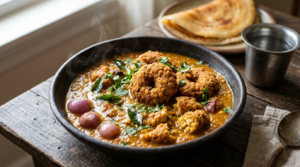
Kerala-style vada curry — crisp chana dal vadas simmered in a coconut gravy.
If you prefer the fluffy urad-dal version, that is a different dish, and we cover it in our medu vada curry recipe. For a lighter, no-fry take, see our Tamil Nadu vada curry without frying. This page stays with the chana dal, coconut-forward Kerala style.
Vada Curry Kerala Style at a Glance
Here are the quick facts about Vada Curry Kerala Style before you start cooking, so you can plan your prep and soaking time.
- Base fritter: chana dal (split Bengal gram), coarsely ground, deep-fried
- Kerala twist: grated coconut, coconut milk, and shallots (small onions)
- Soaking time: 2 to 4 hours for the dal (or overnight in the fridge)
- Active cooking: about 60 to 70 minutes
- Serves: 4 people
- Best with: idli, dosa, kal dosa, poori, or plain rice
What Makes This Vada Curry Kerala Style Different
Vada curry began as a Tamil Nadu tiffin-centre gravy, so most recipes online are the Chennai or Chettinad style. The Kerala-style version keeps the same crisp chana dal vada, yet the gravy changes. It uses grated coconut ground to a paste, a splash of coconut milk, and shallots instead of large onions. Because of this, the curry tastes gentler and more aromatic, with less of a sharp tomato edge.
This coconut habit comes straight from Kerala’s own parippu vada tradition, where the fritters carry coconut, ginger, and shallots. So the honest way to describe Vada Curry Kerala Style is simple. The gravy is Tamil Nadu at heart, and the Kerala hand shows up in the coconut and the small onions.
Ingredients for Vada Curry Kerala Style
You will make two parts: the vadas and the gravy. Keep them separate until the final simmer. The chana dal is the star, and everything in the fritter mix should stay coarse, not smooth.
For the Chana Dal Vada (Parippu Vada)
- 1 cup chana dal (split Bengal gram), soaked 2 to 4 hours
- 3 to 4 dried red chillies
- 1 tsp fennel seeds (saunf)
- ½ tsp turmeric powder
- ¼ tsp asafoetida, or hing (optional)
- ½ cup finely chopped shallots or onion
- 2 tbsp curry leaves and coriander, chopped
- 1 tsp salt, adjust to taste
- Oil for deep frying
For the Kerala-Style Gravy
- 2 tbsp oil
- 1 tsp mustard seeds
- 1 inch cinnamon stick
- 2 to 3 cloves
- 10 curry leaves
- 1 medium onion or a handful of shallots, finely chopped
- 2 tsp ginger-garlic paste
- 2 to 3 medium tomatoes, chopped
- ½ tsp turmeric powder
- 1.5 to 2 tbsp sambar powder
- ½ cup freshly grated coconut, ground to a paste
- ¼ cup coconut milk (for the Kerala finish)
- ¾ to 1 cup water, to adjust consistency
- Salt to taste, plus coriander to garnish
If you cannot find fresh coconut, use thick tinned coconut milk for both the paste and the finish. Since brands vary, add it slowly and taste as you go.
How to Make Vada Curry Kerala Style Step by Step
Follow the steps in order, because the vadas need to be fried before the gravy is ready. The whole process for Vada Curry Kerala Style moves quickly once the dal has soaked.
Step 1: Soak the Dal (2 to 4 hours)
Rinse the chana dal until the water runs clear. Then soak it in fresh water for 2 to 4 hours. This softens the dal, so it grinds into a shapeable dough. If you are short on time, soak it overnight in the fridge instead.
Step 2: Grind the Vada Batter (10 minutes)
Drain the soaked dal really well, because leftover water makes the vada spread and break in oil. Add the dal to a mixer with the dried chillies and fennel seeds. Pulse it coarsely without adding water, so you keep a thick, grainy dough.
Keep a spoon of whole dal aside for extra crunch. Transfer to a bowl, then mix in the turmeric, hing, shallots, curry leaves, coriander, and salt.
Step 3: Fry the Vadas (10 to 12 minutes)
Heat oil in a deep pan on medium heat. Wet your hands, take a small portion, and flatten it into a patty about the size of a lime. Slide it gently into the hot oil, away from you.
Fry on medium-low for 2 to 3 minutes per side, until golden. Drain the vadas on paper towels. Always test one vada first, so you can fix the oil temperature before frying the rest.
Step 4: Start the Gravy Base (10 minutes)
Heat 2 tbsp oil in a heavy pan. Add the mustard seeds and wait until they splutter. Then add the cinnamon, cloves, and curry leaves, and let them sizzle for 20 to 30 seconds.
Add the chopped onion or shallots. Saute for 3 to 4 minutes, until soft and translucent.
Step 5: Add Tomatoes and Masala (8 minutes)
Stir in the ginger-garlic paste and cook for a minute, until the raw smell goes. Add the tomatoes, turmeric, sambar powder, and salt. Cook for 6 to 8 minutes, until the tomatoes break down and the oil starts to separate. This step builds the deep flavour, so do not rush it.
Step 6: Add the Coconut (5 minutes)
Grind the fresh coconut with a little water to a smooth paste. Add it to the pan and cook for 4 to 5 minutes. This is the Kerala heart of the curry, because the coconut rounds off the spice. Stir in the coconut milk at the end, after you lower the heat, so it does not split.
Step 7: Combine the Vadas and Simmer (8 to 10 minutes)
Pour in ¾ to 1 cup water and bring the gravy to a gentle boil. Break the fried vadas into chunks and add them in. Simmer on low for 8 to 10 minutes, so the vadas soak up the gravy and soften.
Finish with fresh coriander. Serve it hot, while the vadas still hold a little bite.
How to Get the Vada Curry Kerala Style Gravy Right
Consistency is where most home cooks slip up. The gravy should coat a spoon, yet still pour easily, because the vadas keep drinking liquid as they sit. If it looks too thick, loosen it with warm water or a little extra coconut milk. If it looks too thin, mash a couple of vadas into the gravy, since the dal naturally thickens it.
Serve Vada Curry Kerala Style within 15 minutes of adding the vadas for the best texture. After that, the vadas turn very soft, which some people love and others do not.
Common Mistakes to Avoid
These are the errors that quietly ruin an otherwise good curry. Fix them and your first attempt will taste like a tiffin-centre classic.
- Wet dal: if the drained dal still holds water, the vada breaks in the oil. Drain it well, then pat it dry.
- Over-grinding: a smooth batter gives a dense vada. Keep it coarse, with some whole dal in it.
- Rushing the masala: undercooked onion and tomato leave a raw taste. Cook until the oil separates.
- Boiling the coconut milk: high heat splits it. Add it last, on low heat.
- Frying too dark: the vadas keep cooking in the gravy, so fry them just golden, not deep brown.
How to Make Vada Curry Kerala Style Lighter
You can lighten Vada Curry Kerala Style without losing the dish. To bake the vadas, arrange the patties on a lined tray and bake at 200°C for 25 to 30 minutes, turning once. An air fryer works too, at about 180°C for 12 to 15 minutes.
You can even steam the batter like idli, then break it into the gravy. The texture turns softer than deep-fried, yet the flavour stays.
A quick safety note: deep frying involves very hot oil, so keep children away, never add wet vadas to the pan, and lower each patty in gently to avoid splashes. If the oil ever smokes heavily, turn off the heat and let it cool.
Storage, Make-Ahead, and Substitutions
Store leftover Vada Curry Kerala Style in an airtight container in the fridge for up to 2 days. The vadas absorb more gravy over time, so reheat with a splash of water or coconut milk. Avoid freezing, because the vada texture turns grainy after thawing.
For make-ahead cooking, fry the vadas and make the gravy separately, then combine only before serving. If you do not have chana dal, a chana-and-toor-dal mix works, which is common in Kerala anyway. Leftover masala vadai from breakfast also works well here and saves time. Skip the coconut milk for a lighter, more Tamil Nadu-style finish.
What to Serve With Vada Curry Kerala Style
Vada curry is a complete side on its own, so you rarely need chutney alongside it. It pairs best with idli, dosa, and kal dosa for weekend breakfasts. It also goes beautifully with hot poori or plain steamed rice.
For a fuller Kerala-style spread, serve a bowl of Kerala-style rasam on the side. If you want the restaurant flavour instead, try our Saravana Bhavan style vada curry.
Nutrition Information (Approximate, Per Serving)
These figures are estimates based on a similar recipe analysis, so treat them as a guide, not exact values. Actual numbers change with the oil absorbed and the coconut used. Chana dal itself is a solid source of plant protein and fibre.
| Nutrient | Amount |
|---|---|
| Calories | ~450 kcal |
| Fat | 13 g |
| Carbohydrates | 60 g |
| Protein | 18 g |
| Fibre | 7 g |
For more on the fritter itself, the Wikipedia entry on vada and the reference page on chana dal give useful background on the ingredients and regional variations.
Vada Curry Kerala Style FAQs
What is the difference between vada curry and sambar?
Vada curry is a thick, coconut-and-masala gravy with broken chana dal fritters simmered in it. Sambar is a thinner lentil-and-vegetable stew made with toor dal and tamarind. Vada curry works as a stand-alone side, while sambar usually needs rice or idli to complete the meal.
Can I make this gluten-free?
Yes, the recipe is naturally gluten-free. Just check that your asafoetida (hing) is labelled gluten-free, because many brands use wheat flour as a filler. Everything else, from chana dal to coconut, is safe.
Can I bake or air-fry the vadas instead of frying?
Yes. Bake at 200°C for 25 to 30 minutes, or air-fry at 180°C for 12 to 15 minutes. The vadas turn a little softer than deep-fried ones, yet they still soak up the gravy well.
Which dal is best for vada curry?
Chana dal (split Bengal gram) is the classic choice, because it holds a coarse, crunchy texture. A mix of chana dal and toor dal is common in Kerala and gives a slightly softer bite. Avoid urad dal here, since that makes medu vada, a different dish.
Why do my vadas break in the oil?
The usual reason is too much water in the batter. Drain the soaked dal thoroughly and grind it coarse without adding water. If the mix still feels loose, add a spoon of rice flour to bind it.
What makes Vada Curry Kerala Style different from Tamil Nadu style?
The Kerala touch comes from coconut and shallots. A Tamil Nadu tiffin-centre version leans on onion, tomato, and sambar powder, while the Kerala style adds ground coconut and coconut milk for a milder, sweeter gravy.
Can I make vada curry ahead of time?
Fry the vadas and make the gravy separately up to a day ahead. Keep them apart in the fridge, then combine and simmer just before serving. This keeps the vadas from turning mushy.
What can I serve with vada curry?
It pairs best with idli, dosa, kal dosa, poori, or plain rice. Because it is already a full-flavoured side, you rarely need an extra chutney with it.