Medu Vada Curry Recipe (Soft Urad Dal Vada in Spiced Gravy)
This Medu Vada Curry Recipe turns soft, golden urad dal vadas into a warm, spiced South Indian gravy that soaks up flavour with every bite. If you have ever eaten crisp medu vada with sambar and wished the two could become one comforting bowl, this is that dish. The vada stays airy at the centre, the curry carries onion, tomato, and a whisper of coconut, and together they make an idli or dosa breakfast feel like a small feast. Below you will find exact quantities, timed steps, and the one distinction most recipes get wrong.
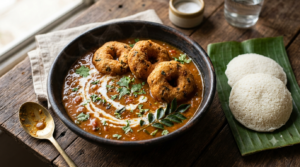
Soft urad dal medu vada soaking in a spiced South Indian onion-tomato gravy, topped with fresh coriander.
Medu Vada Curry at a Glance
- What it is: soft urad dal medu vada simmered briefly in a spiced onion-tomato gravy.
- Total time: about 45 minutes of active work, plus 4-5 hours to soak the dal.
- Serves: 4 people as a hearty side for idli, dosa, or chapati.
- Best paired with: plain idli, ghee dosa, or steamed rice.
- Key tip: break the vada before adding them, so they drink up the gravy.
What Makes This Medu Vada Curry Recipe Different
Here is the point most blogs skip. Classic Tamil Nadu “vada curry”, the one served in tiffin centres, is traditionally made with masala vada from chana dal, not medu vada. Cooks crumble those crisp, coarse-ground lentil patties into the gravy. This Medu Vada Curry Recipe instead uses medu vada made from urad dal (black gram), which is softer and airier.
The swap changes the dish in a real way. Chana dal vada hold their shape and stay slightly crunchy in the curry. Urad dal medu vada, because they are spongy, soak up gravy fast and turn pillow-soft.
So if you have tasted restaurant vada curry and found this version gentler and more absorbent, that is the reason, not a mistake. Both are delicious, yet they are genuinely different dishes wearing a similar name. For the firmer chana-dal versions, see the Hotel Saravana Bhavan style vada curry or the Kerala style vada curry.
Knowing this helps you cook it right. Since medu vada soften quickly, you add them near the end and serve soon after. A masala-vada curry can sit longer because the firmer vada resist going mushy.
Recipe Card
| Detail | Value |
|---|---|
| Prep time | 30 mins (plus 4-5 hrs soaking) |
| Cook time | 45 mins |
| Servings | 4 people |
| Difficulty | Medium |
| Cuisine | South Indian |
Ingredients for This Medu Vada Curry Recipe
Gather everything before you start, because the frying and the gravy move quickly once you begin. The quantities below serve four and use standard Indian measuring cups.
For the Medu Vada (Fritters)
- 1 cup urad dal (skinned black gram / ulundu), washed and soaked 4-5 hrs
- ½ tsp cumin seeds
- 2 green chillies, finely chopped
- 1 tbsp fresh curry leaves, finely chopped
- ¼ cup finely chopped onion (optional)
- 1 tsp grated ginger
- Salt, ½ tsp or to taste
- Oil for deep frying, about 500 ml
For the Curry Gravy
- 2 tbsp oil
- ½ tsp mustard seeds
- ½ tsp cumin seeds
- 1 bay leaf
- 1 small cinnamon stick (1 inch)
- 2 cloves
- 1 large onion, finely sliced
- 1 tbsp ginger-garlic paste
- 1-2 green chillies, slit
- 10 curry leaves
- 2 medium tomatoes, chopped or pureed
- ¼ tsp turmeric powder
- 1 tsp red chilli powder
- 1 tsp coriander powder
- Salt, ¾ tsp (adjust to taste)
- 1 to 1½ cups water
- ½ cup coconut milk (optional, for richness)
- 2 tbsp fresh coriander leaves, chopped
Step-by-Step Medu Vada Curry Recipe Instructions
Follow the timings below and the whole dish comes together in one flow. Fry the vada first, then build the gravy while they rest.
Step 1: Soak the Dal (4-5 hrs)
Rinse the urad dal under running water until it runs clear. Then soak it in fresh water for 4-5 hours. In many Tamil and Andhra homes, families set the dal to soak in the morning, because well-soaked dal grinds into an airy batter that fries up crisp outside and soft inside.
Step 2: Grind the Batter (10-15 mins)
Drain the soaked dal and add it to a mixer. Pour in a little ice-cold water and grind to a smooth, thick, fluffy batter. The batter should hold its shape and never run thin.
Transfer it to a bowl, then fold in the salt, cumin seeds, green chillies, curry leaves, onion, and ginger. Mix well so the flavours spread evenly.
Step 3: Shape and Fry the Vada (15-20 mins)
Heat the frying oil on a medium flame. Wet your fingers, take a small ball of batter, and shape it into a disc with a hole in the centre. Gently slide each vada into the oil.
Fry for 3-4 minutes per side until golden and crisp. Drain them on a kitchen towel while you start the gravy.
Step 4: Temper the Gravy (5 mins)
Heat 2 tbsp oil in a pan. Add the mustard seeds and let them crackle. Then add the cumin, bay leaf, cinnamon, and cloves. Sauté for about 30 seconds, until the whole spices turn aromatic.
Step 5: Build the Base (10 mins)
Add the sliced onion, slit green chillies, and curry leaves. Sauté for 2-3 minutes until the onion softens. Next, stir in the ginger-garlic paste and cook another 2 minutes, until the raw smell fades and the base smells sweet.
Step 6: Add Spices and Tomato (5 mins)
Sprinkle in the turmeric, red chilli powder, coriander powder, and salt. Stir for a minute so the spices bloom. Add the chopped or pureed tomato. Cook for 3-4 minutes, until the tomato breaks down and the gravy begins to thicken.
Step 7: Simmer the Curry (8 mins)
Pour in 1 to 1½ cups water and bring it to a gentle boil. Adjust the water to reach the consistency you like. For a richer, mellower curry, stir in the ½ cup coconut milk now and let it warm through without a hard boil.
Step 8: Add the Medu Vada (5 mins)
Break a few vada into rough pieces and drop them into the simmering gravy. Let them soak for 4-5 minutes, so the flavours meld and the vada softens just enough. Keep the flame low here, because a rolling boil can turn soft vada to mush.
Step 9: Finish and Serve (2 mins)
Turn off the heat. Scatter the fresh coriander over the top. Serve hot with idli or dosa while the vada still hold a little bite.
Pro Tips for the Best Medu Vada Curry Recipe
- Soak the urad dal for at least 4 hours. This single step is what makes the vada airy, so skipping it leaves a dense, heavy centre.
- Grind with ice-cold water, because heat makes the batter gummy and the vada oily.
- Keep the frying flame at medium. When the oil runs too hot, the outside browns before the inside cooks through.
- Break the vada before adding them to the gravy, so they absorb the curry instead of floating on top.
- Add the vada only when you are close to serving, since urad dal vada soften faster than any other kind.
Common Mistakes and How to Fix Them
A few small errors trip up most first attempts at this Medu Vada Curry Recipe. Here is how to spot and fix each one before it spoils the dish.
- Vada turn hard, not soft: the dal was under-soaked or the batter was over-ground with warm water. Soak longer and grind cold.
- Vada soak up oil: the oil was not hot enough, or the batter was too thin. Test with a pinch of batter first; it should rise fast.
- Gravy turns bitter: the whole spices or ginger-garlic paste burned. Keep the flame moderate and stir often.
- Vada dissolve in the curry: they simmered too long or on too high a flame. Add them last and keep the heat gentle.
- Curry tastes flat: the tomato was under-cooked. Let it break down fully before you add water.
Variations and Substitutions
This Medu Vada Curry Recipe adapts easily to what you have and how you like to eat. Try any of these swaps.
- Tangy version: replace the coconut milk with 2 tbsp thick curd, added off the heat so it does not split.
- Lighter version: air-fry the vada instead of deep frying, which cuts the oil sharply while keeping the shape.
- No onion, no garlic: skip both and lean on ginger, tomato, and curry leaves for a temple-style, satvik gravy.
- Kerala touch: add a pinch of fennel and extra coconut milk for a sweeter, coastal profile.
- Protein boost: stir a handful of cooked green peas into the gravy for extra body and colour.
What to Serve With Medu Vada Curry
The curry is rich enough to anchor a small meal on its own. Still, a few pairings show it off best.
Soft idli is the classic match, because the plain, spongy cakes carry the spiced gravy beautifully. Crisp dosa works just as well, folded around a spoon of curry. For a heavier plate, serve it with steamed rice and a squeeze of lime.
Chapati or plain paratha also pairs nicely when you want a North-meets-South lunch. A cup of filter coffee on the side rounds the whole thing off.
Make-Ahead, Storage, and Reheating
You can plan parts of this Medu Vada Curry Recipe in advance, which helps on a busy morning. The gravy and the vada each keep differently, so store them apart when you can.
Refrigerate the batter up to one day in an airtight box, then bring it to room temperature before frying. The cooked gravy keeps well for 1-2 days in the fridge; reheat it gently on the stovetop with a splash of water. Fried vada are best fresh, yet leftovers store for a day and crisp up again in a hot pan or air fryer. For the softest result, though, add the vada to the gravy only just before you eat.
A Quick Safety and Nutrition Note
Deep frying calls for a little care. Keep children away from the pan, never leave hot oil unattended, and lower each vada gently to avoid splashes. Fresh oil fries cleaner and tastes better, so avoid reusing oil many times over.
The figures below are approximate and vary with vada size and how much oil the batter absorbs. Treat them as a rough guide, not exact medical data.
| Per medu vada (approx.) | Amount |
|---|---|
| Calories | 130-190 kcal |
| Protein | 4-7 g |
| Carbohydrates | 12-20 g |
| Fat | 7-10 g |
A whole serving with gravy and idli or dosa naturally adds more calories. Because the vada are deep fried, this dish is best enjoyed in moderation as an occasional treat rather than a daily breakfast.
The Bottom Line
This Medu Vada Curry Recipe gives you a soft, soaked-through comfort bowl that differs from the crisp masala-vada curry served in restaurants, and that difference is the whole charm. Soak the dal well, fry on a steady medium flame, and add the vada only at the end. Do that, and you get airy fritters bathed in a fragrant gravy every time. Serve it hot with idli or dosa, and keep the heat gentle so the vada stay tender.
Frequently Asked Questions About Medu Vada Curry Recipe
What is the difference between medu vada curry and regular vada curry?
Regular Tamil Nadu vada curry uses masala vada made from chana dal, which stays firm and slightly crunchy in the gravy. Medu vada curry uses urad dal medu vada, which are softer and soak up the curry quickly. Both share a similar onion-tomato gravy, yet the texture differs a lot.
Can I make this Medu Vada Curry Recipe gluten-free?
Yes. The vada batter uses only urad dal, which is naturally gluten-free. Just make sure the frying oil has not been used for gluten-containing foods, and check that your spice powders carry no added fillers.
Can I prepare the vada batter ahead of time?
You can store the batter in the fridge for up to one day. Bring it back to room temperature before frying, because cold batter fries unevenly. Give it a quick stir to loosen it before you shape the vada.
Can I skip onions in the vada?
Yes. Traditional temple-style vada leave out onion, especially when the dish is prepared as an offering. The vada still turn out light and crisp, since the airiness comes from the urad dal, not the onion.
Why do my medu vada turn hard?
Hard vada usually mean the dal was under-soaked or the batter was over-ground with warm water. Soak the dal a full 4-5 hours and grind with ice-cold water. A light, fluffy batter is the secret to soft vada.
Can I use leftover medu vada for this curry?
Leftover vada work well and even save time. To fry a fresh batch, follow our medu vada recipe. Warm any leftovers in a pan or air fryer first, then break and add them to the simmering gravy. They will soften fast, so add them just before serving.
How long does medu vada curry stay good?
The gravy keeps for 1-2 days in the fridge in an airtight container. Store the vada separately when you can, then combine them at reheating so the vada do not turn mushy. Reheat the gravy gently with a splash of water.
Is medu vada curry spicy?
It carries a mild to medium heat that you fully control. Reduce the green chillies and red chilli powder for a gentler curry, or add more if you like it fiery. The coconut milk also softens the heat nicely.