Hotel Style Vada Curry: Chennai Tiffin Recipe at Home
Hotel style vada curry is the tangy, spiced lentil gravy that Chennai tiffin shops ladle over set dosa and idli every morning. If you have tried to copy it at home and the result tasted flat, the fix is usually two small things the menus never mention: fennel in the dal and a ground coconut paste in the gravy. This guide walks through the full method, then shows the exact restaurant tricks that turn a plain tomato curry into that unmistakable tiffin-shop flavour.
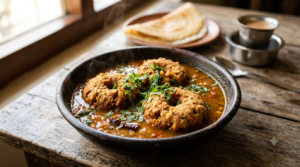
Hotel style vada curry — crisp chana dal vadas simmered in a spiced onion-tomato gravy, Chennai tiffin-shop style.
The dish itself is simple in spirit. Coarse chana dal patties, either fried or steamed, get simmered in an onion-tomato masala until they soften and drink up the spice. Because the vadas do most of the flavour work, the gravy stays light, which is why it pairs so well with soft breakfast breads rather than rice alone.
Hotel Style Vada Curry at a Glance
- What it is: a South Indian breakfast curry of chana dal vadas in a spiced onion-tomato gravy, famous in Chennai hotels.
- Best served with: set dosa, idli, plain dosa, or poori; steamed rice works too.
- The hotel secret: fennel seeds in the dal, plus a ground coconut and fried-gram paste stirred into the gravy.
- Total time: about 1 hour 30 minutes, most of it hands-off dal soaking.
- Makes: 4 generous servings.
| Detail | Value |
|---|---|
| Prep time | 20 mins (plus 2–3 hrs soaking) |
| Cook time | 40 mins |
| Total time | 1 hr 30 mins |
| Servings | 4 people |
| Difficulty | Medium |
What Makes Hotel Style Vada Curry Different
Home versions and hotel style vada curry start from the same base, yet they rarely taste the same. The gap comes down to a handful of restaurant habits. Once you know them, your kitchen version lands much closer to the tiffin-shop original.
First, fennel seeds (sombu) go into the dal itself, not just the gravy. This single step gives the vadas their sweet, anise-like aroma, and skipping it is the most common reason a home batch tastes ordinary. Second, most hotels finish the gravy with a ground paste of coconut and fried gram, which thickens the curry and adds a rounded, nutty body that plain tomato masala cannot reach.
There is a third trick worth knowing. Many Chennai kitchens build the dish from leftover masala vada rather than fresh dal. That is the dish’s origin, since vada curry began as a clever way to use up yesterday’s vadas. If you keep that in mind, the recipe becomes far more forgiving on a busy morning.
The One Ingredient Most Recipes Miss
Kalpasi, the dark stone flower spice known as dagad phool, is the quiet signal of an authentic tiffin gravy. A small pinch, toasted with the whole spices, adds the smoky depth you notice in a good hotel version. It is optional and easy to leave out, yet it is the closest thing to a single “restaurant flavour” ingredient.
Ingredients for Hotel Style Vada Curry
These quantities make four servings. The gravy list looks long, so measure everything first, because the cooking itself moves quickly once the pan is hot.
For the chana dal vadas:
- 1 cup (200 g) chana dal, soaked 2–3 hours
- 2–3 dried red chillies
- 1 tsp fennel seeds (essential, do not skip)
- 1 tsp ginger-garlic paste
- A few curry leaves, chopped
- Salt to taste
- Oil for deep frying, about 1½ cups (or a little oil to steam)
For the gravy:
- 2 tbsp oil
- 1 tsp mustard seeds and 1 tsp cumin seeds
- 1 bay leaf, 2 cloves, a small piece of cinnamon
- A pinch of kalpasi (stone flower), optional
- 1 large onion, finely chopped
- 2 green chillies, slit
- 1 tsp ginger-garlic paste
- 3 large tomatoes, finely chopped
- ½ tsp turmeric, 1½ tsp red chilli powder, 2 tsp coriander powder
- 2–3 tbsp grated coconut with 1 tbsp fried gram, ground to a paste
- 2–3 cups water, adjusted for consistency
- Fresh coriander and a few mint leaves, chopped
How to Make Hotel Style Vada Curry Step by Step
Follow the stages in order, since the vadas need to be ready before the gravy finishes. Read the timings once, then keep your ingredients within reach as you cook.
1. Soak and Grind the Dal (2–3 hours, then 10 mins)
Wash 1 cup chana dal well, then soak it for 2 to 3 hours until plump. Drain and rinse thoroughly, because extra water makes grinding messy. Add the dal, red chillies, fennel, ginger-garlic paste, curry leaves and salt to a blender. Pulse to a coarse texture, not a smooth batter, so little grains stay behind for bite.
2. Shape and Cook the Vadas (15 mins)
Heat oil in a deep pan over medium heat. Wet your hands, then shape small patties from the dal mixture. Slide them gently into the hot oil and fry until golden, about 3 to 4 minutes per batch.
Drain the vadas on paper towels. If you prefer a lighter dish, steam the patties like idli for 10 minutes instead of frying.
3. Build the Gravy Base (12 mins)
Heat 2 tbsp oil in a wide pan. Add mustard and cumin, and once they crackle, drop in the bay leaf, cloves, cinnamon and kalpasi. Add the onion and green chillies, then sauté until the onion turns translucent.
Stir in the ginger-garlic paste and cook off the raw smell. Add the tomatoes with turmeric, chilli and coriander powders, then cook until the tomatoes break down and oil separates at the edges.
4. Add the Coconut Paste and Simmer (10 mins)
Pour in 2 to 3 cups water and bring the gravy to a gentle boil. Stir in the ground coconut and fried-gram paste, which thickens the curry and softens the spice. Now add the vadas, pressing a few so they soak up the masala.
Simmer for 6 to 8 minutes until the curry thickens and the vadas turn soft. Finish with coriander and mint, then switch off the heat.
Steamed, Fried, or Roasted: Which Method Wins?
There is no single correct way to make the vadas, and each method changes the final dish. The table below compares the three common routes, so you can pick the one that suits your morning.
| Method | Texture | Best for |
|---|---|---|
| Deep-fried vada | Richest, closest to hotel taste | Authentic flavour, weekends |
| Steamed patties | Lighter, softer, less oil | Healthy home breakfast |
| Roasted dry dal | Crumbly, quick, no shaping | Busy mornings, meal prep |
Fried vadas give the most restaurant-like result, because the crisp edges hold their shape in the gravy. Steamed patties are the everyday home choice, though they soften faster. For the roasted route, you skip shaping entirely and dry-roast the ground dal until crumbly, then stir it straight into the curry.
Chef’s Pro Tips for Hotel Style Vada Curry
- Grind coarse, never smooth: a coarse dal keeps the vadas from turning gummy, so resist the urge to add water.
- Do not skip fennel: it is the aroma that makes people ask what your secret is.
- Watch the oil heat: too cool and the vadas drink oil, while too hot browns them raw inside.
- Use both sliced and chopped onion: many hotels do this for a gravy that is smooth yet textured.
- Add vadas late: drop them in near the end so they soften without dissolving into mush.
Common Mistakes to Avoid
A few small errors turn a promising pan into a disappointing one. Since they are easy to prevent, it helps to know them before you start.
The biggest mistake is a watery gravy. Vada curry thickens as it rests, so a curry that looks perfect on the stove can turn stodgy in ten minutes. Add water gradually, and keep a little hot water aside to loosen it before serving. Another frequent slip is grinding the dal too fine, which robs the vadas of their signature bite.
Adding the vadas too early is the third trap. When they sit in boiling gravy for too long, they break apart and cloud the curry. Instead, add them once the gravy has thickened, then simmer just long enough for them to soften through.
What to Serve With Hotel Style Vada Curry
This curry was built for South Indian tiffin, so the classic partners are the softest breakfast breads. Set dosa is the signature match, since the spongy layers trap the gravy beautifully. Idli comes a close second, and plain dosa or poori both work well.
If you want a heavier meal, spoon it over steamed rice with a drizzle of sesame oil. A squeeze of lemon at the table lifts the whole plate. For a full spread, pair it with a fresh Andhra pesarattu or a bowl of light masoor dal sambar.
Storing Hotel Style Vada Curry: Make-Ahead and Leftovers
Vada curry is friendly to advance cooking, which is exactly why hotels rely on it. Store the gravy and vadas separately whenever you can, because the vadas keep their texture far longer that way.
Keep the gravy in the fridge for up to 3 days, and store fried vadas in an airtight box for 1 to 2 days. When you reheat, warm the gravy first, then add the vadas so they do not overcook. The curry also freezes well for up to a month, though it is best to add freshly crisped vadas after thawing. If you are short on time, a batch made from leftover masala vada comes together in minutes.
Nutrition Information (Approximate)
Chana dal makes this a protein-rich breakfast, since the lentil brings both plant protein and fibre. The figures below are estimates for one serving and will shift with your frying method and portion size.
| Nutrient | Per serving (approx.) |
|---|---|
| Calories | 350–450 kcal |
| Protein | 15–20 g |
| Carbohydrates | 40–60 g |
| Fat | 8–15 g |
These numbers are a general guide only, so treat them as approximate rather than exact. Steaming the vadas instead of frying lowers the fat noticeably. For precise dietary needs, it is best to check with a qualified nutritionist. You can read more about the base lentil on the chickpea reference page, and about the fritters themselves on the vada food page.
Before You Cook
Hotel style vada curry rewards a little patience and two small upgrades. Soak the dal properly, keep fennel in the mix, and stir a coconut paste into the gravy, and you will land close to the tiffin-shop version. Whether you fry, steam, or roast the dal, the dish stays a warm, protein-packed start to the day. For a spicier regional take, try the Chettinad vada curry, or use up spare fritters with the leftover vada curry method.
Frequently Asked Questions About Hotel Style Vada Curry
What is hotel style vada curry made of?
Hotel style vada curry is made of coarse chana dal vadas simmered in a spiced onion-tomato gravy. The dal is flavoured with fennel and chillies, while the gravy is often finished with a ground coconut paste. It is a classic Chennai breakfast side for idli and dosa.
Can I make hotel style vada curry without deep frying?
Yes, you can steam the dal patties like idli or dry-roast the ground dal instead of frying. Steaming gives a lighter dish with less oil, though fried vadas taste closest to the hotel version. Both methods work well in the same gravy.
Why is fennel important in this recipe?
Fennel seeds give vada curry its signature sweet, anise-like aroma. Adding them to the dal itself, not just the gravy, is what separates a hotel-style batch from a plain one. Skipping fennel is the most common reason a home version tastes flat.
What can I serve with vada curry?
Set dosa is the classic pairing, followed by idli, plain dosa, and poori. For a fuller meal, serve it over steamed rice with a drizzle of sesame oil. A squeeze of lemon at the table brightens every plate.
Can I use leftover vadas for this curry?
Absolutely, and it is the dish’s original idea. Leftover masala vada breaks down beautifully in the gravy and saves you the soaking and grinding. Just simmer the pieces until they soften and soak up the masala.
How do I keep the vadas from turning to mush?
Add the vadas only after the gravy has thickened, then simmer briefly. Long boiling makes them fall apart and cloud the curry. Pressing just a few vadas lets them absorb flavour while the rest hold their shape.
Can I freeze vada curry?
Freeze the gravy for up to a month in an airtight container. Reheat it gently, then add freshly crisped or thawed vadas before serving. This keeps the texture much better than freezing the finished dish together.
Why did my vada curry turn out watery?
The curry thickens as it rests, so it firms up after cooking. Add water gradually and stop while the gravy still looks slightly loose. If it thickens too much later, a splash of hot water loosens it again before serving.