MTR Bisibele Bhath Paste Recipe: Easy Bisi Bele Bath
MTR Bisibele Bhath Paste turns the usual rice, dal and vegetable preparation into a much faster bisi bele bath, but the paste needs different handling from MTR powder. The key is to use the paste by weight, avoid adding extra tamarind or jaggery too early, and keep the finished dish looser than you think because it thickens quickly.
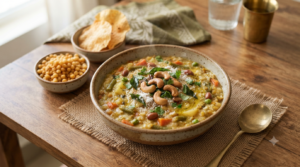
Creamy bisi bele bath prepared with MTR Bisibele Bhath Paste, mixed vegetables, rice, dal and a simple tempering.
One important update: MTR’s current India online range prominently lists Bisibele Bhath Masala powder, while the paste is easier to find in some overseas stores. So, if you already have a jar of paste, use the method below and follow your pack if its directions differ. If you only have powder, use our MTR Bisi Bele Bath powder recipe instead.
MTR Bisibele Bhath Paste: Quick Recipe Ratios
The most reliable ratio is the one printed for the paste format: equal weights of rice, toor dal and paste, plus a larger quantity of vegetables. A full 200 g paste pack is designed around 200 g rice, 200 g red gram dal and about 500 g vegetables, with enough water to cook everything soft.
| Ingredient | Full pack ratio | Smaller home batch |
|---|---|---|
| Sona masuri rice | 200 g | 100 g |
| Toor dal | 200 g | 100 g |
| Mixed vegetables | 500 g | 250 g |
| MTR Bisibele Bhath Paste | 200 g | 100 g |
| Water | about 2 litres | about 1 litre |
| Ghee | 2-3 tsp, plus tempering | 1-2 tsp, plus tempering |
The smaller batch is simply a half-scale version, so it is easier to season consistently than a tablespoon-based guess. Cup weights vary, while a kitchen scale keeps the rice, dal and paste in the intended proportion. If your jar carries different directions, however, the jar should win.
Why MTR Bisibele Bhath Paste Is Different From Powder
The earlier version of this page treated the paste almost like a dry spice powder. It used only a few tablespoons of paste, then added a separate dose of tamarind, jaggery and salt. That can make the final flavour unpredictable because the paste itself already contributes tang, salt, sweetness and spices.
With MTR Bisibele Bhath Paste, it is better to build the base first and taste near the end. Do not add extra tamarind, jaggery or salt at the start. After the paste simmers with the rice and dal, you can correct only what is actually missing.
Ingredients for a Smaller Home Batch
- 100 g sona masuri or another short-grain rice
- 100 g toor dal, also called red gram dal
- 250 g mixed vegetables, such as carrot, beans, peas and potato
- 100 g MTR Bisibele Bhath Paste, or the amount directed on your pack
- About 1 litre water, plus extra hot water for final consistency
- 1-2 teaspoons ghee for finishing
- 1 teaspoon ghee or oil for tempering
- 1/2 teaspoon mustard seeds
- 6-8 curry leaves
- 6-8 cashews, optional
- 2 tablespoons finely chopped onion, optional
- Fresh coriander for garnish, optional
Choose vegetables that soften without disappearing. Carrot, beans, peas and potato are dependable because they hold their shape while the rice and dal become creamy. You can also use capsicum or chayote, but keep the total vegetable weight close to the recipe ratio.
How to Cook MTR Bisibele Bhath Paste Step by Step
This method keeps the process simple: cook rice, dal and vegetables until very soft, stir in the paste, simmer briefly, then finish with ghee and tempering. The paste should go in after the main ingredients are cooked because its job is to season and bind the dish, not to replace the cooking liquid.
Cooking Sequence
- Rinse the rice and dal. Wash both until the water is mostly clear. Soaking for 15 minutes is optional, but it can help the dal soften evenly.
- Prep the vegetables. Cut carrot, beans and potato into small, similar pieces. Keep peas whole so the vegetables cook at roughly the same rate.
- Pressure-cook the base. Put rice, dal and vegetables into a cooker with about 1 litre water for the smaller batch. Cook until the rice and dal are completely soft rather than separate and fluffy.
- Release pressure naturally. Open only after the pressure drops. Stir gently, since a partly mashed texture is desirable for bisi bele bath.
- Add the paste. Stir in 100 g MTR Bisibele Bhath Paste. Keep the heat low so the thick mixture does not catch at the bottom.
- Simmer for 2-3 minutes. Add hot water if the mixture looks tight. Stir often because the lentils continue to absorb liquid.
- Finish with ghee. Add 1-2 teaspoons ghee after the paste has blended. Taste only now before deciding whether the dish needs more salt or tang.
- Make the tempering. Heat ghee or oil, crackle mustard seeds, then add curry leaves and cashews. If you like onion, fry a small amount until soft and golden.
- Serve immediately. Pour the tempering over the hot bath and mix once. Keep a little hot water ready because the dish thickens as it stands.
What Texture Should You Aim For?
Bisi bele bath should be soft, creamy and spoonable, not dry like pulao. When it leaves the cooker, it can look slightly looser than your final target because rice and dal continue absorbing water. If it sits for ten minutes, a splash of boiling water usually restores the right flow.
A common mistake is to stop cooking when the rice grains still look separate. For this dish, the dal should melt into the rice and vegetables. That creamy base lets the MTR Bisibele Bhath Paste coat the whole pot evenly instead of tasting like a sauce added at the end.
Do You Need Extra Tamarind, Jaggery or Salt?
No, not at the beginning. The paste format already carries concentrated seasoning, so adding tamarind, jaggery and salt before tasting can push the dish too sour or too salty. Cook the paste into the rice-dal base first, then make small corrections after a two- or three-minute simmer.
If you want more tang, add only a small spoon of thin tamarind water after tasting. If the dish tastes too sharp, a little jaggery can round it out. Salt should come last because packaged paste can already contribute a significant amount.
MTR Bisibele Bhath Paste vs MTR Masala Powder
MTR Bisibele Bhath Paste and MTR Bisibele Bhath Masala are not interchangeable spoon for spoon. Paste is a wet, seasoned concentrate, while masala is a dry spice blend. The dry powder usually needs tamarind, jaggery and salt from the cook, whereas the paste already brings much of that flavour structure.
| Point | Paste | Masala powder |
|---|---|---|
| Form | Wet seasoned concentrate | Dry spice blend |
| Tamarind | Usually already present | Usually added separately |
| Salt/sweetness | Already partly built in | Adjusted separately |
| Best measuring method | By weight | By spoon, following pack |
| Current India availability | May be harder to find | Listed on MTR’s India store |
MTR’s current India shop lists Bisibele Bhath Masala in its MTR range. The paste, however, is still listed by some overseas retailers. That is why this page should stay focused on people who already have the paste, while the readymade powder method serves a different pantry situation.
What If Your MTR Paste Pack Gives Different Directions?
Follow the pack you actually bought. MTR products can differ by market, pack size or formulation, so the printed label is the best source for your jar. Use this recipe for technique, texture and troubleshooting, but keep the pack ratio as the final authority on how much paste to add.
The official MTR Foods range from Orkla India is also useful for checking which products are currently sold in India. If your local shop only stocks masala powder, do not try to convert the paste quantity directly into powder. Use the powder-specific recipe instead.
Common Problems and How to Fix Them
The Bisi Bele Bath Is Too Thick
Add boiling water a little at a time and stir over low heat. Cold water can cool the pot sharply and makes it harder to judge final texture. After adding water, simmer for a minute so the paste and lentils become smooth again.
The Flavour Is Too Sour or Salty
First, do not add more paste. Increase the plain cooked base if you have extra rice and dal, or loosen with hot water and add a small amount of cooked rice. A little ghee can soften the perception of sharpness, but it cannot remove excess salt.
The Paste Tastes Raw or Separate
Simmer the mixed dish for another two minutes on low heat while stirring. MTR Bisibele Bhath Paste needs a brief cook after it enters the pot, so its flavours spread through the rice and dal. High heat is unnecessary and increases the risk of scorching.
The Vegetables Turn Mushy
Cut vegetables evenly and avoid very small pieces. Hard vegetables can cook with the rice and dal, while quick-cooking vegetables can go in later. The rice and dal should be soft, but the vegetables should still give a little contrast.
Practical Tips That Make the Shortcut Taste Better
- Use short-grain rice. Sona masuri gives a softer, creamier result than long-grain basmati.
- Measure paste by weight. Paste density makes tablespoons less reliable, especially when scaling a batch.
- Keep hot water nearby. The dish thickens fast, so final consistency is easier to control at the stove.
- Taste after simmering. Since the paste already contains several seasonings, early adjustments are easy to overdo.
- Use ghee at the finish. A small amount added late gives more aroma than a larger amount cooked for a long time.
- Add crunch at serving time. Cashews, boondi, papad or potato wafers give contrast to the soft rice-lentil base.
If you want the from-scratch version, our Karnataka-style bisibelebath recipe explains the spice-led method without relying on paste. That page is the better choice when you want to control tamarind, jaggery and masala separately.
MTR Bisibele Bhath Paste Storage and Reheating
Bisi bele bath is best fresh, but leftovers should be cooled and refrigerated promptly. The Food Safety and Standards Authority of India advises keeping cooked food cold below 5°C when stored and reheating stored cooked food thoroughly before eating. See the FSSAI Food Safety at Home guidance for the general safety rules.
Store leftovers in a shallow, covered container so they cool faster. When reheating, add a little water because the rice and dal will have tightened in the fridge. Reheat only the portion you plan to eat, and discard food that has been left at room temperature for too long.
Before You Serve
MTR Bisibele Bhath Paste works best when you treat it as a complete seasoned concentrate rather than a dry masala. Keep the rice and dal soft, add the paste after cooking, simmer briefly, then correct only the seasoning that truly needs adjustment. That simple change makes the shortcut more predictable and keeps the paste page distinct from BhimasCook’s powder recipes.
Frequently Asked Questions
Is MTR Bisibele Bhath Paste the same as MTR Bisibele Bhath Masala?
No. The paste is a wet, seasoned concentrate, while the masala is a dry spice powder. They need different quantities and different supporting ingredients, so do not swap them spoon for spoon.
Should I add tamarind when using MTR Bisibele Bhath Paste?
Usually, no extra tamarind is needed at the start because the paste already provides tang. Cook the dish first and taste it. If your particular batch needs more sourness, add a small amount of diluted tamarind water at the end.
How much MTR Bisibele Bhath Paste should I use?
A common pack direction uses 200 g paste with 200 g rice, 200 g toor dal and about 500 g vegetables. For a smaller batch, halve all of those weights. Always check your own jar because pack instructions can vary by market.
Can I make this recipe in a pressure cooker?
Yes. Pressure-cook the rice, dal and firm vegetables with enough water until very soft. After the pressure releases, stir in the paste and simmer uncovered on low heat for two or three minutes before adding the final tempering.
Why does bisi bele bath become thick after cooking?
Rice and toor dal keep absorbing liquid as they cool, so the dish naturally tightens. Add boiling water in small amounts while reheating or before serving. Stir well and simmer briefly to restore a smooth, spoonable consistency.
Is MTR Bisibele Bhath Paste vegan?
Do not assume it is vegan. Some current product listings reproduce labels that include ghee or milk-related allergen information. Check the ingredient and allergen panel on your own pack if you avoid dairy or have a food allergy.
What can I use if MTR paste is not available?
Use MTR Bisibele Bhath Masala powder or another bisi bele bath powder, but switch to a powder-specific recipe. Powder usually needs separate tamarind, salt and sweetness, so the paste ratios on this page should not be reused.
What should I serve with bisi bele bath?
Serve it hot with potato wafers, papad, boondi or a mild raita. A small spoon of ghee on top adds aroma, while a crunchy side balances the soft texture of the rice and dal.
Can I prepare bisi bele bath ahead for a party?
Yes, but keep the cooked dish slightly loose and refrigerate it promptly if you make it well ahead. Reheat thoroughly with hot water to restore consistency. Add the final cashew and curry-leaf tempering close to serving so it stays aromatic.