Rava Upma Water Ratio: Easy Guide for Perfect Fluffy Upma
Rava upma water ratio decides whether your upma turns firm, fluffy, soft, or overly pasty. For most everyday rava, 1 cup rava to 2.5 cups water is the safest starting point. Use less water for a drier texture and more water when you prefer softer upma.
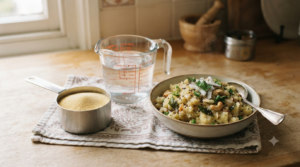
Measured rava and water beside fluffy upma, showing how the water ratio changes the final texture.
The useful answer is a range, not one rigid number. Current recipe references consistently place ordinary rava upma between about 2 and 3 cups water for every cup of rava. The right point within that range depends on texture, pan, rava brand, and how long you cook it.
Rava Upma Water Ratio at a Glance
The easiest rule is 1 cup rava to 2.5 cups water for soft, fluffy upma. Use about 2 cups for firmer grains. Move toward 2.75 to 3 cups when you want a softer, more spoonable result.
| Texture wanted | Rava | Water | Result |
|---|---|---|---|
| Firm and grainy | 1 cup | 2 cups | Drier, more separate grains |
| Fluffy everyday upma | 1 cup | 2.5 cups | Soft but still holds shape |
| Soft upma | 1 cup | 2.75 cups | Moist and tender |
| Very soft upma | 1 cup | 3 cups | Softer, spoonable texture |
A current Swasthi’s Recipes upma method uses 3 cups water and suggests 2.75 cups for a drier result. A currently indexed Wonderchef upma guide uses 2 to 2.5 cups for firmer to softer upma. These differences show why one fixed ratio cannot suit every preferred texture.
Why the Rava Upma Water Ratio Changes
Rava is semolina made from wheat, but packets can differ in particle size and processing. The current FSSAI cereal standard identifies semolina, suji, or rawa as a milled wheat product. Because grind and handling vary, two brands can absorb water at slightly different rates.
The pan matters too. A broad pan loses moisture faster, while a heavy covered pan retains steam. That means the rava upma water ratio can shift slightly even when the rava stays the same. Vegetables also change the cooking environment, so start with a proven baseline and adjust in small steps.
For most home kitchens, start at 1:2.5. If your regular packet gives dry upma, add another quarter cup next time. If it becomes too soft, reduce the water by a quarter cup.
Ingredients for a Reliable 1-Cup Rava Batch
This base recipe makes about three moderate servings. Use the same measuring cup for both rava and water, because the ratio depends on equal volume measures.
- 1 cup rava or sooji
- 2.5 cups water
- 2 tablespoons oil or ghee
- 1/2 teaspoon mustard seeds
- 1 teaspoon chana dal
- 1/2 teaspoon urad dal
- 1 medium onion, finely chopped
- 1 to 2 green chillies, slit
- 1 teaspoon finely chopped ginger
- 8 to 10 curry leaves
- Salt to taste
- 1 tablespoon chopped coriander
- 1 to 2 teaspoons lemon juice, optional
- Cashews or peanuts, optional
If you want a vegetable-heavy version, follow the separate rava upma with vegetables recipe. Extra vegetables can change the moisture balance, so check the pan before adding more water.
How to Use the Rava Upma Water Ratio Without Lumps
The method is as important as the measurement. Roast the rava, bring the seasoned water to a full boil, and add the rava slowly while stirring. This gives each grain a better chance to hydrate before clumps form.
1. Roast the rava
Heat a heavy pan over low to medium heat. Add 1 cup rava and stir for about 4 to 5 minutes until it smells nutty and moves freely. Do not brown it deeply, because the goal is dry roasting rather than colouring.
2. Prepare the tempering
Remove the roasted rava and add oil or ghee to the pan. Add mustard seeds, then chana dal and urad dal. Once the dals begin to turn golden, add curry leaves, ginger, green chillies, and optional nuts.
3. Cook the onion
Add the chopped onion and cook until it turns translucent. If you are using a small amount of vegetables, add them now and cook until they begin to soften.
4. Add the measured water
Pour in 2.5 cups water and add salt. Bring it to a strong boil before the rava goes in. Hot water helps the semolina hydrate quickly and evenly.
5. Add rava slowly
Lower the heat slightly. Add the roasted rava in a thin stream while stirring continuously with the other hand. Keep the mixture moving until all the rava is incorporated and no dry pockets remain.
6. Cover, cook, and rest
Reduce the heat to low and cover the pan. Cook until the water is absorbed and the grains are tender. Then switch off the heat and let the upma rest covered for a few minutes before fluffing.
Finish with coriander and optional lemon juice. The upma may look slightly softer while very hot, but it usually firms as the steam settles.
Best Rava Upma Water Ratio for Different Textures
The same recipe can taste quite different when you change only half a cup of water. That is why texture preference should decide the final measurement.
Rava Upma Water Ratio for Firm, Separate Grains
Use around 2 cups water for 1 cup rava when you prefer drier, more separate grains. Watch the pan closely because some rava brands may need a little more moisture to cook fully.
Fluffy everyday upma
Use 2.5 cups water for 1 cup rava. This is the best general starting point because it gives enough moisture without pushing the dish toward a porridge-like consistency.
Soft or hotel-style upma
Use 2.75 to 3 cups water when you want softer upma. Current recipe references commonly use the upper end of this range for a tender, moist finish. A little extra ghee at the end can also make the texture feel richer without changing the water ratio again.
How to Adjust the Rava Upma Water Ratio for Your Brand
Do not change the recipe by a full cup after one imperfect batch. Instead, adjust by one quarter cup of water. That small change is enough to noticeably alter the final texture without making the next batch unpredictable.
| What happened | Next-batch adjustment | Why |
|---|---|---|
| Upma felt dry | Add 1/4 cup water | Your rava needs more moisture |
| Upma was too soft | Reduce by 1/4 cup | Less free water keeps grains firmer |
| Centre felt undercooked | Add a little water and cook longer | Rava needs full hydration |
| Texture was right | Keep the same ratio | Your packet and pan are calibrated |
Once you find the right rava upma water ratio for the packet you buy regularly, note it down. That is more reliable than switching between random online ratios every time you cook.
Rava Upma Water Ratio for 1/2, 1.5, and 2 Cups
You can scale the 1:2.5 baseline directly for normal home batches. Still, very large batches may lose more water because they cook longer, so judge the texture before making a big correction.
| Rava | Water at 1:2.5 | For softer upma |
|---|---|---|
| 1/2 cup | 1.25 cups | 1.5 cups |
| 1 cup | 2.5 cups | Up to 3 cups |
| 1.5 cups | 3.75 cups | About 4.5 cups |
| 2 cups | 5 cups | Up to 6 cups |
For a first attempt at a larger batch, stay near the baseline. You can always add a small amount of hot water if the rava remains firm, but removing excess water is harder.
Rava Upma Water Ratio Problems: Sticky, Lumpy, or Dry
The rava upma water ratio is only one part of the result. Roasting, boiling temperature, stirring, and resting also affect texture. Therefore, changing the water alone will not fix every problem.
Why does upma become lumpy?
Lumps usually form when rava goes into the pan too quickly or the cook stops stirring. Add it in a steady stream while the water is boiling, then stir continuously during the first stage of absorption.
Why does upma become sticky?
Too much water can make upma pasty, but poor roasting can also contribute. Roast the rava until it smells aromatic and feels dry. Then avoid excessive stirring after the mixture has thickened.
Why is the upma dry?
The rava may need more water, or the pan may have lost too much steam. Sprinkle in a few tablespoons of hot water, cover, and cook briefly on low heat. Add more only if needed.
How to Fix the Rava Upma Water Ratio After Cooking
A dry batch is easier to rescue than a watery one. If the grains feel firm, add 2 tablespoons of hot water at a time. Cover the pan after each addition so steam can finish the cooking.
If the upma is too soft, keep it on low heat briefly with the lid off. Stir gently so extra moisture escapes. Do not add raw rava at the end because it can remain grainy and create uneven lumps.
If you have a few small lumps, press them gently with the back of the spoon while the mixture is still hot. Large lumps are usually a sign that rava entered the water too fast.
Rava Upma Water Ratio for Vegetable, Milk, and Onion-Free Upma
Do not assume every variation uses the same liquid. Vegetables can release or absorb moisture, while milk changes both richness and consistency. For that reason, use a variation-specific recipe rather than copying the plain-water ratio blindly.
For vegetables, see the vegetable rava upma method. For a creamier version, use the rava upma with milk recipe. If you avoid alliums, the upma without onion and garlic recipe keeps that intent separate.
One Important Ingredient Note About Rava
Regular semolina, suji, and rawa are wheat products. The current FSSAI cereal standard defines semolina as a product obtained from wheat by grinding or milling. Therefore, ordinary rava upma is not gluten-free.
If you must avoid gluten for medical reasons, do not assume a product called millet rava or another grain substitute behaves exactly like wheat rava. Follow the specific product instructions and check the label for ingredients and allergen information.
You can read the current FSSAI cereal and cereal products standard for the official definition of semolina.
Storage and Reheating
Upma is best served fresh because the grains continue to firm as they cool. If you have leftovers, cool and refrigerate them promptly in a clean covered container. Reheat thoroughly before eating.
Add a small splash of water before reheating because chilled upma usually feels drier. Stir once or twice as it heats so the moisture spreads evenly. Avoid giving a universal freezer duration because texture and home freezer conditions vary.
Rava Upma Water Ratio: The Practical Rule to Remember
The most useful rava upma water ratio is 1 cup rava to 2.5 cups water. Treat that as your baseline, not an unbreakable law. Move down toward 2 cups for firmer grains or up toward 3 cups for softer upma.
Then keep the cooking method consistent. Roast the rava, boil the water fully, add the rava slowly, cook on low heat, and allow a short covered rest. Those steps prevent more failures than chasing a new ratio every time.
Once one batch works with your usual rava and pan, record that measurement. The best recipe is the one you can repeat.
Frequently Asked Questions
What is the best rava upma water ratio for 1 cup rava?
Start with 2.5 cups water for 1 cup rava. That ratio gives a soft, fluffy texture for many home cooks. Use closer to 2 cups for firmer upma or up to 3 cups for a softer result.
Can I use 2 cups water for 1 cup rava?
Yes. A 1:2 ratio works when you prefer a firmer, drier texture. However, some rava brands may need slightly more water, so check whether the grains are fully cooked before serving.
Is 3 cups water too much for 1 cup rava?
No. Three cups is within the common range for soft upma. Current recipe references use around 2.75 to 3 cups when a tender, moist texture is the goal.
What Is the Rava Upma Water Ratio for 2 Cups Rava?
Use about 5 cups water when scaling the 1:2.5 baseline. For softer upma, you can move toward 5.5 or 6 cups. Large pans may need small adjustments because evaporation changes with cooking time and surface area.
Should the water boil before adding rava?
Yes. Bring the seasoned water to a full boil first, then add roasted rava slowly while stirring. This method helps the grains hydrate evenly and reduces the chance of lumps.
Should I roast rava before making upma?
Yes, unless the packet is already sold as pre-roasted rava. Dry roasting improves aroma and helps the grains stay more separate during cooking.
Can I fix dry upma after cooking?
Yes. Add 2 tablespoons of hot water, cover the pan, and cook briefly on low heat. Repeat only if needed because a large addition can quickly make the upma too soft.
Why does the same rava upma water ratio give different results?
Rava brand, grind, pan width, heat, vegetables, and cooking time all change moisture absorption. Keep 1:2.5 as the baseline, then adjust by a quarter cup until you find the repeatable ratio for your kitchen.