Bisi Bele Bath with Powder: Easy Readymade Masala Method
Bisi Bele Bath with Powder is a practical shortcut for a Karnataka-style rice-and-dal meal when you want to use a readymade masala instead of roasting and grinding spices from scratch. The key is not simply adding packet powder: use enough water for a soft, flowing texture, cook the dal fully before tamarind enters the pot, and adjust the masala because brands vary in salt, chilli and sourness.
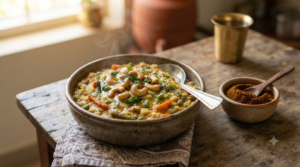
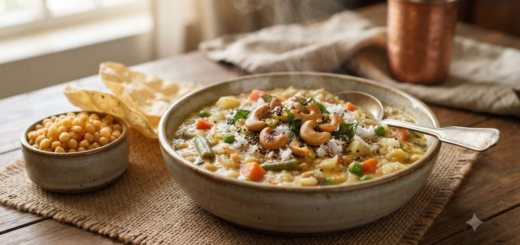
Karnataka-style Bisi Bele Bath with Powder made using rice, toor dal, mixed vegetables, readymade masala, cashews and curry leaves.
This version uses 1 cup sona masuri rice, 1/2 cup toor dal and 2 1/2 tablespoons of readymade bisi bele bath powder as a sensible starting point. Add more only after tasting. Karnataka Tourism describes bisi bele bath as a rice-and-lentil dish mixed with bisi bele bath masala, vegetables and a final seasoning, which matches the basic structure used here.
Bisi Bele Bath with Powder at a Glance
- Prep time: about 20 minutes
- Cook time: about 40 minutes
- Total time: about 60 minutes
- Servings: 4 generous portions
- Rice-to-dal ratio: 1 cup rice to 1/2 cup toor dal
- Readymade powder: start with 2 1/2 tablespoons, then adjust by brand
- Target texture: soft, spoonable and slightly flowing while hot
- Best rice: sona masuri or another short- to medium-grain white rice
The biggest improvement over the old method is control. Packet masalas are not identical, so a fixed heavy dose can make one batch too salty or too hot. Starting lower and adjusting during the final simmer gives you a repeatable result.
Ingredients for Bisi Bele Bath With Readymade Powder
| Ingredient | Quantity | Purpose |
|---|---|---|
| Sona masuri rice | 1 cup | Soft, cohesive base |
| Toor dal | 1/2 cup | Creamy lentil body |
| Readymade bisi bele bath powder | 2 1/2 tbsp to start | Main spice blend |
| Carrot | 1 medium, diced | Sweetness and texture |
| French beans | 8 to 10, chopped | Vegetable bite |
| Green peas | 1/2 cup | Sweetness and colour |
| Potato | 1 small, cubed | Body and softness |
| Onion | 1 small, chopped | Optional savoury base |
| Thick tamarind extract | 2 tbsp | Tang |
| Jaggery | 1 to 2 tsp | Optional balance |
| Turmeric | 1/4 tsp | Dal seasoning |
| Ghee or neutral oil | 2 tbsp | Cooking and tempering |
| Mustard seeds | 1 tsp | Tempering |
| Curry leaves | 10 to 12 | Aroma |
| Asafoetida | 1/4 tsp | Optional savoury note |
| Cashews | 10 to 12 | Optional garnish |
| Dried red chilli | 1 or 2 | Optional extra heat |
| Salt | To taste | Add after tasting masala |
| Hot water | About 5 to 5 1/2 cups | Added in stages |
Do not treat 2 1/2 tablespoons as a universal packet instruction. Some powders are stronger than others, and some already contain noticeable salt. Check the packet label, then taste before adding the final salt or another spoonful of masala.
How to Make Bisi Bele Bath with Powder
- Rinse and soak. Rinse rice and toor dal separately until the water is mostly clear. Soak the dal for 20 to 30 minutes if time allows, because older dal often takes longer to soften.
- Cook the dal until very soft. Pressure-cook 1/2 cup dal with 2 cups water and turmeric for about 3 to 4 whistles. Let the pressure fall naturally, then mash the dal lightly.
- Cook the rice soft. Cook 1 cup rice with about 2 cups water. The grains should be softer than plain steamed rice, since bisi bele bath needs a cohesive texture.
- Cook the vegetables. Heat 1 tablespoon ghee or oil in a deep pan. Add onion, carrot, beans, peas and potato, then sauté for 3 to 4 minutes.
- Add water and soften the vegetables. Pour in about 1 cup hot water, cover and simmer until the vegetables are tender. Keep the potato cubes small so they finish with the other vegetables.
Finish Bisi Bele Bath with Powder with Masala and Tempering
Once the vegetables are tender, the remaining steps build the tangy masala and final texture. Keep the heat moderate because packet powder can scorch quickly in a dry pan.
- Build the masala base. Lower the heat and stir in 2 1/2 tablespoons readymade powder for 20 to 30 seconds. Add tamarind, jaggery and about 3/4 cup hot water, then simmer for 4 to 5 minutes.
- Combine rice and dal. Add the cooked rice and mashed dal. Mix gently, then add more hot water until the mixture looks slightly looser than your final serving texture.
- Simmer and adjust. Cook for 5 to 7 minutes, stirring often. Taste now, then add salt or another teaspoon of readymade powder only if needed.
- Finish with tempering. Heat the remaining ghee or oil in a small pan. Crackle mustard seeds, then add curry leaves, dried chilli, asafoetida and cashews. Pour the tempering over the pot and serve hot.
For a rice-cooker-only version, use the site’s two-stage rice cooker method. If you specifically use one branded packet, the separate MTR powder version is the better match.
How Much Readymade Bisi Bele Bath Powder Should You Use?
For 1 cup rice and 1/2 cup toor dal, start with about 2 1/2 tablespoons of readymade powder. That amount is enough to season the pot without assuming every brand has the same strength. After the final five-minute simmer, taste and add another teaspoon only if the flavour feels weak.
The old 3 to 4 tablespoon range could work with a mild masala, yet it can overwhelm a stronger packet. This is why the packet label still matters. Also, add salt near the end because commercial powders may already contain salt.
Why Tamarind Should Go In After the Dal Is Soft
Cook the toor dal fully before adding tamarind. Acidic ingredients can slow the softening of dried legumes, so adding tamarind too early may leave the dal grainy. North Carolina Cooperative Extension gives the same general advice for dried beans: add acidic ingredients only after the legumes have become tender.
This timing is easy in the stovetop method because rice and dal cook before the masala base is combined. It also makes troubleshooting simpler. If the dal is still firm, fix that first instead of trying to hide the texture with more water.
Bisi Bele Bath with Powder: Getting the Right Consistency
A good Bisi Bele Bath with Powder should finish softer and looser than pulao, but thicker than sambar. When the pot is hot, the mixture should slowly fall from a ladle rather than sit in a stiff mound. It will thicken further as the rice and dal continue absorbing liquid.
Add only hot water during the final adjustment because it keeps the simmer steady. If the bath looks perfect in the pan, loosen it with another small splash before switching off. Ten minutes later, the texture will usually be closer to the ideal serving consistency.
What Vegetables Work Best?
Carrot, French beans, peas and potato are the safest combination because they hold their shape while the rice and dal become soft. Capsicum can also work, but add it later if you want a fresher bite. Brinjal softens fast, so use larger pieces and add them after firmer vegetables begin cooking.
Onion is optional rather than essential. You can skip it for a simpler version, while garlic is not required for this method. For a from-scratch masala and a more traditional flavour profile, use the site’s Karnataka-style bisibelebath recipe instead.
Bisi Bele Bath with Powder: Brand Adjustment Rules
The advantage of Bisi Bele Bath with Powder is flexibility, but packet masalas vary. This method also lets you tune the final pot after tasting instead of guessing from the packet name. Some lean hotter, some taste more aromatic, and some include more salt. Therefore, the safest method is to start with a moderate amount, simmer it in liquid, then correct the pot after the flavours have blended.
- If the masala tastes weak, add 1 teaspoon powder and simmer for 2 more minutes.
- If it tastes too hot, add cooked rice and dal or a little extra hot water rather than adding sugar.
- If it tastes too sour, add a small amount of jaggery and a little more cooked dal.
- If it tastes flat, check salt before adding more spice powder.
- If the powder tastes raw, simmer the masala base for several minutes before combining everything.
This method also protects the dish from a common mistake: adding extra chilli powder before tasting the packet masala. Many commercial blends already provide enough heat.
Common Problems and How to Fix Them
| Problem | Likely cause | Best fix |
|---|---|---|
| Bath is too thick | Rice absorbed liquid while resting | Stir in hot water gradually |
| Bath is watery | Too much water at the end | Simmer uncovered and stir |
| Dal feels grainy | Dal was not cooked soft enough | Cook dal separately until mashable |
| Flavour is too strong | Too much packet powder | Add plain cooked rice and dal |
| Flavour is dull | Low salt or weak masala | Adjust salt first, then masala |
| Tamarind tastes raw | Base was not simmered enough | Simmer 4 to 5 minutes before combining |
Do not try to repair every problem with more masala. Texture problems usually need water, rice or dal. Flavour problems need tasting in the right order: salt first, then sourness, then spice.
What the Old Version Got Wrong or Left Unclear
The earlier post treated 3 to 4 tablespoons of readymade powder as one broad instruction. It also called jaggery something you should not skip, although the amount is better treated as optional and taste-driven. Most importantly, it presented the Mysore Palace origin story as settled fact.
Bisi bele bath is firmly associated with Karnataka, and Karnataka Tourism documents its common rice, lentil, masala, vegetable and seasoning structure. The exact historical origin is less certain, so this refresh avoids presenting one popular origin story as proven history. That keeps the cooking guide useful without turning a food legend into a hard fact.
Serving Ideas That Actually Improve the Bowl
Bisi Bele Bath with Powder is best served hot, because the aroma and loose texture are best before the pot cools. Karnataka Tourism notes common accompaniments such as chips or boondi. Papad also works well because a crisp side contrasts with the soft rice-and-dal base.
A small spoon of ghee on top adds richness, but it is optional. For a vegan version, use neutral oil or coconut oil throughout. If you serve raita, keep it simple so it cools the spice instead of competing with the masala.
Storage and Reheating
Cool leftovers promptly and refrigerate them in shallow, covered containers. The USDA Food Safety and Inspection Service says most cooked leftovers keep for 3 to 4 days in the refrigerator. It also advises refrigerating perishable food within 2 hours, or within 1 hour when temperatures are above 32°C.
Bisi bele bath thickens strongly in the fridge, so reheat it with a splash of water. Heat only the portion you plan to eat, and bring it fully hot before serving. For longer storage, freeze portions, although the rice and vegetables may become softer after thawing.
Food-safety guidance: USDA leftovers and food safety gives the current general storage rules. The acid-and-legume timing note is supported by North Carolina Cooperative Extension.
Approximate Nutrition and Portion Notes
This dish combines rice, toor dal and vegetables, so it provides carbohydrate, plant protein and fibre in one bowl. However, calories can change sharply with serving size, ghee, cashews and the amount of rice used. A generic calorie number copied from another recipe is therefore less useful than watching your actual portion.
If you want a lighter plate, use more vegetables and less added ghee. If you want a more filling meal, keep the standard rice-and-dal ratio and serve it as the main dish rather than alongside another heavy rice item.
Before You Serve
This Bisi Bele Bath with Powder method works because it treats readymade masala as an adjustable ingredient rather than a fixed shortcut. Cook the dal soft, add tamarind later, keep the final texture loose, and taste before adding extra salt or masala. Those four decisions matter more than the brand printed on the packet.
If your goal is speed, use the generic packet method here. If your goal is a specific MTR flavour or a rice-cooker process, use the dedicated Bhimas Cook versions linked above so each recipe keeps a clear purpose.
Bisi Bele Bath with Powder FAQ
Can I make Bisi Bele Bath with Powder from any brand?
Yes. Most readymade bisi bele bath powders can work, but the strength varies by brand. Start with about 2 1/2 tablespoons for 1 cup rice and 1/2 cup dal, then taste after simmering before you add more.
How much readymade powder should I add for 1 cup rice?
Start with about 2 1/2 tablespoons for 1 cup rice and 1/2 cup toor dal. If the flavour is mild after the final simmer, add another teaspoon. Always check the packet directions because salt and spice levels vary.
Can I use MTR Bisi Bele Bath powder in this recipe?
Yes, MTR powder can be used here. However, Bhimas Cook has a separate MTR-specific recipe, so use that version if you want measurements and adjustments centred on that brand rather than a generic packet method.
Should I cook rice and dal together?
You can, but cooking them separately gives more control. Toor dal must become very soft, while rice only needs to reach a soft, cohesive texture. Separate cooking makes it easier to fix either component before combining the pot.
Why is my bisi bele bath becoming thick after cooking?
Rice and dal continue absorbing water as the dish rests. Keep the mixture slightly looser than your ideal texture when you switch off the heat. If it thickens later, stir in hot water while reheating.
Can I make bisi bele bath without jaggery?
Yes. Jaggery is optional in this shortcut version. Use 1 to 2 teaspoons only when the tamarind tastes sharp and you want a rounder sweet-sour balance.
Is bisi bele bath gluten-free?
The basic rice, dal, vegetables and spices are naturally gluten-free. However, check the label on readymade masala and asafoetida because some commercial products may use wheat-based carriers or have cross-contact warnings.
How long can I store leftover bisi bele bath?
Use refrigerated leftovers within 3 to 4 days, following USDA general leftovers guidance. Refrigerate promptly in shallow containers, then reheat only the portion you need. Add water during reheating because the rice-and-dal mixture thickens when chilled.