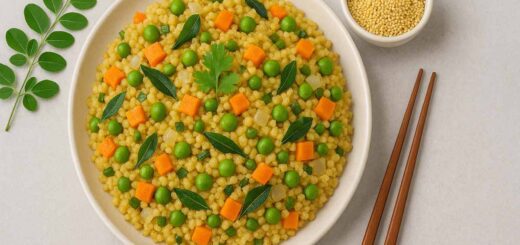
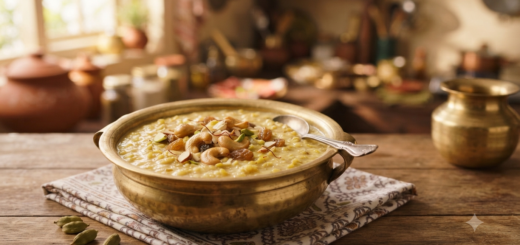
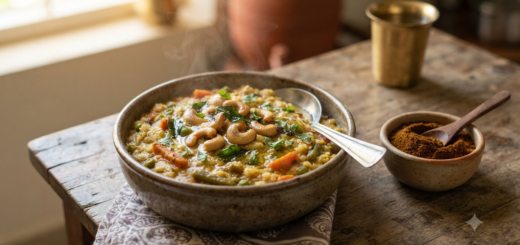
Bisibelebath with MTR Powder Recipe: Easy Karnataka Method
Bisibelebath with MTR powder is an easy way to make Karnataka-style rice, lentils and vegetables without roasting a separate spice blend. The key is not simply adding more masala. You get a better bowl by balancing the MTR powder with tamarind, a little jaggery, enough hot water and a fresh final tempering.
This recipe uses MTR Bisibele Bhath Masala, which MTR Foods lists in its official masala-powder range. Karnataka Tourism also describes bisi bele bath as a popular dish built from rice, lentils, vegetables and bisi bele bath masala. This version focuses on a practical home method using the packaged powder rather than a homemade spice mix.
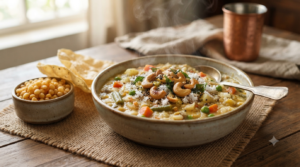
Bisibelebath with MTR powder made with soft rice, toor dal, mixed vegetables, tamarind and a fresh tempering.
Bhimas Cook is an independent recipe website and is not affiliated with or endorsed by MTR Foods. Product names are used only to identify the ingredient used in this recipe.
Bisibelebath with MTR Powder at a Glance
- Serves: 4 generous portions
- Prep time: about 15 minutes
- Cook time: about 35 to 40 minutes
- Main base: 1 cup sona masuri rice and 1/2 cup toor dal
- MTR masala: start with 2 tablespoons, then add up to 1 tablespoon more after tasting
- Best texture: soft, creamy and slightly flowing rather than dry
- Best sides: boondi, papad, potato chips or a simple cucumber raita
The most important texture rule is simple: finish the dish slightly looser than you want to serve it. Rice and dal continue absorbing liquid after cooking, so a perfect-looking pot can become too thick within ten minutes.
Bisibelebath with MTR Powder Ingredients
These quantities make a balanced four-serving batch. Because packaged masala can taste stronger or milder depending on how much you use, begin with the lower amount and adjust near the end.
| Ingredient | Quantity | Why it matters |
|---|---|---|
| Sona masuri rice | 1 cup | Softens well and gives the classic comforting texture |
| Toor dal | 1/2 cup | Adds body and a creamy lentil base |
| MTR Bisibele Bhath Masala | 2 to 3 tbsp | Provides the main spice profile |
| Carrot | 1 medium, diced | Adds sweetness and colour |
| French beans | 1/2 cup, chopped | Adds texture |
| Green peas | 1/2 cup | Adds sweetness and body |
| Potato | 1 small, diced | Makes the dish more filling |
| Tamarind paste | 1 tbsp | Provides the essential sour note |
| Jaggery | 1 to 2 tsp | Rounds out tamarind and chilli heat |
| Turmeric | 1/4 tsp | Adds colour and warmth |
| Salt | to taste | Balances the full dish |
| Water | about 5 to 6 cups total | Used for pressure cooking and final consistency |
For the final tempering
- 1 to 2 tablespoons ghee, or neutral oil for a vegan version
- 1 teaspoon mustard seeds
- 8 to 10 curry leaves
- 1 dried red chilli, optional
- 1 small pinch asafoetida
- 8 to 10 cashews or 2 tablespoons peanuts, optional
Do not add extra red chilli powder at the start unless you already know your preferred heat level. MTR masala supplies the main chilli-and-spice profile, so adding more chilli too early makes correction harder later.
How to Make Bisibelebath with MTR Powder Step by Step
The easiest method cooks rice and dal until very soft, prepares vegetables with tamarind and masala in a second pot, then combines both. This gives you more control than putting every ingredient into the pressure cooker at once.
Cook the rice, dal and vegetables
- Rinse the rice and dal. Wash 1 cup rice and 1/2 cup toor dal until the water looks mostly clear. Soaking for 10 to 15 minutes is optional, but it can help the dal soften evenly.
- Pressure cook until soft. Add the rice and dal to a pressure cooker with 4 cups water and turmeric. Cook until both become very soft and mash easily. In many stovetop cookers this takes about 3 to 4 whistles, but cooker size and heat level vary.
- Prepare the tamarind. Mix 1 tablespoon tamarind paste with 1/2 cup warm water. If you use fresh tamarind, soak and strain it first so no fibres remain.
- Cook the vegetables. Add carrot, beans, peas and potato to a wide heavy pan with about 1 cup water and a small pinch of salt. Cover and simmer until tender but not completely broken down.
Finish the pot and adjust the seasoning
- Add the flavour base. Stir in the tamarind water and 2 tablespoons MTR Bisibele Bhath Masala. Add 1 teaspoon jaggery, then simmer for 3 to 4 minutes so the raw tamarind edge softens.
- Combine rice and dal. Lightly mash the cooked rice-dal mixture, then add it to the vegetables. Stir well and add hot water in small amounts until the mixture becomes thick but flowing.
- Taste before increasing masala. Simmer for 5 minutes, then taste. Add another 1/2 to 1 tablespoon MTR powder only if the spice flavour feels too mild.
- Finish with tempering. Heat ghee in a small pan. Crackle mustard seeds, then add cashews or peanuts, curry leaves, dried chilli and asafoetida. Pour the hot tempering over the bath and mix once.
Let the Bisibelebath with MTR powder rest for five minutes before serving. If it tightens during that rest, stir in a little hot water. The finished bisi bele bath should mound softly on a spoon but still spread on the plate.
Why Bisibelebath with MTR Powder Works
The packaged masala solves only one part of the recipe: the spice blend. Texture, sourness and aroma still depend on how you cook the rice, dal, vegetables and tempering.
1. The rice and dal need to be softer than plain rice
Bisi bele bath is not pulao, so separate grains are not the goal. Soft rice and fully cooked dal create the creamy base that holds the masala around the vegetables.
2. Tamarind changes how strong the masala tastes
Acidity can make chilli and spice seem sharper, so taste only after tamarind has simmered with the MTR powder. This is why adding the full three tablespoons at the beginning can overshoot the balance.
3. The final tempering should stay aromatic
A tempering added at the end keeps mustard, curry leaf and ghee aromas noticeable at the table. If you fry everything at the start and simmer it for a long time, that fresh aroma becomes less distinct.
Bisibelebath with MTR Powder: How Much Masala Should You Use?
For 1 cup rice and 1/2 cup toor dal, 2 tablespoons is a sensible starting point. After the dish simmers with tamarind, add up to another tablespoon if needed. Swasthi’s Recipes likewise notes that 2 to 3 tablespoons of MTR powder can replace homemade spice powder in a four-serving bisi bele bath recipe.
The package is still the best reference if your specific MTR pack gives serving directions, because pack sizes and formulations can change. MTR Foods currently lists Bisibele Bhath Masala in its official masala powders range.
For Bisibelebath with MTR powder, a practical rule works better than chasing one fixed spoon count. Start low, simmer, taste, then add more. You can always increase masala, but you cannot easily remove it after the rice and dal absorb the spice.
Consistency: The Detail Most Quick Recipes Miss
Karnataka Tourism describes bisi bele bath as rice and lentils mixed with masala and heated while stirring to maintain consistency. At home, the common problem is stopping when the mixture already looks thick.
Instead, switch off the heat while the bath is still slightly loose. It thickens as it stands because both rice and dal keep taking up moisture. If you plan to serve it after 20 to 30 minutes, keep 1 cup hot water nearby and loosen it just before eating.
Cold water will also thin the dish, but hot water blends faster and does not drop the serving temperature. Add it a little at a time so you do not turn the bath into soup.
How to Balance Tamarind, Jaggery and Heat
A good bisi bele bath tastes tangy, savoury and warm, with a small sweet note rather than obvious sweetness. The exact balance changes with tamarind strength and your masala dose.
- Too sour: add 1/2 teaspoon jaggery and a little hot water, then simmer two minutes.
- Too sweet: add a small splash of diluted tamarind, not extra chilli.
- Too spicy: add more cooked rice-dal mixture or a little hot water, then correct salt.
- Too flat: add salt first. If it still tastes dull, add a small amount of MTR powder and simmer.
- Too thick: add hot water in 1/4-cup additions until it flows again.
This balance-first method is more reliable than adding chilli powder by habit. It also keeps the MTR masala flavour clear instead of masking it with extra heat.
Vegetables You Can Use
Carrot, beans, peas and potato make an easy everyday combination. Capsicum, chayote, turnip or small pieces of cauliflower can also work, although each changes the final flavour slightly.
Avoid overloading the pot with too many vegetables. About 2 cups of chopped vegetables is enough for the rice and dal quantity here. More vegetables can dilute the masala and make the dish feel like a vegetable stew.
If you want a more traditional from-scratch spice profile, use Bhimas Cook’s homemade bisibelebath powder recipe. For a broader Karnataka-style version without relying on one packaged brand, see the traditional bisibelebath recipe.
Bisibelebath with MTR Powder Troubleshooting
Most failures come from texture or balance, not from the brand of masala. These fixes are useful because they work after the pot is already cooked.
My bisi bele bath became dry
Add hot water, 1/4 cup at a time, and stir over low heat. Once it loosens, taste again because added water may require a small correction of salt and masala.
The MTR powder tastes raw
Simmer the masala with tamarind and vegetables for several minutes before combining everything. If the dish is already mixed, keep it on low heat for another five minutes and stir often so the bottom does not catch.
The vegetables turned mushy
Cook firmer vegetables separately until just tender, then combine them with the soft rice and dal. This preserves some bite while the grain-and-lentil base stays creamy.
The flavour is strong but not balanced
Check salt before adding more masala. Then adjust sourness with diluted tamarind or soften it with a small amount of jaggery. Extra chilli rarely fixes an unbalanced bowl.
Serving Ideas That Suit the Texture
Bisi bele bath is best served hot because its texture becomes denser as it cools. Karnataka Tourism notes common accompaniments such as chips or boondi, which work because they add crunch against the soft rice-and-dal base.
- Top each bowl with a teaspoon of ghee for aroma.
- Add kara boondi only just before eating so it stays crisp.
- Serve papad or potato chips on the side rather than mixing them in early.
- Use cucumber raita if you want a cooling contrast.
- Add chopped coriander at the table for a fresh note.
If you prefer a pressure-cooker or electric multi-cooker workflow, Bhimas Cook also has an Instant Pot bisibelebath method. Keep the MTR-powder page focused on the packaged masala so the two recipes answer different cooking intents.
Storage and Reheating
Cool leftovers promptly and refrigerate them in shallow containers. The U.S. Department of Agriculture advises refrigerating perishable leftovers within two hours, using most cooked leftovers within three to four days, and reheating leftovers to 165°F, which is about 74°C.
When reheating bisi bele bath, add a splash of water before heating because the rice and dal firm up in the fridge. Stir midway so the centre heats evenly. See the USDA food-safety basics for the full leftover guidance.
For freezing, portion the cooled bath into freezer-safe containers. The texture may soften further after thawing, so frozen leftovers are best when reheated gently with a little water and fresh tempering.
Ingredient Swaps and Dietary Notes
Use neutral oil instead of ghee if you want a vegan version. Peanuts can replace cashews, while the vegetables can change with the season.
For a gluten-free meal, check the labels on the MTR masala and asafoetida you use. Some compounded hing products contain wheat flour, so the ingredient list matters even when the rest of the dish is naturally rice-and-lentil based.
Brown rice or millets can work, but they need different water and cooking times. If the goal is a dependable first attempt with packaged MTR powder, sona masuri rice remains the simplest choice.
What to Remember Before You Cook
Bisibelebath with MTR powder works best when you treat the packaged powder as the spice shortcut, not as the whole recipe. Soft rice and dal create the body, tamarind provides tang, jaggery rounds the edges, and the final tempering gives aroma.
Start with 2 tablespoons of masala, then adjust only after the tamarind has simmered. Keep the finished dish slightly loose because it thickens quickly. Those two decisions solve the most common problems before they happen.
Frequently Asked Questions
Can I Make Bisibelebath with MTR Powder Without a Pressure Cooker?
Yes. Cook the rice and toor dal in a heavy pot with enough water until both become very soft. It takes longer than pressure cooking, but the rest of the method stays the same.
How Much Masala Should I Add to Bisibelebath with MTR Powder?
Start with 2 tablespoons for 1 cup rice and 1/2 cup toor dal. After simmering with tamarind, taste and add up to another tablespoon if you want a stronger masala flavour.
Do I need sambar powder with MTR Bisibele Bhath Masala?
No. The MTR product is already a blended masala intended for bisi bele bath, so extra sambar powder is not required. Adding several spice blends can make the flavour muddy.
Can I skip tamarind?
You can, but the dish will lose much of its characteristic tang. If tamarind is unavailable, use another souring ingredient cautiously, although the flavour will not be identical.
Is jaggery compulsory?
No. Jaggery is optional, but a small amount helps round out sharp tamarind and chilli. Add only enough to soften the sour edge rather than make the dish taste sweet.
Why does bisi bele bath thicken after cooking?
Rice and dal continue absorbing water while they rest, so the mixture naturally becomes denser. Finish it slightly loose and add hot water before serving if it has tightened too much.
Can I make this recipe ahead for guests?
Yes, but keep it looser than usual and reserve the final tempering until close to serving. Reheat gently with hot water, then add the fresh ghee, mustard, curry leaves and nuts.
Is Bisibelebath with MTR Powder the Same as MTR Ready-to-Eat Bisibelebhath?
No. This recipe uses MTR Bisibele Bhath Masala powder as one ingredient in a homemade dish. MTR also sells ready-to-eat Bisibelebhath as a separate prepared product, so check the pack before buying.