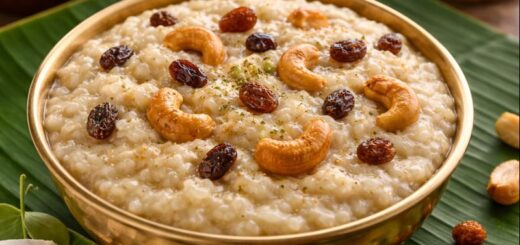
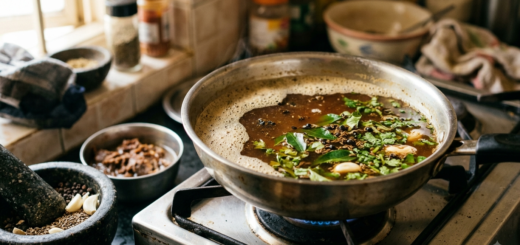
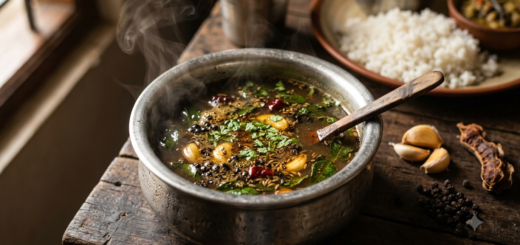
Bisibelebath Without Onion: Easy Karnataka-Style Recipe
Bisibelebath without onion is a rich Karnataka-style rice and lentil meal built on tamarind, vegetables, spice powder and a fragrant tempering. You do not need onion to give it body or depth. The real keys are a soft rice-dal base, enough masala, balanced sourness and a slightly loose finish because the dish thickens as it rests.
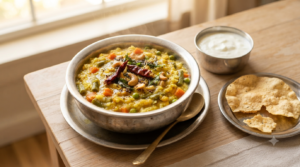
Soft onion-free Bisi Bele Bath with vegetables, curry-leaf tempering, cashews and a crisp papad side.
Karnataka Tourism describes Bisi Bele Bath as a popular Karnataka dish made with rice, lentils and Bisi Bele Bath masala, often with vegetables and a ghee-based seasoning. This version keeps that familiar structure while leaving onion out completely. It also avoids the old page’s broad claim that any onion-free version automatically suits religious fasting.
Bisibelebath Without Onion at a Glance
This method gives you a soft, spoonable Bisi Bele Bath rather than dry masala rice. Cook rice and toor dal until very soft, prepare the vegetables separately, then bring everything together with tamarind, jaggery and masala. Finish with mustard, curry leaves, red chilli and cashews or peanuts.
| Detail | For this recipe |
|---|---|
| Prep time | 20 minutes |
| Cook time | 40 to 45 minutes |
| Total time | About 1 hour |
| Yield | 4 to 5 servings |
| Heat level | Medium, adjustable |
| Main texture | Soft and slightly flowing |
The dish is also written as Bisi Bele Bath, Bisi Bele Bhath and bisibelebath. Those spellings refer to the same Karnataka rice-lentil preparation. If you want a broader regional overview, Karnataka Tourism has a useful Bisi Bele Bath food guide.
Bisibelebath Without Onion Ingredients
The ingredient list is simple, but the proportions matter. The old version used only one tablespoon of masala for one cup of rice, which can taste flat once dal, vegetables and extra water enter the pot. This refresh uses a stronger starting amount, while still asking you to adjust for the strength of your powder.
For the rice and dal
- 1 cup Sona Masuri or other medium-grain raw rice
- 1/2 cup toor dal
- 1/2 teaspoon turmeric powder
- 4 cups water for pressure cooking
- 1/2 teaspoon salt, plus more later to taste
For the vegetables and flavour base
- 2 cups mixed vegetables, diced small: carrot, French beans, green peas and potato work well
- 1 small tomato, chopped, optional
- 20 g tamarind, soaked in 3/4 cup hot water, then squeezed and strained
- 2 1/2 tablespoons Bisi Bele Bath masala powder
- 1 1/2 teaspoons jaggery, grated or powdered
- 1 to 2 cups hot water for the final consistency
- Salt to taste
For the tempering
- 2 tablespoons ghee, or neutral oil for a vegan version
- 1 teaspoon mustard seeds
- 2 dried red chillies, broken
- 10 to 12 curry leaves
- 1/8 teaspoon asafoetida, or a small pinch
- 10 to 12 cashews, or 2 tablespoons peanuts
- 2 tablespoons chopped coriander leaves, optional
If you use a packaged spice blend, check the ingredient label when you need a strict no-onion or no-garlic meal. Product formulas can change. MTR Foods currently lists Bisibele Bhath Masala in its masala range, but the packet in your kitchen remains the final label to follow.
How to Make Bisibelebath Without Onion
The easiest reliable method separates the soft rice-dal base from the vegetable masala. That gives you more control over texture because the vegetables do not have to survive several pressure-cooker whistles. Once both parts are ready, the final simmer takes only a few minutes.
- Rinse the rice and dal. Wash both until the water looks much clearer. Drain well, then place them together in a pressure cooker.
- Pressure cook until very soft. Add turmeric, 4 cups water and 1/2 teaspoon salt. Cook for about 4 whistles on medium heat, then let the pressure release naturally. Cooker size and heat vary, so use softness rather than whistle count as the final test.
- Prepare the tamarind. Soak 20 g tamarind in 3/4 cup hot water for about 10 minutes. Squeeze well and strain out fibres and seeds.
- Cook the vegetables. Add the vegetables to a wide, heavy pan with about 3/4 cup water. Cover and cook until just tender. Add the tomato now if using it, then cook for 2 more minutes.
- Build the masala base. Pour in the strained tamarind water. Add jaggery, salt and 2 1/2 tablespoons Bisi Bele Bath masala. Simmer for 5 to 7 minutes so the tamarind loses its raw edge.
Finish Bisibelebath Without Onion and Temper
At this stage, the rice-dal base and vegetable masala are both ready. The remaining work is about consistency and aroma, so keep hot water nearby and taste once before the final tempering.
- Combine everything. Mash the cooked rice and dal lightly, then add them to the vegetable masala. Stir gently until the mixture looks even.
- Adjust the texture. Add 1 cup hot water first. Simmer for 5 minutes, then add more hot water if needed. Stop while the bisibelebath is slightly looser than your preferred serving texture.
- Make the tempering. Heat ghee in a small pan. Add mustard seeds, then cashews or peanuts. Once the nuts colour lightly, add red chillies, curry leaves and asafoetida.
- Finish and rest. Pour the hot tempering over the rice mixture. Stir once, rest for 5 minutes, then taste for salt, tamarind and jaggery before serving.
Why Bisibelebath Without Onion Still Tastes Full
Onion is not the ingredient that defines Bisi Bele Bath. The dish gets most of its character from roasted spice powder, tamarind, toor dal and the final tempering. Jaggery does not make it sweet when used sparingly; instead, it softens the sharp edge of tamarind and chilli.
Texture also carries flavour. A dry version can taste harsher because the masala sits on the grains instead of blending through a soft rice-dal base. Keep the mixture slightly flowing, since both rice and dal continue absorbing liquid after the heat goes off.
The final tempering matters more in an onion-free version because it supplies fresh aroma at the end. Mustard seeds, curry leaves, red chilli and ghee or oil create a top note that the cooked masala alone cannot provide.
How Much Bisi Bele Bath Powder Should You Use?
Start with about 2 1/2 tablespoons for one cup rice and half a cup toor dal, then adjust by brand strength. Homemade blends and commercial powders vary widely in chilli, coriander, cinnamon, clove and roasted lentil intensity. A weak powder may need more, while a concentrated blend may need less.
If you want to control the spice profile from scratch, use Bhimas Cook’s Bisibelebath powder recipe. For a faster route, the site’s readymade powder method explains how to work with a packaged blend.
Is Onion-Free Bisi Bele Bath Suitable for Fasting?
No, not automatically. Leaving out onion and garlic can fit some religious food preferences, but fasting rules depend on the observance and family tradition. For example, many Ekadashi practices exclude ordinary rice and pulses, so a dish containing rice and toor dal would not qualify even when it contains no onion.
This corrects an important problem in the old article, which implied that skipping onion made the recipe suitable for fasts and festivals. If you are cooking for a vrat, check the rules for that specific fast first. Bhimas Cook’s Ekadashi fasting recipes guide shows why “no onion” and “fasting food” are not interchangeable labels.
Common Problems and How to Fix Them
Most failed batches are not ruined by one ingredient. They usually miss one of four balances: water, salt, sourness or masala strength. Fix those in that order, because adding more spice to a dry or under-salted pot rarely solves the real problem.
| Problem | Likely cause | Fix |
|---|---|---|
| Too thick | Rice and dal absorbed water while resting | Add hot water in 1/4-cup amounts, then simmer briefly |
| Too thin | Too much final water | Simmer uncovered and stir often |
| Too sour | Tamarind is strong | Add a little jaggery and hot water, then recheck salt |
| Tastes flat | Not enough salt or masala | Correct salt first, then add a little more masala |
| Vegetables mushy | They cooked too long | Cook them separately and stop at just tender |
| Spice tastes raw | Masala was added too late | Simmer it in the tamarind base before adding rice and dal |
Serving Ideas That Work with the Onion-Free Version
Serve Bisi Bele Bath hot because the texture is at its best before it sets. Karnataka Tourism notes common pairings such as chips or boondi, while many home cooks also add papad, curd or a simple cucumber raita. A teaspoon of ghee on top is optional but especially good with a chilli-forward masala.
If you are keeping the entire meal onion-free, check the sides too. Restaurant raita, boondi mixes and packaged papad can contain seasonings you may want to avoid. Plain curd, cucumber raita without onion, roasted papad or banana chips are easy options.
Storage and Reheating Safety
Cooked rice needs careful handling. The Food Safety and Standards Authority of India identifies cooked rice as a higher-risk food and advises rapid cooling for food that will be refrigerated. Its guidance also stresses keeping chilled food at 5°C or below and reheating thoroughly.
For home use, move leftovers into shallow containers instead of leaving a large hot pot on the counter. Refrigerate promptly, then reheat only the portion you plan to eat. Add a splash of water before heating because the rice and dal will be much thicker after chilling.
For the underlying safety guidance, see the FSSAI Food Safety at Home guide. When in doubt about how long leftovers have been warm or unrefrigerated, discard them rather than relying on smell alone.
Bisibelebath Without Onion: Key Tips Before You Cook
- Use Sona Masuri or another medium-grain rice for a soft, cohesive texture.
- Cook rice and dal until soft enough to mash with little effort.
- Do not judge the final texture while it is still boiling; the dish thickens quickly.
- Start with 2 1/2 tablespoons masala, then adjust to the powder you actually use.
- Simmer the tamarind and masala before adding rice so the spice base tastes rounded.
- Keep jaggery subtle. It should balance the sourness, not turn the dish sweet.
- Check commercial masala labels when onion, garlic, gluten or other ingredients matter to you.
This refreshed bisibelebath without onion recipe stays focused on the onion-free cooking intent instead of competing with Bhimas Cook’s broader Bisi Bele Bath pages. The core method is still simple: soft rice and dal, tender vegetables, a properly simmered masala base, and a fragrant tempering. Get those four elements right and the dish does not need onion for depth.
Bisibelebath Without Onion FAQ
Does traditional Bisi Bele Bath contain onion?
There is no single household formula. Many Karnataka-style versions are made without onion, while other home and restaurant versions include it. Treat onion as a variation rather than the ingredient that defines the dish.
Can I make this without onion and garlic?
Yes. This recipe contains no onion or garlic. However, check a packaged Bisi Bele Bath masala label if you need strict avoidance, because commercial formulations can differ.
Can I skip tomato too?
Yes. Tomato is optional here, so you can leave it out without changing the core method. If you skip it, taste the tamarind carefully because it will become the main sour ingredient.
Can I make Bisibelebath without onion in one pressure cooker?
Yes, but the vegetables can become very soft if everything cooks for the same number of whistles. For better texture, pressure cook the rice and dal first, then cook the vegetables and masala separately before combining them.
What can I use instead of Bisi Bele Bath powder?
A homemade roasted masala is the best substitute because the spice blend defines the dish. Sambar powder can make a tasty rice-and-dal meal, but it will not give the same Bisi Bele Bath flavour profile.
Why does Bisi Bele Bath become thick after cooking?
Rice and toor dal keep absorbing liquid as they cool. Therefore, stop cooking while the mixture is slightly looser than you want to serve it. Add hot water during reheating rather than serving it dry.
Is Bisibelebath without onion vegan?
It can be. Replace ghee with a neutral cooking oil or coconut oil, then use oil for the final tempering as well. The rice, dal, vegetables, tamarind and spice base are plant-based.
Is this recipe gluten-free?
The basic rice, dal, vegetables and spices do not require gluten-containing ingredients. However, compounded asafoetida and packaged spice mixes may contain wheat or other carriers, so check labels if you need a strict gluten-free meal.
Can I prepare this recipe for Ekadashi?
Usually not under common Ekadashi rules because this recipe uses rice and toor dal. Onion-free does not mean vrat-friendly. Follow your family or temple tradition for the specific fast.